





In the automotive supply chain, coating materials do far more than improve appearance. They directly affect how long parts can withstand corrosion, friction, heat, moisture, chemicals, and repeated mechanical stress. For information researchers, business evaluators, and decision-makers, the practical conclusion is clear: coating selection is not just a technical detail—it shapes warranty risk, maintenance cycles, compliance exposure, supplier competitiveness, and total lifecycle cost. In many cases, the durability of an automotive part depends as much on the coating system as on the base material itself.
That makes coatings an important area to monitor across manufacturing, chemicals, machinery, and automotive-related procurement. Whether the goal is to compare suppliers, assess material trends, evaluate production opportunities, or understand why some components fail earlier than expected, it helps to look beyond generic claims like “high performance” or “anti-corrosion” and focus on how specific coating materials perform under real service conditions.
Why coating choice has a direct impact on automotive part durability
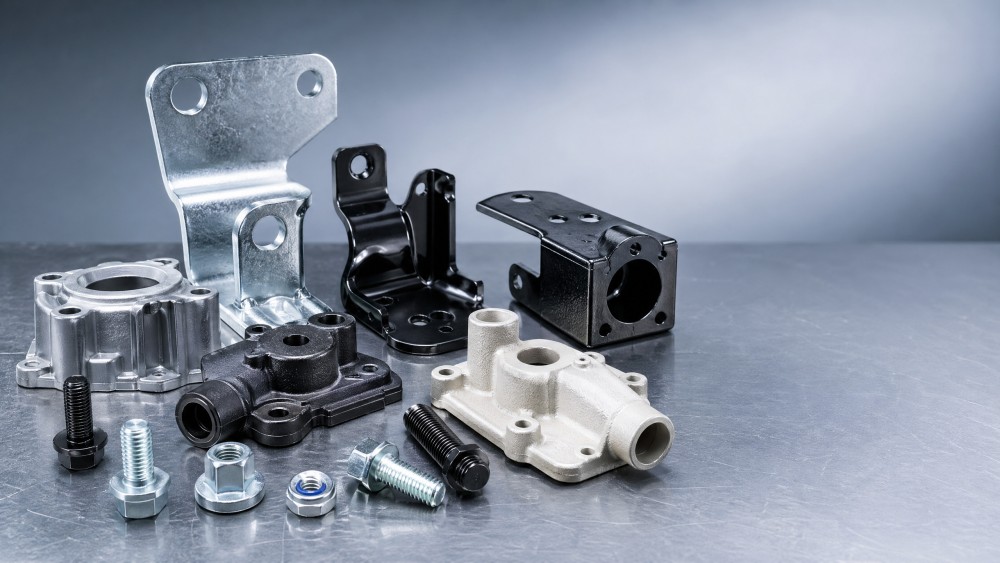
Automotive parts operate in highly variable environments: road salt, humidity, fuel vapors, stone impact, high temperatures, UV exposure, brake dust, cleaning agents, and constant vibration. A coating acts as the protective interface between the part and these stresses. If that interface is poorly matched to the operating environment, the part may degrade long before the substrate itself would fail.
In practical terms, coating materials affect durability in five major ways:
- Corrosion resistance: Protects steel, aluminum, and other metals from oxidation, galvanic attack, and salt spray exposure.
- Wear resistance: Reduces abrasion, friction damage, and surface degradation in moving or high-contact components.
- Thermal stability: Helps parts maintain integrity when exposed to engine heat, exhaust systems, or rapid temperature cycling.
- Chemical resistance: Prevents damage from oils, fuels, brake fluids, cleaning chemicals, and industrial contaminants.
- Adhesion and structural reliability: Ensures the protective layer remains intact under vibration, impact, and forming stress.
This is why two parts made from the same substrate can show very different field performance depending on coating type, thickness, curing quality, and application process control.
Which coating materials are most commonly used, and what durability trade-offs do they bring?
For readers evaluating market options or supplier positioning, the key is not identifying a single “best” coating. Different coating materials serve different durability priorities, cost targets, and regulatory constraints.
Electroplating and zinc-based coatings
Zinc, zinc-nickel, and related plated coatings are widely used for fasteners, brackets, and metal hardware because they provide sacrificial corrosion protection. In cost-sensitive, high-volume automotive applications, zinc-based systems remain important due to proven performance and established processing infrastructure.
Durability advantage: Strong corrosion resistance, especially for steel components.
Trade-off: Performance depends heavily on coating thickness, passivation, and post-treatment quality. Some systems may be less suitable for high-heat environments.
Powder coatings
Powder coatings are valued for their thickness, impact resistance, and relatively strong environmental profile compared with some solvent-heavy systems. They are often used where appearance and mechanical protection both matter.
Durability advantage: Good chip resistance, solid corrosion protection, and uniform coverage on many component types.
Trade-off: Geometry, edge coverage, and cure consistency can influence long-term performance.
E-coating (electrophoretic coating)
E-coating is common in automotive manufacturing because it can provide even coverage over complex shapes and internal cavities. It is often used as a primer layer in multi-coat systems.
Durability advantage: Excellent coverage and reliable corrosion protection when process conditions are controlled.
Trade-off: Often works best as part of a broader coating system rather than as the only protective layer.
PTFE, fluoropolymer, and low-friction coatings
These coatings are used where anti-stick properties, friction reduction, or chemical resistance are critical. They can improve functional durability in moving assemblies or chemically exposed parts.
Durability advantage: Low friction, good chemical resistance, and performance in specialized applications.
Trade-off: Higher cost and narrower use cases compared with conventional anti-corrosion coatings.
Ceramic and thermal barrier coatings
For exhaust, turbocharger, and high-temperature applications, ceramic-based coatings help protect parts from thermal fatigue and heat-related degradation.
Durability advantage: Heat resistance and thermal insulation in severe environments.
Trade-off: More complex application requirements and higher cost.
Organic paint systems and multi-layer coatings
Automotive durability often depends not on one coating material but on a layered system that includes pretreatment, primer, intermediate coating, and topcoat. This is especially relevant for exterior and underbody components.
Durability advantage: Balanced protection against corrosion, UV, impact, and chemicals.
Trade-off: System complexity increases quality-control demands and process cost.
What factors determine whether a coating will actually perform well in service?
For business and technical evaluation alike, one of the most important insights is that coating material alone does not guarantee durability. Actual performance depends on the interaction of material choice, substrate condition, process control, and service environment.
The following factors usually have the greatest impact:
1. Substrate compatibility
Steel, aluminum, magnesium, and engineered plastics all interact differently with coating systems. A coating that performs well on one substrate may show poor adhesion or reduced corrosion protection on another.
2. Surface preparation
Cleaning, degreasing, blasting, phosphating, or other pretreatment steps strongly influence adhesion and corrosion resistance. In many failure cases, the root problem is not the topcoat chemistry but inadequate surface preparation.
3. Coating thickness and uniformity
Too thin, and protection may be insufficient. Too thick, and the coating may crack, peel, or create dimensional issues. Uniformity is especially important for edges, corners, threads, and recessed geometries.
4. Curing and application process control
Temperature, dwell time, humidity, bath chemistry, spray parameters, and line speed all affect the final protective properties. Poorly controlled curing can reduce adhesion, hardness, or chemical resistance.
5. Real-world exposure profile
An underbody bracket, battery enclosure, engine component, and interior fastener all face different risks. Durability cannot be assessed meaningfully without matching the coating to actual use conditions.
How coatings influence business value, not just technical performance
For decision-makers, the value of automotive coating materials should be assessed through a commercial lens as well as an engineering one. The right coating can reduce field failures, improve part reliability, support premium positioning, and lower total ownership cost. The wrong coating can create expensive downstream problems even if its upfront cost appears attractive.
Key business effects include:
- Lower warranty and replacement costs: Better corrosion and wear resistance can reduce claims and service interventions.
- Longer component life: Durable coatings help parts maintain performance over a longer operating cycle.
- Improved supplier competitiveness: Suppliers offering validated, application-specific coating systems may gain an advantage in OEM and Tier procurement.
- Compliance support: Coating chemistry must increasingly align with environmental and chemical regulations across markets.
- Brand and quality perception: Visible surface failure can influence how end users perceive overall product quality.
From a strategic perspective, coatings are often a high-leverage area because relatively modest material or process upgrades can produce meaningful durability gains compared with the cost of redesigning an entire component.
What risks should buyers and evaluators watch for when comparing coating options?
Market claims around durability can be difficult to compare unless readers look at the details behind them. The most common evaluation mistakes include focusing only on nominal coating type, relying on generic test language, or treating coating cost as a standalone purchasing metric.
Important risk signals include:
- Test results without context: Salt spray hours alone do not always predict real-world performance.
- Unclear substrate conditions: Results may not transfer between different base materials or geometries.
- Limited process consistency: A good coating formulation can still produce poor durability if manufacturing control is weak.
- Regulatory exposure: Certain substances or treatment chemistries may face restrictions in target export markets.
- Single-factor optimization: Maximizing corrosion resistance while ignoring friction, heat, appearance, or dimensional tolerance can create new problems.
For commercial assessment, it is often more useful to compare coating systems by application scenario than by material category alone.
How should companies assess the right coating material for different automotive parts?
A practical evaluation framework helps information researchers and business teams move from broad market information to useful decision support. Instead of asking which coating is “best,” ask which coating delivers the best balance of durability, cost, manufacturability, compliance, and supply stability for a specific part.
A useful assessment approach includes:
- Define the service environment: Consider corrosion exposure, heat, chemicals, wear, and expected lifespan.
- Identify the failure mode that matters most: Rust, peeling, abrasion, thermal degradation, or chemical attack.
- Check substrate and design compatibility: Include geometry, edge coverage needs, and dimensional tolerance.
- Review process capability: Evaluate whether the supplier can apply the coating consistently at required scale.
- Compare lifecycle cost: Include rework, maintenance, warranty, and replacement risks—not only initial coating cost.
- Confirm compliance requirements: Especially for export markets and OEM sourcing programs.
- Look for validated performance data: Prefer application-specific evidence over broad marketing claims.
This framework is especially relevant for procurement teams, market analysts, and product strategists tracking supplier differentiation in the automotive and manufacturing sectors.
Where are current market and technology trends creating new opportunities?
Coating materials for the automotive industry are evolving alongside changes in lightweighting, electrification, sustainability, and global regulation. These shifts are creating new demand patterns and competitive openings across chemicals, machinery, materials processing, and component manufacturing.
Several trends are particularly important:
- Growth in coatings for EV components: Battery enclosures, thermal management parts, and lightweight metal structures require targeted protection strategies.
- Stronger demand for environmentally compliant chemistries: Low-VOC, heavy-metal-reduced, and more sustainable coating systems are gaining attention.
- Higher expectations for multi-functional coatings: Buyers increasingly want coatings that combine corrosion protection with thermal, electrical, or friction-control performance.
- More emphasis on process efficiency: Faster curing, automation compatibility, and reduced rework matter in large-scale manufacturing.
- Supplier validation as a differentiator: Reliable testing, traceability, and stable quality systems are becoming more valuable in sourcing decisions.
For industry observers, these trends suggest that coating materials are becoming a more strategic part of automotive value chains, especially where performance and compliance requirements are rising at the same time.
Conclusion
Coating materials affect durability in automotive parts by determining how well components resist corrosion, wear, heat, and chemical exposure throughout their service life. But the most important takeaway for business-focused readers is that coating performance depends on more than chemistry alone. Real durability comes from the right match between coating system, substrate, application process, operating environment, and compliance requirements.
For researchers, evaluators, and decision-makers, the best way to assess coating value is to connect technical performance with commercial outcomes: longer part life, lower warranty risk, stronger supplier positioning, and better fit for changing market demands. In a competitive and regulation-sensitive automotive supply chain, coating selection is not a minor finishing step—it is a practical durability strategy with measurable business impact.
Related News
- Chemical raw materials sourcing guide for volatile marketsApr 27, 2026Chemical raw materials sourcing guide for volatile markets: explore specialty chemicals market analysis, rubber materials price trends, and policy updates for chemical industry to source smarter.
- How coating materials affect durability in automotive partsApr 27, 2026Coating materials for automotive industry directly shape part durability. Explore corrosion, wear, heat, and lifecycle cost insights to compare suppliers and make smarter sourcing decisions.
- Pigments and dyes for textile industry: matching color at scaleApr 27, 2026Pigments and dyes for textile industry: learn how to match color at scale with sharper sourcing, compliance control, and specialty chemicals market analysis for better quality and faster decisions.
- Iran Threatens 25M bpd Oil Output Cut If Facilities AttackedApr 27, 2026Iran threatens 25M bpd oil output cut if attacked—key risk for chemical, rubber & tire exporters. Analyze exposure, hedge smartly & monitor escalation.
Related News
- 00
0000-00
Yangtze River Delta Ports Q1 Throughput Up 7.2% Amid RCEP Stability - 00
0000-00
2026 Beijing Auto Show: AI-Driven Smart Car Export Enters Technical Compliance Phase - 00
0000-00
Tourism Vouchers Fuel Domestic Demand, Signal Export Opportunities - 00
0000-00
Metro China Leadership Reshuffle: Supply Chain Impact - 00
0000-00
Which biodegradable packaging solutions keep food fresh longer?
Chemical Industry Desk
Weekly Insights
Stay ahead with our curated technology reports delivered every Monday.