





Semiconductor supply chain updates are becoming a critical signal for wider market risk, revealing how electronic components price trends, foreign trade policy impact on manufacturing, and renewable energy supply chain challenges can create new bottlenecks. For buyers, analysts, and decision-makers, tracking these shifts through manufacturing industry market analysis and business intelligence for market analysis is essential to respond faster and plan smarter.
Across manufacturing, machinery, electronics, chemicals, packaging, energy, and cross-border trade, semiconductor availability now influences far more than chipmakers alone. A delay in a power management IC can slow appliance production for 2–6 weeks, while shortages in sensors, MCUs, or analog devices can ripple through industrial automation, smart building materials, and energy equipment orders. That makes semiconductor supply chain updates a practical business signal, not just a technology headline.
For procurement teams, market researchers, operators, and corporate planners, the challenge is no longer simply finding parts. It is understanding where the next constraint will appear, how long it may last, and what that means for pricing, inventory policy, contract timing, and customer delivery commitments. The most useful market intelligence connects component trends with production schedules, trade policy shifts, logistics capacity, and end-market demand.
Why Semiconductor Supply Chain Updates Matter Beyond the Electronics Sector
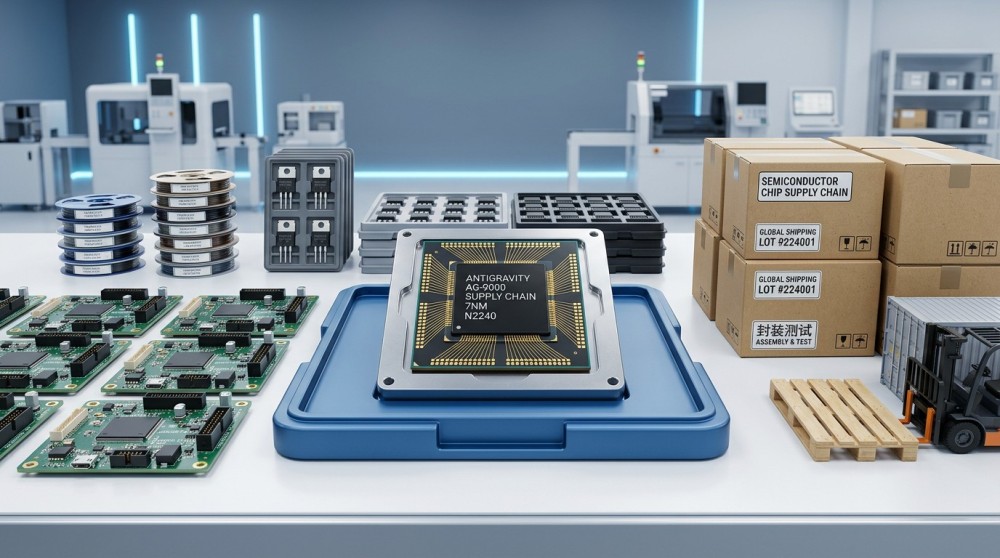
Semiconductors sit at the center of multiple industrial systems. In 2024 and into 2025, buyers are monitoring not only advanced chips, but also mature-node components such as analog ICs, power devices, microcontrollers, memory, and discrete semiconductors. These parts often use 28nm, 40nm, 55nm, 90nm, and larger process nodes, yet they remain essential for industrial controls, automotive subsystems, home improvement equipment, packaging machinery, and renewable energy converters.
The wider risk is that many downstream sectors assume mature-node parts are easier to source. In practice, bottlenecks often emerge when demand rises across 3 or 4 industries at the same time. A surge in inverter demand from solar projects, for example, can tighten supply for IGBTs, MOSFETs, gate drivers, and control chips, affecting both energy projects and general industrial equipment. Shortages are no longer defined only by cutting-edge fabs; they are often driven by overlapping demand clusters.
Another reason updates matter is lead-time volatility. In stable periods, common components may ship in 4–8 weeks. Under pressure, the same category can stretch to 12–24 weeks, especially if wafer starts, backend packaging, substrate supply, or logistics capacity become constrained. For B2B buyers, that difference can change sourcing strategy, safety stock policy, and customer commitment risk almost immediately.
Semiconductor supply chain updates also provide early warning for adjacent sectors tracked by industry news platforms. If chip demand rises in energy storage, electric equipment, data infrastructure, or smart manufacturing, related movements often follow in copper usage, specialty chemicals, packaging materials, ocean freight, and export order scheduling. This is why multi-sector monitoring is valuable: a chip bottleneck rarely remains isolated.
Cross-industry signals that deserve immediate attention
- Lead times extending by more than 30% within one quarter for analog, power, or MCU categories.
- Repeated order allocation notices from tier-1 suppliers or distributors over a 4–8 week period.
- Trade restrictions, licensing changes, or tariff adjustments affecting wafer, equipment, or backend assembly flows.
- Price increases of 5%–15% on low-cost components, which often indicate hidden capacity stress rather than isolated margin changes.
Operational impact for different business roles
Operators and production users need visibility into substitute parts, firmware compatibility, and line requalification time. Procurement teams need clearer thresholds for MOQ, delivery windows, and distributor allocation terms. Business evaluators and executives need scenario planning: what happens if one supplier slips by 21 days, if average component cost rises by 8%, or if export documentation adds another 5 business days to cross-border delivery?
The New Bottlenecks: Mature Nodes, Packaging, Materials, and Trade Friction
The phrase “new bottlenecks” does not always mean a sudden global crisis. More often, it means a narrower choke point that disrupts specific product families. In current semiconductor supply chain updates, four areas are repeatedly showing pressure: mature-node wafer capacity, advanced packaging availability, raw materials and specialty chemicals, and policy-driven trade friction. Each has a different effect on pricing and fulfillment.
Mature-node capacity remains a concern because industrial, power, and automotive demand still depends heavily on established processes. Unlike some digital consumer chips, these components cannot always be shifted quickly to a different fab without qualification work. Requalification can take 8–16 weeks in less regulated applications and longer where product reliability is tightly controlled. That means “capacity exists somewhere else” does not necessarily solve the short-term problem.
Backend bottlenecks are another overlooked factor. Even when wafers are available, packaging and testing can delay shipments. Wire bonding, flip-chip packaging, substrates, and testing slots can all become rate-limiting steps. In some categories, the constraint is not fabrication output but the final stage that turns wafers into shippable parts. This is especially relevant for industrial modules, power semiconductors, and application-specific devices.
Foreign trade policy adds another layer of unpredictability. Export controls, customs checks, local compliance requirements, sanctions screening, and regional tariff changes may add 3–10 business days to normal movement, while also reducing the flexibility of multi-country sourcing. For manufacturers that rely on cross-border replenishment, the issue is not only cost but planning accuracy. A shipment delayed at the border can stop a production batch valued far beyond the price of the chip itself.
Typical bottlenecks and their business impact
The table below shows how common semiconductor bottlenecks affect different industrial functions. These are not fixed market statistics, but typical decision-oriented ranges used in manufacturing industry market analysis and supply planning.
The key lesson is that not every bottleneck produces the same response. A 6-week packaging issue may justify temporary stock coverage, while a 16-week wafer shortage often requires redesign, supplier diversification, or customer delivery reprioritization. Effective business intelligence for market analysis depends on separating short disruptions from structural constraints.
Common misreadings in the market
One frequent mistake is treating falling prices in memory or certain logic products as proof that all semiconductor supply risks are easing. Industrial procurement should track at least 4 separate categories: memory, logic, analog, and power. Their supply-demand cycles often move differently. Another mistake is focusing only on unit price and ignoring lead-time variability, substitute approval time, and regional compliance exposure.
How Buyers and Analysts Should Read Electronic Components Price Trends
Electronic components price trends can look contradictory. Some parts fall 10% quarter over quarter, while others remain flat or rise by 3%–12%. The reason is that semiconductor pricing reflects more than supply volume. It also reflects booking visibility, contract duration, die size, packaging complexity, end-market concentration, and the cost of maintaining buffer inventory. For B2B teams, price signals are most useful when combined with delivery and allocation data.
A practical approach is to classify components into A, B, and C risk groups. A-risk items are single-source or long-lead-time chips that can stop shipment of high-value assemblies. B-risk items are moderately substitutable but still sensitive to allocation. C-risk items are more available and easier to multi-source. This approach helps procurement avoid overreacting to market noise while still protecting critical production lines.
Analysts should also watch the gap between spot prices and contract prices. A widening gap over 6–10 weeks can indicate either sudden demand pressure or speculative stock positioning. Neither should be read in isolation. If spot prices rise but lead times remain stable, the movement may be temporary. If prices rise while confirmed delivery slips by 4 weeks or more, the signal is stronger and may justify escalation.
For companies in manufacturing and foreign trade, it is useful to connect component price trends with customer quote validity periods. If a quotation remains open for 30 days but key semiconductor inputs are shifting weekly, margin risk expands quickly. This is especially relevant in machinery, smart home equipment, industrial packaging systems, and energy control products where chips represent a small share of SKU count but a large share of schedule risk.
A procurement-oriented reading framework
The following table can help procurement teams translate semiconductor supply chain updates into concrete sourcing actions rather than general concern.
This framework is useful because it turns abstract market watching into decision thresholds. Instead of reacting to every headline, teams can define triggers in advance. That improves coordination between procurement, finance, sales, and operations, particularly when companies handle multiple sectors and cannot manually review every category every day.
Four questions every buyer should ask
- Is the part a true single-source dependency, or does an approved second source exist with similar electrical and mechanical fit?
- Has lead time changed for 2 consecutive update cycles, indicating a trend rather than a one-time scheduling issue?
- What share of shipment value would be delayed if this one component misses its promised date by 14 days?
- Can the customer quote, production plan, and payment term absorb a 5%–8% cost swing without margin damage?
Foreign Trade Policy and Renewable Energy Demand Are Reshaping Supply Priorities
Trade policy and energy transition are now tightly linked to semiconductor allocation. Renewable energy supply chain challenges do not only affect batteries, panels, and turbines. They also affect semiconductors used in inverters, converters, battery management systems, smart meters, industrial drives, and grid interface equipment. When energy projects accelerate in one region, component competition often intensifies across several industrial sectors.
This matters because many companies still forecast semiconductors by looking only at electronics demand. That is no longer sufficient. Energy storage systems, charging infrastructure, distributed solar, and factory electrification all use power semiconductors and control devices. A mid-sized project portfolio can shift demand for IGBTs, SiC devices, current sensors, and controllers over a 1–2 quarter horizon, tightening supply for equipment makers outside the energy sector.
At the same time, foreign trade policy can redirect sourcing routes. If one region faces stricter export licensing or customs scrutiny, buyers may move orders to alternate geographies. That redirection may solve one compliance issue while creating another problem in freight timing, payment settlement, or local documentation. For importers and exporters, the best response is not a single supplier switch, but a structured sourcing map with at least 2 approved regional pathways for critical categories.
For industry news users and decision-makers, the main value of multi-sector tracking is visibility into demand collisions. A surge in data center infrastructure, for instance, may compete indirectly with energy equipment for power management components. A policy shift in one trade corridor can also increase demand on another logistics route within 30–60 days. These changes often appear first in component lead times and distributor behavior before they show up in public financial reporting.
What companies should monitor monthly
- Changes in export control scope, tariff schedules, or customs inspection practices for electronics-related categories.
- Capacity additions or delays in renewable energy, storage, charging, and industrial electrification projects over the next 2 quarters.
- Regional freight performance, including port dwell times, air cargo availability, and customs release consistency.
- Supplier communication patterns, especially requests for longer forecasts, NCNR commitments, or revised delivery splits.
A practical risk tier for cross-border procurement
A useful planning model is to separate parts into three trade-risk tiers. Tier 1 includes items with compliance sensitivity or single-region dependency. Tier 2 includes items with dual-region sourcing but limited buffer inventory. Tier 3 includes broad-market items with flexible routes. If Tier 1 parts represent more than 20% of a product’s bill-of-material risk, management should review sourcing resilience monthly rather than quarterly.
How to Build a Smarter Response Plan for Procurement, Operations, and Leadership
Responding to semiconductor supply chain updates requires more than watching prices. Companies need a working playbook that links market signals to inventory policy, design flexibility, supplier communication, and customer promise management. In most B2B environments, the best results come from a 5-step process: map critical parts, define thresholds, secure alternates, align commercial terms, and review risk at a fixed cadence.
The first step is part criticality mapping. Identify which 20–50 components have the highest stop-line risk, not simply the highest spend. A $2 MCU can be more operationally critical than a $50 mechanical part if it blocks final assembly. The second step is threshold design. Set clear internal triggers, such as lead time above 12 weeks, forecast request above 90 days, or price change above 6%, so teams know when escalation is required.
The third step is alternate and redesign readiness. Not every part needs a second source immediately, but critical products should have a defined path. That may include firmware updates, PCB revision options, or modular design choices that shorten switch-over time from 16 weeks to 6 weeks. The fourth step is contract alignment. Customer quote validity, supplier NCNR clauses, and delivery penalty language should reflect current supply volatility rather than outdated assumptions.
The final step is governance. A monthly review may be enough in stable categories, but high-risk items often require a biweekly check. Industry news platforms and business intelligence tools are most valuable when they support this rhythm with multi-sector updates, not isolated alerts. The goal is to make supply chain updates actionable across procurement, operations, sales, finance, and leadership.
Recommended implementation flow
- List critical semiconductor categories and map them to affected finished goods within 5 business days.
- Assign risk tiers using lead time, sourcing concentration, and substitute availability.
- Set response triggers for price, delay, allocation, and trade compliance events.
- Review customer commitments and quote validity for items with high semiconductor exposure.
- Update the plan every 2–4 weeks using manufacturing industry market analysis and supplier feedback.
FAQ for buyers and decision-makers
How often should semiconductor supply chain updates be reviewed?
For standard categories, monthly review is often enough. For single-source, long-lead-time, or cross-border sensitive parts, a 2-week review cycle is safer. If lead times are changing rapidly or trade policy is shifting, weekly monitoring may be necessary for 30–60 days.
What inventory buffer is reasonable?
There is no universal rule, but many companies use 4–8 weeks for stable parts and 8–16 weeks for critical items with volatile lead times. The right level depends on demand predictability, customer penalty exposure, and the cost of carrying stock versus the cost of a missed shipment.
When should a redesign be considered?
If a key part shows repeated allocation, lead time above 16–20 weeks, or limited compliance-safe sourcing, redesign should be evaluated. The decision becomes stronger when the same risk affects more than one product family or more than 15% of monthly shipment value.
Semiconductor supply chain updates now serve as a strategic market signal for companies operating across manufacturing, foreign trade, machinery, electronics, packaging, chemicals, and energy. The most important insight is not simply whether chips are available today, but where the next bottleneck may emerge across mature nodes, packaging, trade policy, and renewable energy demand. Businesses that combine component price tracking, delivery monitoring, and cross-sector intelligence are better positioned to protect margins, reduce disruption, and respond faster to changing market conditions.
If your team needs clearer visibility into supply risks, sourcing priorities, and industry trend connections, now is the time to strengthen your monitoring framework. Contact us to get tailored market insight, discuss sourcing-focused content support, or learn more solutions for tracking multi-sector supply chain developments with greater precision.
- industrial equipment
- market analysis
- supply chain
- building materials
- energy sector
- industry news
- business intelligence
- supply chain updates
- foreign trade policy
- price trends
- electronics sector
- manufacturing
- smart manufacturing
- sensors
- electronic components
- energy storage system
- packaging materials
- packaging machinery
- specialty chemicals
- trade compliance
- importers
- distributors
- foreign trade
- machinery
- home improvement
- chemicals
- packaging
- electronics
- semiconductor
- energy
- renewable energy
- business intelligence for market analysis
- renewable energy supply chain challenges
- electronic components price trends
- manufacturing industry market analysis
- semiconductor supply chain updates
- foreign trade policy impact on manufacturing
Related News
- China’s 'AI+Education' Action Plan Opens Standardization Window for AI Ed-Tech ExportsApr 22, 2026AI+Education Action Plan unlocks AI ed-tech export opportunities—discover how CE-EDU, FCC-ID & ISO/IEC 23053 alignment drives global market access.
- RoHS Compliance Testing Failures Often Start With MaterialsApr 20, 2026RoHS compliance testing starts with materials. Learn how product certification standards, the CE certification process, UL certification requirements, and REACH guide smarter sourcing.
- Consumer electronics market analysis: where demand is movingApr 21, 2026Consumer electronics market analysis reveals where demand is shifting, with insights on foreign trade policy changes, packaging solutions for e-commerce, and economic indicators for global trade.
- Electronics industry trends 2023 that still affect sourcingApr 22, 2026Electronics industry trends 2023 still shape sourcing, from electronics manufacturing trends and semiconductor intelligence to foreign trade policy for electronics—discover actionable insights now.
Related News
- 00
0000-00
Two Supreme Organs Issue Anti-Bribery Judicial Interpretation (II) - 00
0000-00
Yangtze River Delta: 163 Projects Boost Manufacturing Sourcing Hub - 00
0000-00
China’s 'AI+Education' Action Plan Opens Standardization Window for AI Ed-Tech Exports - 00
0000-00
HKMA Sets Q3 2026 Timeline for First Stablecoin Licenses - 00
0000-00
China-Sri Lanka Joint Operation Repatriates 125 Telecom Fraud Suspects
Electronics & Tech Desk
Weekly Insights
Stay ahead with our curated technology reports delivered every Monday.