





Beyond basic sales figures, home improvement business intelligence helps companies decode home decoration market insights, track building materials price fluctuations, and compare broader manufacturing industry market analysis with shifting demand signals. For buyers, operators, and decision-makers, a stronger intelligence framework turns fragmented industry updates into actionable guidance for procurement, strategy, content planning, and competitive response.
Why basic sales data is no longer enough for the home improvement market
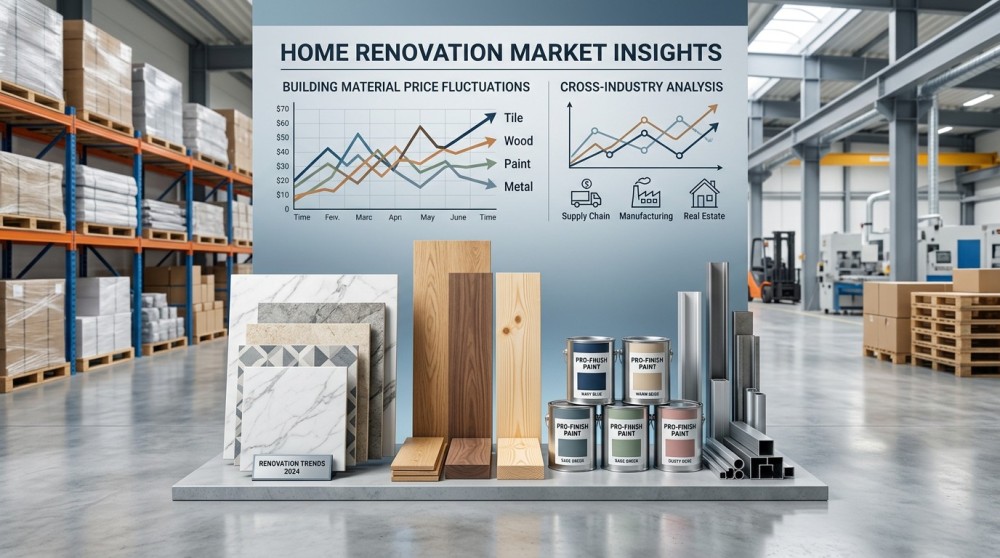
In home improvement, sales numbers only show what has already happened. They do not explain why a paint category slowed in one region, why tile demand rose after a policy adjustment, or why delivery pressure increased even when order volume stayed flat. For information researchers and business evaluators, this gap is where home improvement business intelligence becomes essential.
A more useful framework combines at least 5 layers of input: policy and regulation updates, building materials price fluctuations, supplier and corporate news, technology innovation signals, and cross-sector manufacturing industry market analysis. When these signals are reviewed weekly, monthly, and quarterly, companies can detect patterns earlier than teams relying only on CRM or ERP reports.
This matters because the home decoration market does not move in isolation. Costs may shift with chemicals, packaging, machinery, energy, or foreign trade conditions. A cabinet producer, for example, may be affected by panel pricing, logistics lead times, export demand, and local renovation sentiment within the same 30–90 day period.
For operators, the practical value is clear: intelligence reduces reaction time. Instead of waiting for a 2–4 week drop in sell-through to confirm a trend, teams can act when upstream price signals, distributor activity, and project inquiry changes begin to align. That can improve procurement timing, inventory planning, and campaign prioritization.
What a complete intelligence view should include
A comprehensive industry news platform is useful because it collects, organizes, and delivers updates across multiple sectors rather than leaving teams to monitor dozens of disconnected channels. For the home improvement segment, that means one decision flow can connect building materials trends with machinery upgrades, trade policies, e-commerce shifts, and cost signals from related industries.
- Market movement tracking, including category demand changes, new project momentum, and regional purchasing sentiment.
- Price monitoring for materials such as coatings, boards, metals, adhesives, packaging inputs, and energy-related cost drivers.
- Policy and compliance observation, especially when environmental rules, trade requirements, or local construction standards change within 7–15 days.
- Corporate and technology updates that reveal capacity expansion, channel strategy shifts, automation investments, and product launches.
When these components are connected, business intelligence becomes more than reporting. It becomes a decision-support system for procurement personnel, content teams, operators, and enterprise leaders who need to interpret change, not just record it.
Which intelligence signals matter most for buyers, operators, and decision-makers?
Different roles look at the same market through different risk lenses. Procurement teams focus on price stability, supply continuity, and alternative sourcing windows. Operators care about turnover, fulfillment rhythm, and category timing. Decision-makers want to know whether current signals point to margin pressure, investment opportunity, or competitive risk over the next 1–2 quarters.
The problem is not lack of information. It is signal overload. Teams may collect dozens of news items each week yet still miss the 3 or 4 indicators that truly shape buying decisions. This is why structured filtering matters. A useful home improvement business intelligence workflow separates noise from high-impact variables.
The table below shows a practical way to map intelligence signals to user needs in a cross-industry environment where home decoration market insights depend on upstream and downstream developments.
This type of mapping helps teams avoid a common mistake: treating all updates as equally important. In practice, a procurement manager may need lead-time alerts within 3–7 days, while a strategy lead may care more about recurring quarter-over-quarter signals. The same platform can support both when information is classified by urgency, impact, and function.
The 4 signal groups that deserve continuous tracking
1. Price and cost movement
This includes building materials price fluctuations, freight changes, packaging costs, and energy-related input pressure. Even a modest shift in these factors can affect quotation strategy, project bidding, and reorder timing.
2. Policy and compliance developments
Construction, environmental, and trade-related rules often reshape product feasibility and market entry conditions. Early review helps teams prepare documentation, supplier adjustment, or content updates before the market reacts.
3. Technology and manufacturing shifts
Manufacturing industry market analysis reveals whether automation, material substitution, or processing upgrades are changing cost structure or category competitiveness. This is especially useful for long-lead procurement and product planning.
4. Channel and demand behavior
E-commerce, dealer, project, and export channels may move differently over a 30-day or 90-day window. Tracking this helps businesses avoid relying on a single demand source when home decoration market insights show diverging regional patterns.
How to compare intelligence sources and build a more reliable decision model
Many companies still use a fragmented mix of internal sales reports, supplier messages, trade media, and manual web searches. This can work for short-term visibility, but it often fails when a team needs cross-industry context. A delayed materials signal in chemicals or packaging may not appear in sales reports until margin erosion is already visible.
A stronger approach compares sources by scope, update rhythm, and practical usefulness. For B2B teams in home improvement, the best source is not simply the fastest one. It is the one that helps explain cause, likely impact, and next decision steps across 3–5 operational functions.
The following comparison outlines why a comprehensive industry news platform is often more useful than isolated data streams when teams need home improvement business intelligence that supports both procurement and strategy.
The comparison shows why integrated visibility matters. If a business tracks only sales, it sees lagging outcomes. If it also tracks policy, price, technology, and foreign trade trends, it can identify leading indicators. In many cases, even a 1–3 week forecasting advantage is enough to adjust promotions, revise procurement quantities, or initiate supplier discussions.
A practical 4-step model for implementation
- Define 3 core decision goals, such as reducing purchase timing risk, improving category planning, or identifying emerging regional demand.
- Assign 5–8 intelligence tags, including pricing, regulation, production, channel, competitor, logistics, and trade.
- Set review cycles by role: daily for operations, weekly for procurement, and monthly or quarterly for executive review.
- Translate signals into action rules, such as alternative sourcing review when lead time extends beyond 14 days or quote revision checks when input costs rise across two consecutive cycles.
This process is not complex, but it must be disciplined. Without action rules, intelligence becomes archive material. With them, it becomes a driver of timing, coordination, and risk control.
What should procurement and strategy teams check before acting on market signals?
The biggest procurement mistake is acting on one signal in isolation. A price increase notice may be real, but if demand is softening, competitor inventories are high, and substitute materials are available, the right response may be renegotiation rather than immediate volume expansion. Good home improvement business intelligence is built on validation, not panic.
Procurement teams should evaluate at least 5 checkpoints before locking a decision. These checkpoints are especially important when building materials price fluctuations occur alongside international trade changes or manufacturing capacity adjustments. In such periods, short-term price moves can disguise longer-term market weakness.
The checklist below can be used by buyers, business evaluators, and decision-makers to turn market updates into more reliable sourcing and planning actions.
- Check whether the signal is isolated or repeated across 2–3 sources, such as supplier notices, sector updates, and trade flow changes.
- Confirm the time horizon. Is the issue immediate for the next 7–15 days, or strategic for the next quarter?
- Review substitution feasibility, including material alternatives, packaging adjustments, or revised specification windows.
- Assess downstream demand strength through inquiries, channel response, project pace, and regional activity.
- Estimate operating impact on margin, stock turnover, lead time, and customer communication requirements.
For strategy teams, the same information can support broader market judgments. If home decoration market insights show uneven recovery while manufacturing industry market analysis indicates stable automation investment, the opportunity may be in process efficiency rather than aggressive category expansion. That is a different conclusion than sales data alone would suggest.
Common misunderstandings that weaken intelligence value
“More news means better visibility”
Not necessarily. Without filtering by role and impact, information volume can slow decisions. The better practice is to maintain a focused list of priority categories and update thresholds.
“Procurement only needs price updates”
Price is only one dimension. Delivery cycles, compliance changes, input shortages, and channel demand are equally important in a 2–8 week sourcing window.
“Sales decline always means category weakness”
A decline can also reflect inventory correction, delayed projects, weather, or temporary logistics friction. Cross-checking multiple signals avoids wrong conclusions.
FAQ: how companies can use home improvement business intelligence more effectively
How often should a company review home improvement market intelligence?
For most B2B teams, a layered rhythm works best: daily monitoring for urgent operational alerts, weekly reviews for procurement and competitor movement, and monthly or quarterly reviews for management decisions. If your business depends on imported materials or project bidding, review cycles may need to tighten during volatile 2–6 week periods.
Which metrics matter more than sales data in the home decoration market?
Look beyond revenue and track at least 4 additional indicators: input price movement, supplier lead time, project inquiry volume, and policy or compliance changes. In many cases, these indicators provide earlier warnings than sales reports and help explain whether demand changes are temporary or structural.
Can a cross-industry news platform really help home improvement buyers?
Yes, because home improvement is connected to manufacturing, building materials, chemicals, packaging, energy, electronics, e-commerce, and foreign trade. A buyer sourcing panels, adhesives, fixtures, or finished products often faces cost or lead-time changes that begin outside the immediate home furnishing category.
What is the usual implementation effort for an intelligence workflow?
A basic workflow can usually be set up in 1–2 weeks if the team already knows its procurement categories and reporting priorities. A more mature model, with tagging logic, role-based reviews, and action rules, often takes 3 stages over 30–60 days to stabilize. The goal is not complexity. The goal is repeatable decision support.
Why choose us for cross-industry intelligence support and market insight delivery?
When your team needs more than basic sales reporting, a comprehensive industry news platform can help connect home improvement business intelligence with the wider market forces shaping procurement, operations, and strategic planning. Instead of tracking only one sector, you gain visibility into manufacturing, building materials, chemicals, packaging, e-commerce, energy, foreign trade, and corporate developments that influence real business decisions.
This is especially useful for information researchers, operators, buyers, business evaluators, and enterprise decision-makers who need timely and relevant updates without spending hours filtering fragmented sources. Our focus is to help teams shorten research time, improve signal quality, and turn market information into practical guidance for content planning, supplier communication, category review, and executive reporting.
You can contact us to discuss specific needs such as 3-part market monitoring structures, procurement signal tracking, price change observation, category trend review, policy screening, delivery-cycle assessment, and cross-industry topic mapping for internal decision support. If your team is evaluating a new market, comparing sourcing options, or building a more reliable reporting workflow, these are the areas where structured intelligence creates measurable value.
If you want clearer guidance on parameter confirmation, sourcing selection logic, typical lead-time ranges, custom monitoring scope, compliance-related topics, sample information support, or quotation communication for content and insight services, reach out with your target sectors and decision priorities. A focused intelligence setup can help you respond earlier, communicate better, and make stronger decisions in a changing home improvement market.
- market analysis
- building materials
- industry news
- business intelligence
- price updates
- technology innovation
- policy and regulation updates
- manufacturing
- adhesives
- foreign trade
- international trade
- machinery
- home improvement
- home decoration
- chemicals
- packaging
- electronics
- e-commerce
- energy
- policy updates
- manufacturing industry market analysis
- home improvement business intelligence
- building materials price fluctuations
- home decoration market insights
Related News
- Best Renovation Materials for a Busy KitchenApr 21, 2026Explore renovation materials for kitchen projects with fireproof construction materials, energy-saving home improvement ideas, and construction materials price trends for smarter, longer-lasting results.
- Home decoration market insights from shifting renovation demandApr 22, 2026Home decoration market insights on shifting renovation demand, building materials market analysis, price fluctuations, and home improvement supply chain solutions—discover actionable trends and smarter sourcing strategies.
- When home improvement supply chain solutions fail on deliveryApr 22, 2026Home improvement supply chain solutions fail on delivery? Explore building materials market analysis, machinery supply chain optimization, and chemicals supply chain disruptions to spot risks earlier and make smarter sourcing decisions.
- What Is Driving Home Decoration Market Insights in 2026?Apr 22, 2026Home decoration market insights for 2026 reveal how building materials price fluctuations, e-commerce demand, and home improvement business intelligence shape smarter sourcing, lower risk, and new growth opportunities.
Related News
- 00
0000-00
Two Supreme Organs Issue Anti-Bribery Judicial Interpretation (II) - 00
0000-00
Yangtze River Delta: 163 Projects Boost Manufacturing Sourcing Hub - 00
0000-00
China’s 'AI+Education' Action Plan Opens Standardization Window for AI Ed-Tech Exports - 00
0000-00
HKMA Sets Q3 2026 Timeline for First Stablecoin Licenses - 00
0000-00
China-Sri Lanka Joint Operation Repatriates 125 Telecom Fraud Suspects
Home & Living Desk
Weekly Insights
Stay ahead with our curated technology reports delivered every Monday.