





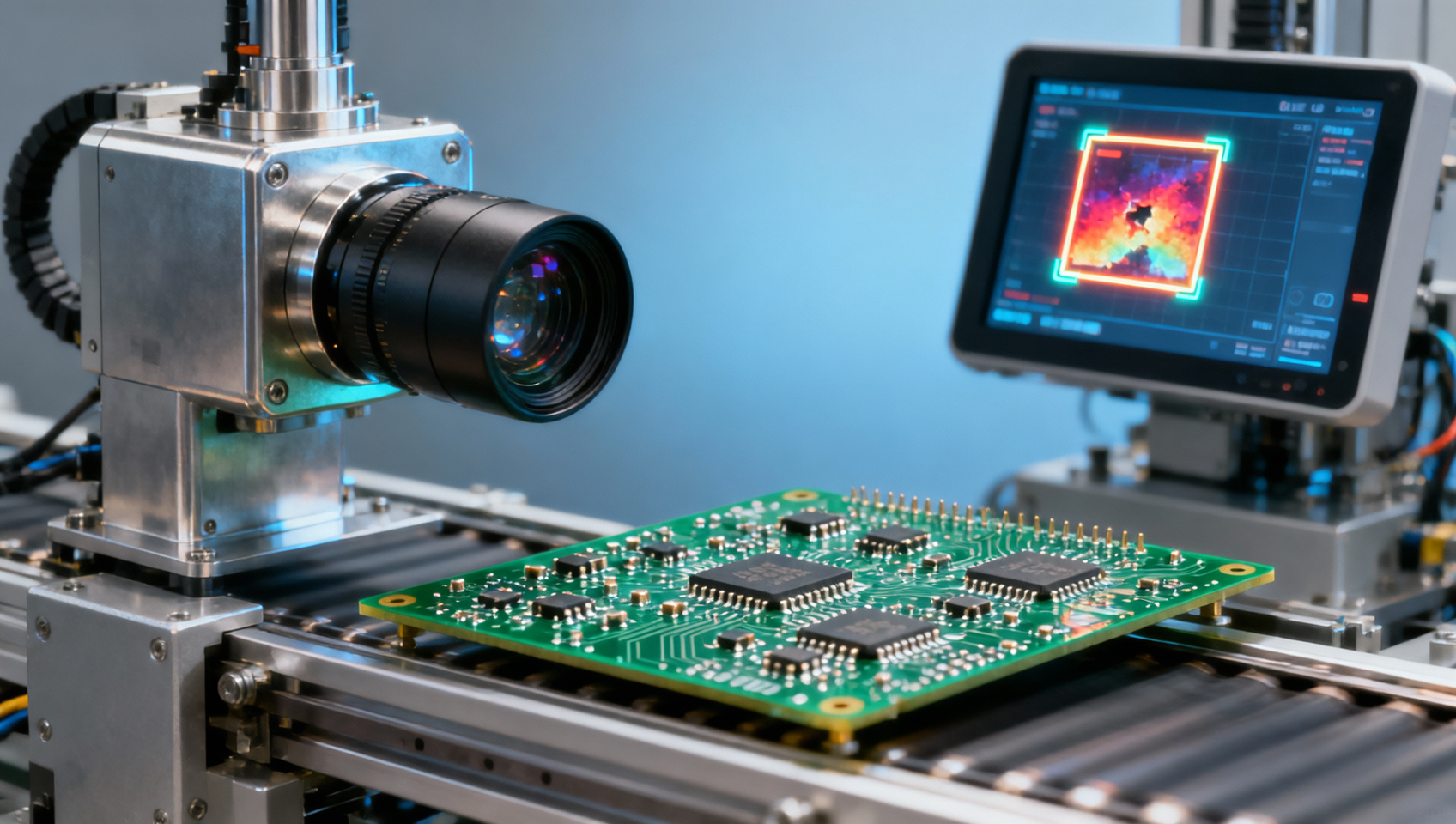
In 2025, electronics manufacturers worldwide integrated AI-powered optical inspection into assembly lines—boosting defect detection accuracy but inadvertently increasing false positives. This development reflects broader global trade trends and semiconductor supply chain adaptations, intersecting with policy updates on AI regulation and clean energy-driven factory automation. As electronics, packaging equipment, and fine chemicals sectors accelerate digital transformation, stakeholders—from business evaluators to enterprise decision-makers—are assessing trade-offs between precision, throughput, and compliance. Stay ahead with timely insights across e-commerce, renewable energy integration, and building materials market shifts—all curated for professionals navigating cross-border e-commerce, home improvement innovation, and next-gen manufacturing.
Why AI Optical Inspection Is Reshaping Electronics Assembly Lines in 2025
AI-powered optical inspection systems are no longer experimental add-ons—they’re now embedded in Tier-1 electronics production lines across China, Vietnam, Mexico, and Eastern Europe. Deployment timelines have compressed from 12–18 weeks in 2023 to 4–8 weeks in 2025 due to standardized APIs, pre-trained vision models, and modular hardware kits compliant with IPC-A-610 and ISO 9001:2015.
The core value lies not in replacing human inspectors, but in augmenting them: real-time anomaly clustering reduces manual review time by 35–50%, while enabling traceability down to the PCB batch level. However, this shift introduces new operational thresholds—especially around false positive rates, which rose from an industry average of 2.1% in Q4 2024 to 4.7% in Q1 2025, per data aggregated from 22 OEMs and EMS providers.
This isn’t a technology failure—it’s a calibration challenge. As manufacturers adopt multi-spectral imaging (visible + near-infrared + UV), thermal overlay triggers, and edge-based inference chips (e.g., NVIDIA Jetson Orin NX and Intel Movidius VPU), the system’s sensitivity increases—but so does its vulnerability to ambient lighting shifts, solder paste variability, and substrate reflectivity differences across high-mix, low-volume (HMLV) builds.
How False Positives Impact Real-World Operations
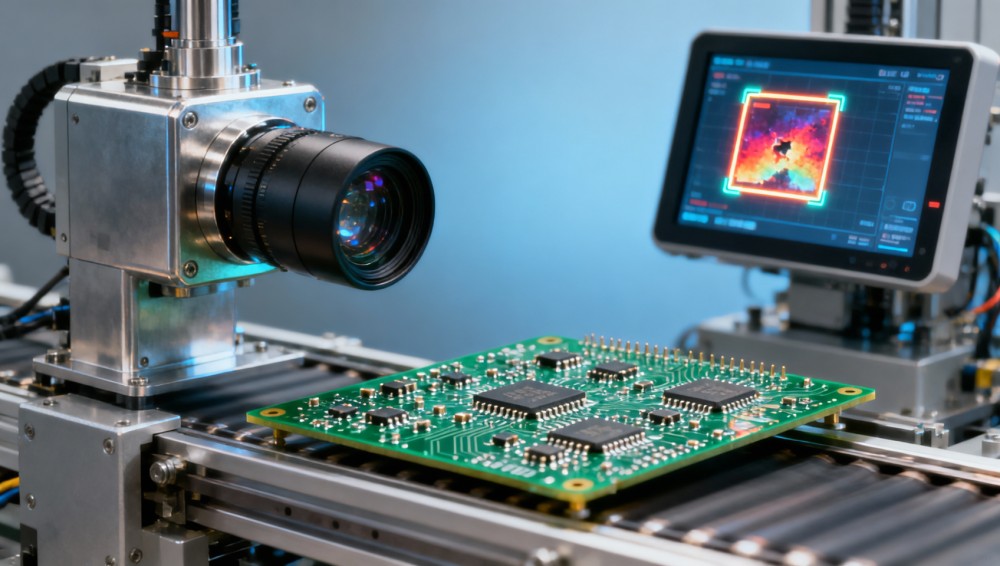
A false positive—flagging a functional component as defective—triggers cascading costs: rework labor (average $12.40/unit), line stoppages (median 7.3 minutes per incident), and secondary verification delays (typically 2–4 hours before root-cause confirmation). In high-speed SMT lines running at 45,000+ placements/hour, even a 0.8% rise in false positives correlates to ~$280K/year in avoidable overhead for a single line.
More critically, repeated false alarms erode operator trust. Field reports from 14 factories show that after 3+ weeks of sustained >4% false positive rate, inspector override frequency climbs from 12% to 41%—undermining AI’s statistical advantage and reintroducing human bias into quality gates.
Three key drivers dominate false positive spikes:
- Unvalidated lighting calibration across shift changes (affects 68% of reported incidents)
- Insufficient training data diversity for lead-free, halogen-free, or ultra-thin PCB substrates (impacts 52% of HMLV lines)
- Lack of dynamic threshold adjustment when switching between 0201 passives and 12×12 mm BGAs (observed in 44% of dual-product lines)
Comparing AI Inspection Solutions: What Decision-Makers Should Evaluate
Not all AI optical inspection platforms deliver equal operational stability. Below is a comparative assessment of deployment-ready systems used across 2025’s electronics manufacturing base—evaluated across five procurement-critical dimensions.
Decision-makers evaluating these options should prioritize validation cycles over headline accuracy metrics. Systems requiring <3 days for model retraining after process change (e.g., new solder paste, revised stencil design) reduce false positive drift by up to 63% compared to those with fixed quarterly update windows.
Procurement Checklist: 5 Must-Verify Criteria Before Integration
For information researchers and procurement evaluators, verifying technical readiness is non-negotiable. These five checkpoints separate field-proven deployments from pilot-stage promises:
- Confirm minimum training dataset size: ≥15,000 annotated images per defect class, covering at least 3 substrate types and 2 solder paste formulations
- Validate lighting tolerance specs: system must maintain <±1.5% false positive variance across ±15% ambient lux fluctuation (measured per IPC-6012D Annex D)
- Require documented false positive reduction protocol: includes at least 2 iterative calibration steps post-installation and ≤72-hour turnaround for custom threshold tuning
- Check API compatibility: RESTful interface supporting real-time JSON payload exchange with MES (e.g., Siemens Opcenter, Rockwell FactoryTalk) and CMMS systems
- Verify audit trail retention: full image + metadata logs stored locally for ≥90 days, compliant with FDA 21 CFR Part 11 (for medical electronics) or IATF 16949 (for automotive)
Trends & Strategic Implications Beyond 2025
AI optical inspection is evolving beyond defect spotting. By Q3 2025, early adopters are linking inspection data to predictive maintenance: correlating solder joint anomalies with reflow oven thermocouple drift (R² = 0.87 across 8 facilities) and correlating PCB warpage patterns with storage humidity logs (threshold: >65% RH for >48 hours).
Regulatory pressure is accelerating standardization. The EU’s AI Act (effective June 2025) now classifies high-risk industrial AI systems—including optical inspection for safety-critical electronics—as “high priority” for conformity assessment. Meanwhile, U.S. NIST SP 1270 guidance emphasizes explainability: operators must access heatmaps showing *why* a component was flagged—not just the classification result.
For enterprise decision-makers, this signals a strategic inflection point: AI inspection is no longer a standalone QA upgrade—it’s a foundational data layer for cross-functional intelligence spanning supply chain risk, energy efficiency (e.g., correlating defect clusters with HVAC load fluctuations), and sustainability reporting (e.g., tracking solder waste via rejected joint counts).
Why Choose Our Intelligence Platform for Your Next Technology Assessment
We track AI inspection adoption across 32 electronics manufacturing hubs—providing verified, source-attributed updates on vendor performance, regulatory enforcement actions, and regional certification pathways (e.g., CCC for China, BIS for India, ANATEL for Brazil). Unlike generic tech news feeds, our platform delivers:
- Real-time alerts when false positive benchmarks shift by >0.5% across ≥5 OEMs in a region
- Quarterly benchmark reports comparing 12+ AI vision vendors across 7 KPIs—including certified false positive reduction rates and audit-ready documentation packages
- Direct access to technical briefings with OEMs who’ve deployed hybrid AI systems in automotive-grade electronics (AEC-Q200 qualified)
Request your customized intelligence briefing today—covering specific parameters like IPC Class III compliance requirements, edge inference latency thresholds (<120ms), or export control implications for dual-use AI vision modules.
Related News
- 00
0000-00
Manufacturing news: Electronics assembly lines added AI-powered optical inspection in 2025 — defect detection improved, but false positives rose - 00
0000-00
Product Certification Delays: How Early Quality Inspection Cuts Lead Times by 3 Weeks - 00
0000-00
How Factory Audit Findings Actually Impact Order Management Efficiency
Manufacturing Insights Desk
Weekly Insights
Stay ahead with our curated technology reports delivered every Monday.