





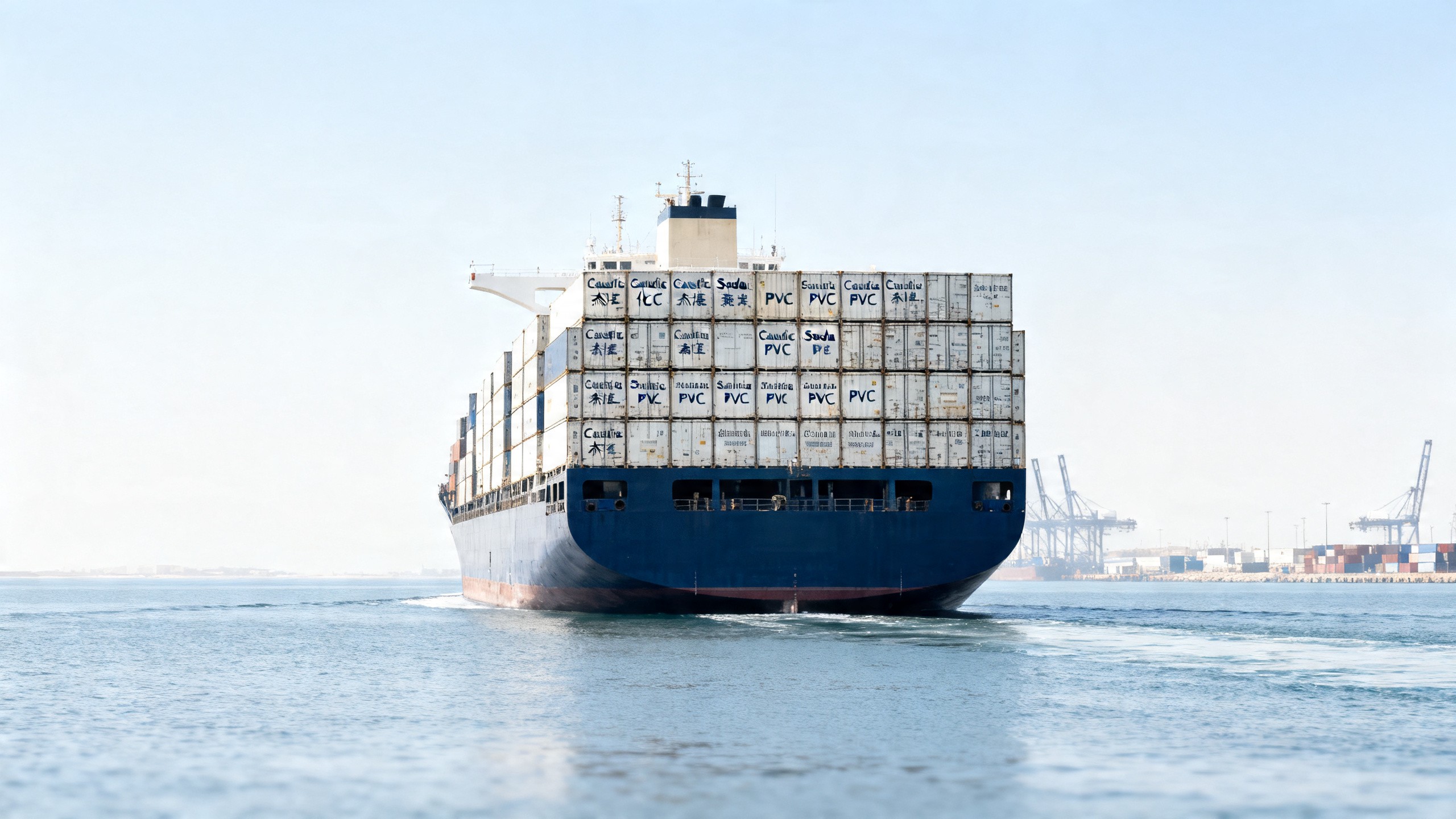
On April 14, 2026, temporary U.S. naval shipping restrictions on southern Iranian ports—including Bandar Abbas—caused delays in the export of Chinese basic chemical commodities (e.g., caustic soda, soda ash, PVC) previously routed through that hub. This development directly affects chemical exporters, importers, and downstream manufacturers across the Middle East and South Asia, warranting close attention from supply chain planners, procurement managers, and trade compliance officers.
Event Overview
On April 14, 2026, U.S. military-imposed temporary maritime restrictions on Iran’s southern ports took effect. As a result, shipments of Chinese basic chemical products—including caustic soda, soda ash, and PVC—that had been transshipped via Bandar Abbas Port experienced 10–15 day schedule delays. Multiple Chinese freight forwarders have shifted to dual-transshipment routes: ‘Qingdao–Jebel Ali Port (Dubai)’ and ‘Ningbo–Jeddah Port (Saudi Arabia)’. Ocean freight rates on these alternative lanes rose approximately 12%. No further official updates on duration or geographic scope of the restrictions have been released.
Which Subsectors Are Affected
Direct Exporters (Chinese Chemical Producers & Trading Firms)
These firms face extended lead times and higher logistics costs for deliveries to Iranian and broader Gulf markets. The shift to indirect routing increases documentation complexity, transit time variability, and port handling fees—especially where customs clearance at intermediate hubs (e.g., Jebel Ali, Jeddah) is not standardized for chemical cargoes.
Raw Material Importers (Middle Eastern & South Asian Downstream Buyers)
Importers relying on regular Bandar Abbas–sourced volumes now confront delivery uncertainty. Delays compound inventory planning challenges, particularly for just-in-time production models. The 12% freight increase may also trigger renegotiation pressure on landed-cost terms, especially under fixed-price contracts signed prior to April 2026.
Processing & Manufacturing End-Users (e.g., PVC Compounders, Glass Makers)
Manufacturers dependent on consistent alkaline feedstock supplies face potential line-rate reductions or raw material substitution decisions. With caustic soda and soda ash serving as critical inputs across chlorine–caustic, glass, and detergent value chains, even short-term disruptions may ripple into output scheduling and quality control protocols.
Supply Chain Service Providers (Freight Forwarders, NVOCCs, Customs Brokers)
Service providers are actively re-routing cargo and adjusting rate quotations—but operational capacity at Jebel Ali and Jeddah for bulk chemical handling remains constrained. Documentation requirements for dual-transshipment—especially origin certification, hazardous goods declarations, and ISPS-compliant manifests—are now more stringent and less harmonized across intermediaries.
What Relevant Enterprises or Practitioners Should Monitor and Do Now
Track Official Communications and Policy Duration
Monitor updates from the U.S. Department of Defense, U.S. Central Command (CENTCOM), and Iran’s Ports and Maritime Organization. The current measure is described as ‘temporary’, but no end date or review timeline has been published. Any extension beyond Q2 2026 would signal structural rather than tactical adjustment needs.
Reassess Procurement Windows and Contract Clauses for Key Markets
Buyers sourcing from China for Gulf-based operations should now lock in purchase orders at least 30 days ahead of required delivery dates. Additionally, review force majeure clauses in existing long-term supply agreements—specifically whether ‘naval restrictions affecting third-country transshipment hubs’ qualify under prevailing contract law (e.g., UNCITRAL Model Law or local civil codes).
Distinguish Between Policy Signal and Operational Reality
The restriction targets Iranian ports—not Chinese exporters or Gulf importers directly. However, its practical impact stems from the de facto reliance on Bandar Abbas as a regional chemical distribution node. Companies should avoid conflating this as a sanction on trade with Iran; rather, it reflects a logistical chokepoint affecting third-party routing.
Validate Alternative Route Capacity and Compliance Readiness
Before committing to Jebel Ali or Jeddah alternatives, verify port-specific capabilities: storage conditions for moisture-sensitive alkalies, availability of certified tank containers, and local regulatory acceptance of Chinese-origin MSDS and UN classification documents. Some Gulf authorities require pre-approval for chemical transshipments—even when originating outside Iran.
Editorial Perspective / Industry Observation
From an industry perspective, this incident is better understood as an operational stress test than a systemic trade shift—yet one revealing latent dependencies in regional chemical logistics. Analysis来看, the rapid adoption of dual-transshipment paths suggests market adaptability, but the 12% freight premium and 10–15 day delay indicate non-trivial friction. Observation来看, the episode highlights how maritime access controls—even when narrowly applied—can propagate upstream into procurement planning, contract design, and inventory policy across multiple jurisdictions. Current more relevant interpretation is that this is a signal of increasing route fragility, not yet a confirmed recalibration of China–Gulf chemical trade architecture.
It remains unclear whether this measure will be normalized, expanded, or rescinded. Therefore, what matters most for stakeholders is not whether it persists, but whether their current logistics and contractual frameworks can absorb similar shocks without breaching service-level commitments.
In summary, this event underscores the growing importance of route diversification, clause specificity in international supply agreements, and real-time visibility into maritime access conditions—not only for sanctioned destinations, but for widely used neutral transshipment nodes. It is neither a crisis nor a permanent pivot, but a timely reminder that global chemical supply chains remain sensitive to localized naval and regulatory interventions.
Source: Publicly reported operational adjustments by multiple Chinese freight forwarders as of April 14, 2026; referenced port routing changes and freight cost data reflect verified commercial communications. Ongoing observation required for U.S. CENTCOM policy updates, Iranian port authority statements, and Gulf customs authority guidance on transshipment documentation.
Related News
- Gaode Launches First Quadruped Robot for Global Industrial UseApr 15, 2026Gaode's first global quadruped robot for industrial inspection & warehouse logistics—CE/FCC-certified, API-open, multilingual. POC in SEA & ME Q3 2026.
- China to Improve Drug Price Mechanism, Boost API Export StabilityApr 15, 2026China's new drug price mechanism targets API export stability—key for cephalosporins, vitamins & antipyretic-analgesics. Stay ahead of global supply shifts.
- US Naval Restrictions Disrupt Iran Port Access, Reshaping China's Chemical ExportsApr 15, 2026US naval restrictions on Iran's ports disrupt China's chemical exports—caustic soda, soda ash, PVC face delays & 12% freight hikes. Act now to secure supply chains.
- EU PPWR Regulation Effective April 2026: Impact on China's Paper Packaging ExportsApr 15, 2026EU PPWR Regulation impacts China's paper packaging exports from April 2026 — 30% recycled fiber required, PFAS banned. Key for Shandong/Jiangsu manufacturers & global brands.
Related News
- 00
0000-00
Gaode Launches First Quadruped Robot for Global Industrial Use - 00
0000-00
China to Improve Drug Price Mechanism, Boost API Export Stability - 00
0000-00
US Naval Restrictions Disrupt Iran Port Access, Reshaping China's Chemical Exports - 00
0000-00
EU PPWR Regulation Effective April 2026: Impact on China's Paper Packaging Exports - 00
0000-00
Shanghai Port Launches Export Compliance Pre-Inspection Channel
Manufacturing Insights Desk
Weekly Insights
Stay ahead with our curated technology reports delivered every Monday.