





Choosing packaging materials for e-commerce means balancing cost control, product protection, and customer experience. As damage rates, shipping fees, and sustainability demands reshape fulfillment strategies, businesses need practical insight into packaging materials for e-commerce and broader electronic commerce supply chain solutions. This article explores the key tradeoffs, market factors, and decision points that matter to buyers, operators, and business leaders.
How do packaging materials for e-commerce affect cost, damage, and fulfillment efficiency?
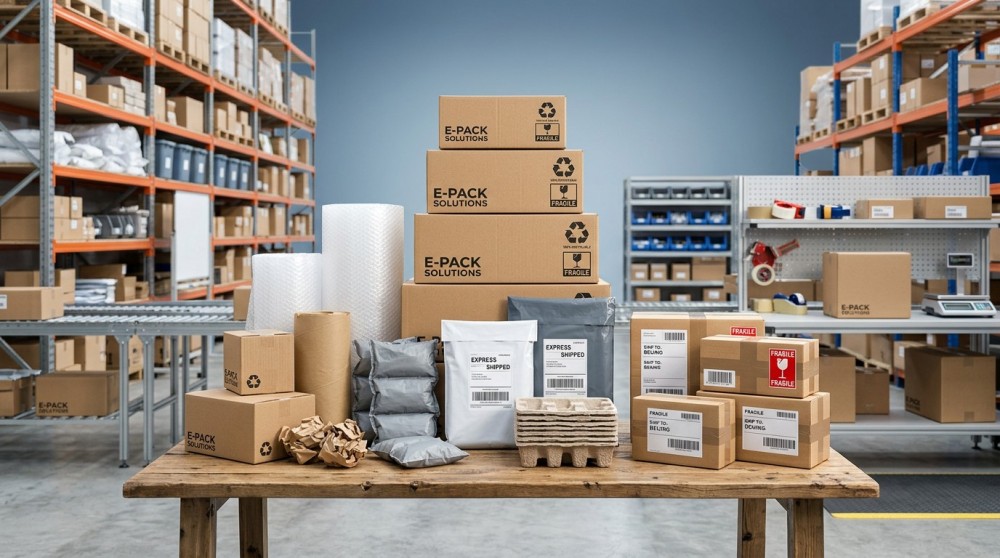
For e-commerce teams, packaging is not a simple purchasing line item. It directly affects parcel weight, dimensional charges, picking speed, storage density, returns handling, and customer complaints. In most operations, the packaging decision sits between 3 competing goals: keeping unit cost under control, reducing transit damage, and maintaining a presentable delivery experience across small parcel networks.
The challenge is more visible in cross-sector supply chains where product mixes change weekly or monthly. A business may ship consumer electronics on Monday, home improvement accessories on Wednesday, and chemical-resistant sample packs on Friday. In that environment, packaging materials for e-commerce must support multiple SKU sizes, variable fragility levels, and order profiles ranging from single-item parcels to multi-line shipments.
Operators usually evaluate 4 practical variables first: box cost, cushioning cost, labor time per order, and expected damage exposure over a 2–7 day domestic transit window or a 7–21 day international route. Procurement teams then add supplier lead time, minimum order quantity, and storage footprint. Decision-makers finally look at margin impact, complaint rate trends, and whether the packaging strategy can scale during peak cycles such as monthly promotions or Q4 surges.
For information researchers and commercial evaluators, the broader market context also matters. Packaging prices move with paper pulp, polymer inputs, freight rates, energy costs, and policy pressure on recyclability. That is why businesses increasingly rely on industry news platforms that track packaging, trade, manufacturing, and e-commerce developments in one place. Better monitoring helps teams react faster when material costs rise, delivery standards tighten, or customer expectations shift.
The 3 main tradeoffs most teams underestimate
- A lower-cost box can increase total logistics spend if it adds dimensional weight or causes more void-fill usage.
- Stronger protective packaging can reduce breakage, but it may slow packing throughput by 5–15 seconds per order in high-volume lines.
- Eco-friendlier formats may improve brand perception, yet they can require changes in supplier sourcing, testing, and disposal instructions.
Why this matters across industries
Manufacturing suppliers, foreign trade firms, electronics merchants, building materials sellers, and packaging buyers all face the same operational question: what is the lowest practical packaging cost that still protects goods through courier handling, sorting drops, stacking pressure, and last-mile delivery? The answer changes by category, but the decision framework remains consistent.
Which packaging materials fit different e-commerce shipping scenarios?
There is no universal best option for packaging materials for e-commerce. Material choice depends on product weight, surface sensitivity, moisture exposure, packing speed, and customer expectations. Businesses with 20–50 daily orders can often use a simpler material mix. Companies shipping 500+ parcels per day usually need standardized packaging logic to control labor variation and freight leakage.
The most common material families include corrugated boxes, padded mailers, poly mailers, paper void fill, molded pulp inserts, bubble cushioning, foam inserts, kraft paper tape, and stretch or sealing films. Each one solves a different problem. The real issue is how these materials perform together as a system rather than as isolated components.
For example, lightweight apparel often benefits from flexible mailers that reduce dimensional weight. Fragile electronics usually need corrugated outer packaging plus internal immobilization. Home improvement accessories may need edge protection because damage often comes from abrasion and corner pressure rather than direct impact. Cross-border shipments may require stronger moisture resistance and more stable closure methods over a 2–4 week transit cycle.
The table below summarizes common packaging materials for e-commerce and where they are most suitable in day-to-day operations.
A useful rule is to match the outer pack to shipping exposure and the inner pack to product movement risk. Many damage claims come not from box failure alone, but from product movement inside the parcel during repeated handling. That is why some businesses reduce complaints by changing insert design rather than upgrading to a more expensive box grade.
Scenario-based selection logic
Low-value, non-fragile goods
Focus on minimizing packaging weight and packing time. Standard mailers or light corrugated formats often work if returns remain below the business tolerance level and the product is not sensitive to compression.
Fragile or high-complaint goods
Use a 2-layer strategy: a stable outer carton and internal cushioning that prevents movement on all sides. If the item has screens, corners, or coated surfaces, add surface protection and review drop and vibration risks during packing validation.
Cross-border and long-transit shipments
Prioritize seal integrity, compression resistance, and moisture tolerance. Transit duration of 10–30 days, multiple handoffs, and customs inspection exposure increase the need for robust labeling and repack resilience.
What should buyers compare before choosing a packaging solution?
Procurement decisions become more reliable when packaging is compared on total landed impact, not only on unit purchase price. A box that costs slightly more may reduce product damage, lower customer service tickets, and improve cube efficiency. For business evaluators, the right review model usually includes 5 dimensions: material cost, freight effect, labor effect, damage exposure, and scalability.
A practical sourcing process often runs in 3 stages over 2–6 weeks: shortlist candidate materials, test them on representative SKUs, then compare performance in pilot shipments. This is especially important for companies that source across manufacturing, packaging, electronics, and foreign trade networks, where supplier promises may not reflect real courier handling conditions.
The comparison table below can help buyers, category managers, and operations teams align faster when discussing packaging materials for e-commerce.
Buyers should also compare supplier responsiveness. In practical terms, a 7–15 day replenishment cycle may work for stable SKU programs, while faster-moving e-commerce sellers may need more flexible resupply, sample revision, or emergency substitutions. This is where continuous industry monitoring becomes useful, because price movements in paper, resin, and freight can quickly change the economics of a packaging plan.
A 5-point procurement checklist
- Map your top 20 SKUs by size, fragility, and monthly order volume before asking for quotations.
- Ask suppliers for alternative structures, not just price on the current design.
- Run pilot packing on at least 3 shipment scenarios: single-item, multi-item, and return flow.
- Review compliance needs for labeling, recycling claims, and export documentation where relevant.
- Track damage and freight results for 2–4 weeks after implementation before scaling.
How can companies reduce packaging cost without increasing damage risk?
Cost reduction in electronic commerce packaging rarely comes from simply buying cheaper material. The larger gains usually come from reducing overboxing, cutting dimensional weight, simplifying SKUs, and improving pack consistency. In many operations, 4–6 standard box sizes cover most order patterns better than a large catalog of rarely used formats.
One common alternative strategy is material substitution. For example, paper void fill may replace some plastic cushioning in certain product categories, while molded inserts may replace loose-fill approaches when presentation and consistency matter. However, substitution only works if the product’s fragility profile, surface sensitivity, and route conditions have been reviewed carefully.
Another cost lever is packaging engineering at the order level. If one product regularly ships with 20%–30% unused carton volume, the problem is not only material waste. It can also increase dimensional billing and in-transit movement. A better-fitting pack often lowers both cost and damage exposure at the same time.
The table below outlines common cost levers and the risks businesses should assess before changing their packaging materials for e-commerce.
The best cost-saving projects are usually phased rather than immediate. A business may first simplify box assortments over 30 days, then test cushioning substitutions over the next 30–60 days, and finally renegotiate purchasing terms after real shipment data becomes available. This stepwise approach reduces the risk of solving one cost problem while creating a bigger returns problem.
Common mistakes that raise total cost
- Measuring packaging cost per unit but ignoring freight charges caused by oversized parcels.
- Using one packaging format for every SKU, even when product dimensions differ widely.
- Switching materials without validating handling conditions across sorting centers and final-mile delivery.
- Treating sustainability messaging as a substitute for physical protection performance.
What compliance, sustainability, and market signals should decision-makers monitor?
Packaging strategy now sits at the intersection of operations, compliance, and market perception. Decision-makers should monitor at least 3 external signals: material price trends, recyclability or waste-related policy changes, and courier or marketplace requirements that influence parcel presentation and labeling. These signals affect not only procurement cost, but also supplier selection and communication with buyers or investors.
In many markets, sustainability expectations are shifting from vague claims to clearer material disclosure and recovery logic. That does not mean every e-commerce company must adopt the same format. It means teams should be able to explain why a given solution uses paper, film, foam, or molded fiber, and how that choice fits product protection, route conditions, and disposal practicality.
For internationally active businesses, packaging review should also include export marking, language requirements where applicable, and the durability of labels over humid or high-friction conditions. A package that survives warehouse handling but loses barcode readability after 7–10 days in transit creates avoidable service failures.
This is where a cross-industry news platform adds operational value. Teams can monitor packaging price movement, manufacturing supply changes, foreign trade developments, electronics market launches, and regulatory updates in one workflow. Instead of reacting late, procurement and business leaders can prepare sourcing alternatives, budget scenarios, and content communication plans earlier.
Practical compliance and review questions
Material disclosure
Can your supplier clearly state the structure and intended use of each packaging component? This matters when comparing recyclable paper-based options, mixed-material mailers, or cushioning systems with different disposal pathways.
Transit label durability
Will labels remain legible over a 2–3 stage handling route that includes warehousing, line-haul transfer, and final-mile delivery? Packaging decisions should support scanning reliability as well as physical protection.
Supplier continuity
Do you have a secondary option if one material category faces sudden price increases or lead-time extension? In volatile periods, supply continuity can be as important as the initial quotation.
FAQ: what do buyers and operators ask most about packaging materials for e-commerce?
The questions below reflect common search intent from researchers, operations staff, procurement teams, and company leaders comparing packaging materials for e-commerce. They also help clarify how electronic commerce supply chain decisions should be evaluated beyond simple packaging price.
How many packaging sizes should an e-commerce business keep?
There is no fixed number, but many operations start effectively with 4–6 core sizes and expand only if damage, void fill usage, or dimensional billing remains too high. The right count depends on SKU diversity, average order mix, and storage space. Too few sizes can create overpacking. Too many can slow operator choice and raise inventory complexity.
Are eco-friendly materials always more expensive?
Not always. Some paper-based or simplified formats can lower costs by reducing mixed-material complexity or improving pack standardization. However, certain molded or custom structures may involve higher tooling or sourcing requirements. The correct comparison is total cost over a 1–3 month operating cycle, including freight, labor, returns, and customer feedback.
What should be tested before changing packaging?
Test at least 5 points: fit accuracy, closure security, internal movement control, label readability, and performance after simulated or real courier handling. If the product is fragile, also review corner impact, surface abrasion, and stacking pressure. Pilot shipments over 2–4 weeks usually provide more useful feedback than a one-day warehouse trial.
When does custom packaging make sense?
Custom packaging becomes more practical when order volume is stable, product dimensions are consistent, and damage or presentation issues justify the investment. For unstable SKU mixes or early-stage programs, semi-standard solutions are often safer until shipment patterns become predictable.
Why choose us when evaluating packaging market changes and sourcing decisions?
Packaging decisions do not happen in isolation. Buyers and business leaders need visibility into raw material trends, logistics shifts, policy changes, manufacturing supply conditions, and international trade developments. Our industry news platform is built to connect these signals across packaging, e-commerce, manufacturing, electronics, chemicals, machinery, building materials, foreign trade, and energy, so teams can make faster and more informed decisions.
If you are reviewing packaging materials for e-commerce, we can help you track the information that matters during the next decision cycle: market price movement, supplier trend monitoring, policy and compliance updates, technology developments, cross-border trade factors, and category-specific shifts that may affect procurement timing or packaging strategy.
You can contact us for practical support around packaging research and decision preparation, including parameter confirmation for product categories, comparison logic for alternative materials, lead-time and supply trend review, monitoring of regulatory or market changes, quotation discussion preparation, and content planning support for internal reporting or customer-facing communication.
For procurement teams, operators, and decision-makers facing tight budgets or urgent delivery windows, timely information often creates the biggest advantage. Reach out if you need a clearer view of packaging trends, sourcing tradeoffs, or industry developments affecting your next packaging decision.
- supply chain
- building materials
- industry news
- price trends
- packaging market
- manufacturing
- consumer electronics
- packaging materials
- supplier sourcing
- foreign trade
- international trade
- machinery
- home improvement
- chemicals
- packaging
- electronics
- e-commerce
- electronic commerce
- energy
- packaging materials for e-commerce
- electronic commerce supply chain solutions
Related News
- Which Sustainable Packaging Solutions Work BestApr 21, 2026Sustainable packaging solutions compared: find the best options for cost, compliance, and packaging equipment for food industry needs, with practical insights buyers can act on.
- How to choose packaging solutions for e-commerce ordersApr 21, 2026Packaging solutions for e-commerce orders: learn how to cut shipping costs, reduce damage, and improve fulfillment with practical tips shaped by global trade risk assessment and foreign trade policy changes.
- Packaging Materials for E-commerce: Cost, Damage, and TradeoffsApr 22, 2026Packaging materials for e-commerce: compare cost, damage risk, and fulfillment tradeoffs with practical electronic commerce supply chain solutions and actionable market insights.
- Mono-material pouches vs. laminated films: Where do recyclability claims break down?Apr 18, 2026Explore packaging innovations 2023, electronics recycling methods, and e-commerce business solutions—debunking recyclability myths in mono-material vs. laminated films.
Related News
- 00
0000-00
Two Supreme Organs Issue Anti-Bribery Judicial Interpretation (II) - 00
0000-00
Yangtze River Delta: 163 Projects Boost Manufacturing Sourcing Hub - 00
0000-00
China’s 'AI+Education' Action Plan Opens Standardization Window for AI Ed-Tech Exports - 00
0000-00
HKMA Sets Q3 2026 Timeline for First Stablecoin Licenses - 00
0000-00
China-Sri Lanka Joint Operation Repatriates 125 Telecom Fraud Suspects
Packaging Industry Desk
Weekly Insights
Stay ahead with our curated technology reports delivered every Monday.