





After the inventory reset, electronic components price trends are becoming a key signal for buyers, sourcing teams, and business leaders. This overview connects semiconductor supply chain updates, manufacturing industry market analysis, and broader foreign trade policy impact on manufacturing to help readers understand cost shifts, demand recovery, and procurement risks across the global electronics market.
Why electronic components price trends matter after the inventory reset
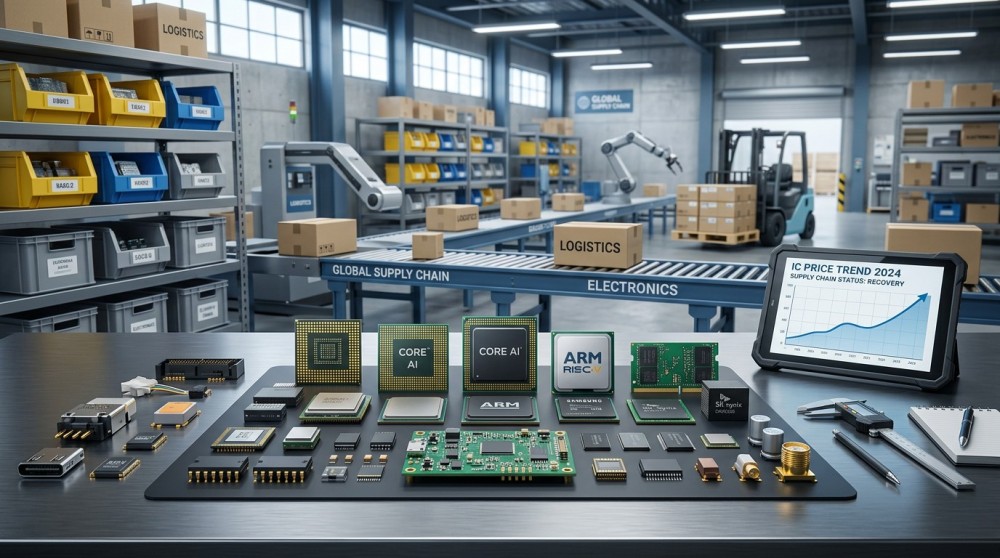
The inventory reset changed the way the electronics market reacts to demand. During the destocking phase, many distributors, OEMs, and EMS providers reduced purchasing cycles from quarterly planning to rolling windows of 4–8 weeks. Now that channel inventory is closer to normal in several categories, electronic components price trends have become a practical indicator of whether demand is stabilizing, suppliers are regaining pricing power, or competition is forcing discounts.
For information researchers and commercial analysts, the key issue is not only whether prices rise or fall, but which categories move first. Analog ICs, MCUs, passive components, power devices, and memory often behave differently. A broad decline in memory does not automatically mean lower costs for industrial connectors or automotive-grade sensors. This is why a multi-sector industry news platform has value: it links electronics pricing with manufacturing output, export orders, policy changes, and logistics conditions.
For procurement teams, the main pain point is timing. Buying too early can lock in high-cost stock. Buying too late can expose production lines to shortages, especially when lead times move from 2–4 weeks to 8–12 weeks without much notice. Operators and production planners also need clarity because price volatility often comes with allocation risk, engineering change pressure, and substitute part validation work.
For decision-makers, the signal is broader than electronics alone. Electronic components price trends increasingly reflect factory utilization, energy costs, freight conditions, and foreign trade policy impact on manufacturing. In sectors such as machinery, home improvement devices, industrial controls, packaging equipment, and energy systems, components pricing affects margin planning, quotation validity, and contract negotiation windows.
What changed after channel inventory normalized
The market shifted from panic buying to selective replenishment. That means suppliers now face more frequent price checks, smaller order batches, and stronger requests for alternates. Buyers are no longer accepting broad claims about scarcity. They want category-specific evidence, realistic lead times, and visibility into whether a current quote is driven by wafer capacity, packaging constraints, regional demand, or distributor stock strategy.
- Planning cycles have shortened in many companies from 12 weeks to 4–6 weeks for standard parts.
- Approval of alternates has become more common, especially for passives, connectors, and selected power components.
- Commercial teams increasingly ask for price validity periods of 7–30 days instead of longer fixed quotations.
- Cross-border sourcing now depends more heavily on compliance checks, origin risk, and shipping predictability.
These changes make market intelligence more actionable when it is structured by category, geography, and end-use sector. A general price headline is not enough. Buyers need to know whether the movement affects immediate procurement, future bids, or strategic supplier negotiations.
Which component categories are moving differently in the current market
Not all electronic components price trends are moving in the same direction. Categories with shorter technology cycles and heavier consumer exposure may show faster price adjustments, while industrial and high-reliability components can stay firm for longer. Understanding this difference helps procurement personnel avoid using one benchmark for every category.
The table below organizes common post-reset market behavior by category. It is not a fixed rule for every brand or SKU, but it reflects typical procurement patterns used in manufacturing industry market analysis, supplier reviews, and quotation comparisons.
This comparison shows why category-level analysis matters. A buyer who sees falling memory prices may expect similar relief across the bill of materials, but a machine control project still depends on stable MCU availability, connector specification matching, and supplier support for long product lifecycles. In practical sourcing, one constrained part can erase the savings created by three cheaper parts.
How different industries feel the same price trend differently
Manufacturing, machinery, energy equipment, building automation, and e-commerce device brands do not react the same way to component prices. A consumer-oriented product team may change specifications within 1–2 product cycles. An industrial equipment maker may keep one platform in production for 5–10 years, which makes lifecycle stability more important than spot price. That difference affects how companies should read the same market signal.
Three practical reading angles for business users
First, ask whether the price movement is tactical or structural. A tactical drop may last one quarter. A structural change may come from new capacity, weaker long-term demand, or permanent product migration. Second, ask whether the change is global or regional. Third, ask whether compliance or export controls may limit the usefulness of a lower price from a specific source.
That is where a cross-sector news platform becomes more than a content source. It helps users connect component pricing with customs updates, manufacturing activity, logistics changes, and supplier announcements so commercial judgments are based on context rather than one isolated quote.
How buyers should evaluate pricing, lead time, and substitute risk
In the current market, procurement decisions need a balanced framework. The lowest visible price is not always the lowest total cost. Buyers need to test 3 core indicators at the same time: unit price, lead-time reliability, and substitution risk. If one of these is weak, the real landed cost can rise through production delays, engineering hours, or after-sales complications.
This is especially important for operators and planners managing mixed demand. Small-batch, mid-batch, and scheduled production require different buying logic. A 7-day saving on delivery may matter more than a 3% price reduction if the part is on a critical path. For decision-makers reviewing annual supply strategy, the better question is often whether a source can maintain continuity for 2–4 quarters, not just the current month.
The table below offers a practical procurement evaluation grid that sourcing teams, commercial reviewers, and business leaders can use when tracking electronic components price trends in a post-reset market.
A structured comparison like this helps teams avoid false savings. In many B2B projects, a part that is 5% cheaper but slips delivery by 3 weeks is worse than a stable source with slightly higher cost. It also supports internal alignment between procurement, engineering, finance, and sales when they evaluate the same sourcing choice from different angles.
A 4-step approach for purchasing teams
- Segment the BOM into strategic, standard, and flexible items. Do not use the same approval process for all parts.
- Review lead times every 2–4 weeks for strategic items and monthly for standard items.
- Pre-qualify at least 1 alternate source for high-risk categories where engineering impact is manageable.
- Link quote review to trade policy, freight, and compliance updates before final approval.
This approach is useful for both large enterprises and smaller sourcing teams. It turns market analysis into an operational process instead of a one-time report. For business assessment staff, it also provides a clearer basis for supplier scorecards and budgeting discussions.
What external factors are influencing semiconductor supply chain updates now
Electronic components price trends do not move in isolation. Even after the inventory reset, semiconductor supply chain updates are still shaped by policy changes, regional manufacturing shifts, energy costs, and logistics reliability. Foreign trade policy impact on manufacturing is particularly important when businesses depend on cross-border sourcing, bonded warehousing, or export-oriented assembly.
For example, changes in tariff treatment, customs inspection intensity, or documentation requirements can add several days to a shipment cycle. In a market where standard parts may ship in 7–15 days and constrained parts in 6–12 weeks, those extra days can change the economics of a quote. This matters for procurement managers and executives who need stable planning windows rather than surprising last-minute adjustments.
Manufacturing industry market analysis also needs to track the demand side. When factory activity improves in one region, component suppliers may redirect capacity or tighten discounting. When end-market demand stays uneven, buyers may see selective promotions in standard parts but little relief in specialized industrial items. The result is a more fragmented market than many teams expect.
Five signals worth monitoring every month
- Lead-time changes by category, especially when quoted ranges move by more than 2 weeks within one month.
- Distributor inventory behavior, including whether stock depth is improving or simply rotating faster.
- Supplier announcements related to product lifecycle, capacity planning, or packaging changes.
- Trade and compliance updates affecting origin, shipping routes, documentation, or restricted applications.
- Demand indicators from downstream sectors such as industrial automation, energy devices, vehicles, and export manufacturing.
Why a cross-sector intelligence view helps
A procurement team focused only on part numbers may miss broader market triggers. A comprehensive industry news platform helps connect electronics with machinery orders, chemical input costs, packaging demand, e-commerce equipment cycles, and energy project activity. That wider view is useful because component pricing often reflects the health of several adjacent industries at once.
For content teams and market researchers, this also improves reporting quality. Instead of saying prices changed, they can explain why, where, and what business action is reasonable within the next 30–90 days. That turns information into planning support for procurement, operations, and management.
Common questions buyers ask about post-reset component pricing
How often should we review electronic components price trends?
For volatile categories such as memory, monthly review is often the minimum, and some teams track key SKUs every 2 weeks. For more stable industrial categories, a monthly or quarterly review can be enough if lead times remain predictable. The best cadence depends on how much of your BOM cost is exposed to electronics and how quickly customer quotations need updating.
Are lower prices after the inventory reset always a good buying signal?
Not always. A lower price can result from temporary channel clearing, regional oversupply, or short-term demand weakness. If the part has lifecycle risk, compliance uncertainty, or weak delivery reliability, the lower price may create higher downstream cost. Buyers should verify at least 3 items before committing: stock source, quote validity, and alternate availability.
What are the most common mistakes in semiconductor sourcing after destocking?
One mistake is assuming that all categories recover at the same speed. Another is using old safety-stock rules even though supply behavior has changed. A third is approving substitutions without checking firmware, thermal, connector, or certification impact. In practical terms, teams should build a 4-part review: technical fit, supply continuity, commercial terms, and compliance traceability.
How do foreign trade policies affect component purchasing decisions?
Policies can affect landed cost, customs timing, origin eligibility, and documentation requirements. Even when the unit price is competitive, the total procurement value may change due to tariff treatment, shipping route changes, or market-access restrictions. This is why foreign trade policy impact on manufacturing should be reviewed together with supplier quotations, especially for multinational sourcing programs.
Why choose our industry news platform for pricing insight and sourcing decisions
When electronic components price trends become harder to read, speed alone is not enough. Businesses need organized information that connects pricing, supply chain movement, policy updates, technology changes, and downstream demand. Our industry news platform is built for that purpose across manufacturing, foreign trade, machinery, building materials, chemicals, packaging, electronics, e-commerce, and energy.
For information researchers, we help reduce search time by consolidating market movements into usable insight. For operators and sourcing teams, we support faster judgment on lead times, supplier signals, and substitution risks. For commercial reviewers and decision-makers, we provide context that improves quotation planning, product strategy, and business communication over 30-day, quarterly, and annual horizons.
What you can contact us about
- Tracking electronic components price trends by category, application, or sourcing region.
- Comparing procurement risk across lead time, pricing window, and substitute feasibility.
- Reviewing foreign trade policy impact on manufacturing and cross-border supply planning.
- Supporting content planning, market research, and business assessment with structured updates.
- Discussing delivery-cycle expectations, compliance checkpoints, and category-specific sourcing signals.
If your team needs clearer signals on price direction, supplier risk, category comparison, or sourcing timing, contact us with your target component groups, application sector, and planning cycle. We can help you narrow the questions that matter most: what to watch now, what to compare next, and where procurement decisions need stronger market context.
- industrial equipment
- market analysis
- supply chain
- building materials
- industry news
- supply chain updates
- foreign trade policy
- price trends
- manufacturing
- sensors
- electronic components
- connectors
- cement
- distributors
- foreign trade
- machinery
- home improvement
- chemicals
- packaging
- packaging equipment
- electronics
- semiconductor
- e-commerce
- energy
- policy updates
- electronic components price trends
- manufacturing industry market analysis
- semiconductor supply chain updates
- foreign trade policy impact on manufacturing
Related News
- Brent Crude Hits $98/bbl; BAF Up 5–8% in MayApr 22, 2026BAF up 5–8% in May as Brent crude hits $98/bbl—key alert for Chinese machinery, furniture & building materials exporters. Act now to protect margins.
- Wholesale Price Comparison vs Total Landed CostApr 20, 2026Wholesale price comparison only shows part of the sourcing picture. Learn how total landed cost, supplier sourcing strategies, quality inspection checklist, and compliance factors reduce risk and improve buying decisions.
- Wholesale Price Comparison Gets Misleading Without These ChecksApr 20, 2026Wholesale price comparison can mislead without checks on ex factory price negotiation, quality inspection checklist, and product certification standards. Learn smarter supplier sourcing strategies.
- What’s driving construction materials price trends in 2026Apr 21, 2026Construction materials price trends in 2026: track foreign trade policy changes, economic indicators for global trade, and product innovation in building materials to manage risk and source smarter.
Related News
- 00
0000-00
Two Supreme Organs Issue Anti-Bribery Judicial Interpretation (II) - 00
0000-00
Yangtze River Delta: 163 Projects Boost Manufacturing Sourcing Hub - 00
0000-00
China’s 'AI+Education' Action Plan Opens Standardization Window for AI Ed-Tech Exports - 00
0000-00
HKMA Sets Q3 2026 Timeline for First Stablecoin Licenses - 00
0000-00
China-Sri Lanka Joint Operation Repatriates 125 Telecom Fraud Suspects
Price Monitoring Desk
Weekly Insights
Stay ahead with our curated technology reports delivered every Monday.