





As global trade rules tighten in 2026, understanding certificate of origin requirements by country is becoming essential for exporters, buyers, and sourcing teams. This guide explains key documentation standards, trade compliance regulations for exporters, and practical ways to reduce tariff costs while improving quotation accuracy, HS code checks, and cross-border procurement decisions across multiple industries.
For manufacturers, foreign trade teams, technical evaluators, procurement managers, and project leaders, the certificate of origin is no longer a routine paper attached at shipment stage. In many markets, it directly affects import duty rates, customs release speed, free trade agreement eligibility, and even whether a bid price remains commercially valid after landing costs are recalculated.
In 2026, the challenge is not just obtaining a document, but matching the right origin proof to the destination country, product category, and trade arrangement. A wrong declaration, a mismatch between HS code and origin rule, or a late-issued certificate can add 3% to 25% in tariffs, delay customs clearance by 2 to 10 business days, or trigger post-entry verification.
This article breaks down country-specific certificate of origin requirements, practical compliance checkpoints, and sourcing implications for businesses operating across manufacturing, machinery, chemicals, electronics, building materials, packaging, home improvement, energy, and e-commerce supply chains.
Why Certificate of Origin Rules Matter More in 2026
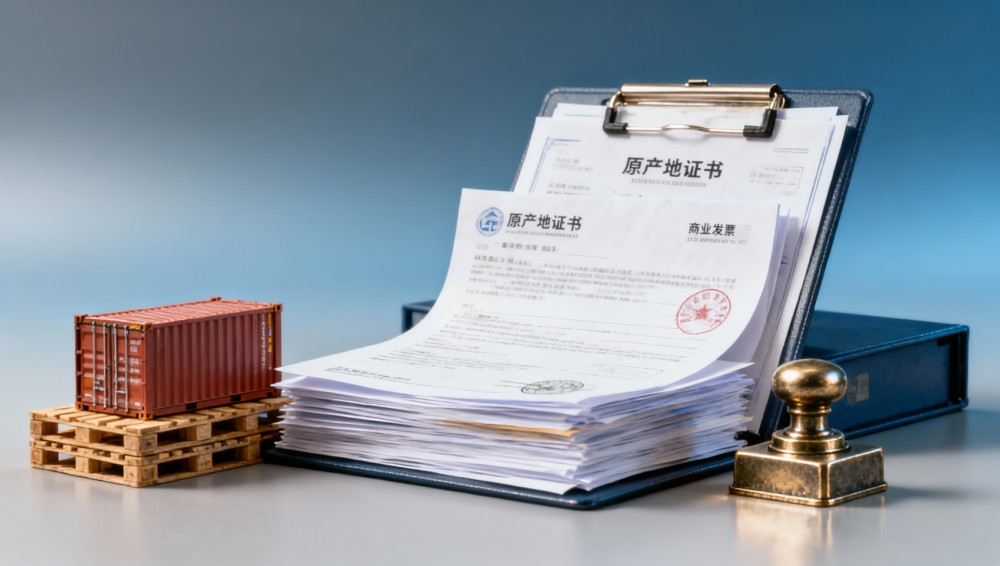
A certificate of origin confirms where goods are produced, processed, or substantially transformed. That sounds simple, but the compliance impact is broad. Customs authorities use origin data to decide whether preferential duty treatment applies, whether anti-dumping measures should be imposed, and whether additional inspections are required for sensitive sectors such as chemicals, steel products, electrical parts, and energy equipment.
In 2026, three trends are increasing pressure on exporters and importers. First, more customs systems are digitized, making document mismatches easier to detect. Second, more buyers want landed cost estimates within 24 to 72 hours during quotation stage. Third, origin claims under trade agreements are under closer review, especially where supply chains involve 2 to 4 countries before final assembly.
For B2B procurement teams, origin requirements also influence vendor selection. A supplier offering a lower ex-works price may still be less competitive if its goods cannot qualify for reduced tariffs in the destination market. In sectors with margins below 8%, even a 5% duty difference can change the preferred source country.
Technical and project teams should also care because origin documents are often linked to product traceability, contract acceptance, and regulatory filings. In infrastructure, machinery, and energy projects, delayed origin certification can slow site delivery, insurance processing, and payment release tied to shipping document sets.
Main business risks linked to origin mistakes
- Incorrect preferential claim, leading to retroactive duty collection within 6 to 36 months after import.
- Mismatch between invoice, packing list, and certificate details, causing customs hold or manual review.
- Wrong origin rule applied to mixed-material goods such as machinery assemblies, composite panels, or electronic modules.
- Late submission of original or electronic certificate, affecting customs release and demurrage exposure.
Typical document set used in cross-border trade
In many transactions, the certificate of origin is reviewed together with the commercial invoice, packing list, bill of lading or air waybill, and product classification data. When a shipment contains 10 to 50 SKUs, consistency across documents becomes a practical control point, not just an administrative task.
Certificate of Origin Requirements by Country: Practical Market Differences
Country requirements differ in form, issuing body, language preference, and whether a preferential or non-preferential certificate is accepted. Some markets still expect chamber-issued originals, while others increasingly accept electronic certificates or self-certification under selected trade agreements. Exporters serving multiple regions should not assume one template works everywhere.
The table below summarizes common destination patterns relevant to industrial trade, sourcing, and project cargo. These are practical planning references rather than legal substitutes, because product sensitivity, trade agreement status, and local customs practice can create additional requirements.
The key takeaway is that certificate of origin requirements by country are not only destination-specific but product-specific. A packaging film, a motor, and a ceramic tile shipped to the same country may follow different verification intensity if anti-dumping controls, technical regulations, or preferential rules differ by tariff line.
Companies handling 20 or more export destinations each year should maintain a destination matrix showing required certificate type, issuing route, legalization needs, expected processing time, and whether digital copies are accepted. This reduces last-minute corrections and improves quotation reliability for sales and sourcing teams.
Country-level variables that often change the document requirement
- Whether the importing country grants preferential tariffs under a bilateral or regional trade agreement.
- Whether the goods fall under anti-dumping, safeguard, or quota-related controls.
- Whether customs accepts electronic certificates, scanned copies, or only original stamped documents.
- Whether the importer’s bank or tender authority requires additional certification for payment or bid compliance.
High-sensitivity product categories
Origin verification tends to be stricter in 6 major groups: steel and metal products, chemicals, electronics, solar and energy components, machinery assemblies, and selected construction materials. Buyers in these sectors should confirm origin evidence before purchase order release, not after shipment booking.
How Exporters and Procurement Teams Should Verify Origin Before Shipping
Origin compliance works best when checked early. Waiting until cargo is packed usually creates avoidable cost. A practical process starts at quotation stage, when the supplier confirms manufacturing country, material source, HS code, and whether preferential treatment is realistically available. This is especially important for goods assembled from imported parts where final processing may not be enough to establish origin.
For sourcing teams, a 5-step review process can prevent most document problems. It also helps technical evaluators compare suppliers on total landed cost rather than ex-factory price alone.
- Confirm the 6-digit and destination-specific HS code before price approval.
- Check whether the destination market requires non-preferential or preferential origin proof.
- Review the product’s origin rule, such as tariff shift, regional value content, or substantial transformation.
- Match certificate data against invoice description, packaging details, and consignee information.
- Verify issuance lead time, usually 1 to 5 working days for standard cases and longer if legalization is needed.
This process is valuable in manufacturing and project procurement because shipments are often mixed. A container may include base equipment, spare parts, consumables, and accessories from different sources. If origin is declared at master-document level without SKU-level review, customs may challenge the whole consignment.
The next table shows a simple operational checklist that trading companies, factories, and import buyers can use before issuing a final shipping instruction.
The main lesson is that certificate of origin compliance should be embedded into procurement workflow, supplier onboarding, and shipping approval. Businesses that review these 4 checkpoints early usually reduce avoidable customs issues and improve tariff forecasting accuracy during tendering or annual sourcing rounds.
Common mistakes in multi-industry sourcing
One common mistake is assuming that the export country is automatically the origin country. That is not always true. Re-exported goods, unfinished components, or items only repacked in a transit location may keep the origin of the original production country. Another mistake is relying on generic product descriptions such as “machine parts” or “chemical products,” which are too vague for accurate customs review.
When to involve customs brokers or trade specialists
If the shipment value exceeds a typical project threshold, includes more than 3 origin countries, or involves controlled sectors such as energy equipment or chemical materials, early review by a customs broker or trade compliance specialist is usually worth the cost. The same applies when expected duty savings are above 5% of cargo value.
Country-by-Country Planning for Tariff Cost, Lead Time, and Sourcing Decisions
For decision-makers, the real value of understanding certificate of origin requirements by country is commercial. It improves landed cost visibility, helps compare supply options, and supports faster bid response. In industrial sourcing, a 1% to 3% difference in logistics or factory price can be outweighed by a 5% to 12% tariff difference caused by origin treatment.
This is especially relevant in sectors with frequent cross-border procurement: machinery, building materials, electronics, packaging materials, and energy-related components. Buyers often compare suppliers from 2 or 3 countries for the same specification. If one supplier can provide valid preferential origin documentation and another cannot, the duty impact should be built into the total cost model.
Lead time matters as well. A standard non-preferential certificate may be issued in 1 to 3 working days in some jurisdictions, while legalized or agreement-specific documentation may take 5 to 10 working days. For project cargo, that difference can affect site schedules, installation windows, and payment terms linked to shipping milestones.
A practical evaluation model for B2B buyers
- Estimate tariff impact under normal duty and under any available preferential scheme.
- Score supplier ability to provide valid origin evidence within the required shipping window.
- Check whether product structure supports the claimed origin rule for the target market.
- Include customs delay risk in project planning when document validation is likely to be strict.
For example, when comparing two suppliers for industrial motors, insulation material, or aluminum profiles, procurement teams should model the full import outcome: product price, freight, insurance, duties, customs service cost, and likely clearance timing. A sourcing decision based only on unit price can distort actual project cost by 8% or more.
Industries where origin planning adds the most value
The strongest value is usually seen in 5 scenarios: repeated annual imports, project procurement with fixed deadlines, tender submissions requiring document certainty, products exposed to trade remedies, and categories where regional trade agreements materially reduce duty. In these settings, origin planning should be part of sourcing strategy rather than a shipping afterthought.
Information research teams and content planners can also use country-specific origin tracking to support market intelligence. When rules shift, businesses may reconfigure sourcing from one production base to another, creating early signals for demand changes in machinery parts, chemicals, packaging, and building product supply chains.
FAQ and Best Practices for 2026 Trade Compliance
Below are the most common questions from exporters, purchasing teams, and project managers dealing with country-specific certificate of origin requirements in 2026. These answers focus on practical control points that improve customs readiness and commercial decision quality.
How do I know whether a preferential certificate of origin is worth pursuing?
Start with a 3-part check: destination country, applicable trade agreement, and product-specific origin rule. If the potential duty reduction is small, such as below 1% to 2%, the administrative burden may outweigh the benefit for low-value shipments. But for medium and high-value cargo, especially machinery, chemicals, or construction products, the savings can justify the extra compliance work.
Can a certificate of origin be corrected after shipment?
In many cases, yes, but correction rules vary. Some customs authorities accept replacement documents or post-entry claims within a limited period, while others are stricter once import clearance is filed. Because correction can take 3 to 15 business days, businesses should not rely on post-shipment fixes as a routine practice.
What documents should be kept to support origin claims?
Keep manufacturing records, supplier declarations, bill of materials, production flow descriptions, costed breakdowns where needed, and all shipping documents. A retention period of at least 5 years is common in many trade environments. For higher-risk categories, keeping a full audit file for 7 years is often a safer internal standard.
What are the most common buyer-side mistakes?
The top mistakes are accepting a supplier statement without checking the origin rule, using the wrong HS code during costing, and asking for the certificate too late. Another frequent issue is treating all items in a mixed shipment as having the same origin, which can create customs complications if even 1 or 2 SKUs differ.
Best-practice checklist for 2026
- Build an origin review into supplier qualification and RFQ templates.
- Maintain a country requirement sheet updated every quarter or at least every 6 months.
- Check duty assumptions before finalizing annual procurement budgets.
- Use the same product description logic across invoice, packing list, and certificate documents.
- Escalate review for products facing anti-dumping exposure or complex multi-country production.
In 2026, certificate of origin requirements by country are shaping more than customs paperwork. They affect sourcing strategy, quotation accuracy, tariff control, delivery reliability, and project execution across manufacturing, foreign trade, building materials, chemicals, electronics, packaging, and energy sectors. Companies that treat origin compliance as part of commercial planning, not just documentation, are better positioned to reduce avoidable duty costs and shipment delays.
If your team needs structured market updates, destination-specific trade document insights, or practical support for cross-border sourcing decisions, now is the right time to refine your compliance workflow. Contact us to learn more solutions, review country-specific requirements, or get a tailored content and market intelligence plan for your industry operations.
- industrial equipment
- supply chain
- building materials
- energy sector
- machinery parts
- global trade
- manufacturing
- machine parts
- steel products
- cement
- packaging materials
- tariff costs
- certificate of origin
- HS code
- trade compliance
- importers
- foreign trade
- machinery
- construction materials
- home improvement
- chemicals
- packaging
- electronics
- e-commerce
- energy
- trade compliance regulations for exporters
- certificate of origin requirements by country
Related News
- Internet Platform Pricing Rules Take Effect Apr 10, 2026Apr 24, 2026Internet Platform Pricing Rules take effect Apr 10, 2026—learn how 'price hiking before discounting', fake original prices, and unsupported strikethroughs impact cross-border sellers & platforms.
- New Judicial Interpretation on Bribery Takes Effect May 1, 2026Apr 24, 2026New Judicial Interpretation on Bribery takes effect May 1, 2026—criminalizing overseas kickbacks & offshore shell company benefits. Critical for MNCs in medical devices, infrastructure, and energy sectors.
- Certificate of Origin Requirements by Country in 2026Apr 24, 2026Certificate of origin requirements by country in 2026: learn trade compliance regulations for exporters, HS code checks, and how to reduce tariff costs with practical global sourcing insights.
- How to Reduce Tariff Costs Without Creating Compliance RiskApr 24, 2026How to reduce tariff costs safely: learn HS code lookup, certificate of origin requirements by country, and FOB vs CIF checks to cut duty, stay compliant, and protect margins.
Related News
- 00
0000-00
China's Lithium Battery Equipment Delivery Lead Time Extends to 18 Weeks - 00
0000-00
AI+Education Action Plan Launches, Impacting EdTech Exports - 00
0000-00
China-Sri Lanka Joint Operation Repatriates 125 Telecom Fraud Suspects - 00
0000-00
Second Batch of CNY 62.5B Ultra-Long Special Treasury Bonds Supports Consumer Upgrading - 00
0000-00
OpenClaw AI Agent Deployment Risk Guide Released
Policy Review Desk
Weekly Insights
Stay ahead with our curated technology reports delivered every Monday.