





Rising duties can erode margins fast, but cutting landed costs without violating trade compliance regulations for exporters requires a smarter approach. From HS code lookup tool accuracy and certificate of origin requirements by country to FOB price calculation formula checks and CIF price vs FOB price comparison, businesses need practical methods to understand how to reduce tariff costs while protecting supply chain efficiency and audit readiness.
Why tariff reduction becomes a compliance problem so quickly
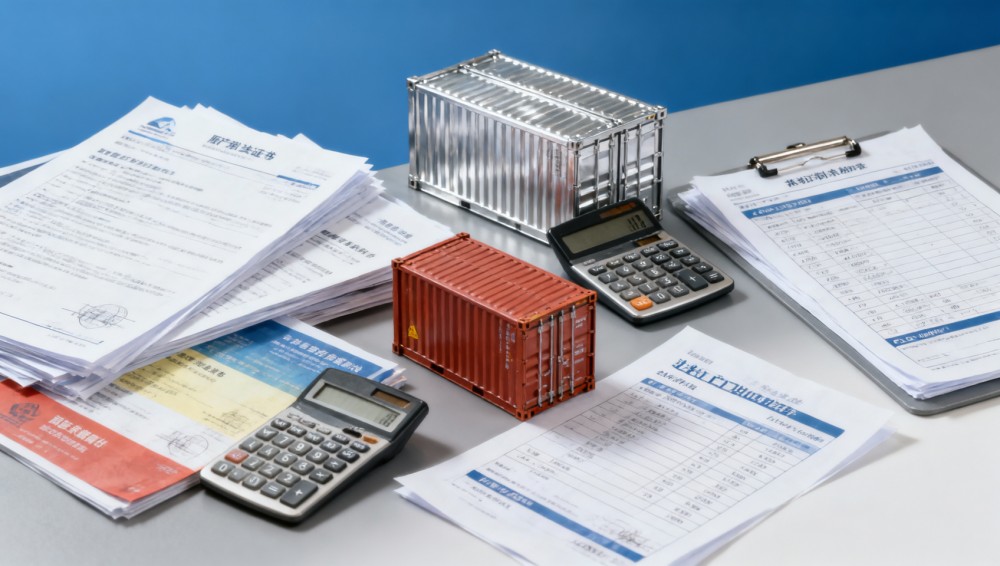
For manufacturers, traders, sourcing teams, and project managers, tariff cost is rarely just a customs line item. It affects bid pricing, supplier selection, inventory timing, and contract terms. The problem is that many companies try to lower duty exposure in only one direction, usually by chasing a lower declared value or switching shipping terms, without checking whether the method can survive customs review over a 3–5 year record retention period.
In cross-border sectors such as machinery, chemicals, packaging, electronics, home improvement materials, and energy equipment, tariff planning touches several moving parts at once: HS classification, country of origin, customs valuation, transfer pricing, Incoterms allocation, and product-specific restrictions. A mistake in any one of these can trigger reassessment, delayed clearance, or penalties that outweigh the expected savings.
This is why information quality matters. A comprehensive industry news platform helps decision-makers track policy updates, anti-dumping developments, price fluctuations, and country-specific trade changes across multiple sectors. When procurement and compliance teams work from outdated assumptions even for 30–60 days, landed cost models can become unreliable, especially in volatile sourcing markets.
A safer strategy is to reduce tariff costs through structured review rather than shortcuts. In practice, this means checking 5 core areas before shipment: classification, origin, valuation, trade term allocation, and documentation completeness. If those five are aligned, businesses can lower risk while improving forecast accuracy for sourcing, quoting, and project delivery.
Where companies usually lose money without noticing
Duty leakage often happens in routine operations, not in exceptional events. A buyer may accept a supplier’s HS code without technical validation. A sales team may compare CIF price vs FOB price without isolating the dutiable components. A logistics team may rely on a certificate template that is valid in one market but insufficient in another. These are common operational gaps, especially when teams are spread across sourcing, finance, customs, and project execution.
- Misclassified goods that fall into a higher duty bracket because technical specifications were not matched to the tariff heading.
- Origin claims that fail because regional value content, processing threshold, or supporting documents were not reviewed before export.
- Incorrect customs value because assists, tooling, molds, royalties, or inland freight were handled inconsistently.
- Missed timing opportunities when shipments depart before a preferential trade agreement document is available.
These issues matter even more in industries with frequent model changes, multi-component assemblies, or fluctuating raw material prices. A platform that tracks regulatory changes, product updates, and trade developments can give teams earlier warning signals, often 1–2 procurement cycles before the cost impact becomes visible in finance reports.
Which levers actually reduce tariff costs without crossing the line
There are legitimate ways to reduce tariff costs, but each one depends on evidence, process discipline, and country-specific review. The most practical levers are classification optimization, preferential origin planning, customs valuation accuracy, shipment structuring, and supplier term redesign. None of these should be treated as a one-time task; they should be reviewed at least quarterly, or whenever sourcing country, product configuration, or Incoterms change.
A workable decision framework for exporters and import buyers
Before changing any duty-related setup, companies should determine whether the savings come from a legal change in facts or only from a paper adjustment. Customs authorities generally accept the first and challenge the second. For example, a genuine change in manufacturing country, product composition, or shipment packaging may support a different tariff outcome. A cosmetic invoice change usually will not.
The table below summarizes the main tariff reduction paths and the checks needed to keep compliance risk under control. It is especially useful for procurement teams comparing suppliers across 2–4 countries or engineering teams validating product variants before a bid submission.
The strongest savings usually come from combining two or three levers, not forcing one. For example, an HS review plus origin qualification may produce more durable savings than trying to adjust invoice terms alone. This is also easier to defend during post-entry review because the supporting evidence comes from engineering, sourcing, and trade documentation together.
How FOB and CIF comparisons affect tariff planning
Teams often ask whether moving from CIF to FOB will automatically reduce duty. The answer depends on the destination country’s valuation rules and the treatment of freight and insurance. A clean FOB price calculation formula helps isolate ex-works price, local charges, export clearance, inland freight, and loading cost. That breakdown is useful because some cost elements may be dutiable while others may not, depending on the customs regime.
A reliable comparison should test at least 4 elements: product value, international freight, insurance, and destination-side add-ons. Without that structure, buyers may choose the cheaper quoted term while ending up with a higher customs value and a weaker audit trail.
How to evaluate HS code, origin, and customs value in real sourcing scenarios
In the comprehensive industry environment, product portfolios can range from simple packaging materials to complex machinery systems with electronics, sensors, metal parts, and software-linked functions. That diversity makes classification and origin review a technical exercise, not a clerical one. Information researchers and technical evaluators should work from drawings, material composition, process flow, and product function summaries, not from catalog labels alone.
A practical HS code lookup tool is helpful, but it should be treated as a starting point. Final classification usually requires 3 layers of validation: tariff wording, technical product evidence, and market-specific customs interpretation. If even one layer is missing, teams may quote duty assumptions that are too aggressive for commercial use.
A comparison table for procurement and compliance review
The following table helps teams compare the three most important tariff variables during supplier assessment, tender preparation, or shipment approval. It is especially relevant when a project involves 2 or more sourcing countries, mixed components, or staged deliveries over 6–12 months.
The main lesson is that tariff cost reduction is evidence-driven. When technical, sourcing, and finance records are aligned, companies can make stronger claims and avoid rework. When they are fragmented, even a reasonable duty position becomes difficult to defend during customs inquiry.
What information teams should collect before shipment
For most industrial and trade categories, a pre-shipment review should cover 6 items: product description, HS code basis, country of origin logic, Incoterms, invoice breakdown, and supporting certificates. This does not need to be bureaucratic. In many cases, a structured checklist completed within 24–48 hours can catch misalignment before cargo is booked.
- Confirm whether the commercial description matches the technical description used for classification.
- Check if certificate of origin requirements by country include format, issuer, and validity timing.
- Review whether freight, insurance, and packing are separated clearly for customs valuation.
- Verify if any anti-dumping, safeguard, quota, or licensing rule applies to the product and route.
A multi-sector news and intelligence platform adds value here by monitoring regulation changes, product-specific trade disputes, and country-by-country origin or documentation requirements. That reduces dependence on scattered emails, outdated broker habits, or supplier assumptions.
What procurement leaders should compare before choosing a tariff-saving strategy
A lower duty outcome is not always the best commercial outcome. Procurement leaders must compare tariff savings against lead time, supplier reliability, engineering change risk, and document readiness. In large projects or recurring sourcing programs, the right question is not only “Can we reduce duty?” but “Can we reduce duty without creating delays, disputes, or post-entry cost exposure over the next 2–4 quarters?”
This is particularly important in sectors with long approval cycles such as machinery, building materials, chemicals, and energy-related products. A sourcing change that saves duty but adds 3–6 weeks of qualification or forces repeated customs queries may damage project schedules more than it helps margin.
A 4-step procurement review process
- Map the landed cost structure. Separate product value, inland freight, export handling, main carriage, insurance, and destination-side cost.
- Test classification and origin. Confirm whether the product as shipped, not as marketed, supports the proposed duty treatment.
- Stress-test documentation. Ask whether the file would still be defensible after staff turnover, a customs audit, or a supplier change 12 months later.
- Track change events. Review again when there is a new material source, revised BOM, price adjustment, or route change.
This review process works well when paired with timely market and policy intelligence. A comprehensive industry news platform can flag when a tariff line, trade agreement interpretation, price surge, or enforcement trend is shifting, allowing buyers and project teams to update assumptions before contracts are locked.
Typical decision signals by business role
Different stakeholders evaluate tariff strategy differently. Information researchers need current policy context. Technical evaluators need classification evidence. Procurement wants savings with stable supply. Executives want audit-safe margin protection. Project managers want no disruption to delivery milestones. The best tariff reduction plan is one that aligns all five perspectives rather than optimizing only the customs view.
When these teams share one information base, sourcing decisions become faster and more defensible. Instead of chasing isolated duty savings, they can compare supplier offers, origin pathways, and shipping terms using consistent assumptions across the full procurement cycle.
FAQ: common misconceptions about reducing tariff costs
Can changing Incoterms alone lower import duty?
Sometimes, but not automatically. The effect depends on the importing country’s customs valuation rules and how freight, insurance, and related charges are treated. A CIF price vs FOB price comparison only helps when the quote clearly separates cost components and the customs regime recognizes those distinctions. Teams should validate this before changing contracts.
Is the supplier’s HS code always safe to use?
No. Supplier classifications may be prepared for another market, another product version, or another commercial purpose. Buyers should verify the code against the product’s function, materials, and degree of assembly. For complex goods, a technical review is often necessary before quoting landed cost or filing customs entries.
Does a certificate of origin guarantee preferential duty?
Not by itself. The certificate must match the relevant agreement rules and the underlying manufacturing facts. Customs may still ask for supplier declarations, production records, or bill-of-material support. In some markets, format, issuer, or timing errors can also invalidate the claim even when the goods genuinely qualify.
How often should tariff assumptions be reviewed?
A practical baseline is every quarter, with immediate review when there is a country change, material substitution, product redesign, price adjustment, or route change. For high-value or high-volume import programs, monthly checks may be appropriate, especially when commodity prices or trade restrictions are volatile.
Why choose us for tariff-related market intelligence and decision support
Reducing tariff costs safely requires more than a one-off customs answer. It requires current visibility across regulations, market price movement, international trade trends, supplier shifts, and sector-specific developments. Our comprehensive industry news platform brings these signals together across manufacturing, foreign trade, machinery, building materials, chemicals, packaging, electronics, e-commerce, and energy so teams can make decisions with better timing and better context.
For information researchers, we help shorten the time needed to collect relevant policy and market updates. For technical evaluators, we surface industry developments that affect product positioning and classification review. For procurement and project teams, we support landed cost comparison, sourcing timing, and document preparation by organizing the updates that matter most in day-to-day execution.
You can contact us for practical support around 6 key areas: HS code and product description research, certificate of origin requirements by country, FOB price calculation formula review, CIF price vs FOB price comparison, tariff-related market monitoring, and sourcing or project decision background collection. If you are preparing a new supplier evaluation, contract renewal, sample order, shipment plan, or quotation model, we can help you narrow the information gap before risk becomes cost.
If your team needs a clearer basis for parameter confirmation, supplier comparison, delivery cycle assessment, compliance document review, or quotation communication, reach out with your product category, target market, shipping term, and current sourcing question. That allows us to focus the research on the most relevant trade, pricing, and compliance signals for your decision window.
- supply chain
- building materials
- industry news
- raw material prices
- manufacturing
- sensors
- cement
- home improvement materials
- packaging materials
- FOB price
- CIF price
- tariff costs
- certificate of origin
- HS code
- trade compliance
- foreign trade
- international trade
- machinery
- home improvement
- chemicals
- packaging
- electronics
- e-commerce
- energy
- policy updates
- trade compliance regulations for exporters
- HS code lookup tool
- certificate of origin requirements by country
- how to reduce tariff costs
- CIF price vs FOB price comparison
- FOB price calculation formula
Related News
- Internet Platform Pricing Rules Take Effect Apr 10, 2026Apr 24, 2026Internet Platform Pricing Rules take effect Apr 10, 2026—learn how 'price hiking before discounting', fake original prices, and unsupported strikethroughs impact cross-border sellers & platforms.
- New Judicial Interpretation on Bribery Takes Effect May 1, 2026Apr 24, 2026New Judicial Interpretation on Bribery takes effect May 1, 2026—criminalizing overseas kickbacks & offshore shell company benefits. Critical for MNCs in medical devices, infrastructure, and energy sectors.
- Certificate of Origin Requirements by Country in 2026Apr 24, 2026Certificate of origin requirements by country in 2026: learn trade compliance regulations for exporters, HS code checks, and how to reduce tariff costs with practical global sourcing insights.
- How to Reduce Tariff Costs Without Creating Compliance RiskApr 24, 2026How to reduce tariff costs safely: learn HS code lookup, certificate of origin requirements by country, and FOB vs CIF checks to cut duty, stay compliant, and protect margins.
Related News
- 00
0000-00
China's Lithium Battery Equipment Delivery Lead Time Extends to 18 Weeks - 00
0000-00
AI+Education Action Plan Launches, Impacting EdTech Exports - 00
0000-00
China-Sri Lanka Joint Operation Repatriates 125 Telecom Fraud Suspects - 00
0000-00
Second Batch of CNY 62.5B Ultra-Long Special Treasury Bonds Supports Consumer Upgrading - 00
0000-00
OpenClaw AI Agent Deployment Risk Guide Released
Policy Review Desk
Weekly Insights
Stay ahead with our curated technology reports delivered every Monday.