





As global standards tighten, chemical additives for food packaging are no longer a niche technical issue. They now sit at the center of compliance, sourcing, reformulation, and product positioning. For businesses following policy updates for chemical industry and assessing biodegradable packaging solutions for food industry, the immediate takeaway is clear: additives that were once commercially acceptable may now create regulatory delays, customer rejection, or cross-border trade risk. Companies that respond early can reduce compliance exposure, protect supply continuity, and improve their market readiness.
For information researchers, business evaluators, and corporate decision-makers, the key question is not simply which additives are under scrutiny. It is how regulatory tightening affects material choices, supplier qualification, product claims, export feasibility, and long-term investment decisions across food packaging and specialty chemicals.
What tighter rules really mean for food packaging businesses
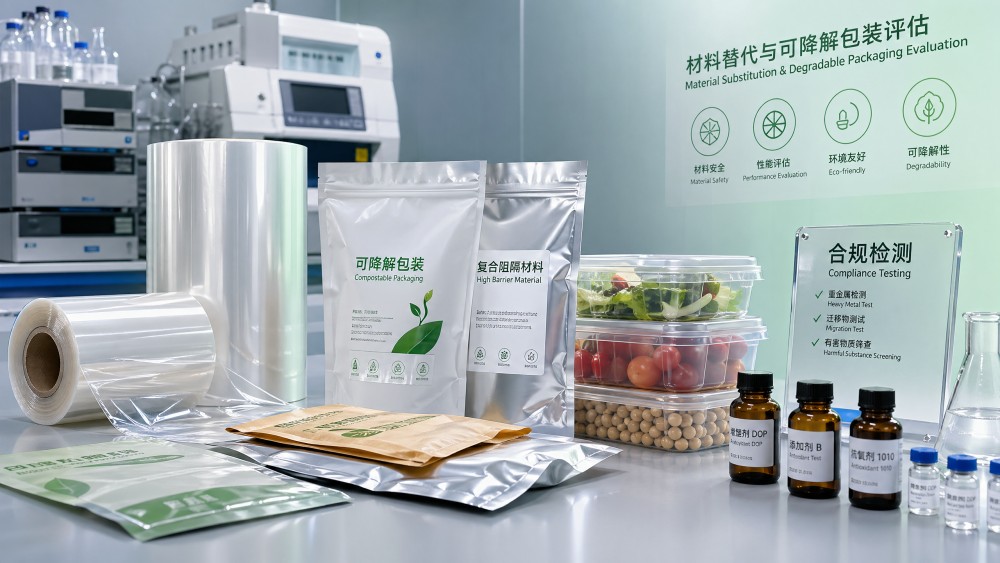
Tighter regulation of chemical additives for food packaging usually means stronger limits, broader substance reviews, stricter migration testing, more documentation, and rising pressure for traceability. This affects not only resin producers and additive suppliers, but also converters, brand owners, food exporters, and procurement teams.
In practice, the impact shows up in several ways:
- Higher compliance costs: more testing, reformulation work, supplier audits, and legal review.
- Longer approval cycles: especially for new materials, coatings, inks, adhesives, and barrier systems.
- Greater sourcing risk: some additives may remain technically available but become commercially risky in regulated markets.
- Increased customer scrutiny: large buyers now ask for deeper chemical disclosure, not just basic declarations of conformity.
- Pressure on product claims: “safe,” “sustainable,” and “food-grade” claims increasingly need evidence.
For decision-makers, the business implication is straightforward: compliance is becoming a market access issue, not just a technical checklist.
Which reader concerns matter most when evaluating chemical additives
Target readers in research, business assessment, and corporate leadership usually care less about textbook chemistry and more about commercial impact. Their main concerns tend to be the following:
- Will current packaging materials remain compliant in key markets?
- Which additives create the highest regulatory or reputational risk?
- How fast should the company switch materials or suppliers?
- Will biodegradable or alternative packaging reduce risk, or create new uncertainty?
- How will changing rules affect costs, lead times, and customer acceptance?
These questions matter because food packaging regulation does not move in isolation. It influences product development, export planning, brand communication, procurement policy, and even investor confidence. A material that performs well technically may still fail commercially if its additive profile becomes difficult to defend under tighter rules.
Which additives and material systems are facing more scrutiny
Regulatory pressure is not applied evenly. Some categories of chemical additives for food packaging attract more attention because of migration potential, toxicological concern, persistence, or lack of sufficient supporting data.
Areas often facing closer review include:
- Plasticizers used to improve flexibility
- Stabilizers and antioxidants added to protect polymers during processing and use
- Slip agents and processing aids that may affect surface behavior and migration performance
- Colorants, inks, and coatings especially in multilayer or printed food-contact applications
- Adhesives and tie layers in laminated structures
- PFAS-related and other high-concern chemistries where policy momentum is strengthening
- Intentionally added substances in compostable or bio-based packaging that may still require full regulatory assessment
For business users, the important point is that “innovative” or “green” does not automatically mean lower compliance risk. Some biodegradable packaging solutions for food industry still face challenges around barrier performance, additive compatibility, processing stability, and food-contact approvals.
How tighter policy changes material selection and sourcing decisions
When standards tighten, material selection shifts from a cost-performance model to a risk-adjusted model. Procurement and R&D teams can no longer evaluate substrates, additives, and formulations only by unit price, machinability, and shelf-life performance. They must also assess regulatory durability.
A practical evaluation framework includes:
- Map market exposure: identify which packaging formats go to which countries or customer groups.
- Check additive dependency: understand which formulations rely on substances under review or likely future restriction.
- Assess supplier transparency: prioritize suppliers that can provide updated declarations, composition support, and testing data.
- Compare reformulation paths: determine whether a material can be modified, substituted, or phased out.
- Estimate transition cost: include testing, equipment adjustment, qualification time, and customer reapproval.
For many companies, the real risk is not the current rule itself but being unprepared for the next revision. That is why policy updates for chemical industry should be treated as an input for sourcing strategy, not just a compliance alert.
Are biodegradable packaging solutions a safer long-term answer?
Biodegradable packaging solutions for food industry are attracting more investment because they align with sustainability goals and changing market expectations. However, they are not a universal shortcut around chemical regulation.
They may offer strategic advantages such as:
- better alignment with brand sustainability positioning
- potential support for circularity or waste-reduction initiatives
- reduced reliance on some conventional polymer systems
- new product differentiation opportunities
But they also raise practical questions:
- Do they meet food-contact standards in target markets?
- What additives are still needed for heat resistance, flexibility, sealing, or printability?
- Can they deliver shelf-life protection comparable to conventional solutions?
- Will disposal claims hold up under local rules and customer scrutiny?
- Are supply volumes and pricing stable enough for scale-up?
For managers and evaluators, the better approach is to compare biodegradable options against conventional alternatives on four dimensions: compliance certainty, functional performance, total landed cost, and claim defensibility. The most sustainable option on paper is not always the best commercial option in regulated food packaging.
How companies can reduce compliance and business risk now
Businesses do not need to wait for a full regulatory shock to act. Several practical steps can improve resilience immediately:
- Build an additive risk inventory: list substances used across food-contact packaging by application, supplier, and market exposure.
- Segment packaging by risk level: high-export, high-volume, and high-scrutiny formats should be reviewed first.
- Ask deeper supplier questions: request migration data, supporting documentation, change-notification commitments, and visibility into formulation updates.
- Create substitute pathways: identify backup materials and prequalify alternative suppliers before disruption happens.
- Track policy updates continuously: especially for chemicals, food-contact materials, plastics, and environmental claims.
- Align legal, R&D, procurement, and sales: compliance decisions affect customer promises and commercialization timelines.
This cross-functional approach is especially important for companies operating across manufacturing, chemicals, packaging, foreign trade, and e-commerce channels, where one packaging decision can affect multiple business units.
What decision-makers should watch over the next 12 to 24 months
Looking ahead, the market is likely to see a combination of stricter chemical oversight, stronger documentation expectations, and faster customer-driven substitution pressure. That means decision-makers should monitor not only formal regulation, but also buyer standards, retailer specifications, investor concerns, and public scrutiny around chemicals in food-contact materials.
Key signals to watch include:
- expansion of substance restrictions or watchlists
- new migration or testing requirements
- regional divergence in food-contact compliance standards
- rising demand for non-intentionally added substance assessment
- stricter rules around recyclability, compostability, and environmental marketing claims
- consolidation among approved or trusted specialty chemical suppliers
Companies that monitor these changes early can move from reactive compliance to proactive portfolio planning. That often leads to better supplier leverage, smoother product transitions, and stronger customer confidence.
In summary, tighter rules on chemical additives for food packaging are changing the logic of packaging decisions. The issue is no longer limited to regulatory specialists; it now affects sourcing, product strategy, export readiness, and brand trust. For information researchers, business evaluators, and enterprise leaders, the most valuable response is to combine policy tracking with practical material assessment. Businesses that understand both compliance risk and alternative packaging pathways will be better positioned to protect market access and capture emerging opportunities.
- chemical industry
- packaging solutions
- manufacturing
- packaging materials
- biodegradable packaging
- specialty chemicals
- adhesives
- chemical additives
- foreign trade
- chemicals
- packaging
- e-commerce
- policy updates
- policy updates for chemical industry
- chemical additives for food packaging
- biodegradable packaging solutions for food industry
Related News
- Chemical additives for food packaging under tighter rulesApr 27, 2026Chemical additives for food packaging under tighter rules: explore compliance risks, sourcing shifts, and biodegradable packaging solutions for food industry to protect market access.
- Policy updates for chemical industry that may change complianceApr 27, 2026Policy updates for chemical industry: track compliance risks across sourcing, packaging, exports, and specialty chemicals market analysis to act faster and protect cross-border competitiveness.
- EU AI Act Implementing Rules v2 Requires Human-AI Log for Industrial AI DevicesApr 26, 2026EU AI Act v2 mandates human-AI logs for industrial AI devices—key for electronics, machinery & instrumentation exporters. Stay compliant & ahead of enforcement.
- Simplifying VAT Filing in Cross-Border E-commerce GuidesApr 27, 2026Master VAT compliance with our cross-border e-commerce tax guide. Explore industry trends in digital transformation and cross-border e-commerce strategies to minimize risks and scale your business today!
Related News
- 00
0000-00
Yangtze River Delta Ports Q1 Throughput Up 7.2% Amid RCEP Stability - 00
0000-00
2026 Beijing Auto Show: AI-Driven Smart Car Export Enters Technical Compliance Phase - 00
0000-00
Tourism Vouchers Fuel Domestic Demand, Signal Export Opportunities - 00
0000-00
Metro China Leadership Reshuffle: Supply Chain Impact - 00
0000-00
Which biodegradable packaging solutions keep food fresh longer?
Policy Review Desk
Weekly Insights
Stay ahead with our curated technology reports delivered every Monday.