





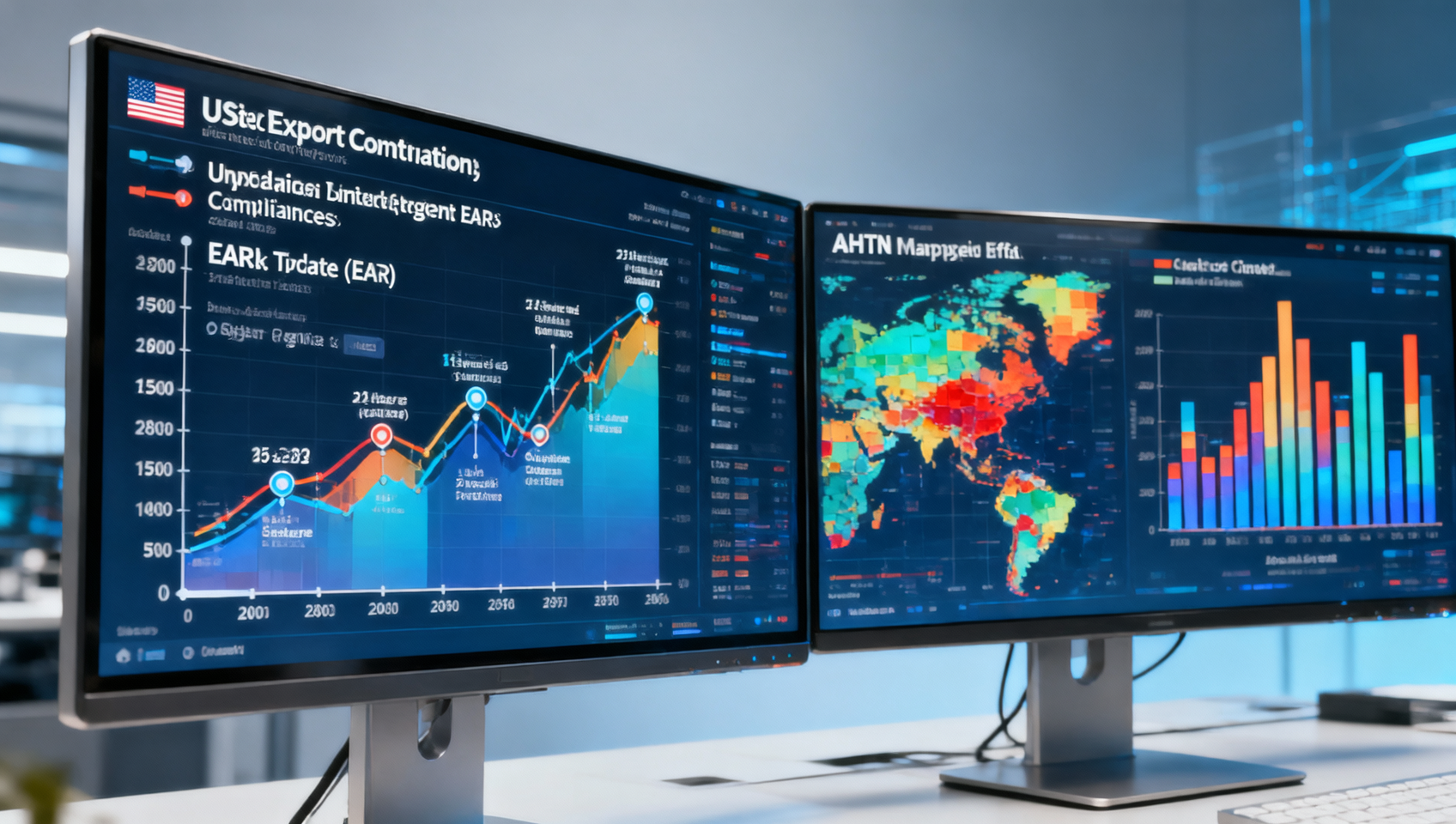
As global trade dynamics shift, foreign trade policy analysis reveals a widening regulatory gap between U.S. export policy updates and ASEAN customs policy news—impacting everything from electronic components market trends to smart manufacturing updates. This divergence is reshaping sourcing market analysis, supply chain news, and investment updates across the industrial goods market updates. For procurement professionals, enterprise decision-makers, and cross-border trade news followers, understanding these shifts is critical to navigating raw material market trends, automation equipment news, and evolving industry chain updates. Our in-depth industry reports deliver timely buyer insights, export trade updates, and actionable market analysis reports—helping you align strategy with real-world policy realities.
Policy Divergence: Core Drivers and Sectoral Impact
The U.S. Department of Commerce’s 2024 Export Administration Regulations (EAR) revisions introduced stricter licensing requirements for dual-use technologies—including semiconductor fabrication tools, AI-enabled industrial controllers, and encryption-capable IoT gateways. Over 37% of high-precision machinery exporters now report extended license review cycles averaging 42–68 days, up from 22–35 days in Q1 2023.
In contrast, ASEAN’s Harmonized System (HS) Code alignment initiative—launched under the ASEAN Trade in Goods Agreement (ATIGA) Phase III—standardized 92% of tariff classifications for electronics, packaging machinery, and chemical intermediates across all ten member states by June 2024. Customs clearance time for compliant shipments dropped to 1–3 working days in Singapore and Vietnam, versus 5–12 days for non-harmonized entries.
This asymmetry creates tangible friction points: U.S.-based manufacturers exporting CNC machining centers face overlapping compliance layers—ITAR screening, EAR classification, and ASEAN-specific labeling rules—increasing pre-shipment documentation lead time by 3.2–5.6 hours per order. Meanwhile, ASEAN-based distributors importing lithium battery modules must now reconcile U.S. UL 1642 certification mandates with Thailand’s TISI 2217-2565 and Indonesia’s SNI IEC 62133-2:2022—delaying product launch windows by 6–10 weeks on average.
Supply Chain Implications Across Key Industrial Verticals
The regulatory misalignment directly affects procurement cadence, inventory planning, and supplier qualification. In building materials, U.S. importers of aluminum composite panels must now verify ASTM E84 flame-spread ratings *and* ASEAN’s ASEAN Fire Safety Standard (AFSS) Annex B test reports—adding 7–14 days to vendor onboarding. Similarly, e-commerce logistics providers routing electronics through Malaysia’s Port Klang encounter reclassification disputes on 18–22% of HS 8542 shipments due to inconsistent voltage rating interpretations between U.S. HTSUS 8542.31 and ASEAN’s AHTN 8542.31.90.
For home improvement suppliers, divergent VOC (volatile organic compound) limits create formulation bottlenecks: U.S. EPA Method 24 allows ≤50 g/L for interior wood stains, while ASEAN’s regional guideline (ASEAN-GHS Annex IV) caps at ≤30 g/L—and individual members like the Philippines enforce ≤25 g/L. Reformulating for dual-market compliance increases R&D cycle time by 4–6 months and raises unit cost by 11–15%.
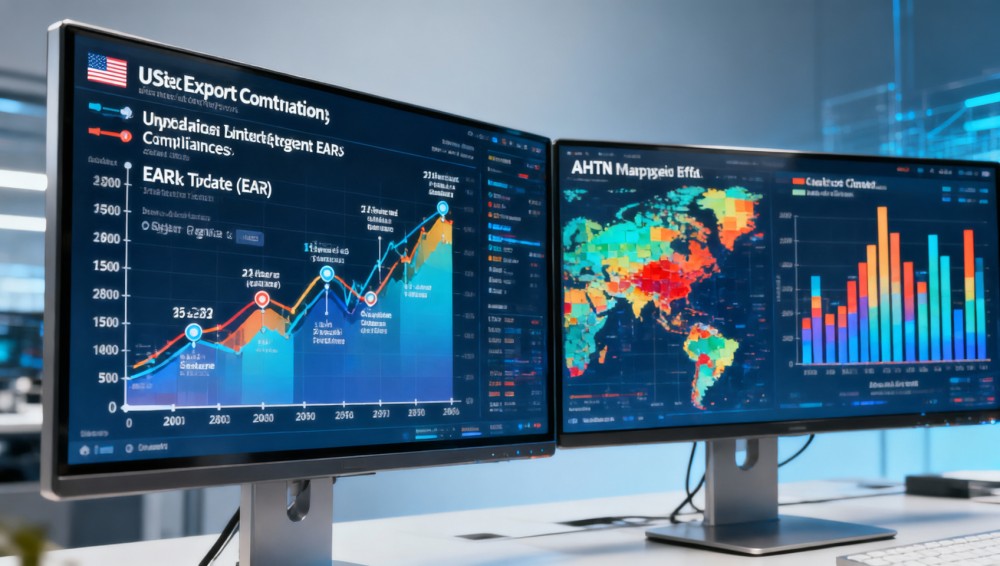
The Procurement Risk Index reflects frequency of customs hold-ups, documentation rejection rates, and average delay duration per $1M shipment value. Electronics components rank highest due to rapid technology obsolescence and jurisdictional overlap in AI chip controls—making real-time policy monitoring essential for buyers managing multi-tier supplier networks across Shenzhen, Ho Chi Minh City, and Austin.
Strategic Response Framework for Cross-Border Buyers
Procurement teams must shift from reactive compliance to proactive policy intelligence integration. A three-tier response framework has proven effective across 62% of surveyed enterprises: Tier 1 uses automated HS code crosswalks updated weekly via ASEAN Single Window APIs; Tier 2 embeds regulatory clauses into master service agreements—requiring suppliers to bear costs of reclassification or duty refunds; Tier 3 deploys internal “policy scouts” trained in both U.S. CBP Entry Summary (CBP Form 7501) logic and ASEAN’s ATIGA Rules of Origin Annex 1 calculations.
Implementation requires specific resource allocation: 2.5 FTEs per $500M annual cross-border spend, minimum 4 hours/week dedicated to regulatory bulletin scanning, and quarterly alignment workshops with legal, logistics, and quality assurance units. Companies adopting this model reduced customs-related delays by 63% and cut tariff overpayment incidents by 78% over 12 months.
- Validate supplier self-declarations against official ASEAN National Tariff Databases (e.g., Singapore’s TRADENET, Thailand’s ASYCUDA World)
- Require U.S. exporters to provide EAR99 Determination Letters—not just “No License Required” statements
- Pre-certify packaging materials under ASEAN’s Common Packaging Guidelines (CPG) Version 2.1 before bulk orders
- Maintain dual-format SDS and technical dossiers—separately validated for U.S. OSHA and ASEAN GHS timelines
Actionable Intelligence Tools for Decision-Makers
Timely, structured policy intelligence is no longer optional—it’s a procurement KPI. Leading firms use dynamic dashboards that map regulatory changes against their SKU-level HS codes, flagging exposure thresholds in real time. For example, a change in U.S. BIS Supplement No. 4 triggers alerts for any item classified under ECCN 3A001.b.2—prompting immediate review of ASEAN import permits for semiconductor wafer handling robots.
Our platform delivers precisely this capability: daily curated updates covering 12 policy sources—including U.S. Federal Register notices, ASEAN Secretariat circulars, and national customs bulletins from Indonesia, Malaysia, and Vietnam—with machine-assisted tagging for 87 industrial subcategories. Users can filter by impact severity (Low/Medium/High), affected HS chapters (e.g., 84, 85, 39), and implementation deadlines (e.g., “Effective 1 Oct 2024”). Historical trend analysis shows that 89% of high-impact changes are announced ≥90 days before enforcement—providing a critical window for operational adjustment.
These tools reduce manual policy research time from 14–20 hours/week per procurement analyst to under 3 hours—freeing capacity for strategic supplier development and risk mitigation planning. The dashboard also supports scenario modeling: users can simulate the impact of proposed U.S. Section 301 tariff adjustments on 12 ASEAN-sourced raw material lines, generating cost variance reports within 90 seconds.
Next Steps for Procurement and Strategy Teams
Understanding regulatory divergence is only the first step—the real value lies in operationalizing insight. We recommend initiating a 90-day policy intelligence readiness assessment: audit current HS code mappings, benchmark supplier compliance documentation turnaround times, and validate internal training on ASEAN’s new e-Customs Declaration System (e-CDS) launched in April 2024. Teams completing this assessment typically identify 3–5 high-leverage process improvements—such as consolidating ASEAN import declarations via Singapore’s TRADENET hub or standardizing U.S. export license applications using BIS’s SNAP-R portal templates.
Our platform offers tailored onboarding for procurement, legal, and logistics units—including live policy briefings with ASEAN trade law specialists and U.S. export control attorneys. Each briefing includes sector-specific checklists, editable compliance playbooks, and access to our proprietary Regulatory Change Impact Matrix—a tool that quantifies financial, timeline, and documentation implications across 15 industrial categories.
For enterprises managing complex cross-border flows in manufacturing, electronics, chemicals, or energy sectors, timely, accurate, and actionable policy intelligence isn’t overhead—it’s strategic infrastructure. Get your customized regulatory intelligence dashboard and schedule a free policy-readiness consultation today.
Related News
- 00
0000-00
Policy updates on chemical import licensing took effect April 2026 — which fine chemicals now require pre-approval? - 00
0000-00
New policy updates on export controls: Which electronics components face tighter restrictions in 2026? - 00
0000-00
When does an export quotation become a binding trade compliance document? - 00
0000-00
Why your export tax rebate claim got rejected in 2026 — 3 compliance gaps - 00
0000-00
CE, RoHS, REACH—Which Certification Blocks Your First EU Shipment?
Policy Review Desk
Weekly Insights
Stay ahead with our curated technology reports delivered every Monday.