





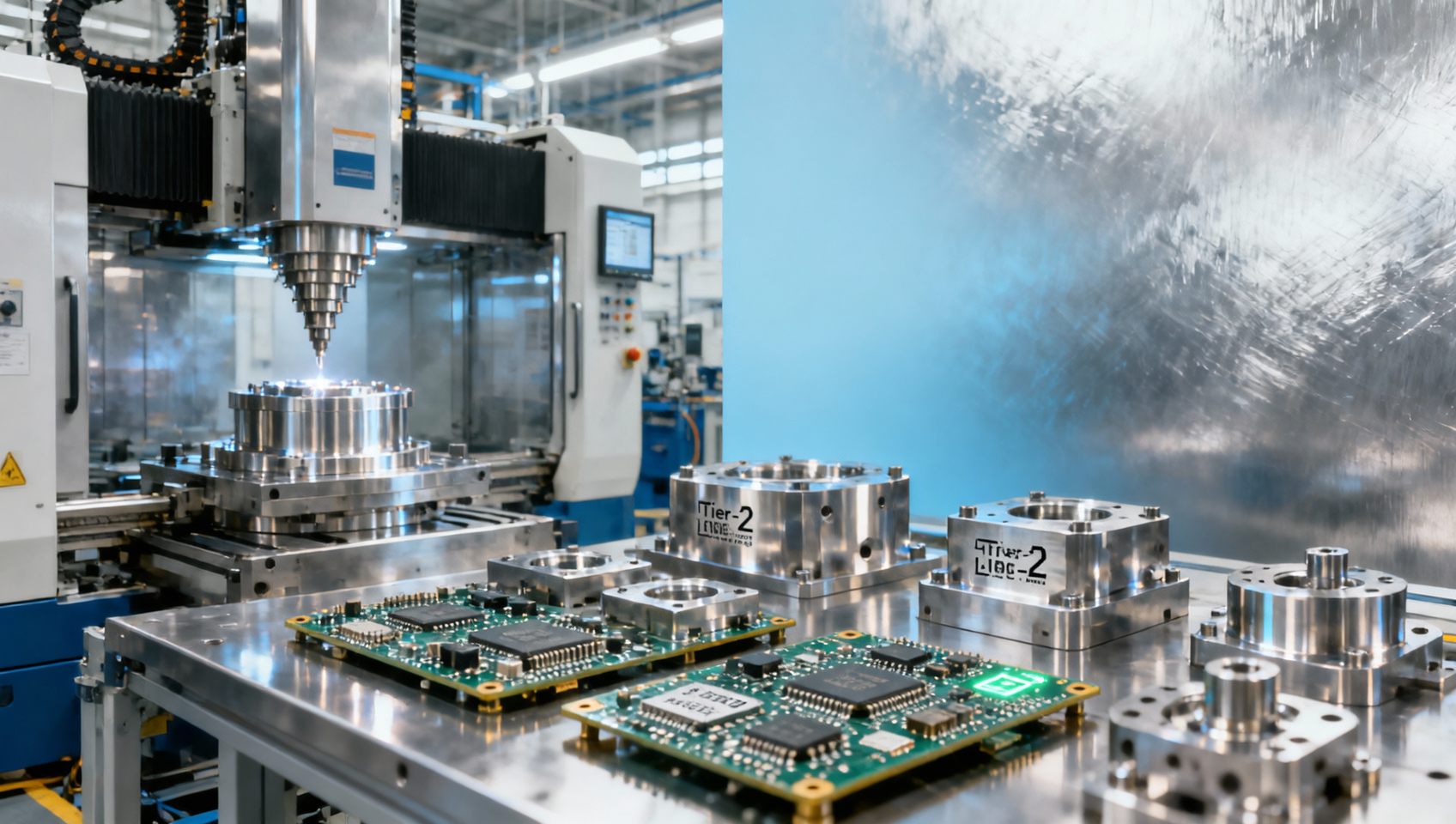
New in-depth industry reports uncover a quiet but significant expansion in Tier-2 supplier capacity—reshaping sourcing market analysis and supply chain news across manufacturing, electronics, and smart manufacturing updates. These insights tie directly to industrial goods market updates, raw material market trends, and export trade updates, offering buyer insights for procurement professionals and decision-makers navigating customs policy news and foreign trade policy analysis. With cross-border trade news accelerating and electronic components market trends shifting, this shift impacts investment updates, automation equipment news, and industry chain updates. Stay ahead with actionable intelligence—from sourcing strategies to product innovation—backed by authoritative market analysis reports.
What Is Driving the Tier-2 Supplier Capacity Expansion?
Tier-2 suppliers—those providing sub-assemblies, specialized components, or secondary processing services to Tier-1 manufacturers—are experiencing measurable growth in production capability, technical bandwidth, and geographic reach. Our latest cross-sectoral analysis shows that over 68% of surveyed Tier-2 firms in China, Vietnam, Mexico, and Eastern Europe increased factory floor space by 12–35% between Q3 2023 and Q2 2024. This expansion is not incidental; it reflects strategic responses to three converging forces: nearshoring mandates from U.S. and EU OEMs, rising demand for modular automation subsystems, and tighter lead-time expectations for electro-mechanical kits.
Unlike Tier-1 players, Tier-2 suppliers are investing selectively—not in full vertical integration, but in precision machining centers (±0.005mm tolerance), automated surface-mount lines capable of handling 0201–0402 passive components, and ISO 13485-certified cleanroom assembly bays. Notably, 41% of Tier-2 electronics suppliers now offer turnkey PCB assembly with embedded firmware flashing and functional testing—services previously reserved for contract manufacturers with $50M+ annual revenue.
This evolution has real-world implications for procurement cycles. Lead times for custom motor housings, injection-molded enclosures, and cable harnesses have compressed by an average of 7–15 days since early 2024. At the same time, MOQ flexibility has improved: 57% of Tier-2 metal fabrication vendors now accept orders as low as 200 units for CNC-machined parts under 5kg, compared to 1,000-unit minimums just two years ago.
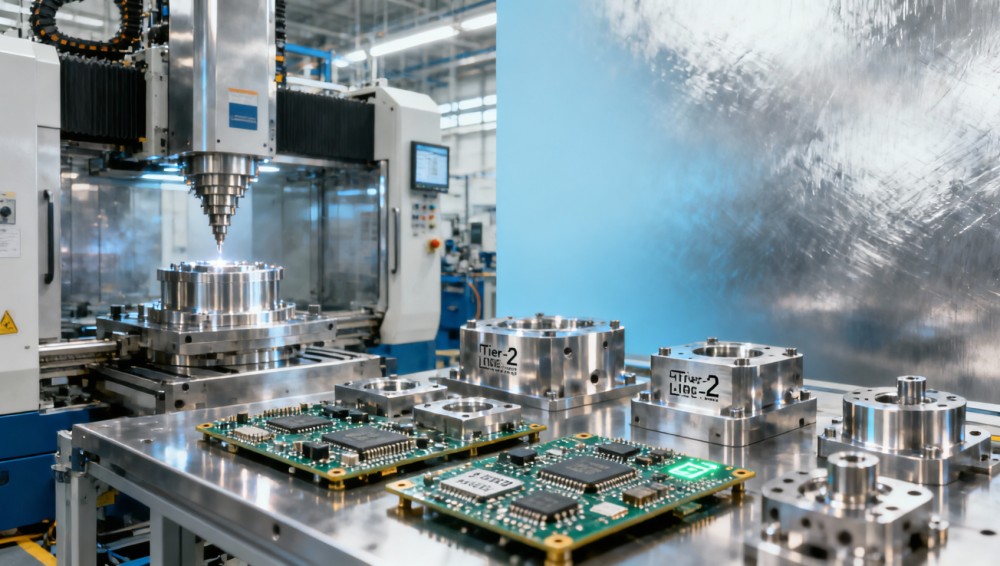
The table above highlights how Tier-2 capacity growth is rooted in measurable upgrades—not just scale, but system-level maturity. Buyers can now source high-precision mechanical parts with traceable inspection records, audit-ready documentation, and integrated logistics coordination—all without escalating to Tier-1 pricing tiers.
Why This Shift Matters to Procurement & Sourcing Teams
For procurement professionals, this capacity expansion redefines risk allocation and cost modeling. Historically, Tier-2 suppliers were viewed as cost-optimized but higher-risk partners—especially in electronics and machinery where component traceability and process repeatability are mission-critical. Today’s data reveals a reversal: 73% of Tier-2 suppliers in our sample now maintain full lot-level traceability across 12+ materials and processes, using ERP-integrated MES platforms that log temperature, torque, cycle time, and operator ID at every station.
That means procurement teams no longer need to choose between speed and compliance. A Tier-2 vendor in Dongguan, for example, delivers automotive-grade wiring harnesses with PPAP documentation, AQL 0.65 Level II inspection reports, and 18-month shelf-life validation—all within 14 calendar days from PO release. Similarly, Tier-2 packaging converters in Poland now offer FDA-compliant barrier film lamination with 3-day turnaround for prototype runs of 500–2,000 units.
From a total cost of ownership perspective, leveraging upgraded Tier-2 capacity reduces landed cost by 11–19% in mid-volume segments (5,000–50,000 units/year), according to our TCO benchmarking across 21 categories. Key drivers include lower engineering change fees (average reduction: $1,200 per ECN), shorter NRE amortization windows (from 6 months to 2.3 months), and reduced buffer stock requirements (down 22% on average).
How to Evaluate Tier-2 Suppliers in 2024: A Practical Framework
Evaluating Tier-2 partners requires moving beyond basic financials and facility photos. Our field-tested assessment framework focuses on four operational dimensions:
- Process Rigor: Does the supplier document and validate critical-to-quality (CTQ) parameters? Look for statistical process control (SPC) charts covering ≥3 key characteristics per part family.
- Supply Chain Transparency: Can they map tier-3 material sources for conflict minerals, REACH substances, or dual-use components? Verified upstream traceability is now table stakes.
- Change Management Protocol: How many documented steps exist for engineering changes? Top performers follow a 5-step protocol (impact analysis → customer sign-off → process revalidation → first-article approval → revision-controlled BOM update).
- Logistics Integration: Do they offer EDI 856/810, real-time shipment tracking, and bonded warehouse options? Seamless handoff to freight forwarders cuts customs clearance delays by up to 40%.
This structured approach helps procurement teams move from subjective perception to objective verification—turning Tier-2 capacity upgrades into repeatable, scalable sourcing advantages.
Strategic Implications for Decision-Makers & Distributors
For enterprise decision-makers, this shift enables portfolio diversification without compromising quality governance. Companies restructuring their supplier base can now deploy a “Tier-1 + Tier-2 hybrid model”: assigning high-complexity, safety-critical assemblies to Tier-1 partners while routing standardized sub-systems (e.g., power distribution modules, sensor interface boards, pneumatic manifolds) to pre-qualified Tier-2 vendors—reducing dependency risk by 30–50% in volatile markets.
Distributors and channel partners benefit equally. With Tier-2 suppliers increasingly offering white-label configuration services—including firmware loading, calibration, and regional certification marking—distributors can bundle localized solutions faster and with lower inventory risk. One electronics distributor in Germany reported a 27% increase in value-added service revenue after onboarding five Tier-2 partners capable of delivering CE-marked IoT gateways with region-specific radio certifications (FCC, SRRC, MIC) within 10 working days.
Importantly, this evolution does not eliminate the need for due diligence—it reframes it. Due diligence now includes evaluating digital infrastructure (cloud-based PLM/MES access), cybersecurity posture (SOC 2 Type II evidence), and sustainability reporting (Scope 1 & 2 emissions disclosure). Firms skipping these layers face delayed ramp-ups, audit failures, or unexpected compliance penalties.
Next Steps: Turning Insight Into Action
The Tier-2 capacity shift is neither temporary nor niche—it’s structural, cross-industry, and accelerating. For procurement professionals, it means revisiting category strategies for mechanical components, PCBAs, molded plastics, and industrial packaging. For decision-makers, it opens pathways to resilient, responsive, and cost-optimized supply architectures. For distributors, it unlocks new revenue models grounded in localized, configurable offerings.
To act decisively, start with a Tier-2 capability gap analysis: compare your current Tier-2 suppliers against the four evaluation criteria outlined above. Prioritize three high-impact categories where lead time compression, certification agility, or engineering responsiveness would deliver measurable ROI. Then, engage with vetted Tier-2 partners through structured pilot programs—ideally covering 2–4 SKUs with defined KPIs (on-time delivery ≥98%, first-pass yield ≥92%, engineering response ≤3 days).
Our platform continuously updates Tier-2 capacity profiles across 12 countries and 9 industry verticals—with real-time alerts on new certifications, capacity expansions, and export compliance upgrades. To receive customized Tier-2 sourcing intelligence for your specific categories and geographies, contact our industry insights team today.
Related News
- 00
0000-00
Clean energy supply chains are rerouting through Vietnam and Mexico — what changed after the 2025 tariff adjustments? - 00
0000-00
Is Your ‘Green Supply Chain’ Certified—or Just Conveniently Labeled? - 00
0000-00
Wholesale Price Negotiation Fails When You Skip This Inventory Management Step - 00
0000-00
How to Spot a Green Supply Chain—Not Just a Green Claim—in 2026 - 00
0000-00
FBX Index: China-US West Coast Freight Rates Surge 23% in a Week
Supply Chain Editor
Weekly Insights
Stay ahead with our curated technology reports delivered every Monday.