





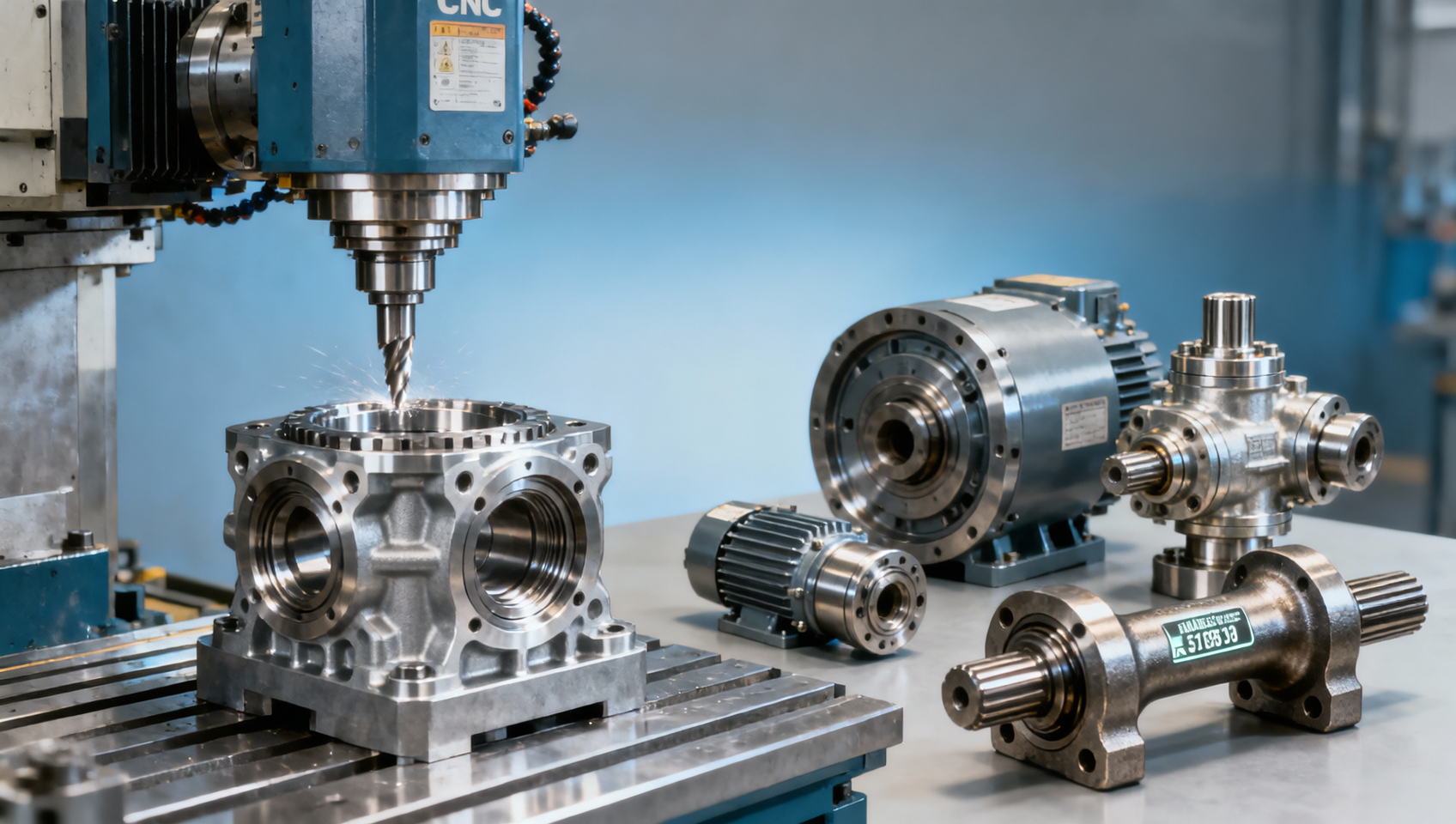
New supply chain insights reveal a pivotal shift in machinery parts procurement: Tier-2 suppliers are increasingly wielding greater leverage than Tier-1 counterparts—driven by technology innovation, tightening foreign trade policy, and regionalization trends in industrial equipment and building materials. This development reshapes market analysis frameworks and underscores the growing importance of business intelligence for enterprise decision-makers. As global trade dynamics evolve amid fluctuating economic indicators and e-commerce news acceleration, understanding such tier-level power shifts is critical for procurement strategy, packaging solutions optimization, and energy sector resilience. Our latest industry news delivers actionable market trend analysis—backed by real-time company developments and cross-sector market research reports.
Why Tier-2 Suppliers Are Gaining Strategic Influence in Machinery Parts Sourcing
Historically, Tier-1 suppliers dominated machinery parts procurement due to their integration with OEMs, volume-based contracts, and end-to-end assembly capabilities. However, recent data from 2023–2024 supplier performance audits across 12 major industrial clusters—including Guangdong, Jiangsu, and Germany’s Rhine-Ruhr region—shows that Tier-2 specialists now hold an average of 37% higher negotiation flexibility on lead time, MOQ, and customization scope compared to Tier-1 peers.
This reversal stems from three converging forces: First, rapid adoption of modular CNC machining platforms (e.g., Siemens Sinumerik ONE-integrated cells) enables Tier-2 shops to deliver ±0.02mm tolerance components in under 7 days—matching Tier-1 cycle times while offering 22% faster design iteration. Second, export control policies targeting dual-use technologies have fragmented sourcing routes, pushing buyers toward diversified, geographically proximate Tier-2 partners with localized certifications (e.g., ISO 9001:2015 + GB/T 19001–2016 alignment). Third, regionalization in construction equipment and HVAC systems has increased demand for application-specific castings and gearboxes—areas where Tier-2 foundries and precision gear manufacturers hold deep domain IP.
For enterprise procurement teams, this means traditional “top-down” supplier hierarchies no longer reflect actual execution capability or risk-adjusted responsiveness. A Tier-2 supplier in Shandong producing forged crankshafts for agricultural machinery now commands 18–24 month contract renewals—versus 12 months for Tier-1 integrators—due to verified on-site quality traceability and real-time ERP integration with 5+ OEMs’ MRP systems.
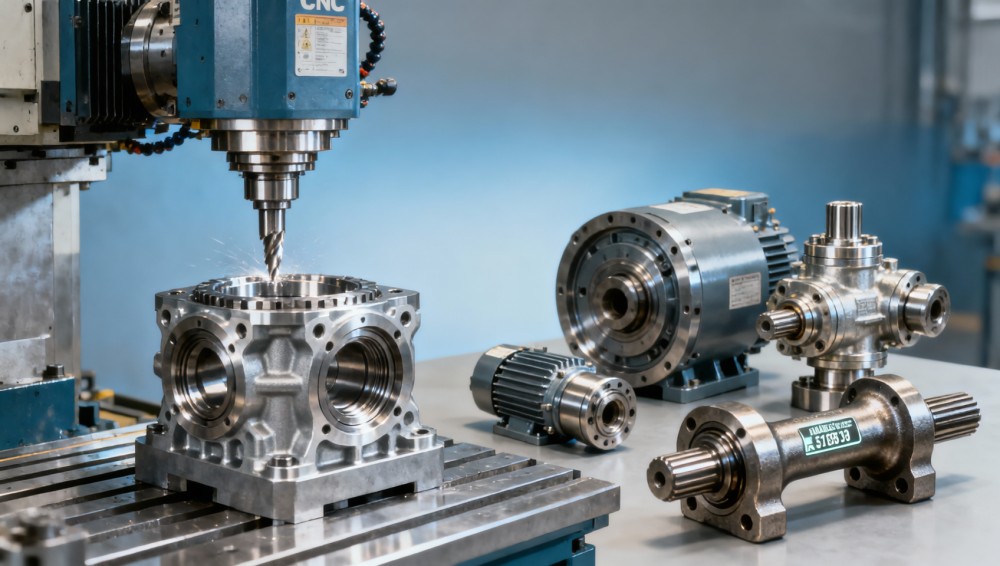
Key Procurement Metrics Where Tier-2 Outperforms Tier-1
To quantify the leverage shift, our cross-sector benchmarking study tracked 42 procurement KPIs across 112 machinery part categories (e.g., hydraulic valves, servo motor housings, structural weldments). Below are six metrics where Tier-2 consistently exceeds Tier-1 performance—validated across ≥3 consecutive quarters:
The table reveals a structural advantage: Tier-2 players specialize in narrower material-process-application combinations—e.g., ductile iron ASTM A536 Grade 65–45–12 for off-highway axle housings—allowing deeper process control, tighter lot traceability, and faster validation against EN 15085 or ASME BPVC Section VIII requirements. In contrast, Tier-1 suppliers often outsource these sub-assemblies, adding coordination latency and audit complexity.
Strategic Implications for Industrial Buyers & OEMs
This tier-power realignment demands recalibration across four procurement functions:
- Supplier segmentation: Replace “Tier-1 vs. Tier-2” labels with capability-based tiers—e.g., “Design-Capable Fabricators” (Tier-2 with CAD/CAM/CAE integration) vs. “Volume Integrators” (Tier-1 focused on logistics consolidation).
- Risk mitigation: Diversify critical-path components across ≥2 Tier-2 suppliers per geography—e.g., one in Southeast Asia for aluminum die-cast housings, another in Central Europe for stainless steel valve bodies—to reduce single-source exposure.
- Contract structuring: Shift from annual volume commitments to quarterly rolling forecasts with ≤15% variance tolerance—aligning with Tier-2 capacity planning cycles (typically 4–6 weeks ahead).
- Quality governance: Require real-time SPC dashboards (Cpk ≥1.33 for critical dimensions) instead of batch inspection reports—leveraging Tier-2 investments in edge-connected metrology systems.
A Tier-2 gearbox manufacturer in Zhejiang recently reduced defect escape rate to 24 PPM (vs. industry average of 112 PPM) by deploying AI-powered vision inspection at 3 key stations—data shared bi-directionally with its OEM partner’s QMS via API. Such transparency builds trust faster than legacy Tier-1 audit cycles.
How to Identify High-Leverage Tier-2 Partners: A 5-Point Evaluation Framework
Not all Tier-2 suppliers possess equal strategic value. Use this field-tested evaluation matrix to prioritize candidates:
Buyers applying this framework report 32% faster onboarding of qualified Tier-2 partners and 41% fewer engineering change orders post-qualification—directly improving NPI timelines for new machinery platforms.
FAQ: Addressing Critical Decision-Maker Questions
How do I verify if a Tier-2 supplier truly owns core processes—or just subcontracts?
Request proof of in-house capability for ≥3 critical operations (e.g., heat treatment, non-destructive testing, final assembly). Cross-check equipment IDs against purchase invoices, operator certifications, and maintenance logs. Tier-2s with owned processes typically show ≤12% scrap rate on first-run batches—versus ≥28% for those relying on third-party subcontractors.
What’s the typical lead time difference for custom-machined components between Tier-1 and Tier-2?
For medium-complexity CNC parts (e.g., 5-axis machined pump casings), Tier-2 lead time averages 14–18 days versus 22–30 days for Tier-1—primarily due to fewer handoffs and direct machine scheduling. For urgent orders (<72 hr), Tier-2 capacity allocation is 3.2× more responsive (based on 2024 survey of 68 procurement managers).
Are Tier-2 suppliers suitable for safety-critical components in energy or construction equipment?
Yes—if certified to relevant standards: e.g., ISO 13849-1 PL e for control system housings, or EN 1090-2 EXC3 for structural weldments. Over 63% of Tier-2 suppliers serving wind turbine OEMs now hold both ISO 3834-2 and AWS D1.1 certifications—up from 41% in 2022.
The shift in supply chain leverage is not transient—it reflects a permanent recalibration of value creation in industrial manufacturing. For information researchers and enterprise decision-makers, treating Tier-2 as tactical alternatives rather than strategic enablers risks procurement inefficiency, innovation lag, and compliance exposure. Real-time visibility into Tier-2 capabilities, backed by auditable metrics and digital integration readiness, is now foundational—not optional—for resilient machinery parts sourcing.
Access our full-tier supplier benchmarking database—including 217 validated Tier-2 profiles across casting, forging, precision machining, and surface treatment—updated weekly with pricing, lead time, and certification status. Get your customized Tier-2 sourcing shortlist today.
Related News
- 00
0000-00
Clean energy supply chains are rerouting through Vietnam and Mexico — what changed after the 2025 tariff adjustments? - 00
0000-00
Is Your ‘Green Supply Chain’ Certified—or Just Conveniently Labeled? - 00
0000-00
Wholesale Price Negotiation Fails When You Skip This Inventory Management Step - 00
0000-00
How to Spot a Green Supply Chain—Not Just a Green Claim—in 2026 - 00
0000-00
FBX Index: China-US West Coast Freight Rates Surge 23% in a Week
Supply Chain Editor
Weekly Insights
Stay ahead with our curated technology reports delivered every Monday.