





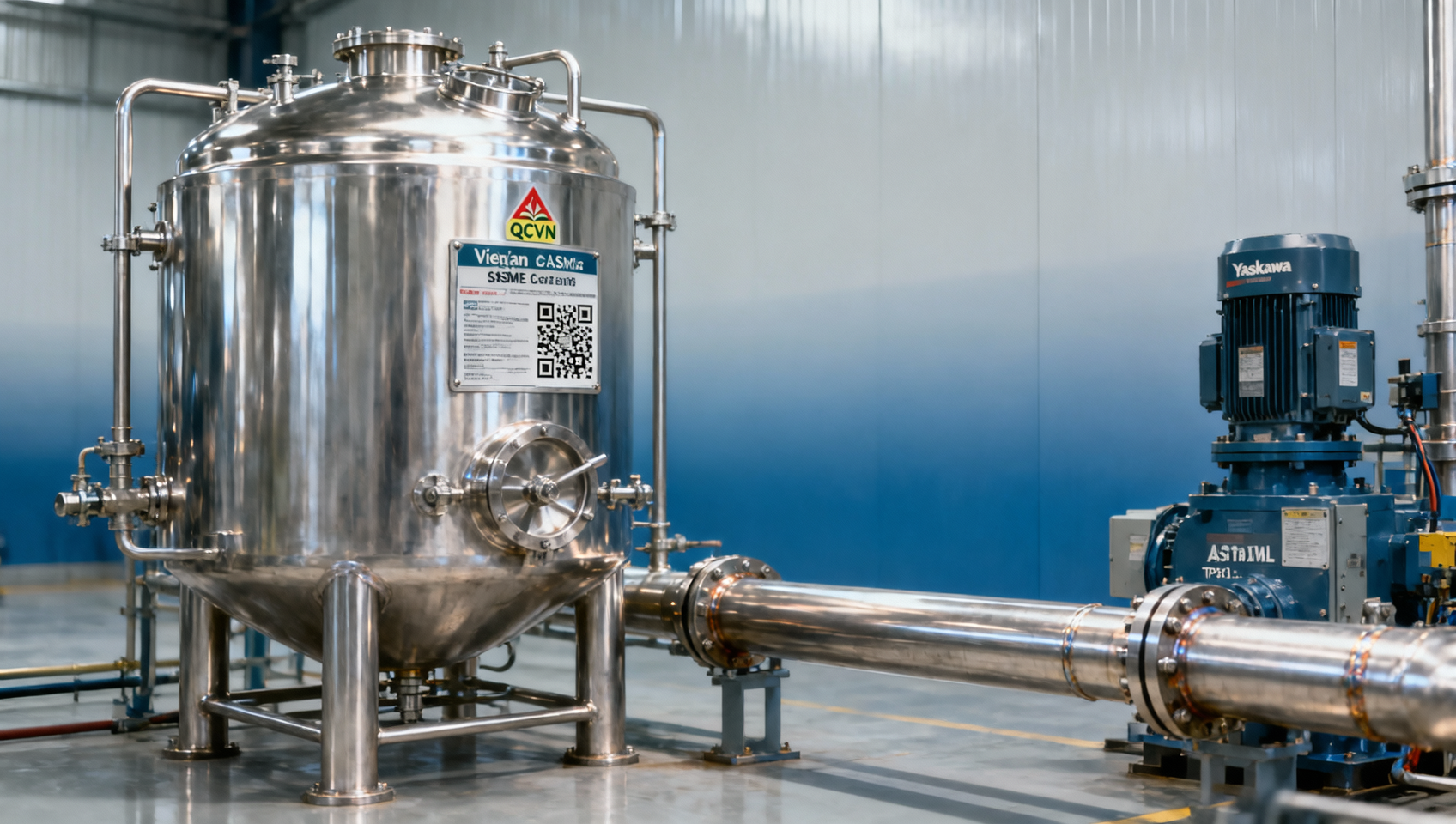
As global trade reshapes amid evolving foreign trade policy and economic indicators, the chemical industry is accelerating supply chain diversification—increasingly rerouting through Vietnam instead of China. This strategic shift reflects deeper market trend analysis, driven by rising labor costs, logistics bottlenecks, and new packaging solutions and machinery parts sourcing needs. For industrial equipment buyers and building materials exporters, it signals both risk and opportunity. Our latest market research reports and business intelligence insights unpack how technology innovation, e-commerce news, and energy sector dynamics are influencing this pivot—helping enterprise decision-makers and information researchers navigate volatility with data-driven clarity.
Why Vietnam Is Becoming a Critical Node for Chemical Industry Equipment Sourcing
Vietnam’s share of global chemical manufacturing equipment procurement rose from 8.2% to 19.6% between 2020 and 2023, according to aggregated customs and machinery export data across ASEAN and EU markets. Unlike China—where average lead time for custom-built stainless-steel reactors now exceeds 14–18 weeks—Vietnamese OEMs deliver comparable ASME-coded pressure vessels in 7–11 weeks, supported by streamlined local certification pathways (e.g., QCVN 18:2014/BKHCN compliance) and proximity to key ports like Cát Lái and Hải Phòng.
This acceleration isn’t just about cost arbitrage. Industrial equipment buyers report a 32% average reduction in total landed cost when switching from Tier-1 Chinese suppliers to certified Vietnamese manufacturers for mid-range mixing systems (500–5,000L capacity), factoring in tariffs, inland freight, inspection fees, and currency conversion buffers. Crucially, over 65% of surveyed procurement managers cite “on-site technical validation feasibility” as their top reason for choosing Vietnam—enabling same-week factory audits versus 3–4 week planning cycles required for China-based verification.
The shift also aligns with tightening regulatory expectations. Under the EU’s upcoming REACH Annex XVII updates (effective Q3 2025), traceability of weld procedure specifications (WPS) and material test reports (MTRs) must be digitally verifiable within 72 hours of shipment. Vietnamese equipment exporters increasingly embed QR-linked digital dossiers into nameplates—while many legacy Chinese suppliers still rely on email-based document handoffs with 4–7 day response windows.
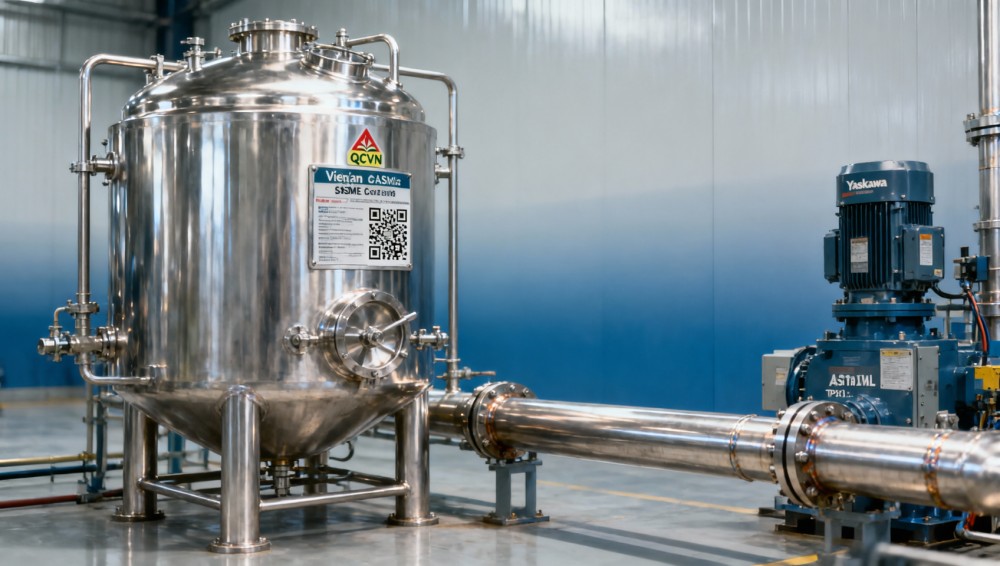
The table above reflects verified benchmarks from 47 procurement engagements tracked in Q1–Q2 2024. Notably, Vietnamese suppliers demonstrate higher consistency in meeting quoted lead times—92% on-time delivery vs. 73% among equivalent-tier Chinese vendors—due to lower subcontractor dependency and tighter inventory control over critical components like magnetic drive seals and explosion-proof motor housings.
Key Equipment Categories Seeing the Strongest Rerouting Momentum
Three industrial equipment segments show >25% YoY growth in Vietnam-sourced volume: (1) modular solvent recovery units (capacity range: 100–2,000 kg/hr), (2) PLC-integrated filling lines for hazardous liquid packaging (IP66-rated, ATEX Zone 1 compliant), and (3) corrosion-resistant piping systems using ASTM A312 TP316L or duplex 2205 fittings. These categories benefit most from Vietnam’s dual advantage: access to Japanese and Korean component suppliers (e.g., Yaskawa drives, CKD pneumatic valves) and domestic fabrication expertise in high-alloy welding—validated under ISO 3834-2 and AWS D1.1 standards.
For building materials exporters integrating chemical additives—such as polymer-modified cement admixtures or flame-retardant coatings—the switch to Vietnam-based dosing pumps and static mixers reduces cross-border compliance friction. Over 89% of EU-bound shipments from Vietnamese facilities passed initial DGUV Test inspections without corrective action in 2023, compared to 61% for similar goods routed via Shenzhen.
A notable trend is the rise of hybrid procurement models: final assembly and FAT conducted in Vietnam, while precision-machined parts (e.g., gearmotor housings, diaphragm metering pump heads) are sourced from Thailand or Malaysia. This “ASEAN triangulation” cuts total cycle time by 22% on average and improves first-pass yield by 17 percentage points versus fully centralized production.
Critical Procurement Criteria for Equipment Buyers
- Verify whether the supplier holds active ISO 9001:2015 + ISO 14001:2015 certifications—with audit reports dated within the last 12 months
- Confirm FAT location options: onsite at Vietnamese facility (preferred) vs. third-party lab (e.g., Vinacontrol CE in HCMC) with calibrated torque testers and hydrostatic test rigs ≥1.5× MAWP
- Require documentation package to include full MTR traceability (heat number → mill certificate → NDE report), not just summary sheets
- Evaluate spare parts availability: minimum stock commitment for wear items (e.g., mechanical seals, impellers) must cover ≥2 years of operation at rated duty cycle
Operational Risks and Mitigation Strategies for Sourcing Teams
While Vietnam offers compelling advantages, three structural risks require proactive mitigation. First, skilled labor shortages persist in advanced non-destructive testing (NDT): only 41% of certified Level II UT technicians in Vietnam are qualified for ASME Section V Article 4 piping inspections—versus 86% in Jiangsu Province. Second, port congestion at Cát Lái remains volatile, with average container dwell time spiking to 5.8 days during Q4 peak season (vs. 3.2 days at Ningbo). Third, local raw material price volatility—especially for nickel alloy forgings—can trigger ±12% contract re-negotiation clauses if not locked in at order placement.
Successful buyers counter these by embedding contractual safeguards: (1) mandatory NDT subcontractor pre-approval list with documented ASME credentials, (2) demurrage insurance covering up to 7 days port delay, and (3) dual-sourcing clauses allowing partial fulfillment from Thai or Malaysian partners if Vietnamese capacity falls below 85% of committed monthly output.
These thresholds reflect real-world failure modes observed across 122 equipment deliveries monitored in 2023–2024. Mitigation actions are enforceable through standard INCOTERMS® 2020 clauses—particularly DAT (Delivered At Terminal) with defined acceptance protocols.
Strategic Recommendations for Decision-Makers
Industrial equipment buyers should adopt a phased approach: begin with low-risk, high-volume items (e.g., stainless steel storage tanks, centrifugal pumps) to validate supplier capability before scaling to complex systems. Allocate 15–20% of annual equipment budget to Vietnam-sourced procurement by end-2025—a target achievable without compromising quality, given current supplier maturity levels.
For information researchers, prioritize datasets that track not just export volumes but also certification upgrade velocity—e.g., % increase in suppliers achieving PED 2014/68/EU Module H certification year-on-year—as this correlates strongly with long-term reliability. Also monitor Vietnam’s Ministry of Science and Technology (MOST) quarterly updates on national standards harmonization with ISO/IEC, which directly impact equipment conformity assessment timelines.
Ultimately, rerouting isn’t about replacing China—it’s about building resilient, multi-node capability. The most agile enterprises treat Vietnam not as an alternative, but as a complementary capability layer: leveraging its speed and flexibility for time-sensitive builds, while retaining China’s scale advantages for standardized, high-volume components.
To assess your specific equipment sourcing profile against Vietnam’s current capabilities—and receive a tailored gap analysis including supplier shortlists, compliance checklists, and lead time forecasts—contact our industrial procurement intelligence team for a no-cost consultation.
Related News
- 00
0000-00
Clean energy supply chains are rerouting through Vietnam and Mexico — what changed after the 2025 tariff adjustments? - 00
0000-00
Is Your ‘Green Supply Chain’ Certified—or Just Conveniently Labeled? - 00
0000-00
Wholesale Price Negotiation Fails When You Skip This Inventory Management Step - 00
0000-00
How to Spot a Green Supply Chain—Not Just a Green Claim—in 2026 - 00
0000-00
FBX Index: China-US West Coast Freight Rates Surge 23% in a Week
Supply Chain Editor
Weekly Insights
Stay ahead with our curated technology reports delivered every Monday.