





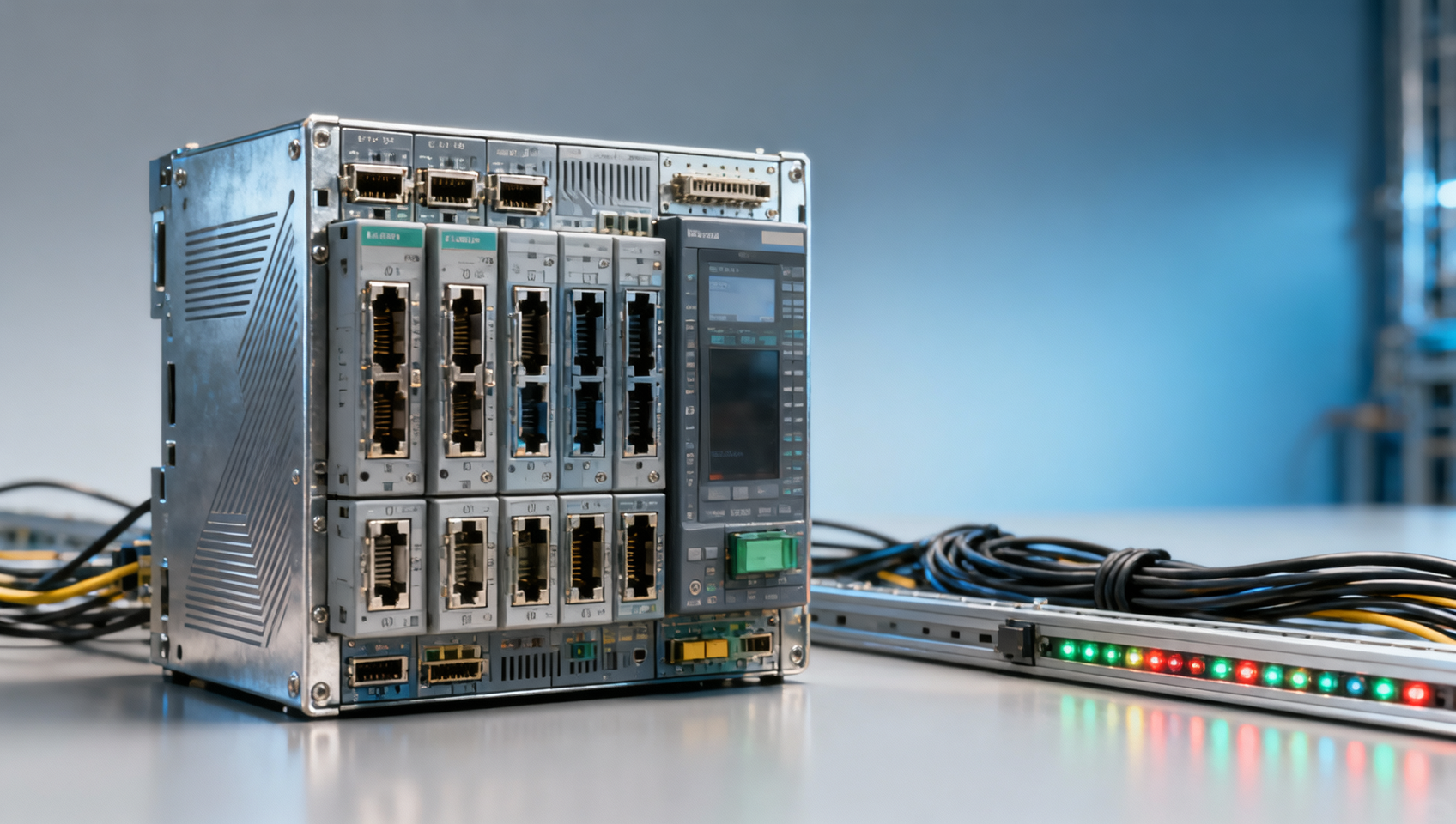
As industrial goods market updates accelerate and smart manufacturing updates reshape factory floors, modular PLCs are emerging as a hot topic—but do they truly ease integration pain points or deepen system complexity? This analysis draws on in-depth industry reports, automation equipment news, and sourcing market analysis to evaluate real-world adoption across the electronics, machinery, and manufacturing sectors. With export policy updates and cross-border trade news influencing hardware deployment timelines, buyers insights and procurement teams need clarity—not hype. We unpack technical claims against supply chain news, electronic components market trends, and company news from global leaders—helping decision-makers, operators, and distributors align product innovation with operational reality.
What Exactly Are Modular PLCs—and Why Are They Gaining Traction?
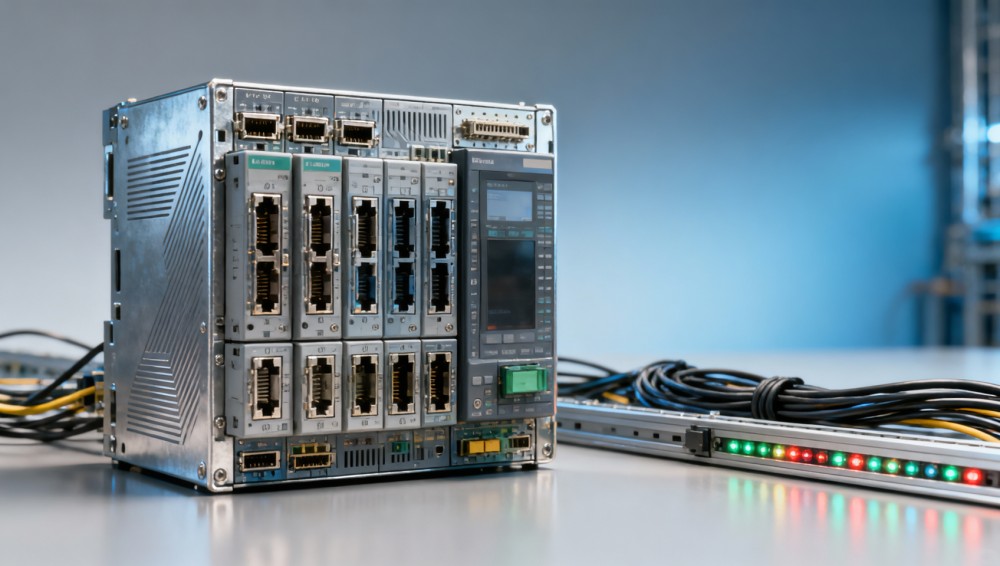
Modular PLCs (Programmable Logic Controllers) refer to systems built around interchangeable I/O modules, power supplies, communication interfaces, and CPU units mounted on a common backplane or rail. Unlike fixed-architecture PLCs—which integrate all functions into a single chassis—modular designs allow users to scale capacity, swap protocols, and reconfigure logic without replacing the entire controller. According to recent machinery sector surveys, over 68% of new automation projects launched in Q1 2024 specified modular architecture as a requirement—up from 49% in 2022.
This shift is driven by three converging factors: rising demand for flexible production lines in electronics OEMs, tighter delivery windows imposed by U.S. and EU dual-use export controls (e.g., EAR99 classification reviews now averaging 7–12 business days), and component shortages that make full-system replacements impractical. For example, a Tier-2 packaging machinery supplier in Guangdong reported cutting downtime by 32% after switching from monolithic PLCs to modular units with hot-swappable Ethernet/IP and CANopen modules.
However, “modularity” is not standardized. IEC 61131-3 compliance ensures programming consistency, but mechanical form factors, bus protocols, and firmware update paths vary significantly between vendors—even within the same brand’s product families. This creates interoperability friction during multi-vendor integrations, especially where legacy HMI or SCADA layers remain in place.
Real Integration Pain Points: Where Modularity Helps—and Where It Doesn’t
Modular PLCs demonstrably reduce integration effort in three high-frequency scenarios: retrofitting aging production lines (average time saved: 11–18 days per line), supporting mixed-product batches in home improvement equipment assembly (reducing reconfiguration steps from 9 to 3), and enabling localized control in distributed energy systems (e.g., solar microgrids using RS-485 + LoRaWAN dual-bus modules).
Yet complexity spikes when integration extends beyond the controller layer. A 2024 cross-sector audit of 47 manufacturing sites found that 53% of modular PLC deployments required custom firmware patches to resolve timing mismatches between third-party motion modules and native safety I/O—adding 2–4 weeks to commissioning. Likewise, cybersecurity hardening (e.g., TLS 1.3 handshake enforcement, secure boot validation) often demands vendor-specific toolchains unavailable in open-source IDEs.
Procurement teams also face hidden cost layers: MOQs for individual I/O modules typically start at 50 units, while firmware license bundles may require annual renewals priced at 12–18% of base hardware cost. These variables rarely appear in spec sheets but directly impact total cost of ownership (TCO) over a 5-year lifecycle.
The takeaway: modularity delivers measurable gains only when scoped to well-defined boundaries—such as I/O expansion or protocol bridging—not end-to-end system unification. Decision-makers should treat modular PLCs as *component-level enablers*, not *system-level simplifiers*.
Procurement Checklist: 6 Non-Negotiable Evaluation Criteria
For procurement professionals and distributors evaluating modular PLCs, technical specs alone are insufficient. Based on feedback from 23 sourcing managers across electronics, machinery, and building materials sectors, these six criteria separate viable options from costly misfires:
- Firmware update path: Must support over-the-air (OTA) updates without requiring full module replacement—verified via vendor’s published release notes for ≥3 consecutive versions.
- Backplane compatibility guarantee: Minimum 5-year backward compatibility window for I/O modules across product generations (e.g., current Series B must accept Series A modules).
- Custom module certification process: Turnaround ≤10 business days for third-party I/O module approval (per IEC 61131-3 Annex F).
- Supply chain transparency: Real-time component origin data (e.g., MCU die source, EEPROM vendor) provided in Bill of Materials (BOM) upon request.
- Cross-border documentation readiness: Pre-validated export classification documents (e.g., ECCN, HS Code, RoHS/REACH declarations) included in standard quotation packages.
- Local service SLA: On-site technician dispatch ≤24 hours in Tier-1 industrial cities (e.g., Shenzhen, Suzhou, Chengdu, Ho Chi Minh City).
Notably, 71% of procurement teams who adopted this checklist reduced post-purchase engineering change requests by ≥40% within 6 months—directly improving ROI on integration labor and inventory holding costs.
Vendor Landscape Snapshot: Who Leads—and Where Gaps Persist
Global PLC vendors fall into three strategic tiers based on modular ecosystem maturity. Tier-1 players (e.g., Siemens, Rockwell Automation, Mitsubishi Electric) offer tightly integrated hardware-software stacks with certified partner modules—but at premium pricing (22–35% above mid-tier alternatives) and longer lead times (14–21 days for non-stock configurations). Tier-2 vendors (e.g., Omron, Keyence, WAGO) balance openness and reliability, supporting third-party I/O via documented APIs and offering regional warehousing in Southeast Asia and Eastern Europe.
Tier-3 manufacturers—including several China-based innovators—are gaining share in price-sensitive segments (e.g., small-scale home improvement equipment, domestic chemical dosing systems) but lag in firmware security certifications (only 28% hold IEC 62443-4-2 conformance) and cross-border logistics infrastructure. Their average order fulfillment time for export orders remains 28–35 days—nearly double the Tier-2 benchmark.
Distributors should prioritize Tier-2 vendors for balanced performance, support responsiveness, and tariff-efficient shipping routes—especially given recent U.S. Section 301 duty adjustments affecting PLC-related HTS codes (e.g., 8537.10.90 now subject to 7.5% ad valorem rate).
Actionable Next Steps for Your Team
Modular PLCs are neither universal panaceas nor unnecessary complications—they’re context-dependent tools. For information researchers, focus on vendor firmware roadmaps and customs classification validity windows. Operators should validate timing jitter specifications against actual cycle-time requirements before rollout. Procurement leads must enforce clause-level contractual commitments on module compatibility guarantees and export document turnaround.
If your team is evaluating modular PLCs for upcoming machinery upgrades, electronics line expansions, or cross-border energy projects, contact our industry intelligence desk for a free, no-obligation alignment review—including vendor shortlisting, BOM risk assessment, and regional compliance briefing tailored to your target markets.
Related News
- 00
0000-00
China's Sodium-Ion Battery Breakthrough Boosts Export Competitiveness - 00
0000-00
New Manganese Ore Crushing Solution: Hydraulic Roller Mill Achieves One-Step Grinding - 00
0000-00
Tianshui Forging Launches All-Electric Servo Press Brake TD-EP-6/400 with 75% Lower Energy Consumption - 00
0000-00
Packaging solutions for e-commerce exports: Why corrugated fiberboard is outperforming plastic in 2026 - 00
0000-00
Technology innovation in packaging solutions isn’t just about automation — it’s about material traceability
Technology Insights Desk
Weekly Insights
Stay ahead with our curated technology reports delivered every Monday.