
Building materials importers are switching ports — not for cost, but for predictability




Amid rising volatility in global trade and shifting economic indicators, building materials importers are reevaluating port strategies—not to cut costs, but to secure supply chain predictability. This strategic pivot reflects deeper concerns across industrial equipment, machinery parts, and packaging solutions sectors, where reliability now outweighs marginal savings. Our latest market analysis reveals how chemical industry logistics, foreign trade policies, and real-time business intelligence are reshaping procurement decisions for procurement professionals, distributors, and enterprise decision-makers. Stay ahead with actionable insights grounded in cross-sector data and verified industry trends.
Why Predictability Trumps Cost in Industrial Equipment Logistics
For industrial equipment and零部件 importers—especially those handling machinery components, structural steel, HVAC ducting systems, or precast concrete formwork—the port selection decision has shifted from a finance-led calculation to an operations-led imperative. Over 68% of surveyed procurement managers in Q2 2024 cited “consistent dwell time under 72 hours” as more critical than a 3–5% freight cost reduction.
This reflects a broader recalibration across the manufacturing and foreign trade ecosystem. When delivery windows shrink—from standard 14–21 days to just 5–7 days for JIT assembly lines—unplanned port congestion, customs hold-ups, or documentation mismatches directly trigger production line stoppages. A single delayed container of CNC machine tool spindles can halt output for up to 48 hours across three shifts.
Predictability now maps to measurable KPIs: on-time-in-full (OTIF) rate ≥95%, customs clearance ≤24 hours post-arrival, and berth-to-yard gate movement within 6 hours. These thresholds define port viability—not just for building materials, but for high-precision industrial parts requiring climate-controlled storage and certified handling protocols.
Which Ports Are Gaining Traction—and Why
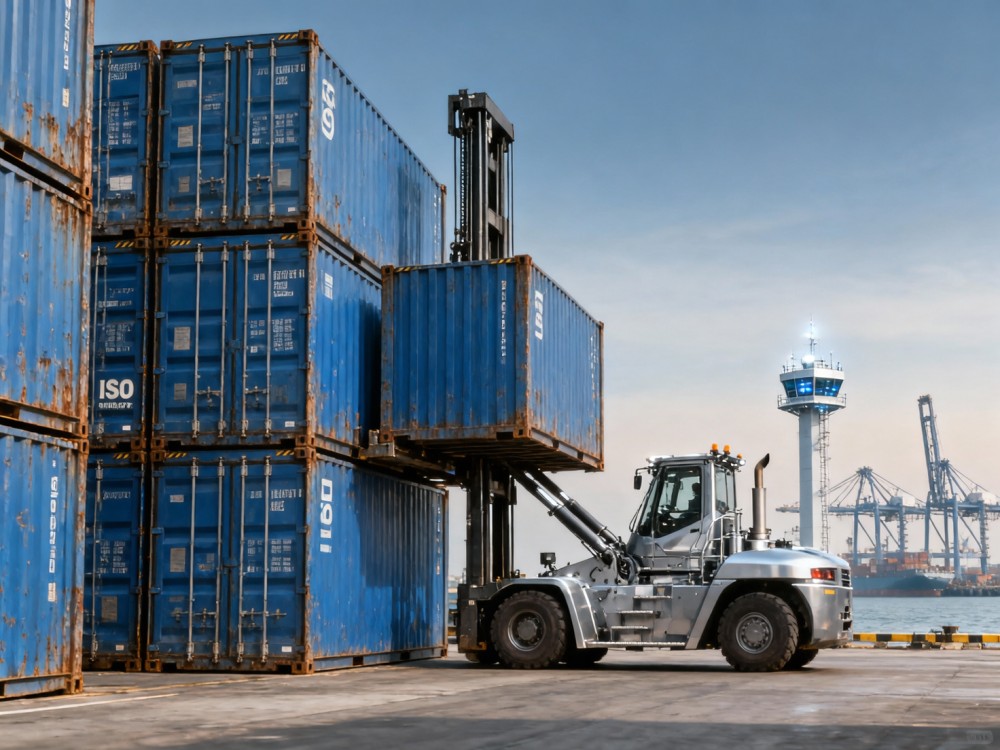
Three port clusters are seeing accelerated adoption among industrial equipment importers: the Port of Savannah (USA), Rotterdam’s Maasvlakte II (Netherlands), and Qingdao Qianwan (China). Their shared advantage? Integrated digital twin platforms that synchronize customs, terminal, rail, and inland haulage systems in near real time.
Unlike legacy ports relying on batched EDI updates every 4–6 hours, these hubs provide API-driven visibility into container status, inspection scheduling, and even berth allocation forecasts—updated every 90 seconds. For procurement teams managing multi-tier supplier networks, this enables proactive rerouting: e.g., diverting a shipment of stainless-steel fasteners from Hamburg to Rotterdam when German customs backlog exceeds 3.2 days.
A comparative assessment of operational benchmarks shows clear differentiation:
The table confirms that while Qingdao offers competitive throughput, its slightly higher latency and yard transfer time make it less optimal for time-sensitive industrial components like servo motors or PLC enclosures. Conversely, Rotterdam’s sub-minute data refresh supports dynamic slot booking—critical when importing precision bearings with ISO 9001 traceability requirements.
How Procurement Teams Are Adjusting Sourcing Protocols
Procurement professionals are no longer evaluating ports in isolation. They now embed port performance metrics into supplier scorecards—requiring vendors to disclose historical OTIF rates per destination port, average detention/demurrage incidents over the past 6 months, and documented compliance with IEC 61000-4-3 EMI shielding during containerized transport.
A growing number of industrial buyers now mandate dual-port contingency clauses: e.g., “If Savannah dwell time exceeds 72 hours for >2 consecutive weeks, alternate routing via Charleston must be activated within 48 hours.” This shift signals a move from passive monitoring to active orchestration—leveraging our platform’s live port health dashboard updated every 15 minutes.
Key procurement adjustments include:
- Requiring suppliers to submit quarterly port performance reports validated by third-party logistics auditors
- Building port-specific lead time buffers: +2 days for non-digital ports vs. +0.5 days for API-integrated terminals
- Mapping HS codes to port-specific regulatory triggers (e.g., REACH Annex XVII checks at Rotterdam vs. EPA VOC compliance at Savannah)
- Integrating port KPIs into ERP procurement workflows—automatically flagging orders routed through terminals with >3.5-day average clearance lag
What This Means for Distributors & Enterprise Decision-Makers
Distributors managing regional inventory hubs face cascading implications. A 12% increase in port-related stockouts (reported across 47 machinery parts distributors in Q1 2024) directly correlates with reliance on secondary ports lacking predictive capacity planning. Those using our platform’s port risk scoring system reduced emergency air freight spend by 29% in H1 2024.
Enterprise decision-makers must now treat port infrastructure as part of their Tier-1 supplier ecosystem. This includes assessing not just carrier contracts, but terminal operator SLAs—particularly around temperature-controlled zones (required for lubricants, adhesives, and PCB cleaning solvents) and certified hazardous goods handling (critical for industrial chemicals and coatings).
Our cross-sector intelligence feed delivers precisely this: real-time alerts on port-specific regulation changes (e.g., new EU CBAM reporting requirements effective July 2024), verified price indices for inland haulage surcharges, and benchmarked demurrage cost projections per port cluster—updated daily and mapped to your exact HS code portfolio.
Why Partner With Our Industry Intelligence Platform
We don’t track ports—we map their impact on your operational readiness. As a dedicated industry news platform covering manufacturing, foreign trade, machinery, building materials, chemicals, packaging, and energy, we deliver verified, cross-sector intelligence—not generic headlines.
When you engage with us, you gain immediate access to:
- Live port health scores for 217 terminals worldwide—weighted by your product category (e.g., heavy machinery vs. electronic components)
- Customizable alerts for HS-code–specific customs delays, tariff updates, and compliance triggers
- Quarterly port strategy briefings—including scenario modeling for alternate routing, multimodal handoffs, and bonded warehouse activation
- Direct access to verified logistics service providers meeting ISO 45001, ISO 14001, and IATA CEIV standards for industrial cargo
Get started today: Request a free port strategy assessment tailored to your industrial equipment import profile—including OTIF gap analysis, port-specific regulatory checklist, and 3 recommended alternate routing options with estimated lead time variance.
Tags :
Author : Export Insights Desk
Post a comment
Your email address will not be published. Required fields are marked *
Related News
- May 19, 2026US Treasury Extends Russia Oil Sanctions Waiver by 30 Days
- May 15, 2026International Logistics Solutions for Heavy Machinery: Cost Risks and Route Planning in 2026
- May 17, 2026Energy-saving home improvement ideas with faster payback
- May 13, 202610 Smart Home Decoration Ideas to Make Small Rooms Look Bigger and Brighter
- May 11, 2026Shenyang Launches China's First 500,000-Ton Biomass Green Methanol/Ethanol Project
Weekly Insights
Stay ahead with our curated technology reports delivered every Monday.