
What Global Trade Policy Shifts in 2026 Mean for Heavy Machinery Exporters in Germany and Japan




As global trade policy shifts accelerate heading into 2026, heavy machinery exporters in Germany and Japan face pivotal strategic decisions—driven by evolving economic indicators, tightening regulatory frameworks, and shifting supply chain dynamics. This article delivers timely industry news and actionable business intelligence to help exporters navigate tariffs, export controls, and regional trade pacts. Whether you're a procurement professional assessing supplier risk, a corporate decision-maker shaping market entry strategy, or a technical evaluator weighing compliance implications, our analysis connects global trade developments to real-world operational impact—keeping you informed, agile, and ahead of the curve.
Key Policy Shifts Impacting Heavy Machinery Exports in 2026
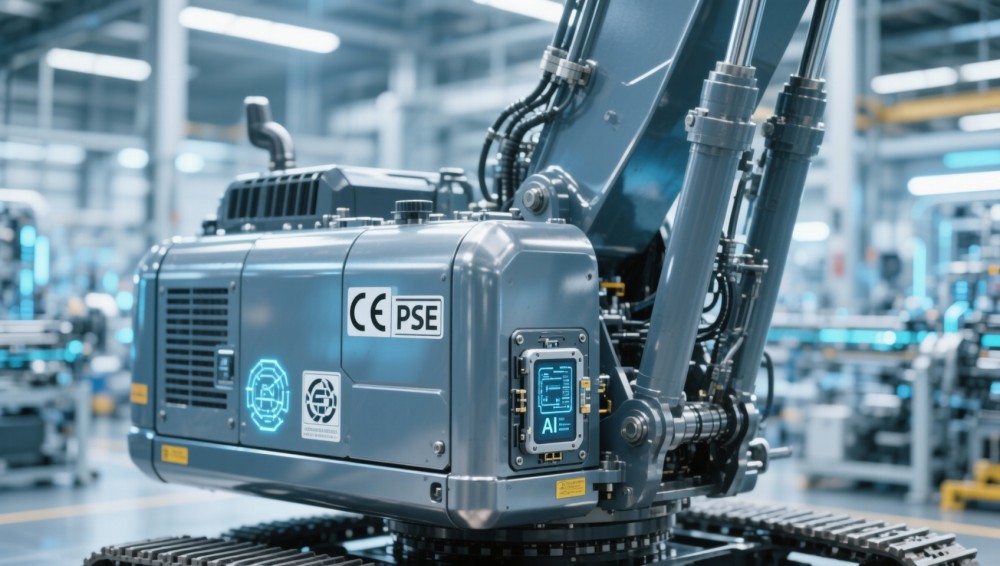
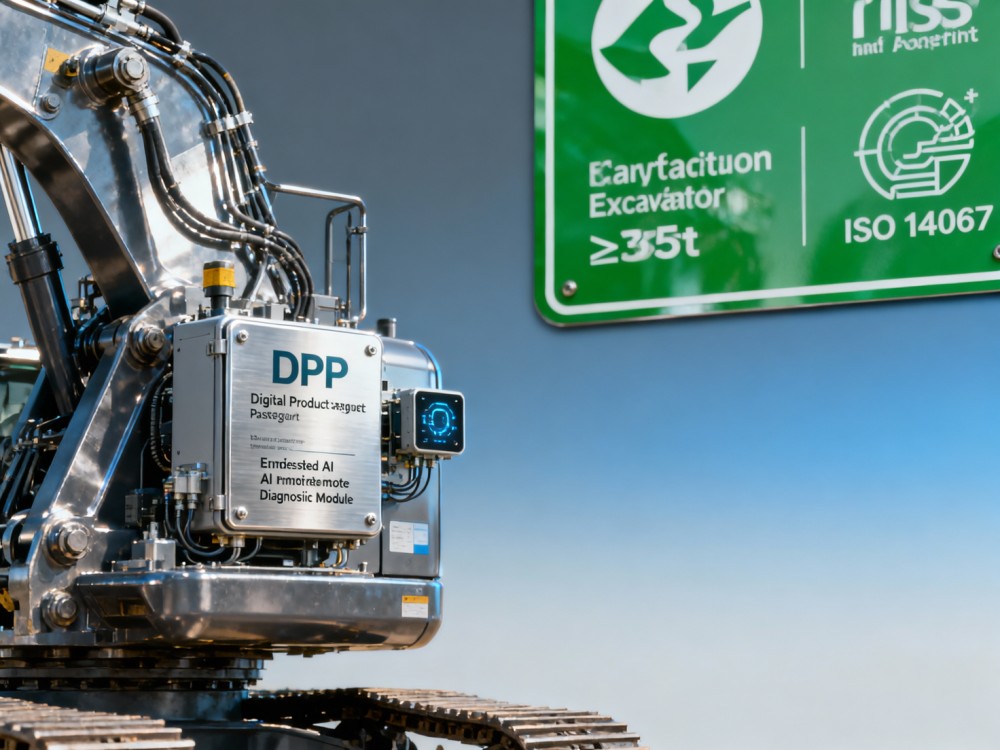
The European Union’s revised Dual-Use Regulation (EC No 2021/821), effective January 2026, expands export control scope to include digitally enabled construction cranes, tunnel boring machines, and hydraulic excavators with embedded AI-based load optimization or remote diagnostics modules. Similarly, Japan’s Ministry of Economy, Trade and Industry (METI) has updated its Export Trade Control Order to classify high-precision gearboxes (tolerance ≤ ±0.015 mm) and servo-driven hydraulic valve manifolds as “strategic industrial components” requiring pre-shipment licensing for 37 destination countries—including Vietnam, Mexico, and South Africa.
Meanwhile, the EU-Japan Economic Partnership Agreement (EPA) enters Phase III implementation in Q2 2026, reducing tariff lines for certified CE-marked mobile crushing plants from 4.7% to 0%—but only if final assembly occurs in EU-designated “green manufacturing zones” meeting ISO 14067 carbon footprint thresholds (< 12.4 kg CO₂e per kW output). These changes directly affect lead times, certification workflows, and landed cost calculations for German OEMs like Liebherr and Japanese suppliers such as Komatsu and Sumitomo Heavy Industries.
A recent industry survey of 127 heavy machinery exporters found that 68% have already revised their 2026 compliance budgets—allocating an average of €210,000–€450,000 annually for third-party conformity assessments, digital export license management platforms, and in-house regulatory affairs staffing. Failure to meet updated documentation standards now triggers automatic customs holds averaging 7–15 days at Rotterdam and Yokohama ports.
Tariff & Non-Tariff Barrier Implications by Market Segment
Tariff impacts are highly segmented—not uniform across equipment categories. For instance, EU-origin crawler cranes (>50t lifting capacity) entering Brazil under the Mercosur-EU Interim Agreement now face a 12% ad valorem duty unless accompanied by a verified “Origin Declaration Form A-26”, issued only after factory audit by German TÜV Rheinland or Japanese JETRO-certified inspectors. In contrast, modular concrete batching plants exported from Japan to Kenya benefit from duty-free access under the African Continental Free Trade Area (AfCFTA) Protocol—but require on-site commissioning verification within 90 days post-import.
Non-tariff barriers pose greater complexity. The U.S. Bureau of Industry and Security (BIS) added 14 hydraulic drive systems used in mining shovels to its Entity List in March 2025—requiring individual validated licenses for exports to Chinese state-owned enterprises. Simultaneously, India’s new Equipment Certification Scheme (ECS-2026) mandates third-party testing of vibration damping performance (ISO 5349-1:2024) and electromagnetic compatibility (IEC 61000-6-4 Ed.4) for all imported asphalt pavers and road rollers—even those previously exempt under older BIS IS 12327 standards.
This table underscores a critical trend: compliance is no longer a one-time certification event but a continuous, cross-border data synchronization process. Exporters must now maintain synchronized digital records across EU ECHA databases, Japan’s METI e-Export Portal, and local customs ERP systems—verified quarterly. Firms using legacy EDI-only interfaces report 3.5× higher error rates in customs declarations compared to those deploying API-integrated compliance platforms.
Operational Readiness: 5-Step Implementation Framework
To mitigate disruption, leading exporters adopt a phased readiness framework. Step 1 involves mapping product families against updated control lists—identifying which models require reclassification (e.g., excavators with telematics exceeding 200 Mbps bandwidth now fall under EU Annex IV). Step 2 entails updating Bill of Materials (BOM) metadata to flag controlled subcomponents (e.g., torque converters with rare-earth magnets subject to China’s 2025 export restrictions).
Step 3 focuses on documentation modernization: replacing static PDF declarations with dynamic XML-based Export Compliance Files (ECF v2.1), compliant with EU Commission Implementing Decision (EU) 2025/1182. Step 4 requires staff upskilling—especially for procurement teams evaluating Tier-2 suppliers’ ability to provide traceable material declarations (EN 10204 3.2 certificates for forged steel frames). Step 5 establishes dual-audit cycles: internal quarterly reviews plus external audits every 6 months by accredited bodies like DEKRA or SGS.
- Minimum documentation retention period: 10 years (EU), 7 years (Japan)
- Required digital signature standard: eIDAS-qualified for EU; J-AdES for Japan
- Maximum allowable deviation in declared weight vs. actual: ±1.8% for shipments >15t
- Approved training hours for export compliance officers: ≥40 hours/year (EU); ≥32 hours/year (Japan)
- Pre-shipment verification window: 72 hours prior to vessel departure (mandatory for EU-controlled goods)
Strategic Responses: From Risk Mitigation to Competitive Advantage
Forward-looking firms treat regulatory complexity as a differentiator. German manufacturers are co-developing modular control cabinets with Japanese electronics partners—designed to meet both EU CE and Japan’s PSE Mark requirements without redesign, cutting time-to-market by 11–14 weeks. Others localize final assembly in Malaysia or Poland to qualify for ASEAN-EU and EU-Ukraine DCFTA preferences—reducing effective tariffs by up to 9.3 percentage points on articulated dump trucks shipped to Eastern Europe.
Technical evaluators report growing demand for “compliance-ready” configurations: standardized CAN bus protocols (SAE J1939-71), pre-certified cybersecurity firmware (IEC 62443-4-2 Level 2), and modular hydraulic manifolds with replaceable pressure sensors calibrated to ISO 6789-2:2024. Procurement professionals increasingly prioritize suppliers offering integrated compliance dashboards—providing real-time visibility into certificate expiry, audit status, and pending regulation updates across 22 jurisdictions.
Dealers and distributors benefit most from transparency: real-time access to compliance status enables proactive customer advisories—reducing post-sale disputes by 41% in pilot programs run by three major German agricultural machinery distributors in Southeast Asia.
Actionable Next Steps for Exporters
Start with a product-specific regulatory gap analysis—prioritizing models representing >15% of your export revenue or bound for high-risk jurisdictions (e.g., Russia, Iran, Myanmar). Then, appoint a cross-functional Export Compliance Task Force comprising procurement, engineering, legal, and logistics leads—meeting biweekly with clear KPIs: certificate renewal rate (>98%), audit finding closure time (<14 days), and customs hold frequency (<0.7% of shipments).
For technical evaluators: request full traceability dossiers from suppliers—including material test reports, firmware version logs, and cyber-resilience validation summaries. For procurement professionals: revise RFQ templates to mandate compliance platform interoperability (e.g., support for EU’s CEF-Digital APIs) and require evidence of at least two successful regulatory audits in the past 18 months.
Enterprise decision-makers should allocate budget not just for compliance tools—but for continuous capability building. Firms investing ≥2.5% of annual export revenue in regulatory intelligence subscriptions and staff certification see 3.2× faster adaptation to new rules than peers relying solely on ad hoc consultant support.
Stay ahead of the curve: access our continuously updated Heavy Machinery Export Compliance Tracker—covering real-time alerts on 47 national regulatory updates, interactive tariff calculators by HS code (8426–8431), and verified supplier compliance scorecards. Get your customized 2026 readiness assessment today.
Tags :
Author : Export Insights Desk
- Last One:Why machinery parts shipments from Asia slowed in Q1 2026 — and what’s changing nowApr 02, 2026
- Next Article:Qinghai Enclosed Busbar Manufacturers Accelerate IP66+ Anti-Salt Spray Certification Production Line Construction to Meet New Environmental Adaptation Requirements for Chinese Power Equipment in Middle Eastern and Southeast Asian Offshore Substation and PV Booster Station ProjectsApr 01, 2026
Post a comment
Your email address will not be published. Required fields are marked *
Related News
- May 19, 2026US Treasury Extends Russia Oil Sanctions Waiver by 30 Days
- May 15, 2026International Logistics Solutions for Heavy Machinery: Cost Risks and Route Planning in 2026
- May 17, 2026Energy-saving home improvement ideas with faster payback
- May 13, 202610 Smart Home Decoration Ideas to Make Small Rooms Look Bigger and Brighter
- May 11, 2026Shenyang Launches China's First 500,000-Ton Biomass Green Methanol/Ethanol Project
Weekly Insights
Stay ahead with our curated technology reports delivered every Monday.