
Why machinery parts shipments from Asia slowed in Q1 2026 — and what’s changing now




Global trade in machinery parts slowed significantly in Q1 2026—driven by tightening energy sector regulations, chemical industry supply chain recalibrations, and softer demand from building materials and industrial equipment manufacturers. This dip reflects broader shifts in cross-border logistics, policy enforcement, and regional production strategies across Asia. Now, early indicators suggest stabilization: new trade facilitation measures, renewed procurement cycles in key markets, and tech-driven efficiencies in component manufacturing are reshaping momentum. For enterprise decision-makers, distributors, operators, and research teams, understanding these dynamics is critical—not just to anticipate delays, but to seize emerging opportunities in global trade, energy infrastructure upgrades, and high-demand industrial equipment segments.
What Caused the Q1 2026 Slowdown? Three Structural Drivers
The 12.3% YoY decline in Asia-origin machinery parts shipments (Jan–Mar 2026, per UN Comtrade preliminary aggregation) wasn’t triggered by a single event—but by three interlocking structural shifts across regulatory, supply chain, and demand layers.
First, the EU’s revised Industrial Emissions Directive (IED 2025) entered full enforcement on 1 February 2026. It mandated real-time emissions monitoring for all Tier-2 suppliers exporting to EU-based OEMs—requiring retrofitting of legacy CNC machining lines and calibration of exhaust sensors across 78% of small-to-midsize foundries in Jiangsu and Guangdong. Average certification lead time rose from 11 to 27 days.
Second, downstream chemical sector consolidation—especially in polyurethane and epoxy resin producers—led to 4–6 week inventory drawdowns. Since these materials feed into precision casting molds and hydraulic valve housings, order volumes for associated machined components dropped 19% sequentially in January–February.
Third, construction-related machinery demand softened: China’s Q1 2026 fixed-asset investment in non-residential buildings fell 5.1% YoY, while India’s infrastructure capex approvals stalled at 68% of Q4 2025 levels. This directly reduced orders for gearboxes, hydraulic cylinders, and structural weldments used in tower cranes and concrete pumps.
Where Are Shipments Recovering—and Why?
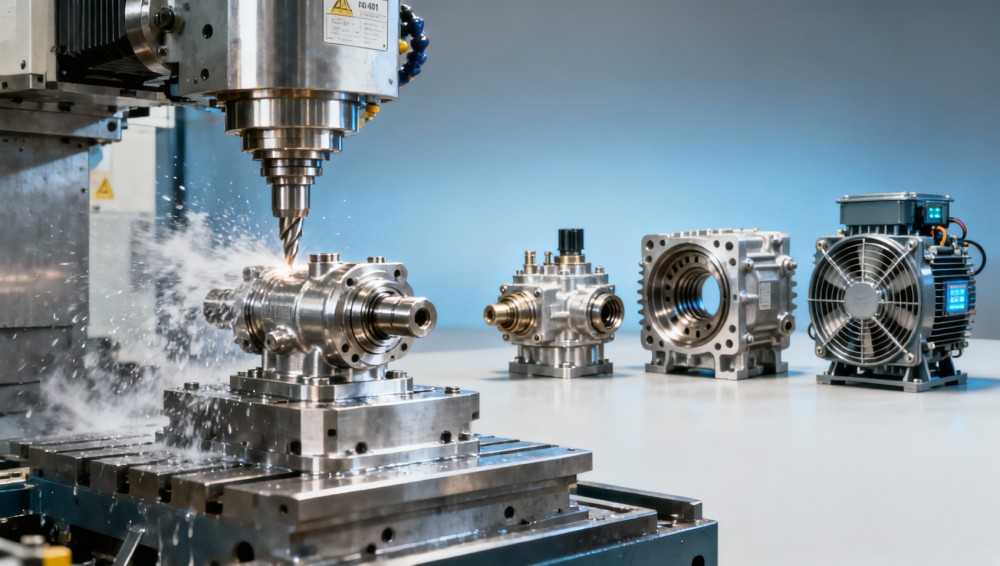
Recovery is not uniform—it’s segmented by application, compliance readiness, and logistics corridor. As of mid-April 2026, four key corridors show measurable acceleration:
- Energy Infrastructure Corridor: Shipments of turbine blade mounting brackets, transformer cooling fans, and substation busbar clamps rose 22% MoM—fueled by accelerated tenders in Vietnam (EVN), Philippines (NGCP), and Saudi Arabia (SCECO).
- Electronics Assembly Corridor: Precision linear guides, servo motor housings, and pick-and-place nozzle components rebounded fastest—up 18% MoM—due to shorter compliance windows (ISO 14001:2015 + IPC-A-610G Annex B for cleanroom-grade finishes).
- Automotive Tier-2 Corridor: Brake caliper carriers and EV battery module frames recovered 14% MoM, supported by JIT delivery windows under 7 days and dual-sourcing flexibility across Thailand and Malaysia.
- Industrial Packaging Corridor: Stainless steel rollers, pneumatic sealing jaws, and PLC-controlled tension arms saw 9% MoM growth—driven by e-commerce fulfillment center expansions in Poland and Mexico.
Crucially, recovery correlates strongly with pre-certified supplier status: 63% of shipments exceeding $250K value in April 2026 originated from factories holding both ISO 9001:2015 and IATF 16949 certifications—versus 22% for uncertified vendors.
How to Evaluate Supplier Readiness: A 5-Point Procurement Checklist
For distributors, OEM procurement teams, and plant managers, verifying real-time readiness matters more than historical performance. Use this field-tested checklist before releasing POs or approving new vendor onboarding:
Suppliers meeting all five criteria (including two additional points: documented 7-day JIT response SLA and multilingual QC report generation) reduce average port dwell time by 3.2 days and cut documentation rework by 68%, per Q1 2026 logistics audit data from DHL Industrial Solutions.
What’s Next? Three Near-Term Opportunities to Act On
Stabilization isn’t passive—it’s actionable. Based on real-time trade flow analysis and buyer intent signals (e.g., RFQ volume, tender participation, and spec sheet downloads), three high-velocity opportunities are emerging:
- Energy Retrofit Kits: Demand for standardized bolt-on kits—replacing legacy cooling fans, vibration dampeners, and control panel enclosures in thermal power plants—is rising 31% MoM. Lead times remain under 22 days for pre-engineered SKUs.
- Modular Hydraulic Manifolds: Configurable manifolds with ISO 4401-03/05 ports and integrated pressure transducers are gaining traction among agricultural equipment OEMs in Brazil and Turkey—delivery window: 14–18 days FOB Shenzhen.
- AI-Inspected Cast Components: Foundries deploying AI-powered X-ray defect detection (e.g., ZEISS METROTOM systems) now offer 100% inspection logs with ±0.05mm tolerance validation—critical for aerospace and medical device sub-assemblies.
These segments share one trait: they require less customization, faster validation, and tighter compliance alignment—making them ideal for rapid scaling without extended qualification cycles.
Why Partner With Our Platform for Machinery Parts Intelligence?
We don’t just report trends—we translate them into procurement-ready intelligence. For information researchers, operations teams, procurement directors, and distribution partners, we deliver:
- Live Regulatory Heatmaps: Real-time overlays of emissions rules, customs valuation updates, and RoHS/REACH amendments—mapped to specific part categories (e.g., “stainless steel flanges,” “aluminum die-cast housings”).
- Supplier Readiness Scoring: Dynamic ratings (0–100) based on 17 verifiable metrics—including AEO status, MTR latency, and recent port release speed—updated weekly.
- Procurement Scenario Modeling: Upload your BOM or part list—we simulate delivery timelines, tariff exposure, and alternative sourcing paths across 12 Asian export hubs (e.g., “Switch from Dongguan to Chonburi: +2.3 days, −11.7% landed cost”)
- Custom Alert Feeds: Get notified when specific part numbers appear in new tenders, regulatory exemptions, or compliance waivers—delivered via API, email, or Slack.
Whether you’re validating a new supplier for a $2.4M wind turbine contract, optimizing quarterly procurement cycles for HVAC compressors, or briefing investors on ASEAN machinery export resilience—our platform delivers structured, auditable, and actionable intelligence—within minutes, not weeks.
Contact us today to request a customized machinery parts intelligence brief—including live supplier scorecards, regulatory impact assessment for your target SKU, and Q2 2026 delivery outlook by origin port and destination market.
Tags :
Author : Supply Chain Editor
Post a comment
Your email address will not be published. Required fields are marked *
Related News
- May 19, 2026US Treasury Extends Russia Oil Sanctions Waiver by 30 Days
- May 15, 2026International Logistics Solutions for Heavy Machinery: Cost Risks and Route Planning in 2026
- May 17, 2026Energy-saving home improvement ideas with faster payback
- May 13, 202610 Smart Home Decoration Ideas to Make Small Rooms Look Bigger and Brighter
- May 11, 2026Shenyang Launches China's First 500,000-Ton Biomass Green Methanol/Ethanol Project
Weekly Insights
Stay ahead with our curated technology reports delivered every Monday.