
Qingdao to Boost 57 Billion-Yuan Auto Projects, Accelerating NEV 'Three Electric' Exports





Qingdao to Boost 57 Billion-Yuan Auto Projects, Accelerating NEV 'Three Electric' Exports
Introduction
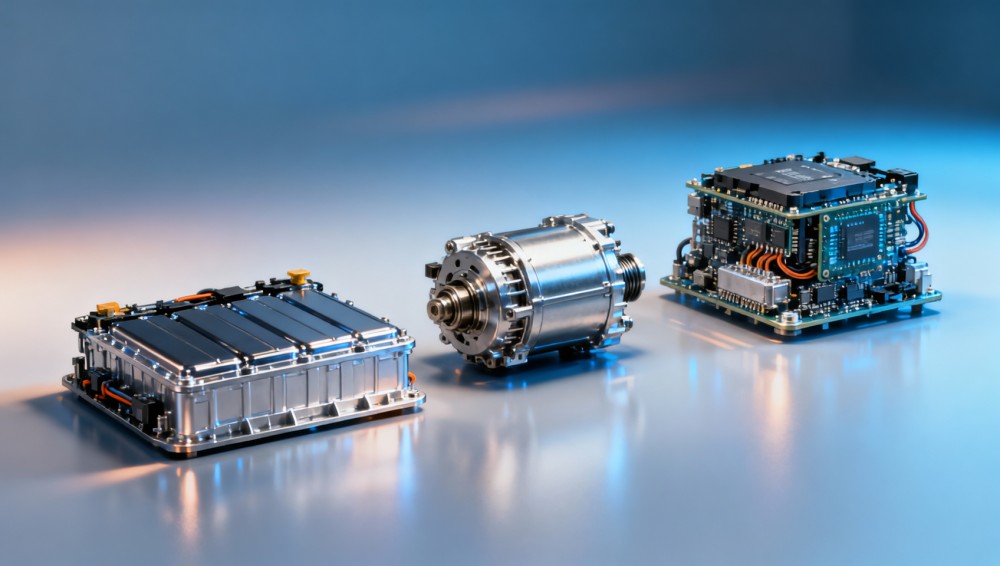
On April 4, 2026, Qingdao announced plans to advance 57 new energy vehicle (NEV) projects, each valued over 100 million yuan, with 28 focusing on core 'three electric' (battery, motor, and electronic control) systems. This initiative, led by nine municipal departments, aims to enhance China's export capabilities for key NEV components to markets like Europe, North America, and Southeast Asia. The automotive supply chain, particularly manufacturers and exporters of NEV subsystems, should monitor these developments closely, as they signal strategic shifts in production and global trade dynamics.
Event Overview
The Qingdao municipal government's joint plan targets 57 NEV projects, including 28 under construction specializing in motor controllers, IGBT modules, and smart BMS. Upon completion, these projects are projected to generate 13.5 billion yuan in additional output, strengthening China's ability to deliver customized 'three electric' solutions internationally. The timeline for full operational capacity remains unspecified.
Impact on Sub-Sectors
1. NEV Component Manufacturers
Suppliers of motors, IGBTs, and BMS will face increased demand for localized, high-precision production. The emphasis on export-oriented capacity may require upgrades in certification compliance (e.g., EU CE/UKCA) and modular design for customization.
2. Automotive Exporters
Trading firms handling 'three electric' systems should prepare for expanded client portfolios, particularly from Southeast Asia where EV adoption is surging. Logistics partners may need to reassess routes for sensitive electronics shipments.
3. Raw Material Providers
Producers of rare earth metals (for motors) and battery-grade lithium face both opportunities and pricing pressures as localized procurement scales up.
Key Considerations for Businesses
Monitor Policy Implementation Timelines
Track Qingdao's quarterly progress reports to align procurement or expansion plans with actual project phases.
Prioritize Certification Readiness
European and North American buyers will likely require stricter documentation. Proactively obtain ISO 26262 (functional safety) and IEC 62133 (battery standards) certifications.
Assess Supply Chain Flexibility
With 28 projects concentrated in 'three electric' systems, secondary suppliers should evaluate their ability to handle variable order volumes and rapid design iterations.
Industry Perspective
From an industry standpoint, this move reflects China's strategic push to dominate mid-to-high value segments of the NEV supply chain. While the 13.5 billion yuan output projection indicates scale, the real significance lies in the integrated 'one-stop' export model—a potential game-changer against competitors like Vietnam's emerging battery hubs. However, actual impact hinges on how quickly these facilities achieve consistent quality benchmarks for global OEMs.
Conclusion
Qingdao's project cluster represents a calculated bet on NEV subsystem specialization rather than whole-vehicle production. For industry stakeholders, the immediate focus should be on differentiating between near-term capacity building (2026-2027) and longer-term export competitiveness. The initiative underscores China's pivot from volume to value in automotive exports, but its success will depend on overcoming technical bottlenecks and trade barriers.
Source
Qingdao Municipal Government Joint Announcement (April 4, 2026). Ongoing monitoring required for project-specific timelines and export volume data.
Industries
Related News
- 00
0000-00
US Treasury Extends Russia Oil Sanctions Waiver by 30 Days - 00
0000-00
International Logistics Solutions for Heavy Machinery: Cost Risks and Route Planning in 2026 - 00
0000-00
Energy-saving home improvement ideas with faster payback - 00
0000-00
10 Smart Home Decoration Ideas to Make Small Rooms Look Bigger and Brighter - 00
0000-00
Shenyang Launches China's First 500,000-Ton Biomass Green Methanol/Ethanol Project
Weekly Insights
Stay ahead with our curated technology reports delivered every Monday.