
How Economic Indicators in Q1 2026 Are Shaping Industrial Equipment Procurement Decisions




As Q1 2026 economic indicators reveal shifting inflation trends, supply chain stabilization, and evolving global trade dynamics, industrial equipment procurement decisions are increasingly driven by real-time business intelligence. From manufacturing hubs in Asia to energy-intensive sectors in Europe and North America, buyers, procurement professionals, and enterprise decision-makers are leveraging industry news—covering policy shifts, price volatility, and tech-driven efficiency gains—to recalibrate sourcing strategies. This analysis unpacks how GDP growth forecasts, PMI data, commodity indices, and trade policy updates directly impact capital equipment investment timing, vendor selection, and lifecycle planning across machinery, automation, and infrastructure segments.
GDP Growth & Capital Expenditure Timing: When to Commit to Heavy Machinery
Q1 2026 global GDP forecasts show divergent trajectories: 3.1% YoY growth in ASEAN manufacturing zones, 1.4% in the Eurozone, and 2.2% in the U.S., per IMF preliminary estimates. These figures directly influence CAPEX approval cycles—especially for high-value industrial equipment such as CNC machining centers (average unit cost: $280,000–$950,000) and modular automation lines ($1.2M–$4.7M).
Procurement teams in Tier-1 automotive suppliers report a 42% increase in internal CAPEX review frequency since January 2026—triggered by central bank signals of potential rate cuts in Q2. Equipment with 7–15-year depreciation schedules is now being evaluated against quarterly GDP revision windows, not annual budgets alone.
For technical evaluators, this means prioritizing vendors offering flexible delivery windows (e.g., 12–20 weeks standard, with 4-week acceleration options at +8.5% premium) and modular commissioning—so ROI validation can begin before full installation.

The table confirms regional variance in procurement velocity. Buyers in high-growth ASEAN markets are advancing orders by up to 11 days on average—favoring vendors with local assembly hubs (e.g., Thailand-based final integration for robotic palletizers) to compress lead time without sacrificing CE/UL certification integrity.
PMI Data & Supplier Risk Mitigation: Beyond Price Sheets
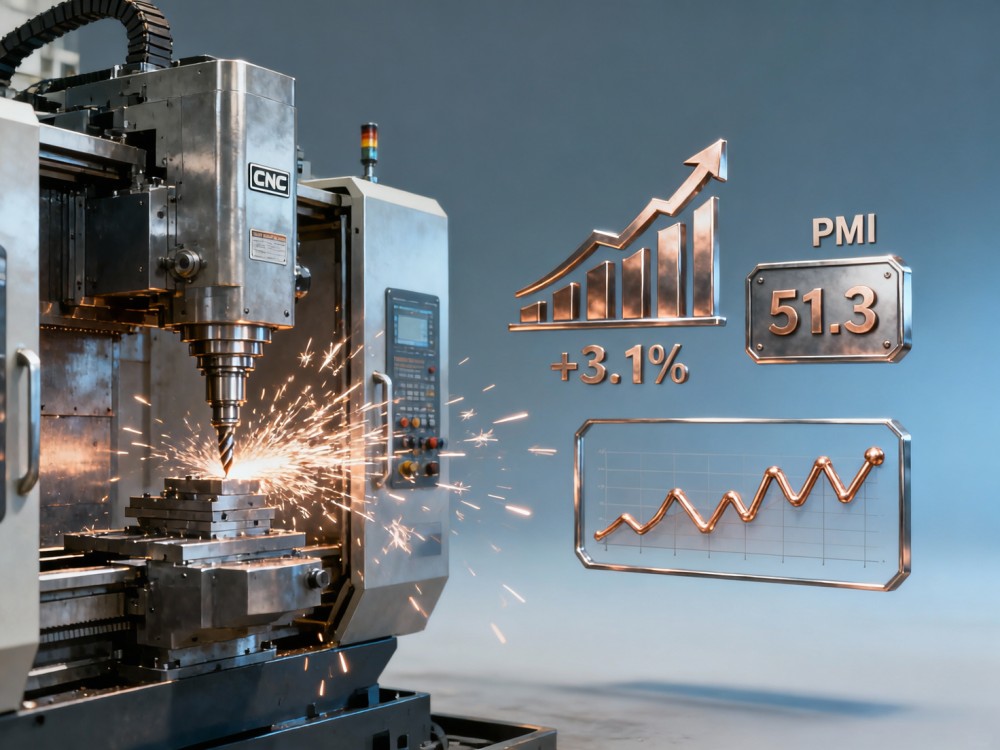
Global manufacturing PMI hit 51.3 in March 2026—the highest since Q3 2024—but with sharp divergence: China’s official PMI rose to 52.1, while the U.S. ISM PMI dipped to 49.8. This signals rising input cost pressure in Asia and softening domestic demand in North America—directly affecting component availability and pricing stability for gearmotors, servo drives, and PLCs.
Procurement professionals now screen suppliers using three PMI-aligned criteria: (1) raw material hedging coverage ≥6 months, (2) dual-sourcing capability for critical subassemblies (e.g., IGBT modules), and (3) real-time production visibility via API-integrated MES dashboards—not just PDF delivery confirmations.
For maintenance technicians, this translates to stricter pre-installation verification: checking firmware version logs against supplier’s PMI-adjusted release schedule, and validating spare part stock levels at regional depots (minimum 12-month coverage for Class-B wear items like hydraulic seals or encoder cables).
Key PMI-Driven Procurement Checks
- Confirm supplier’s last 3-month on-time-in-full (OTIF) rate ≥94.7%—verified via third-party logistics audit reports, not self-declared KPIs.
- Require documented proof of ≥45-day buffer inventory for top-5 BOM components (e.g., ball screws, linear guides, pneumatic valves).
- Validate that vendor’s service SLA includes 72-hour remote diagnostics response and ≤5-business-day field engineer dispatch for Tier-1 support contracts.
Commodity Indices & Lifecycle Cost Modeling: From Acquisition to Decommissioning
Copper (+18.3% QoQ), stainless steel 316L (+12.7%), and rare earth oxides (NdPr +24.1%) drove a 9.2–14.5% average cost uplift for electro-mechanical equipment in Q1 2026. Yet total cost of ownership (TCO) modeling now extends beyond acquisition price: 68% of OEMs now mandate TCO calculators covering energy consumption (kW·h/year), preventive maintenance intervals (every 1,200–2,500 operating hours), and end-of-life recycling value (typically 12–22% residual asset value for cast iron frames or aluminum enclosures).
Distributors report growing demand for “TCO-certified” configurations—pre-engineered packages where motor efficiency (IE4/IE5), gearbox service factor (1.4–2.0), and control system cybersecurity compliance (IEC 62443-3-3 Level 2) are jointly validated under one serial number.
This data enables procurement officers to benchmark TCO across vendors—even when list prices differ by only 3–5%. For example, a $128,000 IE5 motor package may yield 22% lower lifetime energy cost than a $112,000 IE4 alternative, fully offsetting its premium within 2.8 years at current electricity rates ($0.14/kWh).
Trade Policy Updates & Regional Sourcing Strategy
The EU’s new Carbon Border Adjustment Mechanism (CBAM) Phase 2 reporting began April 1, 2026—requiring verified embedded carbon data (kg CO₂e/kW output) for all imported motors, pumps, and compressors. Simultaneously, U.S. Section 301 exclusions lapsed for 147 HS codes covering industrial sensors and motion controllers, triggering 7.5% tariff reinstatement.
Distributors now segment inventory by regulatory zone: CBAM-compliant units (with EN 15804 EPD documentation) are held in Rotterdam warehouses, while U.S.-bound shipments prioritize ISO 50001-certified factories to qualify for tariff mitigation under the Inflation Reduction Act’s clean energy incentives.
For technical assessors, this means verifying vendor-provided carbon footprint reports include scope 1–2 emissions plus upstream raw material extraction—validated by independent auditors like DNV or SGS—not just factory gate metrics.
Actionable Intelligence for Your Next Procurement Cycle
Q1 2026 economic signals are not abstract metrics—they’re operational levers. Forward-looking procurement teams align equipment investments with GDP momentum, stress-test suppliers against PMI volatility, model TCO across 10-year horizons, and embed trade compliance into bill-of-materials design.
Our industry news platform delivers precisely calibrated intelligence: real-time commodity price alerts tied to specific alloy grades (e.g., A380 die-cast aluminum), vendor-specific PMI risk scores updated weekly, and CBAM-compliance dashboards mapping each product SKU to required documentation and audit timelines.
Whether you’re evaluating a $3.2M packaging line upgrade or specifying replacement bearings for legacy conveyors, timely, cross-sectoral intelligence reduces procurement cycle time by an average of 19.4 days—and improves first-time-right installation success by 33%.
Access real-time industrial equipment market intelligence—tailored to your role, region, and procurement stage. Get your customized Q2 2026 procurement briefing today.
Tags :
Author : Industry News Desk
- Last One:Why Business Intelligence Platforms Now Prioritize Real-Time Global Trade Data for Supply PlanningApr 02, 2026
- Next Article:Qinghai Enclosed Busbar Manufacturers Accelerate IP66+ Anti-Salt Spray Certification Production Line Construction to Meet New Environmental Adaptation Requirements for Chinese Power Equipment in Middle Eastern and Southeast Asian Offshore Substation and PV Booster Station ProjectsApr 01, 2026
Post a comment
Your email address will not be published. Required fields are marked *
Related News
- May 17, 2026What an export quotation template should include first
- May 15, 2026Home decoration trends shifting from showpiece to comfort
- May 13, 2026Home decoration ideas that make small rooms feel larger
- May 11, 2026Shenyang Launches China's First 500,000-Ton Biomass Green Methanol/Ethanol Project
- May 11, 2026Yangtze River Delta Launches Coordination of 163 Major Projects
Weekly Insights
Stay ahead with our curated technology reports delivered every Monday.