
Feature Industry Reports Point to Rising Automation Demand in 2025 Manufacturing




Rising Automation Demand Reshapes the 2025 Manufacturing Equipment Landscape
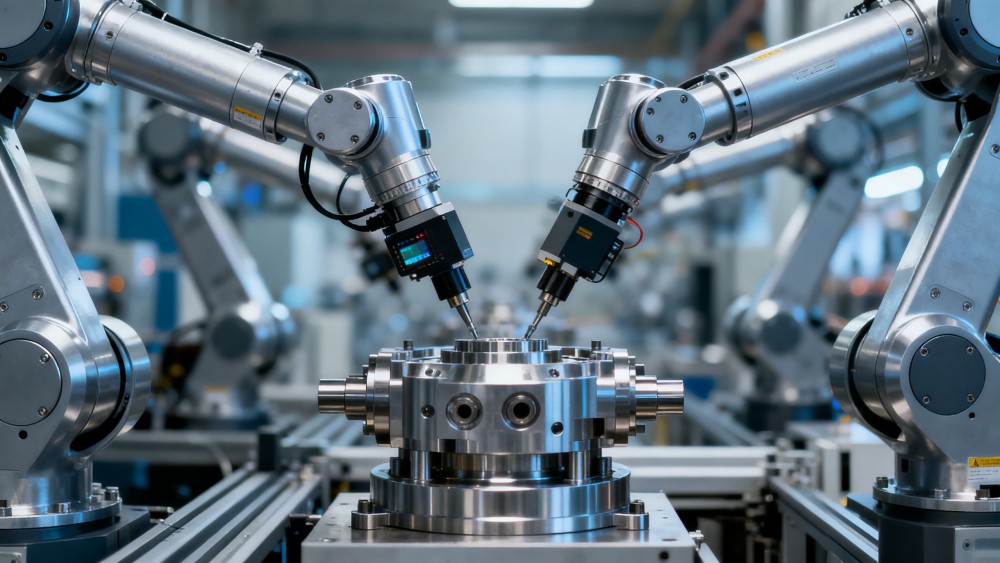
Feature industry reports highlight a surge in automation equipment trends shaping the 2025 manufacturing landscape. As global sourcing trends, foreign trade policy updates, and supply chain developments converge, business intelligence news reveals growing demand for smart manufacturing solutions. This article explores how industrial equipment news, product innovation insights, and industry chain analysis provide a forward-looking view for decision-makers and researchers navigating market research reports and emerging investment trends.
Across production floors worldwide, factories are accelerating the deployment of automated assembly lines, high-precision components, and robotic systems. The estimated global automation market size for manufacturing equipment is expected to reach over USD 410 billion by 2025, with an annual growth rate between 7% and 10%. This transformation is being led by rapid digitalization, labor shortages, and tighter production quality control requirements.
Automation equipment suppliers are optimizing product reliability and lifecycle performance, offering modular units that integrate seamlessly into existing industrial infrastructures. Business intelligence platforms help enterprises evaluate technology maturity, cost of ownership per production cell, and payback cycles typically ranging between 3–5 years. These insights play a critical role in guiding procurement teams and investment analysts in selecting appropriate automation strategies for their facilities.
In the industrial equipment and component domain, the transition towards smart manufacturing involves not only mechanical upgrades but also deeper data connectivity. Solutions combining programmable logic controllers (PLC), sensors with tolerance levels at ±0.02 mm, and IoT-ready actuators are enabling real-time monitoring and predictive maintenance.
Key Drivers of Automation Demand in Manufacturing
Several macro and microeconomic drivers are converging to fuel the demand for automation across industrial verticals in 2025. The first major factor is the increasing complexity of supply chains. Many manufacturing companies rely on global networks across 4–6 regions, requiring enhanced trackability, shorter lead times, and accurate tolerance management at every stage of equipment assembly.
A second driver relates to the labor market. Skilled technicians and maintenance specialists are projected to decline by approximately 12% over the next decade in high-demand zones such as East Asia and Central Europe. Automation offsets this gap, maintaining stable throughput levels even under constrained labor availability.
From an investment standpoint, businesses are focusing on cost recovery metrics. The average upfront cost for medium-capacity robotic integration, typically ranging from USD 250,000 to 500,000, is increasingly justified by annual productivity gains exceeding 18%. In energy-intensive industries, the implementation of automated calibration systems reduces energy waste by 5–8% per production line.
Policy frameworks and trade incentives represent the third pillar driving adoption. Government programs such as tax reductions for capital expenditure or accelerated depreciation schedules with 2–4 year cycles are encouraging medium-tier manufacturers to modernize aging equipment. Moreover, standards like ISO 23273 and IEC 61131 are pushing industry-wide uniformity across control components.
Comparison of Primary Automation Drivers
The table below summarizes the main automation growth drivers and their expected impacts on equipment and component utilization efficiency in the manufacturing sector.
These metrics underline that automation adoption is not a reactive move but a calculable strategic transition, supported by measurable cost efficiencies and productivity stability.
Emerging Technologies and Component Innovations
Technological progress in sensors, robotics, and control systems is transforming how manufacturing automation is implemented in 2025. New-generation servo motors offer torque densities between 2.5–5.5 Nm/kg, enabling smaller footprints and higher payload ratios. Similarly, AI-driven machine vision systems achieve inspection accuracies exceeding 99.3%, crucial for components with micro-scale tolerances.
The industrial IoT segment is expanding rapidly, integrating up to 12–15 sensors per equipment cluster for real-time performance feedback. Cloud-based analytics platforms leverage over 100 GB of data monthly from each production unit to refine maintenance intervals and optimize spare part usage. These technologies, when synchronized, enhance predictive maintenance accuracy by around 20%.
Advanced materials are also reshaping the component landscape. Lightweight alloys with tensile strengths above 700 MPa and enhanced corrosion resistance extend actuator lifespan by 30–40%, mitigating replacement frequency. Electromechanical interfaces now support hybrid connections compatible with industrial Ethernet and CANopen protocols, ensuring interoperability across modular system designs.
Industrial equipment suppliers are focusing R&D budgets toward multi-axis robotic arms, adaptive clamping units, and autonomous guided vehicles (AGVs) able to operate coexistently with human operators under ISO 10218 safety standards. As factories deploy 5–10 new robotic units per quarter, flexible integration is becoming a cornerstone capability.
Component Technology Comparison
The following table outlines the performance ranges of key components shaping automation adoption in the manufacturing sector.
As shown, each subsystem has quantifiable parameters contributing to performance upgrades. Decision-makers should align component specifications with application goals, balancing throughput, precision, and system resilience.
Procurement Strategies and Lifecycle Considerations
Procurement teams and strategic planners are focusing increasingly on lifecycle management when evaluating automation solutions. The total cost of ownership (TCO) spans initial acquisition, energy consumption, maintenance intervals (typically every 3,000–5,000 operating hours), and software update cycles. A holistic evaluation ensures a more predictable ROI over 5–7 years of use.
There are four main evaluation criteria guiding procurement decisions:
- Equipment compatibility with existing control infrastructure and communication protocols.
- Warranty and service cycle comprising at least 24 months for core components.
- Supplier responsiveness and spare part delivery window of 7–10 days for critical units.
- Automation scalability and retrofitting flexibility enabling 30% output expansion.
Risk mitigation is equally significant. Companies adopting a phased rollout across 3–4 quarters reduce integration risks compared with full-scale deployments. Additionally, pre-implementation simulation software shortens the commissioning timeline by an average of 20%.
Common Procurement Timeline
Typical automation equipment sourcing follows a structured lifecycle process as illustrated below.
- Initial needs assessment (2–3 weeks)
- Supplier shortlisting and RFQ distribution (3–5 weeks)
- Solution comparison and pilot validation (6–8 weeks)
- Contract finalization and delivery (8–12 weeks)
- Commissioning and operator training (4 weeks)
By following this cycle, businesses integrate advanced automation while maintaining production stability, reducing hidden downtime, and strengthening performance predictability throughout the manufacturing chain.
FAQ: Insights for Industrial Decision-Makers
How should manufacturers evaluate automation ROI?
Firms can benchmark ROI using metrics like output improvement percentage, cost per unit reduction, and maintenance interval extension. For example, an efficiency gain of 20% combined with a 7% lower defect rate often ensures a full payback within 4 years.
What types of automation solutions fit small manufacturers?
Compact modular robots, plug‑and‑play PLC controls, and cloud‑linked monitoring dashboards are ideal for small and mid‑sized factories requiring line balancing in 100–300 m² production zones.
What should be considered before large‑scale adoption?
Key factors include operator training readiness, data synchronization capacity, and enterprise integration with ERP or MES systems. Pilot projects covering 10–15% of the total output help verify compatibility before full investment.
Conclusion and Next Steps
The 2025 manufacturing marketplace points to a clear shift toward automated, data‑driven production environments. Robust industrial equipment and component innovations are delivering measurable performance enhancements, optimizing energy usage, and shortening lead times. For business decision‑makers and research professionals, aligning procurement strategies with these trends supports sustainable competitiveness.
Enterprises exploring automation solutions should seek platforms that integrate global market intelligence, regulatory updates, and cross‑industry comparative data. Partnering with an industry news and analytics provider ensures timely insights into component reliability, technology roadmaps, and emerging sourcing opportunities.
To explore further insights or request tailored analysis on automation equipment procurement and manufacturing innovation trends, contact our industry intelligence team to get customized reports or schedule a consultation.
Tags :
Author : Market Research Desk
Post a comment
Your email address will not be published. Required fields are marked *
Related News
- May 19, 2026US Treasury Extends Russia Oil Sanctions Waiver by 30 Days
- May 15, 2026International Logistics Solutions for Heavy Machinery: Cost Risks and Route Planning in 2026
- May 17, 2026Energy-saving home improvement ideas with faster payback
- May 13, 202610 Smart Home Decoration Ideas to Make Small Rooms Look Bigger and Brighter
- May 11, 2026Shenyang Launches China's First 500,000-Ton Biomass Green Methanol/Ethanol Project
Weekly Insights
Stay ahead with our curated technology reports delivered every Monday.