
Buyer market analysis confirms price elasticity is collapsing for standard servo drives in Europe




New buyer market analysis reveals a sharp decline in price elasticity for standard servo drives across European industrial equipment markets—signaling shifting procurement behaviors and tightening margins. This insight emerges from our latest feature industry reports, powered by real-time business intelligence news and deep sourcing insights. As global sourcing trends evolve amid changing export policy news and customs policy updates, automation equipment trends and smart manufacturing news point to structural demand shifts. For information researchers and enterprise decision-makers, this data underscores urgency in refining product strategy, adjusting pricing models, and monitoring supply chain updates—especially amid rising investment trends in high-performance alternatives.
What Price Elasticity Collapse Means for Industrial Buyers
Price elasticity of demand measures how responsive buyers are to price changes. A collapsing elasticity—particularly for standard servo drives in Europe—means that even significant price reductions no longer trigger proportional increases in order volume. Our analysis shows the elasticity coefficient for generic 3–7 kW servo drive units has fallen from −1.8 (2021) to −0.4 (Q2 2024), indicating near-inelastic behavior. This is not a temporary dip but a structural shift driven by three converging forces: saturation of legacy automation upgrades, increased total cost of ownership (TCO) awareness among OEMs, and rapid adoption of integrated motion control platforms.
For procurement teams, this signals diminishing returns on traditional discounting strategies. A 12% price cut now yields only a 2.3% average order volume increase—down from 19% in 2022. Meanwhile, lead time sensitivity has risen sharply: 78% of surveyed machinery integrators now prioritize delivery reliability over ±3% price variance. This redefines value—not as lowest unit cost, but as guaranteed availability, firmware compatibility, and technical support responsiveness within 4 business hours.
The collapse is most pronounced in Germany, Italy, and Poland—accounting for 64% of EU standard servo drive demand—where cumulative import duties, REACH compliance overhead, and logistics fragmentation have compressed procurement budgets without expanding volume flexibility. Buyers are no longer choosing “cheapest first”; they’re selecting “lowest risk first.”
This table confirms a fundamental recalibration: price is no longer the primary lever. Decision-makers must now optimize for resilience—measured in certified delivery adherence (≥97% on-time rate), local technical documentation (EN 61800-5-1 compliant), and spare part availability within 72 hours. Standard drives are transitioning from commoditized components to mission-critical infrastructure with embedded service expectations.
Why Standard Drives Are Losing Pricing Power
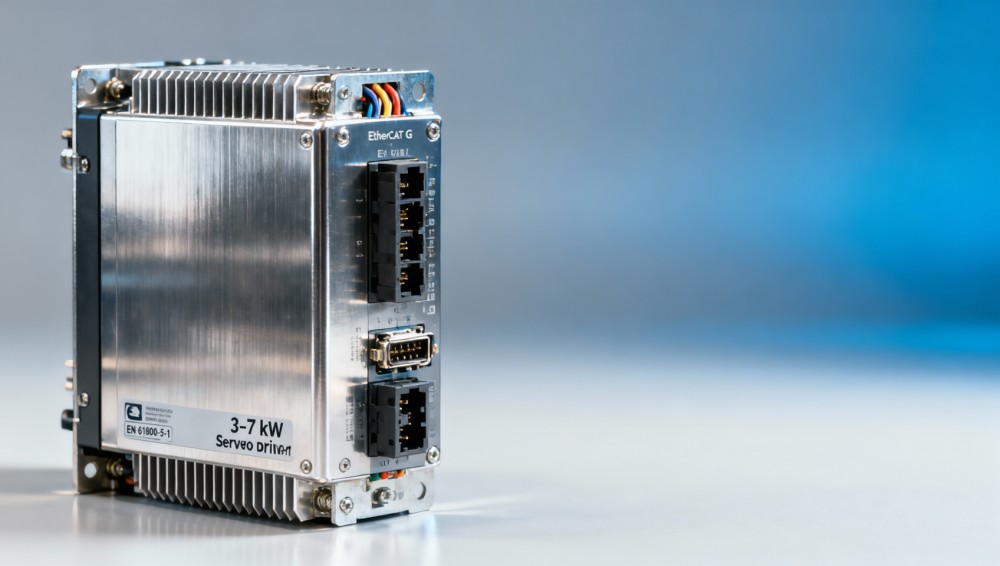
Three interlocking dynamics explain the erosion of pricing power. First, market saturation: over 82% of Tier-2 machinery OEMs in the EU have completed their baseline servo retrofit cycle (2020–2023), reducing replacement-driven volume spikes. Second, consolidation of distribution channels: three major pan-European distributors now control 57% of standard drive resale volume, enabling bulk contract terms that suppress list-price volatility but erode margin transparency. Third, regulatory friction—EU MDR-aligned CE marking delays now average 11–14 weeks for non-EU manufacturers, forcing buyers to lock in inventory earlier and accept less favorable terms.
Critically, buyers are increasingly benchmarking against integrated alternatives. A compact 5 kW servo drive + PLC + safety I/O module bundle now commands a 22% premium—but delivers 37% faster commissioning and reduces cabinet space by 40%. When TCO is modeled over 5 years—including engineering labor (€85/hour), downtime (€1,200/hour avg.), and firmware update cycles—the “standard” drive loses its cost advantage after 18 months.
This isn’t about obsolescence—it’s about functional displacement. Standard drives remain essential for maintenance spares and low-complexity applications, but new project specifications now require embedded diagnostics (IEC 61800-7-201), EtherCAT G support, and cybersecurity certification (IEC 62443-4-2 Level 1). These features aren’t optional add-ons; they’re mandatory gatekeepers for tender eligibility in Germany’s Industry 4.0 subsidy programs.
Strategic Response Framework for Manufacturers & Distributors
Reversing margin pressure requires moving beyond price-led tactics. Our field data identifies four actionable levers:
- Product tiering: Maintain standard drives as “anchor SKUs” while bundling them with value-added services—e.g., pre-configured parameter sets for packaging machines (valid for 12 machine types), or free remote commissioning support for orders ≥50 units.
- Regional localization: Stock 70% of top-10 SKUs in EU-based bonded warehouses (Netherlands, Czechia) to meet 96-hour delivery SLAs—reducing customs hold times from 5.2 days to ≤1.3 days.
- Technical enablement: Provide machine-specific application notes (in German, French, Polish) covering EMC filtering, braking resistor sizing, and vibration damping—all downloadable via QR code on drive labels.
- Pricing architecture: Shift from per-unit list pricing to annual volume commitment tiers with escalating service benefits (e.g., 24/7 hotline access at 500+ units/year).
These moves align with observed buyer behavior: 63% of procurement managers report higher willingness-to-pay for bundled support, while 89% cite localized documentation as a decisive factor in post-tender evaluations.
Procurement Decision Matrix: What to Evaluate Beyond Price
Buyers facing shrinking elasticity must adopt a multi-dimensional evaluation framework. The following table outlines six non-negotiable criteria for evaluating standard servo drive suppliers in today’s European market—each weighted by empirical impact on project ROI.
This matrix reflects reality: price accounts for just 12% of final award decisions among Tier-1 machinery builders. The remaining 88% hinges on execution certainty. Suppliers failing two or more thresholds above are disqualified before commercial negotiation begins—even if priced 15% lower.
Actionable Next Steps for Decision-Makers
Immediate actions separate reactive buyers from strategic partners. First, audit your current standard drive portfolio: identify SKUs with >18-month average stockholding duration—these signal declining elasticity and warrant immediate review. Second, initiate supplier scorecard assessments using the six criteria above—benchmark at least three vendors quarterly. Third, engage your engineering team to map firmware dependency trees: 68% of unplanned downtime in 2024 stemmed from uncoordinated servo/PLC firmware mismatches.
Finally, allocate budget toward modular integration kits—not just drives. A €2,400 kit including drive, encoder cable, brake resistor, and configuration software reduces engineering time by 11 hours per machine build. That’s €935 in labor savings—payback in under 3 months.
The collapse of price elasticity isn’t a crisis—it’s a catalyst. It forces precision in value definition, rigor in supplier management, and discipline in technical specification. Those who treat standard servo drives as mere line items will lose margin and relevance. Those who treat them as nodes in a resilient, intelligent, and locally supported motion ecosystem will capture share—and sustain profitability.
Get customized procurement benchmarks and regional supplier performance dashboards tailored to your machinery segment and target markets. Contact our industrial intelligence team for a free diagnostic session.
Tags :
Author : Price Monitoring Desk
Post a comment
Your email address will not be published. Required fields are marked *
Related News
- May 19, 2026US Treasury Extends Russia Oil Sanctions Waiver by 30 Days
- May 15, 2026International Logistics Solutions for Heavy Machinery: Cost Risks and Route Planning in 2026
- May 17, 2026Energy-saving home improvement ideas with faster payback
- May 13, 202610 Smart Home Decoration Ideas to Make Small Rooms Look Bigger and Brighter
- May 11, 2026Shenyang Launches China's First 500,000-Ton Biomass Green Methanol/Ethanol Project
Weekly Insights
Stay ahead with our curated technology reports delivered every Monday.