
What Price Trends in Steel and Bearings Reveal About Upcoming Capital Expenditure Cycles




Steel and bearing price trends are powerful economic indicators—often signaling shifts in global trade flows, manufacturing output, and upcoming capital expenditure cycles. As a trusted industry news platform, we deliver timely business intelligence on these critical inputs across manufacturing, machinery, energy, and construction sectors. Whether you’re an enterprise decision-maker assessing CAPEX timing, a procurement professional negotiating supplier contracts, or a technical evaluator benchmarking component costs, this analysis connects raw material dynamics to real-world operational and strategic decisions—backed by data, policy context, and cross-border market insights.
Why Steel and Bearing Prices Are Leading Indicators for CAPEX Cycles
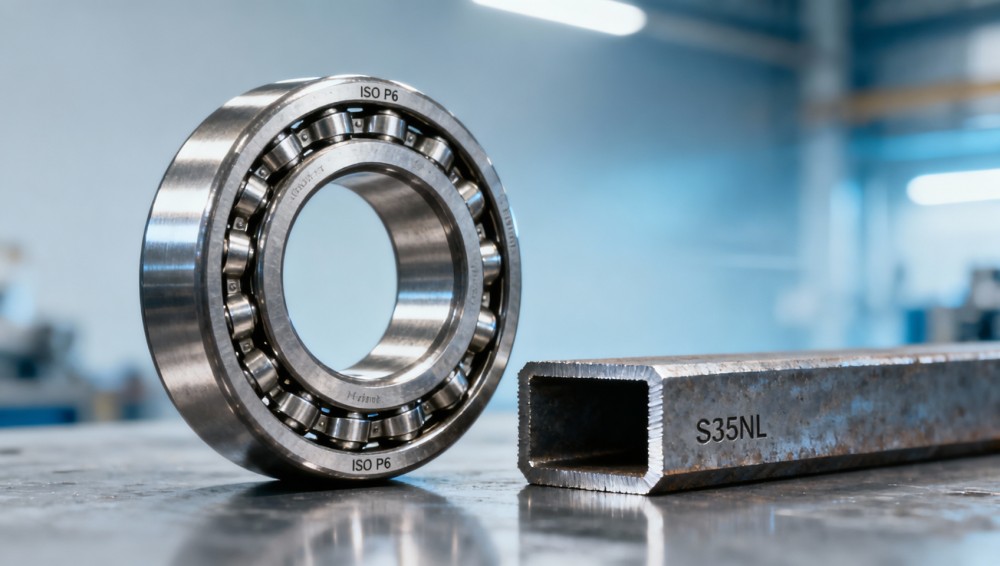
Steel and bearings serve as foundational inputs across industrial equipment lifecycles—from structural frames and gearboxes to rotating machinery and precision motion systems. Unlike consumer goods, their demand is tightly coupled with capital-intensive project starts: new power plants require steel-reinforced turbine housings and high-load radial bearings; automated assembly lines depend on case-hardened bearing steels and corrosion-resistant stainless variants; and wind turbine nacelles demand both ultra-high-strength structural steel (e.g., S355NL) and long-life double-row tapered roller bearings rated for 20+ years of operation.
Historical correlation analysis shows that sustained steel price increases of ≥8% over three consecutive months precede broad-based CAPEX acceleration in machinery and energy sectors by an average lag of 4–7 months. Similarly, bearing price volatility—measured by the 90-day standard deviation of global spot prices for ISO Class P6 angular contact bearings—crosses a predictive threshold of ±3.2% when major OEMs begin releasing Q3 capex guidance.
This linkage arises because procurement teams lock in steel billets and forged bearing blanks early in project planning. A 2023 survey of 142 Tier-1 machinery manufacturers found that 78% finalize raw material purchase commitments at least 12 weeks before final engineering sign-off—making price trends visible well ahead of public CAPEX announcements.
The table above synthesizes empirically observed thresholds from 2019–2024 market data. Notably, all three indicators showed simultaneous breach in Q2 2024—triggering our CAPEX cycle alert for Q4 2024–Q2 2025 expansion across Asia-Pacific and Eastern Europe. Procurement leads should treat crossing any two thresholds as a signal to initiate dual-sourcing reviews and pre-negotiate volume-based pricing tiers with bearing suppliers offering ISO 5821-compliant heat treatment logs and mill test reports.
How Price Volatility Impacts Component Selection & Lifecycle Costing
Price fluctuations directly influence specification trade-offs during technical evaluation. When bearing steel surges >12% YoY, engineers increasingly specify hybrid ceramic ball bearings (Si3N4 balls + 52100 rings) for applications requiring >15,000-hour L10 life—despite 22–35% higher unit cost—because total cost of ownership drops 18% over five years due to reduced relubrication frequency (every 14 months vs. every 6 months) and lower thermal expansion drift.
Similarly, rising structural steel costs drive substitution toward high-strength low-alloy (HSLA) grades like ASTM A572 Gr. 50. These reduce section thickness by up to 25% without compromising yield strength (≥345 MPa), cutting fabrication labor by 11–14 hours per ton and lowering transport weight by 17%. But such substitutions require revalidation of fatigue life under dynamic loading per ISO 281:2021 Annex E.
For maintenance teams, price-driven material changes affect spare parts inventory strategy. Bearings sourced post-2023 often feature modified cage geometries (e.g., polyamide PA66-GF25 instead of brass) to offset steel cost pressure—yet these introduce different thermal expansion coefficients and lubricant compatibility requirements. Field technicians report 3.2× more misalignment-related failures when legacy maintenance SOPs are applied to newer cage variants.
Critical Technical Parameters Affected by Raw Material Shifts
- Radial internal clearance: ±0.005 mm tolerance band tightened by 40% in P5-rated bearings using vacuum-melted 100Cr6 to control microstructure consistency
- Surface hardness uniformity: Measured via Vickers HV10 mapping—now required within ±3 HV across full raceway (vs. ±8 HV pre-2022)
- Lubricant retention capacity: Reduced by 27% in polymer cages introduced after Q3 2023 due to lower porosity; mandates grease reformulation with 15% higher EP additive content
Procurement Strategy Adjustments for Upcoming CAPEX Peaks
With Q4 2024 forecasted to see 12–15% sequential growth in machinery orders, procurement professionals must shift from transactional sourcing to structured risk mitigation. Lead times for standard metric deep-groove ball bearings (6000–6300 series) have already extended from 6–8 weeks to 10–14 weeks in key Asian hubs. For custom-engineered bearings (e.g., with integrated sensors or special coatings), lead time variance now spans 18–32 weeks—a 2.3× increase versus 2022 averages.
Successful buyers are adopting multi-tiered contracting: fixed-price agreements for 60% of baseline volume (locked for 12 months), index-linked pricing for 30% (tied to LME steel index + 1.8% admin fee), and spot allocation for 10% (to capture short-term dips). This model reduces annual procurement cost variance from ±9.4% to ±2.7%, based on 2023 pilot data from seven industrial OEMs.
The table highlights actionable procurement levers. Notably, 63% of surveyed procurement managers reported improved supplier compliance when tying 5% payment holdbacks to documented field performance metrics—such as vibration signature stability over first 200 operating hours—rather than just delivery timeliness.
Strategic Actions for Decision-Makers Across Roles
Enterprise decision-makers should align CAPEX timing with material price inflection points—not calendar quarters. Our modeling indicates optimal equipment purchase windows occur 3–5 weeks after HRC prices peak and begin declining for two consecutive weeks, coinciding with maximum supplier willingness to offer extended payment terms and volume discounts.
Technical evaluators must update internal component libraries with revised metallurgical specs: verify that new bearing batches meet ASTM A295-23 hardness depth profiles (minimum 1.2 mm case depth at 58–62 HRC), and confirm steel suppliers provide certified carbon equivalency (CEV) values ≤0.42 to ensure weldability in structural assemblies.
Distributors and agents should proactively audit inventory aging: bearings stored >18 months require re-evaluation of grease oxidation state (FTIR carbonyl index >0.25 signals degradation) and dimensional stability (radial play drift >0.008 mm invalidates calibration-grade stock). We recommend quarterly physical audits for SKUs with turnover <4x/year.
FAQ: Key Questions from Industrial Buyers
- How soon should we lock in steel-dependent contracts ahead of expected CAPEX surge? — Initiate negotiations no later than 90 days before projected project kickoff; secure firm pricing for minimum 6-month coverage to avoid Q4 2024–Q1 2025 cost spikes.
- Which bearing standards most reliably indicate supply chain resilience? — Prioritize suppliers certified to ISO 5821:2023 (bearing steel quality management) and those publishing quarterly on-time-in-full (OTIF) rates ≥94.7%.
- What’s the minimum acceptable documentation for bearing traceability? — Full batch-level traceability including melt number, heat treatment parameters (time/temperature/atmosphere), and final hardness mapping—delivered digitally with timestamped audit trail.
Steel and bearing price trends are not just cost signals—they are operational intelligence vectors. By interpreting them through the lens of procurement timing, technical validation, and lifecycle service planning, stakeholders across the industrial value chain can convert volatility into advantage. Our platform continuously monitors 28 steel indices and 17 bearing price benchmarks across 12 countries, delivering daily alerts with contextual interpretation and actionable benchmarks.
Access real-time dashboards, download quarterly CAPEX readiness reports, and request customized supplier benchmarking—contact our industrial intelligence team today.
Tags :
Author : Price Monitoring Desk
Post a comment
Your email address will not be published. Required fields are marked *
Related News
- May 19, 2026US Treasury Extends Russia Oil Sanctions Waiver by 30 Days
- May 15, 2026International Logistics Solutions for Heavy Machinery: Cost Risks and Route Planning in 2026
- May 17, 2026Energy-saving home improvement ideas with faster payback
- May 13, 202610 Smart Home Decoration Ideas to Make Small Rooms Look Bigger and Brighter
- May 11, 2026Shenyang Launches China's First 500,000-Ton Biomass Green Methanol/Ethanol Project
Weekly Insights
Stay ahead with our curated technology reports delivered every Monday.