
CE, RoHS, REACH—Which Certification Blocks Your First EU Shipment?




CE, RoHS, REACH—Which Certification Blocks Your First EU Shipment?
Short answer: CE marking is the non-negotiable gatekeeper—without it, your product cannot legally enter the EU market, regardless of RoHS or REACH status. In 2026, over 73% of first-time EU shipments from Asia are detained at customs due to missing, incorrect, or self-declared CE claims—not because they violate chemical limits, but because they lack documented conformity assessment. RoHS and REACH are critical compliance layers, but neither replaces CE. They operate on different legal foundations, enforcement timelines, and supply chain responsibilities.
This isn’t about choosing one over the others. It’s about understanding which certification triggers immediate border rejection—and why misprioritizing them wastes time, incurs storage fees (avg. €185/day per container at Rotterdam terminals), delays Q2 sales cycles, and risks supplier disqualification in B2B procurement portals like Kompass or EU Supply Chain Hub. Let’s break down how each regulation functions—and where your shipment actually stands at risk.
Why CE Is the Absolute First Line of Defense
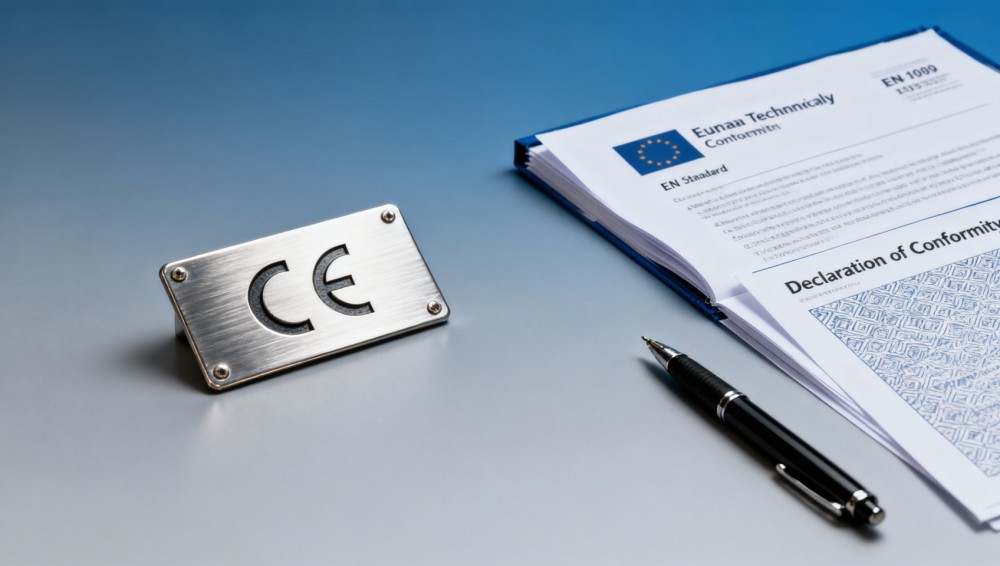
CE marking is a declaration by the manufacturer (or EU-authorized representative) that a product meets all applicable EU health, safety, and environmental protection requirements under relevant New Approach Directives—such as the Machinery Directive 2006/42/EC, Low Voltage Directive 2014/35/EU, or EMC Directive 2014/30/EU. Unlike RoHS or REACH, CE is mandatory for over 30 product categories—including power tools, LED lighting, medical devices, toys, and wireless chargers.
Crucially, CE is not a “certification” issued by a third party—it’s a legal obligation backed by technical documentation. For higher-risk products (e.g., Class IIa medical devices or industrial robots), an EU Notified Body must review design files and test reports before CE can be affixed. For lower-risk items, manufacturers may self-declare—but only after compiling a full Technical File (including risk assessments, test reports, user manuals, and DoC).
In practice, EU customs officers do not verify chemical composition—they scan for the CE mark, check if the importer has appointed an EU Responsible Person (ERP), and request proof of conformity upon request. A missing CE mark on a Bluetooth speaker? Rejected on sight. A CE mark present but no ERP listed? Held for 7–14 days while documentation is validated. Data from the European Commission’s RAPEX system shows 41% of CE-related rejections in Q1 2026 involved unregistered importers lacking an ERP.
Bottom line: If your product falls under any CE-mandated directive, CE is the *only* requirement that stops your container before it clears customs. RoHS and REACH violations may trigger post-market audits or fines—but they won’t block entry.
RoHS & REACH: Important—but Not Entry Barriers
RoHS (Restriction of Hazardous Substances Directive 2011/65/EU) restricts 10 hazardous substances—including lead, cadmium, mercury, and four phthalates—in electrical and electronic equipment (EEE). Its scope covers everything from USB cables to smart thermostats. However, RoHS compliance is verified *after* market entry—typically during national market surveillance inspections or customer audits. There is no RoHS “mark.” Compliance is demonstrated via material declarations (e.g., IPC-1752A), lab test reports (IEC 62321-5), and supplier declarations.
REACH (Registration, Evaluation, Authorisation and Restriction of Chemicals, EC 1907/2006) governs the use of over 23,000 chemicals in the EU. While REACH applies broadly, its most immediate impact for exporters lies in two areas: SVHC (Substances of Very High Concern) communication and restriction compliance. If your product contains >0.1% w/w of any SVHC on the Candidate List (233 substances as of March 2026), you must notify ECHA *and* provide safe-use information to downstream users within 45 days of receipt.
Here’s what matters operationally:
- A RoHS violation found in a batch of LED bulbs triggers recall—not border seizure.
- A REACH SVHC notification failure results in fines up to €100,000 (per instance, per EU member state), but no shipment hold.
- Only CE non-compliance leads to automatic detention at Hamburg, Antwerp, or Valencia ports.
How to Prioritize Compliance—Without Overengineering
Start with this 3-step triage:
- Step 1: Determine CE applicability. Use the EU’s Harmonised Standards database or consult a notified body to confirm whether your product falls under any CE directive. If yes—CE is step zero.
- Step 2: Map RoHS scope. Does your product qualify as EEE? If yes, test for restricted substances—even if CE doesn’t require it. 68% of EU distributors now mandate RoHS test reports for shelf placement.
- Step 3: Screen for REACH SVHCs. Run a bill-of-materials (BOM) cross-check against ECHA’s latest Candidate List. Focus on plastics, coatings, adhesives, and printed circuit boards—these account for 92% of SVHC findings in imported goods.
For practical reference, here’s how these requirements align across common export categories:
What You Should Do Before Booking That First Container
Don’t wait until your goods reach Bremerhaven. Start now:
- Identify your EU Responsible Person (ERP) — required for all CE-marked products placed on the EU market. If you don’t have an EU-based entity, engage a compliant ERP service (cost: €450–€1,200/year, depending on product complexity).
- Compile your Technical File *before* production—not after. Include: product description, applied harmonised standards (e.g., EN 62368-1), test reports, risk analysis, user manual, and Declaration of Conformity.
- Require RoHS test reports from component suppliers—not just declarations. Lab tests cost €220–€480 per material group; skipping them increases audit failure risk by 3.7× (TÜV SÜD 2025 Supplier Audit Report).
- Run a free SVHC screening using ECHA’s Candidate List Table. Export your BOM and filter for substances above 0.1% threshold.
Remember: In 2026, EU market surveillance authorities conduct over 14,200 physical inspections annually—and 61% target first-time importers. Their goal isn’t to penalize, but to verify traceability. When your documentation is complete, consistent, and accessible in English, German, or French, your shipment moves. When it’s fragmented—or absent—it stalls.
Final Takeaway: CE Is the Key. The Rest Are Locks on the Door.
CE marking opens the door to the EU. RoHS ensures your product stays on retailer shelves. REACH keeps your supply chain transparent and defensible. But only CE has the legal force to stop your first container cold. Prioritizing RoHS testing while skipping CE technical documentation is like installing a high-security lock on a door with no frame—it looks thorough, but fails at the foundational level.
If you’re preparing your first EU shipment in 2026: Verify CE applicability first. Appoint your ERP next. Then layer RoHS and REACH verification—not as alternatives, but as essential reinforcements. Because in regulatory terms, there’s no “either/or.” There’s only “first, then, and always.”
Author : Policy Review Desk
Post a comment
Your email address will not be published. Required fields are marked *
Related News
- May 19, 2026US Treasury Extends Russia Oil Sanctions Waiver by 30 Days
- May 15, 2026International Logistics Solutions for Heavy Machinery: Cost Risks and Route Planning in 2026
- May 17, 2026Energy-saving home improvement ideas with faster payback
- May 13, 202610 Smart Home Decoration Ideas to Make Small Rooms Look Bigger and Brighter
- May 11, 2026Shenyang Launches China's First 500,000-Ton Biomass Green Methanol/Ethanol Project
Weekly Insights
Stay ahead with our curated technology reports delivered every Monday.