
Four Departments Issue Implementation Plan for High-Quality Development of Energy-Saving Equipment





Four Departments Issue Implementation Plan for High-Quality Development of Energy-Saving Equipment
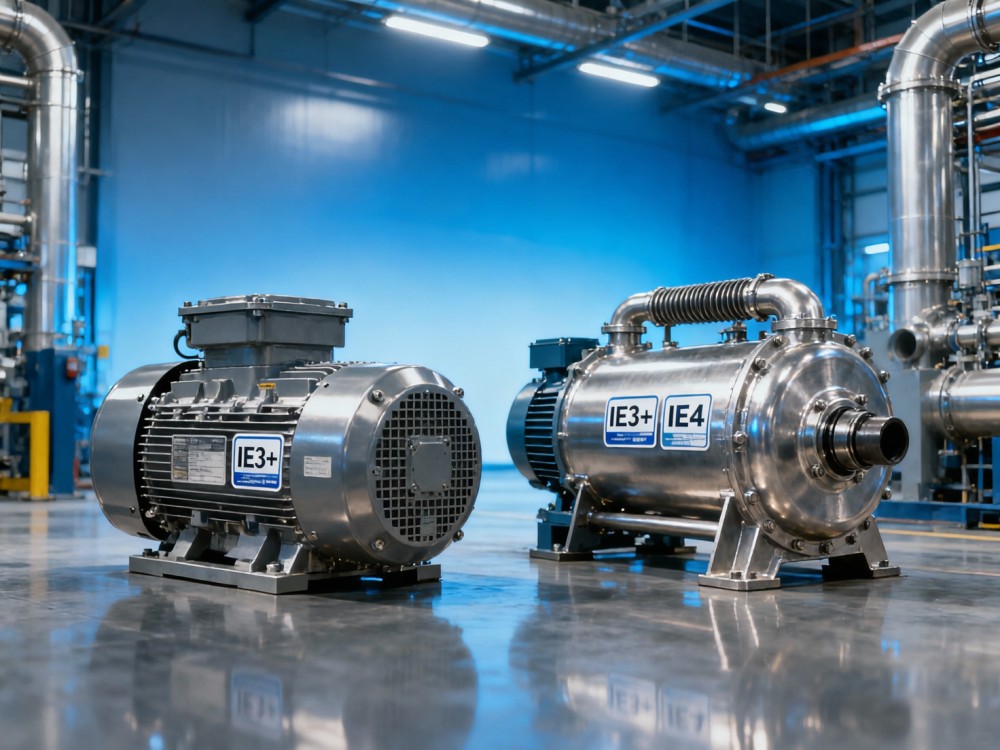
Introduction: On March 16, 2026, four Chinese ministries, including the Ministry of Industry and Information Technology (MIIT), jointly issued the Implementation Plan for High-Quality Development of Energy-Saving Equipment. The plan mandates that newly manufactured high-efficiency motors, screw air compressors, and other products must meet IE3+ energy efficiency standards starting in 2026, with key export categories required to achieve IE4 by 2027. This move aligns with the EU's revised ErP Directive for 2025, posing compliance challenges for Chinese manufacturers. Industries involved in motor production, export trade, and energy-intensive equipment should closely monitor these changes to avoid market access risks.
Event Overview
The Implementation Plan for High-Quality Development of Energy-Saving Equipment, released on March 16, 2026, sets clear timelines for energy efficiency upgrades. From 2026, newly produced high-efficiency motors and screw air compressors must comply with IE3+ standards, while key export products must reach IE4 by 2027. The policy mirrors the EU's ErP Directive updates, emphasizing synchronization with international regulations. Non-compliant manufacturers risk EU customs rejections and order cancellations.
Impact on Sub-Sectors
1. Motor and Compressor Manufacturers
Directly affected by the IE3+/IE4 mandates, these manufacturers must upgrade production lines and retest products. Failure to meet deadlines could disrupt domestic sales and export contracts.
2. Export-Oriented Enterprises
Companies relying on EU markets face urgent certification needs. The 2027 IE4 requirement for key exports demands immediate action to avoid shipment blockages.
3. Supply Chain Partners
Component suppliers must adapt to higher-efficiency designs, potentially increasing costs for raw materials like high-grade silicon steel.
Key Focus Areas and Actions
1. Certification Timelines
Prioritize testing for products targeting EU markets to align with the 2025 ErP revision. Delays may result in lost orders.
2. Production Upgrades
Audit existing manufacturing processes for IE3+/IE4 compatibility. Allocate budgets for equipment retrofits or replacements.
3. Supplier Coordination
Engage upstream partners early to secure compliant materials and avoid bottlenecks.
Editorial Perspective
Analysis来看, this policy signals China's accelerated alignment with global energy efficiency norms. While the 2026-2027 deadlines provide a transition window, the overlap with EU regulations creates a de facto urgency for exporters. 当前更值得关注的是 whether provincial-level implementation rules will offer subsidies or flexibility for SMEs.
Conclusion
The plan reinforces China's commitment to green manufacturing but imposes immediate operational challenges. Businesses should treat this as a compliance milestone rather than a distant target, especially for EU-bound goods. Proactive certification and supply chain adjustments are now critical to maintaining market access.
Source Information
Primary source: Joint announcement by MIIT and three other ministries (March 16, 2026). Pending clarification: Potential provincial-level incentives for compliance.
Industries
Related News
- 00
0000-00
US Treasury Extends Russia Oil Sanctions Waiver by 30 Days - 00
0000-00
International Logistics Solutions for Heavy Machinery: Cost Risks and Route Planning in 2026 - 00
0000-00
Energy-saving home improvement ideas with faster payback - 00
0000-00
10 Smart Home Decoration Ideas to Make Small Rooms Look Bigger and Brighter - 00
0000-00
Shenyang Launches China's First 500,000-Ton Biomass Green Methanol/Ethanol Project
Weekly Insights
Stay ahead with our curated technology reports delivered every Monday.