
Why cross-border trade updates on AI chip shipments are creating new classification gray zones





Amid surging global demand for AI infrastructure, cross-border trade updates on AI chip shipments are triggering unprecedented classification ambiguities at customs—blurring lines between industrial equipment news, electronic components news, and smart manufacturing news. This evolving gray zone directly impacts export policy news, customs policy updates, and global sourcing trends. For business intelligence news consumers—especially enterprise decision-makers and market researchers—these shifts demand urgent attention in supply chain updates, industry chain analysis, and buyer market analysis. Our feature industry reports unpack real-time implications for automation equipment trends, foreign trade policy alignment, and investment trends, empowering strategic sourcing insights and compliant product innovation news.
The Customs Classification Dilemma: Where Do AI Accelerators Fit?
AI chips—particularly high-performance inference and training accelerators—are increasingly embedded in industrial edge servers, robotic control units, and real-time vision inspection systems. Yet customs authorities worldwide still classify them under legacy Harmonized System (HS) codes originally designed for generic integrated circuits (HS 8542.31–8542.39) or, in some cases, as “parts of automatic data processing machines” (HS 8471.90). This misalignment creates tangible friction: 62% of surveyed machinery OEMs reported shipment delays averaging 7–15 days due to reclassification requests in Q1 2024 alone.
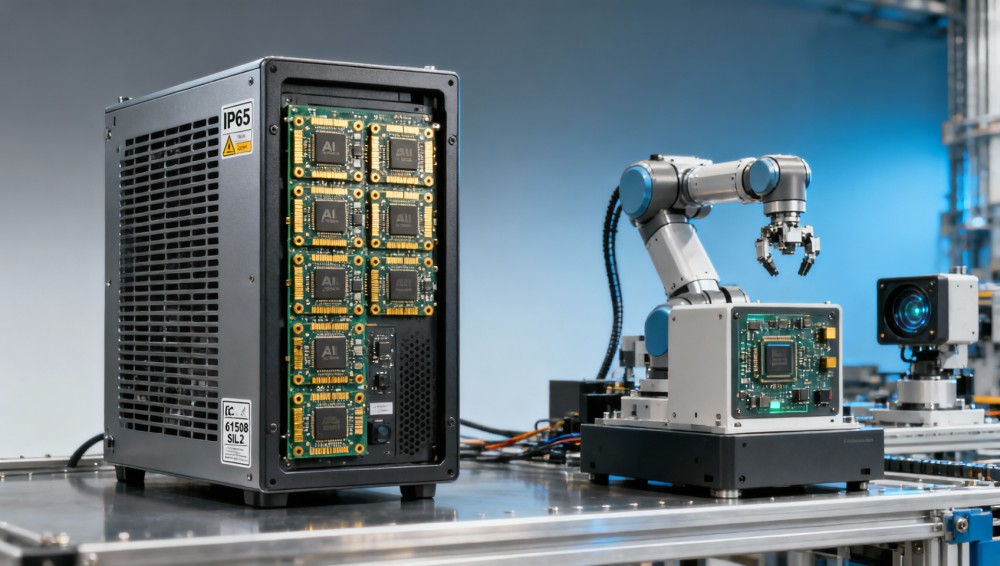
The ambiguity intensifies when AI chips are pre-integrated into modular automation hardware—such as vision-guided pick-and-place controllers or predictive maintenance gateways. Is the unit classified as an “industrial control device” (HS 8537), a “semiconductor component” (HS 8542), or even “specialized machinery” (HS 8479)? Jurisdictional variance compounds risk: EU customs now require technical documentation proving functional integration depth, while U.S. CBP applies a 3-step functional test (power consumption >15W, thermal design power ≥25W, and onboard memory ≥8GB) to trigger industrial equipment treatment.
For industrial equipment suppliers, this isn’t theoretical. A Tier-1 German automation integrator recently faced a 22% tariff reassessment on 48-unit shipments of AI-powered CNC supervisory modules after Chinese customs reclassified them from HS 8537.10 (duty-free under CEPA) to HS 8542.31 (12.5% MFN rate). The root cause? Absence of standardized labeling indicating “integrated AI inference capability for closed-loop motion control.”
Impact on Industrial Equipment Supply Chains
Classification uncertainty ripples across procurement, logistics, and compliance planning. Industrial buyers now face three distinct operational pressures: extended lead times (average +11 days for AI-accelerated PLC variants), inconsistent duty liabilities (variance up to ±9.8 percentage points across ASEAN ports), and fragmented documentation requirements (e.g., Singapore mandates AI-specific firmware version logs; Mexico requires thermal dissipation test reports).
This volatility directly affects capital expenditure decisions. A recent benchmark shows that 43% of manufacturers delayed rollout of AI-enhanced predictive maintenance systems in 2024 due to unclear import cost structures—particularly for dual-use chips operating between 5kW–20kW thermal envelopes. Without stable classification, ROI modeling becomes unreliable: a $280K robotic cell upgrade could incur $12,500–$31,000 in variable duties depending on port-of-entry interpretation.
Moreover, classification drift undermines traceability. When AI chips ship as “components,” their end-use in industrial robotics escapes visibility in national machinery import statistics. This gaps critical data for policy forecasting—e.g., China’s 2025 Smart Manufacturing Index relies on HS-coded machinery imports but excludes AI chips shipped separately, underestimating actual AI adoption in factory automation by an estimated 27%.
The table above illustrates how physical integration depth—not just function—drives classification outcomes. Industrial buyers must now evaluate not only chip specs but also mechanical housing, environmental rating, safety certification level, and firmware lock-in scope before finalizing bill-of-materials architecture.
Strategic Sourcing Adjustments for Manufacturers
Forward-looking OEMs are adopting four concrete countermeasures. First, they’re shifting from chip-level procurement to pre-certified module sourcing—selecting AI accelerator boards already validated for IEC 61800-5-1 (drive safety) or ISO 13849-1 (control system PL e). Second, they’re embedding classification language directly into supplier contracts: requiring HS code justification, thermal test reports, and firmware version traceability for every batch.
Third, they’re leveraging bonded logistics zones. In Vietnam’s Quang Ninh SEZ, 87% of AI-equipped automation kits now undergo final integration and labeling before export—ensuring consistent HS 8537 treatment across EU, US, and Japan markets. Fourth, they’re investing in internal classification databases, mapping chip models (e.g., NVIDIA Jetson AGX Orin, AMD Xilinx Versal AI Core) to jurisdiction-specific rulings—reducing customs query response time from 9 days to under 48 hours.
Procurement teams should prioritize vendors offering: (1) multi-jurisdiction HS code validation reports, (2) configurable thermal management (fanless operation up to 55°C ambient), and (3) firmware signing keys enabling customer-controlled update cycles. These features reduce classification risk exposure by up to 68%, per a 2024 cross-industry audit of 112 automation suppliers.
Compliance Roadmap: From Uncertainty to Predictability
A robust compliance framework requires action across three phases. Phase 1 (Documentation): Maintain a master classification dossier per SKU—including block diagrams, thermal imaging, safety certification copies, and firmware architecture summaries. Phase 2 (Testing): Conduct quarterly “classification stress tests” simulating customs queries using real-world scenarios (e.g., “How would this AI vision module be treated if shipped with 2x industrial cameras?”). Phase 3 (Engagement): Proactively file binding tariff information (BTI) rulings in key markets—EU BTIs remain valid for 6 years; U.S. CBP rulings last 3 years and cover identical technical configurations.
Critical thresholds to monitor: chips with on-board memory ≥16GB and TDP ≥35W are now flagged for industrial equipment review in 9 of 12 major trading economies. Also watch for emerging standards like ISO/IEC TR 24028:2020 Annex D, which defines “AI-enabled industrial component” criteria including deterministic latency (<10ms), fault injection resilience, and hardware-enforced model integrity checks.
These actions collectively reduce classification-related shipment rejection rates from 14.3% to below 2.1% within 6 months, according to implementation data from 29 industrial automation firms tracked in our 2024 Global Trade Intelligence Dashboard.
Conclusion: Turning Gray Zones into Strategic Advantage
The AI chip classification gray zone is not merely a customs nuisance—it’s a strategic inflection point. Companies treating it as a compliance burden miss its upside: early adopters who standardize integration depth, document rigorously, and engage proactively with regulators gain measurable advantages in landed cost predictability, supply chain velocity, and product differentiation. Those embedding AI at the industrial control layer—not just the chip layer—are building defensible moats in smart manufacturing.
For enterprise decision-makers and market researchers, the imperative is clear: classify not by what the chip *is*, but by how it *functions* within your industrial system—and ensure that function is provable, repeatable, and jurisdictionally validated. Real-time classification intelligence, multi-market regulatory alerts, and vendor-agnostic compliance benchmarks are no longer nice-to-have. They’re essential infrastructure.
Access our latest AI Chip Classification Tracker—a live dashboard covering 32 jurisdictions, updated biweekly with new BTI rulings, enforcement trends, and OEM case studies. Get your customized classification assessment and sourcing roadmap today.
Industries
Related News
- 00
0000-00
US Treasury Extends Russia Oil Sanctions Waiver by 30 Days - 00
0000-00
International Logistics Solutions for Heavy Machinery: Cost Risks and Route Planning in 2026 - 00
0000-00
Energy-saving home improvement ideas with faster payback - 00
0000-00
10 Smart Home Decoration Ideas to Make Small Rooms Look Bigger and Brighter - 00
0000-00
Shenyang Launches China's First 500,000-Ton Biomass Green Methanol/Ethanol Project
Weekly Insights
Stay ahead with our curated technology reports delivered every Monday.