
Packaging Industry 26-Year Trend Report





1. Industry Overview
The packaging industry supports global manufacturing, logistics, and retail. Over the past 26 years, innovation has shifted from traditional materials to smart, sustainable, and automated packaging solutions. In 2026, the industry integrates digital printing, eco-friendly materials, automation, and intelligent tracking, impacting supply chains and sustainability practices worldwide.
2. 26-Year Historical Review
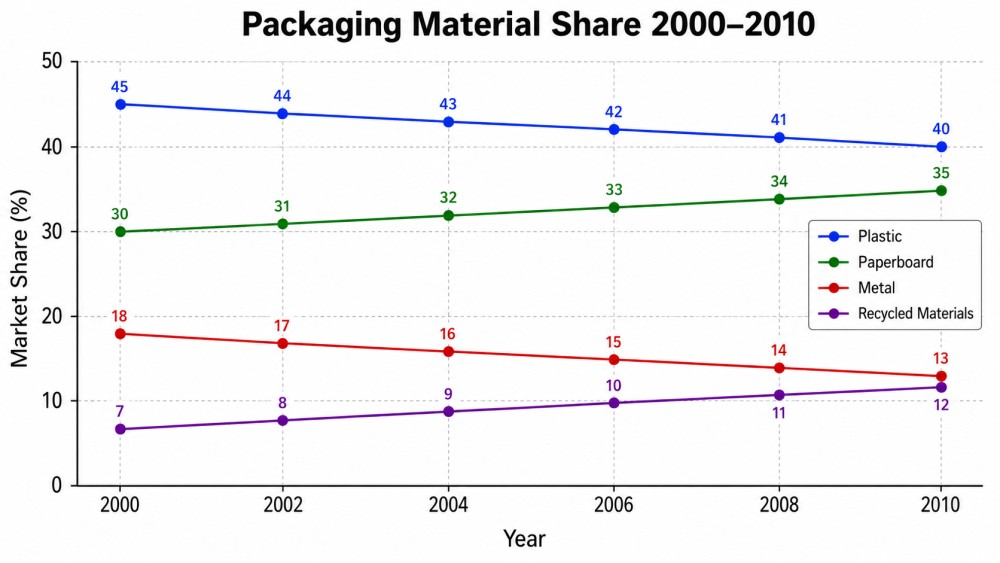
2000–2010: Traditional Materials Dominance
Packaging relied heavily on plastics, paperboard, and metals. Standardized production and mass manufacturing dominated. Environmental concerns began to surface, prompting initial recycling efforts.
2011–2015: Innovation and Sustainability Emergence
Biodegradable materials and recyclable packaging gained traction. Automation in folding, sealing, and labeling started to reduce labor costs and improve consistency.
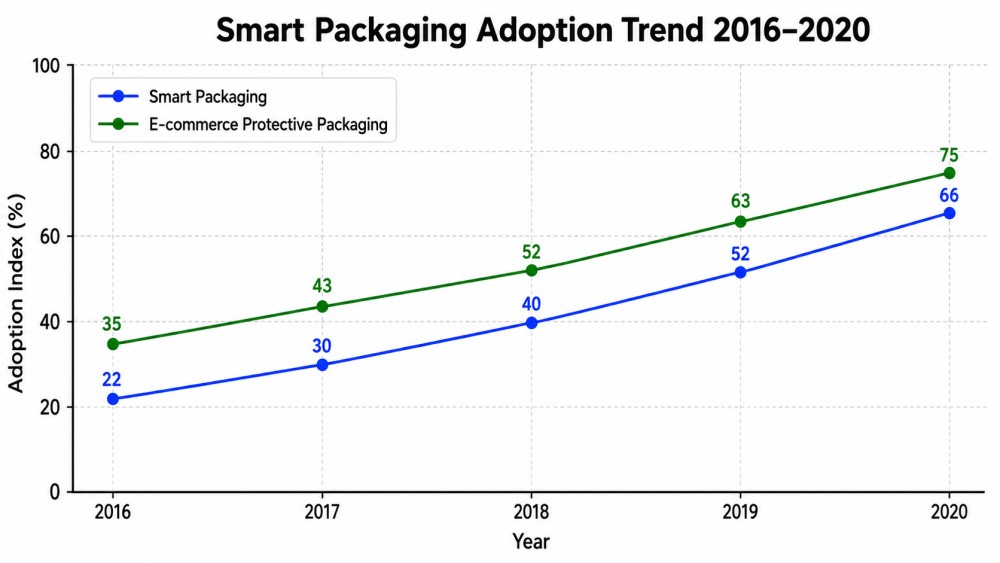
2016–2020: Smart Packaging Integration
QR codes, NFC tags, and smart sensors became more common, enhancing supply chain tracking and consumer interaction. E-commerce growth increased demand for durable, protective, and lightweight packaging.
2021–2025: Digital Printing & Automated Systems
Digital printing technologies enabled faster customization and on-demand packaging. Robotics and automated sorting systems enhanced operational efficiency. Sustainability regulations accelerated eco-friendly material adoption.
3. Current Industry Analysis
3.1 Market Structure
- Segments: Food & beverage, pharmaceuticals, consumer goods, e-commerce packaging.
- Key Technologies: Digital printing, automation, sustainable materials, smart sensors.
- Major Regions: North America, Europe, Asia-Pacific, Middle East.
3.2 Technological Drivers
- Automation in packaging lines for efficiency.
- Smart packaging with sensors and digital tracking.
- Eco-friendly and recyclable material development.
3.3 Policy and Market Environment
Regulations on plastic use and waste management drive innovation. Circular economy initiatives promote recyclable and biodegradable solutions. Government incentives encourage R&D in sustainable packaging.
3.4 Industry Chain Changes
- Upstream: Raw materials (paper, plastic, biodegradable polymers).
- Midstream: Printing, automation, packaging machinery, smart solutions.
- Downstream: Consumer goods, logistics, e-commerce fulfillment.
4. In-Depth Analysis
4.1 Investment Trends
Investment focuses on sustainable material R&D, automation machinery, and smart sensor integration. Startups innovating in recyclable or compostable materials attract venture capital.
4.2 Technology Comparison
4.3 Regional Differences
- North America & Europe: Strong focus on sustainability and automation adoption.
- Asia-Pacific: Rapid manufacturing growth, cost-effective mass production.
- Latin America & Middle East: Emerging adoption of automated and eco-friendly solutions.
4.4 Risks and Challenges
- Raw material price volatility (plastic, paper, polymers).
- High investment costs for automation and digital printing.
- Regulatory compliance and changing sustainability standards.
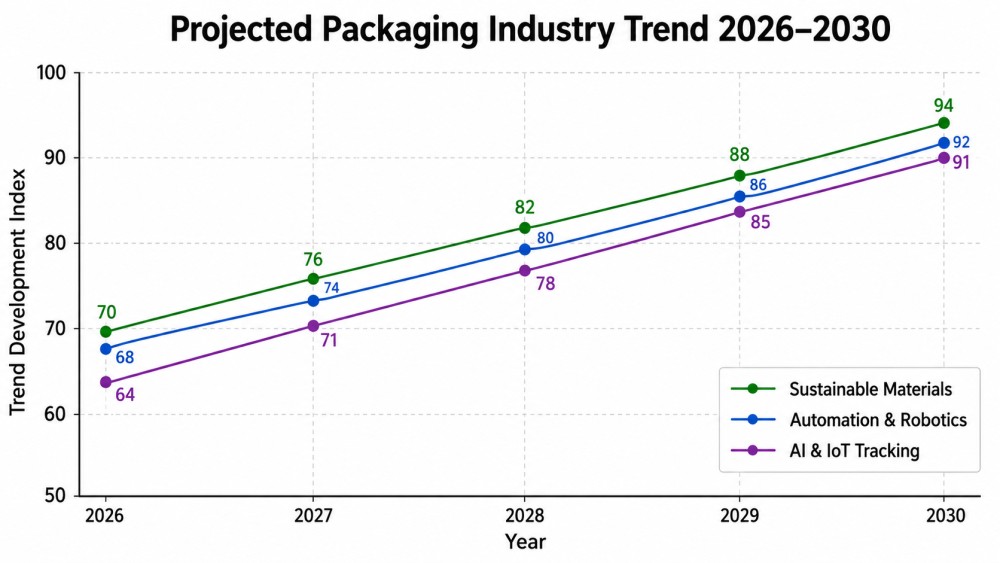
5. Future Development Trends (2026–2030)
- Widespread adoption of biodegradable and recyclable materials.
- Integration of AI and IoT in packaging lines for smart supply chains.
- Customized and on-demand packaging via digital printing.
- Automation and robotics reducing labor intensity and improving precision.
Global compliance with circular economy policies and green regulations.
6. Conclusion
The packaging industry is shifting toward smart, sustainable, and automated solutions. Companies investing in eco-friendly materials, automation, and smart supply chain technologies will remain competitive in the next decade.
Industries
Related News
- 00
0000-00
US Treasury Extends Russia Oil Sanctions Waiver by 30 Days - 00
0000-00
International Logistics Solutions for Heavy Machinery: Cost Risks and Route Planning in 2026 - 00
0000-00
Energy-saving home improvement ideas with faster payback - 00
0000-00
10 Smart Home Decoration Ideas to Make Small Rooms Look Bigger and Brighter - 00
0000-00
Shenyang Launches China's First 500,000-Ton Biomass Green Methanol/Ethanol Project
Weekly Insights
Stay ahead with our curated technology reports delivered every Monday.