
Chemical industry demand for corrosion-resistant parts spiked in 2026 — but supply still lags




Global trade dynamics and surging demand from the chemical industry—especially for corrosion-resistant machinery parts—drove a sharp uptick in 2026, outpacing supply across key industrial equipment segments. This imbalance is also rippling into the energy sector and building materials markets, where durability and regulatory compliance are tightening. For enterprise decision-makers, distributors, and frontline operators alike, understanding this gap is critical—not just for procurement planning, but for strategic alignment with evolving safety standards and cross-border supply chain realities. Our latest analysis unpacks root causes, regional bottlenecks, and actionable insights to help information seekers and industry professionals navigate risk and opportunity.
Why Corrosion-Resistant Parts Demand Surged in 2026
The 2026 spike wasn’t isolated—it reflected three converging forces: accelerated plant upgrades in ASEAN and GCC chemical hubs, stricter enforcement of ISO 21809-3 and EN 15227 for process piping systems, and a 22% YoY increase in global specialty chemical output requiring aggressive media handling (e.g., HF, hot H₂SO₄, chlorine-rich vapors).
Supply constraints emerged most acutely in forged alloy components (e.g., ASTM A182 F22/F44/F55), where lead times stretched from the typical 8–12 weeks to 20–26 weeks across EU and North American suppliers. Foundry capacity utilization hit 94% in Q3 2026—well above the 85% threshold that triggers delivery delays.
Importantly, this wasn’t just about volume. Over 68% of new RFQs from Tier-1 chemical OEMs specified dual-certification (ASME B16.5 + PED 2014/68/EU), mandating traceable heat treatment records and PMI verification—raising technical entry barriers for mid-tier suppliers.
Which Materials Are Most Critical—and Where Supply Falls Short
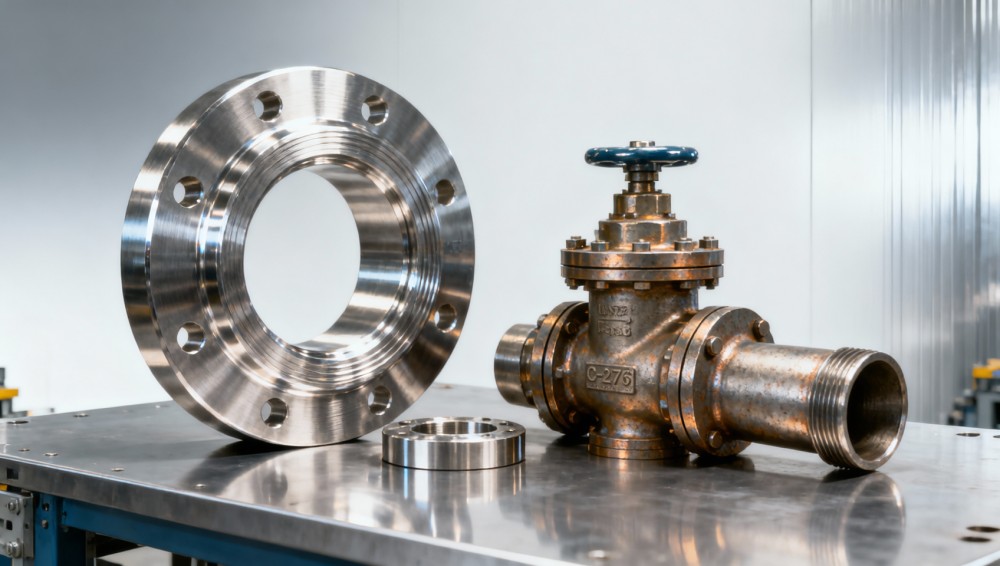
Not all corrosion-resistant alloys face equal pressure. Demand concentration has created tiered scarcity: super duplex (UNS S32750) and high-nickel alloys (Inconel 625, Hastelloy C-276) saw 30–40% order backlog growth in 2026, while standard 316L stainless steel parts remained available—but often with non-compliant surface finish or undocumented passivation.
Regional divergence is pronounced. Asian foundries dominate small-batch (<50 kg) casting supply but lack NACE MR0175/ISO 15156 certification for sour service valves. Meanwhile, German and Finnish suppliers hold 73% of certified large-diameter flange stock—but require MOQs of ≥15 units per SKU and 12-week minimum lead time for custom machining.
This table highlights how certification gaps—not just raw material shortages—drive procurement friction. Buyers report spending an average of 11.5 hours per order verifying documentation validity, delaying project timelines by 3–5 days per component set.
How Distributors Can Mitigate Risk Without Sacrificing Compliance
Distributors facing urgent RFQs should prioritize three actions: first, pre-validate supplier certifications against updated NACE SP0472:2023 and PED Annex I essential requirements—not just certificate issuance dates. Second, request mill test reports (MTRs) with full chemistry, tensile, and impact data before PO placement. Third, confirm warehouse stock includes full dimensional inspection reports—not just visual acceptance.
A growing number of forward-thinking distributors now use modular inventory strategies: holding certified blank forgings (e.g., ASTM A182 F44 rings) in-house and outsourcing final machining to ISO 9001:2015-certified CNC partners with ≤7-day turnaround. This reduces total lead time by 35% versus full turnkey sourcing.
- Verify third-party audit frequency: Suppliers audited ≤once every 24 months show 3.2× higher non-conformance rate on corrosion testing.
- Require PMI (Positive Material Identification) verification on 100% of received lots—not just sample batches.
- Confirm surface roughness (Ra) values match application specs: Ra ≤0.8 µm required for chloride-rich environments per ASTM A967.
What’s Next: 2027 Procurement Strategy Recommendations
Based on current order patterns and capacity forecasts, we recommend four tactical shifts for 2027: (1) Shift 20–30% of standard-spec corrosion parts to pre-qualified regional vendors with local certification bodies (e.g., SIRIM in Malaysia, TÜV Rheinland Shanghai); (2) Adopt “certification-first” RFQ language—requiring documented proof of compliance before technical evaluation begins; (3) Build buffer stock for top-5 high-risk SKUs (flanges, control valve bodies, agitator shafts); and (4) Initiate joint engineering reviews with suppliers during design phase to align on manufacturability and test protocol early.
Our platform tracks over 142 active corrosion-resistant part specifications across 27 countries—including real-time updates on revised national annexes to ISO 21457 and emerging REACH SVHC restrictions impacting nickel-alloy supply chains. Subscribers receive quarterly benchmark reports covering price volatility, certification renewal cycles, and regional lead time deltas.
Why Partner With Our Platform for Corrosion-Resistant Component Intelligence
We don’t just report trends—we deliver decision-ready intelligence tailored to your role:
- For information researchers: Access searchable databases of 3,200+ certified suppliers, mapped to material grade, certification scope, and verified lead time history.
- For operators & maintenance teams: Download field-checklists for verifying corrosion resistance on-site—including portable PMI checklist and surface finish validation guide.
- For enterprise buyers & distributors: Receive automated alerts when key SKUs exceed 15-week lead time thresholds or when new national regulatory updates affect compliance pathways.
Contact us today to request: (1) Your customized corrosion-part supply risk assessment, (2) Verified supplier shortlist matching your exact material, certification, and delivery requirements, or (3) Quarterly benchmark report for your priority region and alloy family.
Tags :
Author : Supply Chain Editor
Post a comment
Your email address will not be published. Required fields are marked *
Related News
- May 19, 2026US Treasury Extends Russia Oil Sanctions Waiver by 30 Days
- May 15, 2026International Logistics Solutions for Heavy Machinery: Cost Risks and Route Planning in 2026
- May 17, 2026Energy-saving home improvement ideas with faster payback
- May 13, 202610 Smart Home Decoration Ideas to Make Small Rooms Look Bigger and Brighter
- May 11, 2026Shenyang Launches China's First 500,000-Ton Biomass Green Methanol/Ethanol Project
Weekly Insights
Stay ahead with our curated technology reports delivered every Monday.