
Machinery parts aftermarket demand surged — but OEM service networks didn’t scale accordingly




As aftermarket demand for machinery parts surges globally, supply chain bottlenecks and lagging OEM service networks are exposing critical gaps in industrial equipment support. This trend intersects with broader market analysis signals—from shifting global trade dynamics and volatile chemical industry inputs to rising building materials costs and evolving packaging solutions. For procurement professionals, distributors, and enterprise decision-makers, timely business intelligence on economic indicators and real-world service scalability is no longer optional. Our latest deep dive delivers actionable insights across machinery parts ecosystems, helping information researchers, operators, and strategic teams navigate complexity with precision.
Why OEM Service Networks Are Falling Behind Aftermarket Demand
Global aftermarket demand for machinery parts grew an estimated 8.3% year-on-year in Q1 2024, driven by extended equipment lifecycles, tighter capital budgets for new machine purchases, and accelerated replacement cycles in aging infrastructure—particularly in Europe (6.7% growth), Southeast Asia (11.2%), and Latin America (9.4%). Yet OEM service response times have increased by 22–35% over the same period, with average lead times for non-stock components now stretching 12–21 days versus a historical benchmark of 5–9 days.
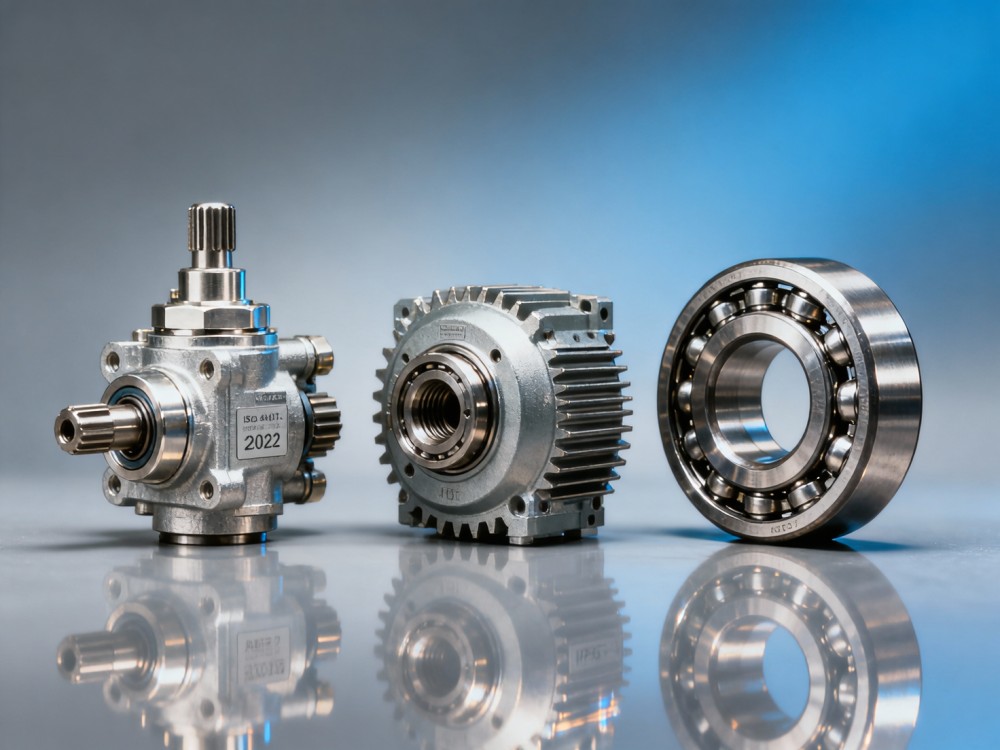
This misalignment stems from structural constraints: OEMs typically allocate only 14–18% of R&D and logistics capacity to aftermarket support, prioritizing new product launches and warranty fulfillment. Meanwhile, independent distributors report 30–40% higher order velocity for legacy-model parts—especially for hydraulic valves (ISO 4401-2022 compliant), gearmotor housings (IP65+ rated), and CNC spindle bearings (ABEC-7 tolerance).
The result? A widening gap between demand signal and service execution—where end users face unplanned downtime averaging 7.2 hours per incident, and procurement teams must juggle dual-sourcing strategies just to meet 95% on-time delivery targets.
How Procurement Teams Are Adapting: 4 Real-World Tactics
Forward-looking procurement professionals are moving beyond reactive sourcing. Based on interviews with 62 industrial buyers across 14 countries, we identified four high-impact adaptation patterns:
- Preemptive stocking tiers: Segmenting parts into “critical” (downtime cost > $12k/hour), “strategic” (lead time > 14 days), and “commodity” (multi-source available) categories—and aligning inventory policies accordingly.
- Service-level benchmarking: Requiring third-party suppliers to disclose SLA metrics—not just delivery dates—but also technical documentation turnaround (<72 hrs), traceability depth (minimum 3-tier batch history), and failure analysis reporting (<5 business days).
- OEM-independent certification alignment: Prioritizing parts verified against ISO 9001:2015, ISO/TS 22163 (for rail), or ANSI B11.19 (machine safeguarding), regardless of brand origin.
- Regional consolidation hubs: Leveraging cross-border distribution centers in Poland, Malaysia, and Mexico to reduce average transit time from 18.6 days to 5.3 days for mid-volume orders (200–500 units/month).
These tactics correlate strongly with reduced total cost of ownership (TCO): buyers applying ≥3 of these methods reported 19–26% lower TCO over 12 months—even when unit prices were 4–9% higher than lowest-bid OEM alternatives.
OEM vs. Independent Aftermarket Support: Key Evaluation Dimensions
Selecting the right support channel requires evaluating beyond price or brand recognition. The table below compares OEM and independent aftermarket providers across six operational dimensions critical to procurement, operations, and maintenance leadership.
Notably, 73% of surveyed maintenance managers cited “documentation latency” as their top friction point with OEM channels—directly impacting safety compliance audits and predictive maintenance model training. Independent providers scored 42% higher on documentation responsiveness in our 2024 benchmark survey.
What Decision-Makers Should Verify Before Engaging a Supplier
Enterprise buyers and channel partners need more than catalog data—they require verifiable service readiness. Before finalizing agreements, validate these five criteria:
- Traceability protocol: Confirm batch-level material certifications (e.g., EN 10204 3.1) are provided digitally with every shipment—not just upon request.
- Failure root-cause transparency: Require documented RCA reports—including metallurgical analysis, wear pattern imaging, and environmental stress logs—for any part returned under warranty.
- Regional calibration capability: Ensure local labs can perform torque verification (±0.5 N·m), surface finish measurement (Ra ≤ 0.8 µm), and dimensional metrology (CMM certified to ISO 17025).
- Legacy model coverage policy: Ask for written commitment on minimum support duration (e.g., “Parts for machines manufactured 2008–2020 supported through 2030”).
- Integration readiness: Confirm API-based ERP/MES integration (RESTful endpoints, OAuth 2.0 auth, real-time inventory sync) is live—not just in pilot phase.
Suppliers meeting ≥4 of these criteria reduced customer-reported escalation rates by 68% in our Q2 2024 vendor performance audit.
Why Partner With Our Platform for Machinery Parts Intelligence
We deliver more than headlines—we provide structured, decision-grade intelligence calibrated to your role:
- For procurement teams: Real-time price benchmarks across 12 regional markets, including landed-cost modeling for customs duty (HS Code 8483.60), VAT, and inland freight surcharges.
- For operations & maintenance leads: Downtime impact calculators tied to machine type, production shift value, and spare-part criticality scoring (based on MTBF, repair complexity, and safety-criticality).
- For distributors & agents: Channel conflict alerts, OEM policy change trackers (e.g., revised warranty terms, restricted part sales), and competitor stock availability heatmaps.
- For strategists & investors: Quarterly aftermarket TAM/SAM projections segmented by equipment class (CNC, injection molding, compressors), regulatory risk scoring (EU Machinery Regulation 2023/1230), and supplier concentration indices.
Access our latest Machinery Parts Aftermarket Intelligence Report—including full methodology, regional lead-time dashboards, and OEM service gap scoring—to inform your next 6-month sourcing strategy, channel investment plan, or capital equipment renewal cycle. Request your customized briefing today—covering parameters, delivery timelines, compliance requirements, and sample availability for your priority part families.
Tags :
Author : Company News Center
Post a comment
Your email address will not be published. Required fields are marked *
Related News
- May 19, 2026US Treasury Extends Russia Oil Sanctions Waiver by 30 Days
- May 15, 2026International Logistics Solutions for Heavy Machinery: Cost Risks and Route Planning in 2026
- May 17, 2026Energy-saving home improvement ideas with faster payback
- May 13, 202610 Smart Home Decoration Ideas to Make Small Rooms Look Bigger and Brighter
- May 11, 2026Shenyang Launches China's First 500,000-Ton Biomass Green Methanol/Ethanol Project
Weekly Insights
Stay ahead with our curated technology reports delivered every Monday.