
Cross-Border Trade Updates: Logistics Bottlenecks and the Push for Digital Customs




Global Logistics Bottlenecks and Their Impact on Industrial Equipment Exports
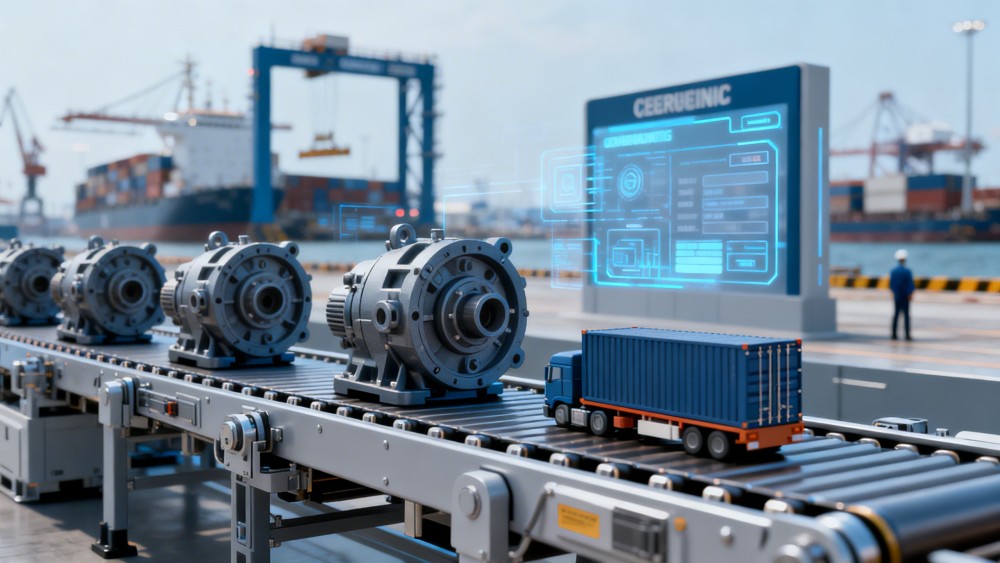
As global supply chains face renewed pressure, our latest cross-border trade updates reveal how logistics bottlenecks and the expansion of digital customs are reshaping the industrial equipment sector. This business intelligence news overview highlights export policy news, customs policy updates, and global sourcing trends that impact manufacturers, investors, and decision-makers. From smart manufacturing news to automation equipment trends, this feature industry report provides sourcing insights, market research reports, and supply chain updates essential for navigating today’s complex foreign trade landscape.
Over the last two years, logistics restrictions have re-emerged due to port congestion, container shortages, and rising freight rates. Transit time for large machinery and component shipments has extended by 15–30% in certain trade corridors, affecting both delivery reliability and costing structures. For the industrial equipment sector, where lead times of 6–8 weeks are standard, a delay of even 5 days can interrupt downstream production scheduling.
This environment has forced equipment exporters to rethink warehousing strategies and consider decentralized inventory models. Regional consolidation centers in Southeast Asia and Europe have become a priority for 40% of surveyed manufacturers, aiming to reduce average transit time to within 12 days on major lanes. Meanwhile, advanced forecasting driven by ERP and AI-based systems is gaining traction to predict port congestion phases 2–3 weeks ahead.
Shipping delays not only affect physical delivery but also create ripple effects in order confirmation cycles. Procurement teams are now pushing suppliers to provide visibility across 5 logistics milestones—factory handover, port entry, departure, customs clearance, and warehouse inbound—using digital dashboards and RFID integration. As the sector becomes data-led, manufacturers who can offer shipment status updates in intervals of under 48 hours are seeing higher buyer preference in B2B sourcing platforms.
The following table summarizes the main logistics pain points and how they affect industrial components and machinery exporters:
These points illustrate how adaptability in cross-border logistics is now an operational necessity. Equipment manufacturers that invest in diversified routing and digital tracking tools can expect delivery consistency improvements of 10–15% annually.
Digital Customs: The New Accelerator in Trade Efficiency
The digital transformation of customs operations is rapidly redefining cross-border efficiency. With more than 70% of global customs authorities integrating electronic declaration systems and AI-based inspection algorithms, clearance speed has improved markedly. Average clearance durations for industrial machinery shipments have dropped from 96 hours to approximately 60 hours within compliant digital corridors.
Digital customs enable exporters of industrial components to minimize paperwork while ensuring compliance with HS codes and dual-use control standards. Many equipment suppliers now adopt automated tariff classification modules that reduce documentation errors by up to 80%, cutting potential regulatory disputes and demurrage fees.
At the same time, integration between digital customs systems and trade compliance management (TCM) software allows automated submission of key forms such as Form A, EUR.1, or Free Trade Agreement certificates, reducing administrative work per shipment from 3 hours to less than 45 minutes. For high-volume exporters shipping over 300 consignments per month, such automation saves approximately 250 man-hours annually.
Below is a summarization of common digital customs features adopted by modern industrial exporters and their measurable outcomes:
Digital customs not only streamline clearance but also contribute to data transparency—helping buyers estimate true landed costs with variance margins below ±2%. This accuracy supports better financial planning for heavy equipment procurement.
Industrial Adaptation: Technology, Strategy, and Policy Alignment
Manufacturers of industrial equipment are responding to these trade challenges through technology-driven adaptation and close alignment with policy frameworks. Smart factories are integrating connected sensors, automated weighing systems, and predictive logistics modules that communicate directly with customs digital interfaces. Such setups are expected to cover 50–60% of tier-one exporters by 2026.
Enterprise-grade trade management suites now combine three critical layers: documentation automation, compliance monitoring, and logistics analytics. For instance, predictive algorithms analyze 12–18 months of shipment data to optimize delivery windows and prevent peak port clashes. These systems reduce average idle container time by about 18% per quarter.
Policy synchronization is another factor shaping adaptation. The ongoing promotion of single window systems by customs authorities in major economies simplifies multi-agency clearance. For industrial exporters, the number of required submission portals has dropped from 4 to 1, and documentation duplication reduced by approximately 65%. This digital alignment shortens entry-to-exit clearance to as low as 36 hours for compliant goods.
Businesses seeking to remain competitive should approach adaptation in a structured way:
- Step 1: Audit current export documentation and classify process efficiency gaps (target reduction ≥20%).
- Step 2: Integrate digital customs API links into ERP systems within 3–6 months.
- Step 3: Train logistics teams on harmonized tariff changes every quarter.
- Step 4: Engage with local policy advisors to preempt upcoming regulatory shifts.
These phased steps enable gradual modernization while maintaining regulatory compliance and export agility.
Procurement and Supply Chain Decision Factors in the New Trade Environment
Procurement leaders now weigh logistics transparency, customs efficiency, and risk mitigation alongside traditional pricing considerations. In B2B markets for industrial equipment, transparency indices—such as real-time order tracking frequency and document visibility scores—are influencing 60% of supplier selection decisions.
Buyers evaluating global machinery suppliers should focus on four performance criteria: transit reliability, customs readiness, digital connectivity, and sustainability compliance. Each of these has a measurable effect on cost and timing. For example, suppliers offering full digital customs compliance reduce average procurement delays by 4–6 days per transaction compared to traditional exporters.
An effective procurement framework should factor quantifiable elements as shown below:
Establishing metric-driven procurement strategies like these allows decision-makers to align sourcing performance with financial objectives. Companies achieving high compliance scores tend to realize cost reductions of 5–8% in logistics expenditure over 12 months.
FAQ: Common Questions in Cross-Border Equipment Logistics
How can manufacturers reduce customs delays for large machinery?
Pre-shipment digital documentation and data sharing with customs authorities allow early validation. Providing digital HS code confirmation and product parameter sheets reduces manual inspection by up to 30%, ensuring faster clearance.
What is the typical implementation time for digital customs integration?
For a mid-sized exporter handling 100–200 shipments per month, deployment of digital customs links and workflow training usually requires 8–12 weeks. Larger enterprises with multi-region setups may need phased rollout over 6 months.
Which trade policies will most affect industrial equipment exporters in the next 12–24 months?
Emerging data-driven single window systems and stricter environmental compliance under carbon border mechanisms will influence export documentation and product certification. Exporters should monitor updates on digital filing standards and sustainability reporting requirements closely.
Conclusion and Next Steps
The intersection of logistics bottlenecks and digital customs transformation is reshaping how industrial equipment exporters operate. Businesses that adopt visibility tools, automated customs workflows, and policy-aligned trade management systems will maintain stronger global resilience. For information researchers and corporate decision-makers, continuous monitoring of supply chain indicators—such as clearance time, trade documentation accuracy, and cost variance—will be vital to strategic planning.
To enhance your organization’s export readiness and operational transparency, consider assessing your current logistics digital maturity. Our industry intelligence platform provides continuous updates on foreign trade policies, customs digitization, and machinery trade dynamics. Contact us today to access customized insights, compare supplier performance, or explore new regional sourcing opportunities in the evolving industrial equipment market.
Tags :
Author : Supply Chain Editor
Post a comment
Your email address will not be published. Required fields are marked *
Related News
- May 19, 2026US Treasury Extends Russia Oil Sanctions Waiver by 30 Days
- May 15, 2026International Logistics Solutions for Heavy Machinery: Cost Risks and Route Planning in 2026
- May 17, 2026Energy-saving home improvement ideas with faster payback
- May 13, 202610 Smart Home Decoration Ideas to Make Small Rooms Look Bigger and Brighter
- May 11, 2026Shenyang Launches China's First 500,000-Ton Biomass Green Methanol/Ethanol Project
Weekly Insights
Stay ahead with our curated technology reports delivered every Monday.