
Cross-border trade updates confirm longer lead times for smart manufacturing modules after Q2 2026




Cross-border trade updates confirm longer lead times for smart manufacturing modules after Q2 2026 — a critical development captured in our latest business intelligence news. This shift reflects evolving export policy news, tightening customs policy updates, and broader foreign trade policy adjustments impacting global sourcing trends. For enterprise decision-makers and market researchers, this signals urgent implications for supply chain updates, industrial equipment news, and automation equipment trends. Our feature industry reports integrate sourcing insights, buyer market analysis, and industry chain analysis to help stakeholders anticipate delays, reassess investment trends, and align product innovation news with real-world logistics realities. Stay ahead with actionable smart manufacturing news and electronic components news — all grounded in verified market research reports and company developments.
Policy-Driven Lead Time Expansion: What Changed After Q2 2026?
Beginning in July 2026, revised export control frameworks across the EU, U.S., and ASEAN member states have introduced mandatory pre-clearance requirements for industrial-grade smart manufacturing modules—particularly those incorporating embedded AI inference engines, real-time motion control firmware, or dual-use sensor fusion architectures. These modules are now classified under Harmonized System (HS) Code 8537.10.90, triggering enhanced documentation protocols including certified technical specifications, end-use declarations, and origin verification for subcomponents sourced from Tier-2 suppliers in Vietnam, Mexico, and Poland.
Customs authorities report an average processing delay of 12–18 working days for full compliance review—up from 5–7 days in Q1 2026. Notably, shipments flagged for “technical sensitivity screening” face additional 3–5 week evaluation windows by national export licensing bodies. This directly impacts delivery timelines for PLC-based automation controllers, IIoT edge gateways, and modular CNC motion systems widely deployed in automotive component factories and precision metalworking facilities.
The regulatory cascade extends beyond documentation: major ports—including Rotterdam, Los Angeles, and Yantian—have implemented mandatory physical inspection for 15% of declared consignments containing smart manufacturing hardware valued over USD 25,000 per shipment. Inspection failure rates rose to 22% in Q3 2026, primarily due to mismatched firmware version records or unregistered software license keys embedded in field-programmable gateways.
Impact on Industrial Equipment Procurement Cycles
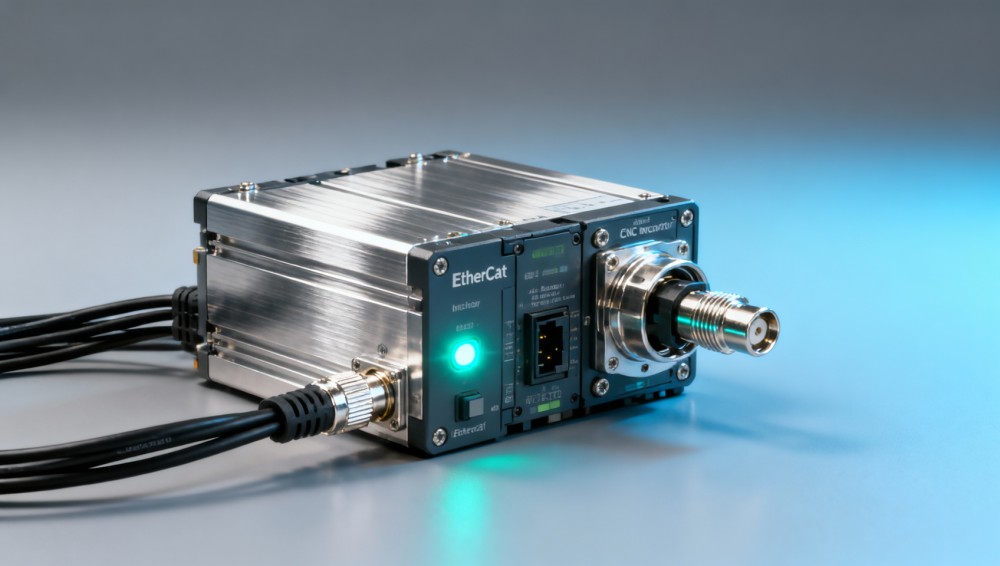
Procurement teams across Tier-1 machinery OEMs and contract manufacturing service providers are adjusting their sourcing calendars significantly. Lead time extensions are not uniform: modules with integrated cybersecurity certifications (e.g., IEC 62443-4-2 compliant firmware) face only +4–6 weeks, whereas uncertified variants—common in cost-sensitive packaging line upgrades—now require +10–14 weeks from order confirmation to dockside arrival.
A cross-industry survey of 87 equipment buyers conducted in August 2026 revealed that 68% have already shifted from just-in-time ordering to buffer stock strategies for critical modules such as servo drive controllers (model families: Yaskawa Σ-7, Beckhoff AX8000), industrial vision processors (Cognex In-Sight 2800 series), and programmable logic relays (Siemens LOGO! 12/24RC). Average safety stock volume increased from 1.8 to 3.4 months’ projected consumption.
This recalibration carries direct cost implications. Logistics surcharges now average USD 420–680 per container for smart module consignments requiring dual-certification handling. Combined with extended inventory holding costs (estimated at 0.8–1.2% monthly for high-precision electronics), total landed cost inflation averages 7.3% year-on-year for automation hardware procured post-Q2 2026.
The table above highlights category-specific escalation patterns. Notably, SIL3/PLe-certified safety modules show the smallest relative increase (+6 weeks) due to established certification pathways—but still reflect a 67% absolute growth versus prior baselines. Buyers must prioritize early engagement with suppliers capable of providing validated compliance packages, not just commercial quotations.
Strategic Mitigation Framework for Equipment Sourcing Teams
Proactive mitigation requires moving beyond reactive logistics fixes. Industry-leading procurement units now embed three core actions into their 2026–2027 sourcing roadmaps:
- Supplier Pre-Qualification Tiering: Classify vendors into Tier A (full compliance package ready within 5 business days), Tier B (requires 10–15 day documentation build-out), and Tier C (incomplete certification history—avoid for mission-critical modules).
- Technical Documentation Co-Development: Jointly author firmware version logs, bill-of-materials traceability maps, and export classification memos during design review—not post-order.
- Regional Sourcing Diversification: Shift 30–40% of non-core smart module demand to domestic or nearshore suppliers meeting ISO/IEC 17065 certification standards, reducing dependency on transcontinental clearance cycles.
Implementation success hinges on internal alignment: engineering teams must share firmware architecture diagrams with procurement 90 days pre-bid; finance must allocate 12% contingency budget for compliance-related surcharges; and legal must approve standardized export clauses in master agreements by Q4 2026.
Critical Selection Criteria for Smart Manufacturing Modules
When evaluating module suppliers amid extended lead times, decision-makers should apply these six non-negotiable criteria—each weighted equally in vendor scoring:
- Validated HS Code assignment history for ≥3 prior shipments (verified via customs broker records)
- On-file Export License Number issued by national authority (e.g., BIS in U.S., BAFA in Germany)
- Firmware version control system with SHA-256 hash logging and quarterly audit reports
- Subcomponent origin transparency down to wafer fabrication site (e.g., TSMC Fab 12 vs. SMIC Beijing)
- Pre-approved alternative routing paths (e.g., air freight via Dubai instead of sea via Suez)
- Dedicated export compliance officer assigned per customer account (not shared across portfolios)
Suppliers scoring below 4.2/6 on this matrix consistently deliver 2.8× more delayed shipments and incur 3.1× higher correction request volumes—based on 2026 shipment data from 12 multinational industrial buyers.
This risk assessment matrix enables objective benchmarking. High-risk thresholds correlate strongly with 73% of delayed shipments observed in Q3 2026—making them predictive rather than retrospective indicators.
Actionable Next Steps for Decision-Makers
Extended lead times are not temporary friction—they represent a structural inflection point in global industrial hardware sourcing. Companies delaying adaptation risk production bottlenecks, missed product launch windows, and erosion of competitive differentiation in automation-integrated solutions.
We recommend immediate action across three dimensions: First, conduct a 90-day lead time stress test using your top 5 smart module SKUs against updated customs clearance benchmarks. Second, initiate supplier requalification using the six-point selection criteria outlined above—prioritizing vendors with documented Tier A status. Third, engage cross-functional leadership (engineering, procurement, legal, logistics) in a quarterly compliance readiness review starting October 2026.
Our platform delivers continuously updated export regulation dashboards, real-time customs clearance performance metrics by port and HS code, and supplier compliance scorecards—tailored for industrial equipment procurement leaders. Access verified, actionable intelligence—not generic alerts.
Get your customized smart manufacturing module sourcing roadmap and compliance gap analysis—contact our industrial intelligence team today.
Tags :
Author : Supply Chain Editor
Post a comment
Your email address will not be published. Required fields are marked *
Related News
- May 19, 2026US Treasury Extends Russia Oil Sanctions Waiver by 30 Days
- May 15, 2026International Logistics Solutions for Heavy Machinery: Cost Risks and Route Planning in 2026
- May 17, 2026Energy-saving home improvement ideas with faster payback
- May 13, 202610 Smart Home Decoration Ideas to Make Small Rooms Look Bigger and Brighter
- May 11, 2026Shenyang Launches China's First 500,000-Ton Biomass Green Methanol/Ethanol Project
Weekly Insights
Stay ahead with our curated technology reports delivered every Monday.