
Dushanzi Petrochemical Completes Pressure Test for 450,000-ton/year Polypropylene Unit, Accelerating Domestic High-Performance PP Specialty Material Capacity Release, Benefiting Export-Oriented Plastic Machinery and Mold Manufacturers in Raw Material Stability and Cost Control




Dushanzi Petrochemical Completes Pressure Test for 450,000-ton/year Polypropylene Unit, Accelerating Domestic High-Performance PP Specialty Material Capacity Release
Introduction
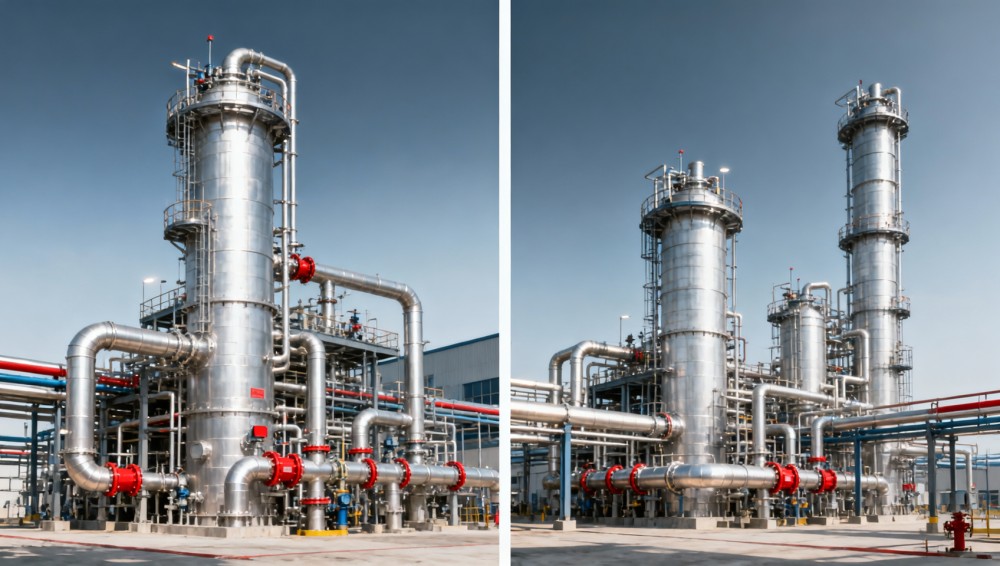
On March 27, 2026, the polypropylene (PP) unit of the Tarim Phase II Ethylene Project, jointly constructed by China Oil Jilin Chemical Engineering & Construction and China Huanqiu Contracting & Engineering Corporation, successfully completed pressure testing for all process pipelines. This milestone signifies a substantial enhancement in China's domestic production capacity for high-rigidity and heat-resistant PP specialty materials. The development is expected to stabilize raw material supply for export-oriented injection molding, blow molding, and precision mold manufacturers, enabling them to offer more consistent processing parameters and pricing structures to overseas clients.
Event Overview
The 450,000-ton/year polypropylene unit under the Tarim Phase II Ethylene Project achieved a critical construction milestone on March 27, 2026, with the completion of pressure testing for all process pipelines. This step confirms the mechanical integrity of the system ahead of commercial operation. The unit is designed to produce high-performance PP grades with enhanced rigidity and thermal resistance, addressing growing demand in automotive, packaging, and consumer goods applications.
Impact on Sub-Sectors
1. Plastic Machinery Exporters
Manufacturers of injection/blow molding machines targeting international markets will benefit from improved raw material consistency. Stable PP supply allows for more reliable machine performance demonstrations and reduced downtime claims from overseas buyers.
2. Precision Mold Makers
Domestic mold producers serving global brands can leverage standardized material properties to reduce trial-and-error adjustments, particularly for thin-wall packaging and automotive interior applications where dimensional stability is critical.
3. Polymer Traders
Specialty PP traders should anticipate gradual price stabilization for high-rigidity grades, though immediate spot market impacts may be limited until full production ramps up post-commissioning.
Key Considerations for Industry Players
1. Monitor Production Ramp-Up Timeline
Track official announcements regarding commercial production start dates to align procurement strategies. The typical 2-3 month window between pressure testing and full operation warrants close observation.
2. Verify Material Certification
Request updated technical datasheets for new PP grades once available, paying particular attention to melt flow rate (MFR) consistency and thermal deformation temperatures compared to existing imports.
3. Reassess Supply Chain Contracts
Export-oriented manufacturers should review force majeure clauses with current suppliers, as domestic alternatives may offer more favorable terms amid global logistics uncertainties.
Editor's Observation
From an industry perspective, this development represents more than incremental capacity expansion. The successful pressure testing confirms China's capability to produce reactor-grade PP specialty materials at scale, historically dominated by Middle Eastern and Southeast Asian producers. While not an immediate market disruptor, it signals a strategic shift toward import substitution in high-value polymer segments. The real test will come during the unit's performance guarantee runs, where consistent quality output will determine long-term industry impact.
Conclusion
The completion of pressure testing at Dushanzi's new PP unit marks a tangible step toward greater supply security for China's plastics processing value chain. Rather than interpreting this as an immediate market transformation, industry participants should view it as the beginning of a 12-18 month transition period where domestic high-performance PP grades gradually gain acceptance as viable alternatives to imported counterparts. Export-focused manufacturers stand to gain the most from improved raw material stability, provided they actively engage in early material testing and process optimization.
Source Information
• Primary Source: Official project progress release by China National Petroleum Corporation (CNPC) • Note: Actual production volumes and quality specifications remain subject to final commissioning results, expected to be confirmed in Q2 2026.
Tags :
Author : Supply Chain Editor
- Last One:Detachable Insulation Jacket Upgrade for Plate Heat Exchangers: 25%+ Energy Efficiency Boost, Compliance with ASME BPE & EU 2019/2021 Directives Facilitates Chinese Exports to EU and Pharmaceutical MarketsApr 01, 2026
- Next Article:Zhejiang Huagong Saibai Launches EO Sterilization Safety Solution: Explosion-proof Warehouse + Forced Aeration System Receives Ex d IIB T4 Gb Certification, Meeting Compliance Requirements for Medical Device ExportersApr 01, 2026
Post a comment
Your email address will not be published. Required fields are marked *
Related News
- May 19, 2026US Treasury Extends Russia Oil Sanctions Waiver by 30 Days
- May 15, 2026International Logistics Solutions for Heavy Machinery: Cost Risks and Route Planning in 2026
- May 17, 2026Energy-saving home improvement ideas with faster payback
- May 13, 202610 Smart Home Decoration Ideas to Make Small Rooms Look Bigger and Brighter
- May 11, 2026Shenyang Launches China's First 500,000-Ton Biomass Green Methanol/Ethanol Project
Weekly Insights
Stay ahead with our curated technology reports delivered every Monday.