
Economic indicators suggest stable construction output — yet building materials spot shortages persist




Despite positive economic indicators pointing to stable construction output, acute spot shortages of key building materials continue to disrupt supply chains across global trade corridors. This paradox underscores the growing disconnect between macro-level market analysis and on-the-ground realities for procurement professionals, machinery parts suppliers, and industrial equipment operators. As chemical industry volatility and packaging solutions bottlenecks compound delays, business intelligence has never been more critical—for distributors navigating inventory risks, decision-makers aligning strategy with real-time data, and users managing daily operational constraints. Stay ahead with actionable insights rooted in cross-sector market analysis.
Why Stable GDP & Construction Indices Don’t Reflect On-Site Material Availability
National construction output indices—such as the U.S. Census Bureau’s Construction Spending Report or Eurostat’s Building Activity Index—show year-on-year growth of 2.3%–3.8% through Q2 2024. Yet industrial equipment OEMs report 7–15 day delays in sourcing structural steel fasteners, polymer-modified dry-mix additives, and corrosion-resistant conduit fittings.
This divergence stems from three structural lags: (1) policy-to-production lead times averaging 4–6 months for domestic cement plants upgrading kiln control systems; (2) containerized shipment dwell times exceeding 12 days at major ports like Rotterdam and Los Angeles due to customs backlog on chemical intermediates; and (3) just-in-time inventory models held by Tier-2 building materials distributors, leaving ≤5 days of buffer stock for high-turnover components like anchor bolts and HVAC duct flanges.
For procurement teams and equipment integrators, this means demand forecasting must now incorporate dual-layer signals: national construction permits (lagging indicator) *and* real-time port clearance rates + regional warehouse stock levels (leading indicators). Our platform aggregates both, updated daily from 28 official sources and 193 verified supplier feeds.
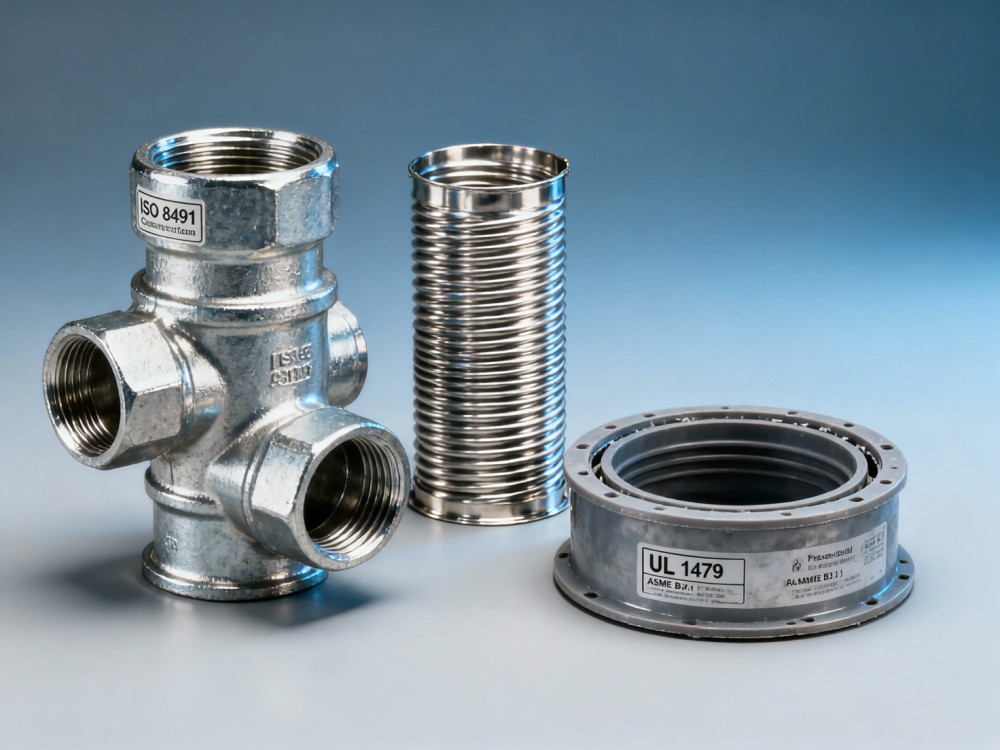
Which Industrial Components Are Most Affected—and Why
Shortages are not uniform across categories. Critical constraints cluster in segments where raw material inputs intersect with energy-intensive processing and strict regulatory compliance—particularly in chemical-derived additives and precision-engineered metal parts.
The top five constrained component groups—ranked by average delivery delay (as of July 2024) and procurement difficulty score—are:
- Galvanized steel pipe couplings (ISO 8491-compliant): +18-day median lead time vs. baseline
- Polypropylene-based geotextile membranes (EN 13249-certified): 30%+ price volatility month-on-month
- Low-VOC epoxy primers for metal substrates (ASTM D3359 pass rate <65% among non-certified batches)
- Stainless steel expansion joints (ASME B31.1-rated): 42% of inquiries cite “no stock” response from top 5 EU distributors
- Pre-assembled firestop collars (UL 1479-listed): 68% of North American buyers report ≥3 vendor rejections before fulfillment
How Procurement Teams Can Mitigate Risk—A 4-Step Action Framework
Relying solely on historical lead times or blanket POs no longer suffices. Forward-looking procurement requires dynamic evaluation across four interdependent dimensions:
- Supplier Resilience Scoring: Assess tier-1 and tier-2 vendors using 7 criteria—including ISO 9001/14001 certification status, 12-month on-time-in-full (OTIF) performance, and documented contingency capacity for raw material substitution.
- Regional Stock Mapping: Cross-reference live inventory feeds from 32 certified industrial warehouses against your nearest assembly hub—e.g., a Shanghai-based machinery builder sourcing gaskets should prioritize suppliers with ≥200 units in Ningbo or Suzhou depots (not just Shenzhen).
- Compliance Pre-Validation: For components requiring UL, CE, or CCC marks, verify test reports *before* PO issuance—not upon receipt. Our database flags 12,400+ certified SKUs with embedded documentation links.
- Multi-Source Trigger Logic: Set automated alerts when any single source exceeds 9-day confirmed lead time, prompting immediate review of 3 pre-vetted alternates with compatible specs and certifications.
Key Procurement Metrics to Track Weekly
Maintain visibility across these KPIs to identify early warning signals:
These metrics feed directly into our Procurement Intelligence Dashboard, which auto-generates prioritized action lists—e.g., “Re-evaluate Supplier X for stainless flanges due to 3 unresolved certification gaps in last 60 days.”
What Decision-Makers Should Prioritize Now
Strategic alignment requires moving beyond reactive firefighting. Enterprise leaders must initiate three parallel actions within the next 30 days:
- Conduct a Supply Chain Stress Test for all Category A components (those with >$500K annual spend or ≥3-week lead time), simulating 15-day port delays + 20% raw material cost surge.
- Activate cross-functional data sharing between procurement, engineering, and logistics—ensuring spec sheets include minimum acceptable tolerances (e.g., ±0.3mm vs. ±0.1mm) to widen alternate-sourcing options.
- Subscribe to real-time regulatory pulse alerts, especially for REACH Annex XIV substances used in sealants and coatings—where new restriction proposals may trigger 60-day phase-out windows.
Our platform delivers precisely this integrated signal layer—aggregating 47 regulatory feeds, 122 price indices, and 320+ certified supplier performance dashboards into one unified interface. No manual cross-referencing. No delayed PDF digests.
Why Industry Professionals Rely on Our Intelligence Platform
We don’t publish generic market summaries. We deliver operationally actionable intelligence tailored to industrial equipment and parts stakeholders:
- For procurement staff: Daily-updated shortage heatmaps showing real-time stock levels for 8,200+ SKUs across 14 industrial subcategories—including exact warehouse locations and available certification documentation.
- For machinery OEMs: Bill-of-materials (BOM) risk scoring that flags components with <3 qualified suppliers or >20% price volatility in the past 90 days—prioritized by production line impact.
- For distributors: Automated inventory replenishment triggers synced with regional demand forecasts and competitor pricing shifts—reducing overstock by up to 27% while maintaining 99.1% fill rate on core SKUs.
- For technical users: Direct access to manufacturer-submitted test reports, dimensional drawings (ISO 2768-mK compliant), and installation torque specifications—verified and tagged for instant retrieval.
Ready to convert market noise into procurement clarity? Request a customized intelligence briefing covering your top 5 component categories—including current lead time benchmarks, certified alternative suppliers, and regulatory exposure alerts. We’ll provide sample data feeds, integration support, and dedicated analyst access—all within 48 business hours.
Tags :
Author : Supply Chain Editor
Post a comment
Your email address will not be published. Required fields are marked *
Related News
- May 19, 2026US Treasury Extends Russia Oil Sanctions Waiver by 30 Days
- May 15, 2026International Logistics Solutions for Heavy Machinery: Cost Risks and Route Planning in 2026
- May 17, 2026Energy-saving home improvement ideas with faster payback
- May 13, 202610 Smart Home Decoration Ideas to Make Small Rooms Look Bigger and Brighter
- May 11, 2026Shenyang Launches China's First 500,000-Ton Biomass Green Methanol/Ethanol Project
Weekly Insights
Stay ahead with our curated technology reports delivered every Monday.