
Global Supply Chain News: Which Disruptions Threaten Your Delivery Dates?





Global Supply Chain News: Which Disruptions Threaten Your Delivery Dates?
A delayed component can derail an entire engineering project, even when every internal milestone is on track. For project managers and engineering leads, global supply chain news is most useful when it reveals which disruptions could affect delivery dates—not just which events dominate headlines. Port congestion, supplier capacity constraints, material shortages, and customs changes can each put critical-path activities at risk. This article examines how those disruptions translate into schedule pressure, which warning signals deserve attention, and how to use industrial market intelligence to reassess lead times, coordinate suppliers, and protect project commitments.
The starting point is not the size of the disruption. It is your exposure to it. A widely reported shipping interruption may leave your project untouched, while an unreported capacity problem at a specialist machining supplier can stop installation. The useful question is: which event changes the earliest realistic date when a required item can be installed, tested, and accepted?
Find the dependency behind the headline
A purchase order rarely captures the full supply chain. A locally assembled control cabinet may depend on imported drives. A fabricated skid may require valves, instruments, and specialty seals from several regions. Building materials sourced through a domestic distributor may still depend on overseas production and a single import gateway.
For critical equipment, map the chain beyond the contracted supplier: essential inputs, production location, subcontracted processes, dispatch point, transport route, customs clearance, and site receipt. You do not need exhaustive visibility into every fastener. You need visibility into items with limited substitutes, long qualification cycles, or direct links to commissioning.
Then distinguish four dates that are often treated as interchangeable: production completion, readiness for dispatch, arrival at the destination, and readiness for use. Equipment can arrive on schedule yet remain unusable because inspection records, software configuration, accessories, or acceptance documentation are missing.
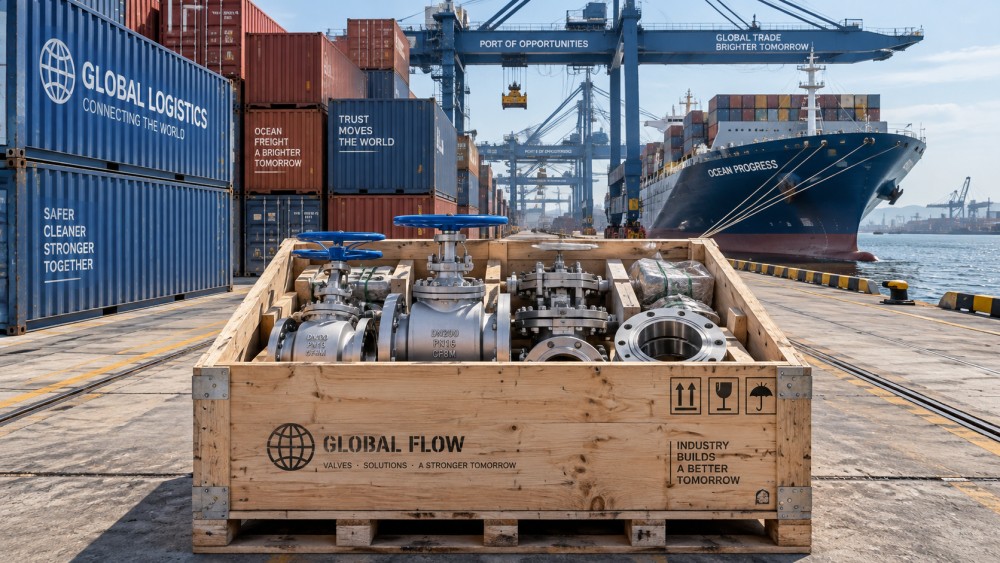
This dependency map is what turns market news into project intelligence. Without it, teams tend to monitor the loudest story rather than the most consequential one.
Transport disruption: look beyond vessel arrival
Port congestion, route diversions, severe weather, and industrial action can affect different parts of the same journey. A longer sailing route changes transit time. Congestion can delay unloading or container availability. An inland transport bottleneck can leave released cargo waiting for collection. These are separate risks, and each requires different evidence.
Ask the forwarder for the shipment’s actual routing, transshipment points, booking status, and last confirmed physical milestone. A booking confirmation is not proof that cargo has loaded. Likewise, a vessel’s estimated arrival does not establish when equipment will reach the project site.
The market signal worth watching is deteriorating reliability on the lane you use, not simply a rise in global freight rates. Repeated sailing cancellations, rolled bookings, changed transshipment connections, or widening arrival windows warrant a schedule review. Higher rates alone may indicate tighter capacity without proving that your shipment will be late.
Alternative transport needs an end-to-end check. Air freight may help with small, high-value components, but dimensions, dangerous-goods restrictions, handling arrangements, and onward delivery can limit its usefulness. A different port may avoid one queue while adding another. Compare realistic site-delivery dates, not advertised transit times.
Factory constraints can matter more than logistics
A shipment cannot be expedited if the equipment is unfinished. Capacity shortages, maintenance outages, skilled-labor constraints, and delays at subcontractors can undermine a delivery promise before freight becomes relevant. For engineered equipment, the bottleneck may be machining, coating, assembly, testing, or inspection rather than raw-material availability.
Supplier updates should therefore describe progress against observable milestones. “Production is on schedule” is weaker evidence than confirmation that drawings are approved, long-lead inputs are received, machining is complete, and a test slot is reserved. The appropriate evidence depends on the equipment and contract, but the principle is consistent: verify the remaining work.
Watch for changes in the supplier’s language. An agreed dispatch date becoming “subject to component availability,” repeated requests for specification clarification, or an unconfirmed inspection appointment can signal growing uncertainty. None proves failure, but each justifies a more detailed review.
Lower demand does not guarantee shorter lead times
Market weakness can ease pressure on some production lines while manufacturers reduce shifts, inventories, or available capacity. Meanwhile, specialized products may remain constrained because they use different equipment or upstream suppliers. Broad manufacturing news should not be used to shorten a project lead-time assumption without confirmation for the actual product, specification, and production slot.
Material and component shortages: price is only part of the story
Commodity prices attract attention because they are visible. Availability at the required grade, dimension, certification level, or technical revision is often less visible—and more relevant to delivery. General steel availability says little about a particular alloy or qualified casting. A recovering electronics market does not establish availability of the exact industrial controller your design requires.
Useful warning signals include shorter quotation-validity periods, allocation notices, rising minimum order quantities, substitution requests, and longer lead times for specific part numbers. These deserve attention even when headline prices are stable.
Substitution is not automatically schedule recovery. A replacement component may require design approval, interface checks, revised drawings, testing, or customer acceptance. In chemicals and materials, compatibility and performance requirements may restrict alternatives. In machinery and electronics, dimensions alone do not establish equivalence.
Compare the original item’s remaining lead time with the alternative’s complete qualification and delivery path. An available substitute is useful only if it becomes acceptable for use sooner.
Customs and trade-policy changes can interrupt finished goods
Trade-policy headlines need careful interpretation. A tariff change may primarily affect landed cost, while a licensing requirement, import restriction, or missing conformity document may prevent release. The operational effect depends on the goods, origin, destination, transaction structure, and effective date.
Before changing the schedule, check the applicable official notice and ask the customs broker or relevant compliance adviser to confirm its scope. Commodity classification, origin documentation, permits, and destination requirements should be reviewed before dispatch where possible. Media summaries are useful alerts, not shipment-specific clearance decisions.
Contract responsibilities matter too. Incoterms clarify certain delivery obligations, costs, and risk allocation, but they do not replace a complete project schedule or settle every contractual issue. The team still needs to know who arranges clearance, provides supporting documents, resolves discrepancies, and coordinates final delivery.
Administrative readiness should be tracked alongside manufacturing progress. Equipment waiting for corrected documents consumes schedule buffer just as equipment waiting for a missing component does.
Turn market signals into a delivery-risk review
Not every disruption deserves escalation. Prioritize events that intersect with an exposed dependency, threaten available schedule float, and leave few practical recovery options. A minor delay to commissioning equipment can matter more than a larger delay to materials needed later.
A concise review can be built around five questions:
- Which item, supplier, facility, or transport leg is exposed?
- What is confirmed, and what remains an assumption?
- Which installation, testing, or handover activity depends on it?
- How much usable float remains after inspection and preparation?
- When must a recovery decision be made to remain effective?
Use a credible delivery range rather than a single unsupported date when uncertainty is material. Keep the contractual commitment separate from the working forecast, and record what would move the forecast. This makes schedule discussions more useful than repeatedly asking whether the supplier can still meet the original promise.
Avoid adding every reported delay together. Some activities run in parallel; others are sequential. A manufacturing slip may consume the buffer intended for transport variability without causing an immediate milestone delay. The project schedule—not the headline—determines the effect.
Choose recovery actions before the options narrow
Recovery should target the actual constraint. Expedited freight addresses transport time, not unfinished production. Additional stock helps with recurring consumption, but may be unsuitable for custom equipment. A second supplier reduces dependence only if qualification, capacity, tooling, and technical approval are already credible.
Sometimes the practical response is resequencing work. Partial delivery may release an installation area or allow preparatory activities to proceed. But it can also create extra handling, incomplete inspections, or fragmented commissioning. Confirm that the proposed sequence is technically safe and contractually acceptable before treating it as recovered time.
Cross-industry monitoring helps reveal pressures that a single supplier update may miss. Hantecorg.com brings together manufacturing, export, energy, price-trend, regulatory, and supply chain coverage, providing context for those checks. An energy development may prompt questions about production continuity; an export update may trigger a documentation review. That context complements direct supplier evidence rather than replacing it.
For the next delivery review, select the items with the least schedule flexibility. Verify their remaining production steps, confirmed transport arrangements, clearance readiness, and acceptance requirements. Then assign an owner and decision deadline to each unresolved risk. Global supply chain news becomes useful when it changes a specific assumption early enough for the project team to act.
Industries
Related News
- 00
0000-00
US Treasury Extends Russia Oil Sanctions Waiver by 30 Days - 00
0000-00
International Logistics Solutions for Heavy Machinery: Cost Risks and Route Planning in 2026 - 00
0000-00
Energy-saving home improvement ideas with faster payback - 00
0000-00
10 Smart Home Decoration Ideas to Make Small Rooms Look Bigger and Brighter - 00
0000-00
Shenyang Launches China's First 500,000-Ton Biomass Green Methanol/Ethanol Project
Weekly Insights
Stay ahead with our curated technology reports delivered every Monday.