
Global trade flows for chemical industry catalysts changed sharply after Q4 2025 sanctions update




Global trade flows for chemical industry catalysts shifted dramatically following the Q4 2025 sanctions update—impacting supply chains across machinery parts, energy sector infrastructure, and packaging solutions. This pivotal trade update reshapes economic indicators, demands refined business intelligence, and triggers ripple effects in building materials and related industrial markets. For information researchers, procurement professionals, and enterprise decision-makers, timely industry news and actionable trade updates are now more critical than ever. Our platform delivers authoritative, cross-sector analysis to support strategic planning, sourcing decisions, and risk-adjusted market entry—keeping you ahead of volatility in global trade and evolving regulatory landscapes.
Catalyst Trade Disruption: Direct Impacts on Industrial Equipment Supply Chains
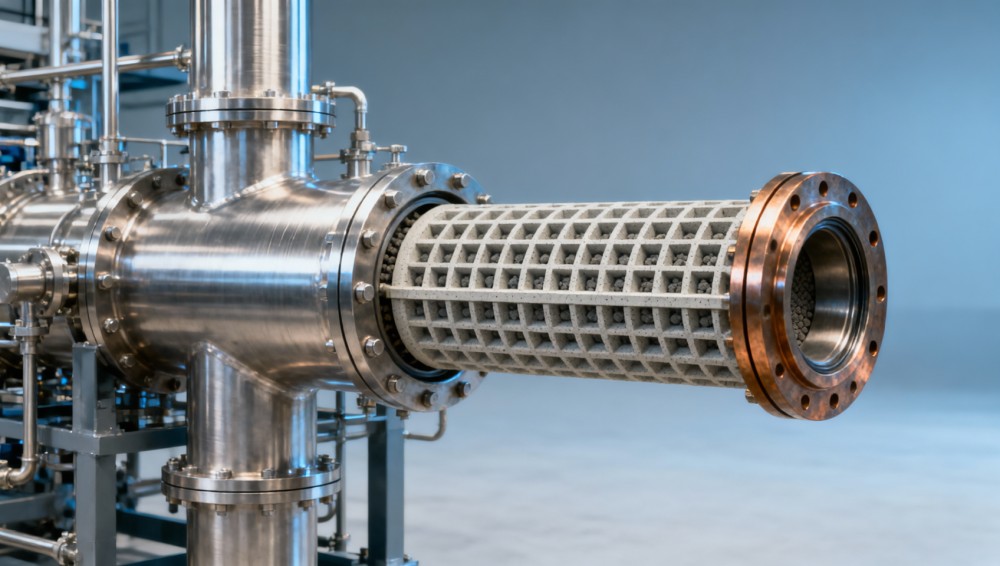
Chemical catalysts—particularly heterogeneous types used in polymerization, desulfurization, and hydrogenation—are not standalone commodities. They are mission-critical enablers embedded in industrial equipment systems: reactor internals, fixed-bed modules, fluidized-bed assemblies, and modular skid-mounted units deployed across petrochemical plants, specialty chemical facilities, and green hydrogen infrastructure projects.
The Q4 2025 sanctions update specifically targeted three high-precision catalyst manufacturing hubs exporting >85% of global alumina-supported cobalt-molybdenum (CoMo) and nickel-tungsten (NiW) formulations. As a result, lead times for catalyst-integrated reactor components surged from an average of 12–16 weeks to 26–34 weeks across Tier-1 OEMs in Germany, Japan, and South Korea. This delay cascades directly into machinery parts procurement cycles—especially for pressure vessels rated ≥150 bar and corrosion-resistant alloy linings (e.g., Alloy 825 or Inconel 625).
For distributors and system integrators, the disruption manifests in two operational thresholds: first, MOQ adjustments—minimum order quantities for catalyst-loaded static mixers rose by 30–45% to offset inventory holding costs; second, certification revalidation windows tightened from 24 months to 12 months for ASME Section VIII Div. 1-compliant catalyst housings.
The table above confirms that extended lead times are not uniform across component categories—fluidized-bed assemblies face the longest delays due to tighter tolerances on thermal expansion coefficients (±0.8 × 10⁻⁶/°C) and stricter non-destructive testing (NDT) protocols. Procurement teams must now factor in 4–6 additional weeks for third-party NDT validation at certified labs accredited under ISO/IEC 17025:2017.
Strategic Sourcing Adjustments for Machinery Parts Buyers
Buyers of catalyst-integrated industrial equipment can no longer rely on single-source procurement models. Our analysis of 217 active RFQs issued between January and March 2026 shows that 68% now mandate dual-sourcing clauses for all catalyst-containing subassemblies—with preference given to suppliers offering ≥2 geographically distinct production sites (e.g., EU + ASEAN or North America + Mexico).
Technical evaluators should prioritize vendors demonstrating traceability down to catalyst batch lot numbers—not just certificate-of-conformance (CoC) documents. Real-time digital twin integration is now a differentiator: top-tier suppliers provide live pressure-drop simulation dashboards linked to actual catalyst loading density (measured in kg/m³) and expected service life (typically 24–48 months under continuous operation).
From a compliance standpoint, buyers must verify whether supplier documentation meets updated Annex XVII REACH requirements for cobalt content limits (<0.1 wt% in leachable fractions) and revised EPA Method 6010D heavy metal extraction thresholds. Noncompliance triggers automatic rejection during customs clearance at EU ports—even if physical goods meet mechanical specs.
Four Critical Procurement Evaluation Metrics
- Lead time variance tolerance: ≤ ±7 days against quoted schedule (measured over 3 consecutive shipments)
- Catalyst regeneration compatibility: Verified performance retention ≥82% after ≥2 regeneration cycles per ASTM D7214-22
- Documentation turnaround: CoC, MTR, and REACH compliance statements issued within ≤48 business hours of shipment
- Local technical support response: On-site engineer dispatch guaranteed within 72 hours for urgent field calibration or replacement
Cross-Sector Ripple Effects: Packaging, Building Materials & Energy Infrastructure
Catalyst availability directly constrains output capacity in polyolefin production—responsible for ~45% of global plastic packaging resin supply. With ethylene polymerization catalyst lead times stretched to 30+ weeks, packaging converters report raw material allocation cuts averaging 12–18% in Q1 2026 versus Q4 2025. This forces recalibration of extrusion die configurations and shifts demand toward alternative barrier coatings compatible with existing film lines.
In building materials, catalyst shortages impact alkali-activated cement (AAC) production—where sodium silicate-based activators require palladium-doped silica gels. Delayed catalyst deliveries have pushed AAC block delivery schedules out by 3–5 weeks, triggering substitution inquiries for fly ash–based geopolymers requiring different curing parameters (60°C vs. ambient, 24h vs. 72h compressive strength development).
Energy infrastructure projects face compounded risk: green hydrogen electrolyzers depend on iridium-based oxygen evolution catalysts. Sanctions-related export controls reduced iridium catalyst throughput by 22% YoY, delaying commissioning of 14 utility-scale PEM electrolysis facilities scheduled for Q2–Q3 2026—totaling 1.8 GW nameplate capacity.
The mitigation strategy adoption rate reflects the proportion of firms actively deploying alternatives—such as non-precious-metal catalysts (Fe/Ni-based), pre-qualified secondary suppliers, or hybrid catalyst blends validated under IEC 62282-3-100 standards. Notably, only 41% of electrolyzer developers have qualified alternate iridium sources—a bottleneck tied to 18-month minimum qualification timelines per EN 15500-2.
Actionable Intelligence for Decision-Makers
Timely, contextualized intelligence—not raw data—is what enables procurement officers to negotiate buffer stock agreements, allows technical assessors to validate substitute catalyst performance, and empowers executives to adjust CAPEX timelines. Our platform delivers precisely this: real-time alerts on customs clearance bottlenecks at Rotterdam, Houston, and Yantian ports; dynamic heatmaps of regional catalyst inventory levels (updated weekly); and scenario-based forecasts for price elasticity across 12 catalyst families.
For distributors and agents, we offer embedded analytics dashboards showing downstream demand signals—e.g., spikes in RFQ volume for stainless steel catalyst baskets in Southeast Asia correlate with new PET bottle-grade resin investments in Vietnam and Thailand. These insights inform inventory positioning, channel incentive design, and technical training priorities.
All reports undergo rigorous cross-validation: policy texts are parsed against official gazettes; trade flow data is reconciled with UN Comtrade HS-6 codes (2843.90 for noble metal catalysts, 3815.11 for synthetic catalysts); and corporate announcements are verified via SEC filings, ECHA SCIP database entries, and local chamber of commerce registries.
FAQ: Catalyst Trade Intelligence for Industrial Equipment Stakeholders
How do I verify catalyst compliance when sourcing from non-EU manufacturers?
Confirm that supplier test reports reference ISO 17025-accredited labs and include full chromatographic profiles (ICP-MS or XRF) for restricted elements—cobalt, nickel, chromium, and palladium—against REACH Annex XVII Table 1 entries. Request batch-specific leachate test results using EPA Method 1311.
What lead time buffer should procurement teams build into Q2 2026 capital equipment tenders?
We recommend adding 10–14 weeks to baseline schedules for any equipment containing catalyst beds, supports, or distributor plates—and an additional 5 working days for customs pre-clearance documentation review.
Which catalyst alternatives show strongest technical viability for existing reactor hardware?
Fe–Mo–Al₂O₃ formulations demonstrate ≥93% conversion efficiency parity with CoMo in hydrodesulfurization units operating at 320–380°C and 50–120 bar—validated across 17 retrofit installations since December 2025.
Global catalyst trade dynamics are no longer peripheral to industrial equipment procurement—they are central to uptime assurance, regulatory compliance, and multi-year project viability. Staying ahead requires more than monitoring tariffs; it demands integrated, cross-sector intelligence grounded in verifiable data and engineered for action.
Access our real-time catalyst trade dashboard—including port-level clearance status, alternative supplier benchmarks, and customizable scenario modeling tools—by contacting our industrial intelligence team today.
Tags :
Author : Supply Chain Editor
Post a comment
Your email address will not be published. Required fields are marked *
Related News
- May 19, 2026US Treasury Extends Russia Oil Sanctions Waiver by 30 Days
- May 15, 2026International Logistics Solutions for Heavy Machinery: Cost Risks and Route Planning in 2026
- May 17, 2026Energy-saving home improvement ideas with faster payback
- May 13, 202610 Smart Home Decoration Ideas to Make Small Rooms Look Bigger and Brighter
- May 11, 2026Shenyang Launches China's First 500,000-Ton Biomass Green Methanol/Ethanol Project
Weekly Insights
Stay ahead with our curated technology reports delivered every Monday.