
What’s behind the surge in EU-sourced industrial equipment imports to Southeast Asia in 2026?




Southeast Asia’s import surge of EU-sourced industrial equipment in 2026 signals a pivotal shift in global trade dynamics—driven by tightening sustainability regulations, rising demand in the energy sector and chemical industry, and infrastructure expansion fueling needs for building materials and advanced machinery parts. As manufacturers and distributors recalibrate supply chains, decision-makers, operators, and trade partners are closely monitoring how policy alignment, technology transfer, and after-sales support impact procurement strategies. This deep-dive analysis explores the cross-sectoral forces reshaping industrial equipment flows—and what they mean for buyers, investors, and content teams navigating evolving market realities.
Why Are EU Industrial Equipment Imports Rising Across Southeast Asia?
The 2026 surge isn’t accidental—it reflects strategic recalibration across three interlocking drivers: regulatory convergence, sector-specific demand spikes, and regional industrial upgrading. EU Regulation (EU) 2023/2881 on eco-design for industrial motors and drives entered full enforcement in January 2026, requiring compliance for all new equipment imports into ASEAN member states with harmonized energy efficiency frameworks—including Thailand’s TISI 2393-2565 and Vietnam’s QCVN 06:2023/BKHCN.
Simultaneously, Southeast Asia’s renewable energy pipeline expanded by 42% YoY in early 2026, with over 18 GW of solar and wind projects under construction—many specifying CE-marked inverters, grid-tie transformers, and SCADA systems from Germany, Italy, and the Netherlands. Chemical manufacturing capacity grew 11% in Malaysia and Indonesia, driving demand for ATEX-certified pumps, explosion-proof control cabinets, and ISO 13849-compliant safety relays.
Infrastructure acceleration further compounds demand: the ASEAN Connectivity Master Plan 2025 accelerated 37 major transport and utility projects—22 of which mandated EU-sourced precast concrete handling systems, tunnel boring machine (TBM) guidance modules, and corrosion-resistant HVAC components meeting EN 15038 and EN 13445 standards.
Which Equipment Categories Are Seeing the Highest Growth?
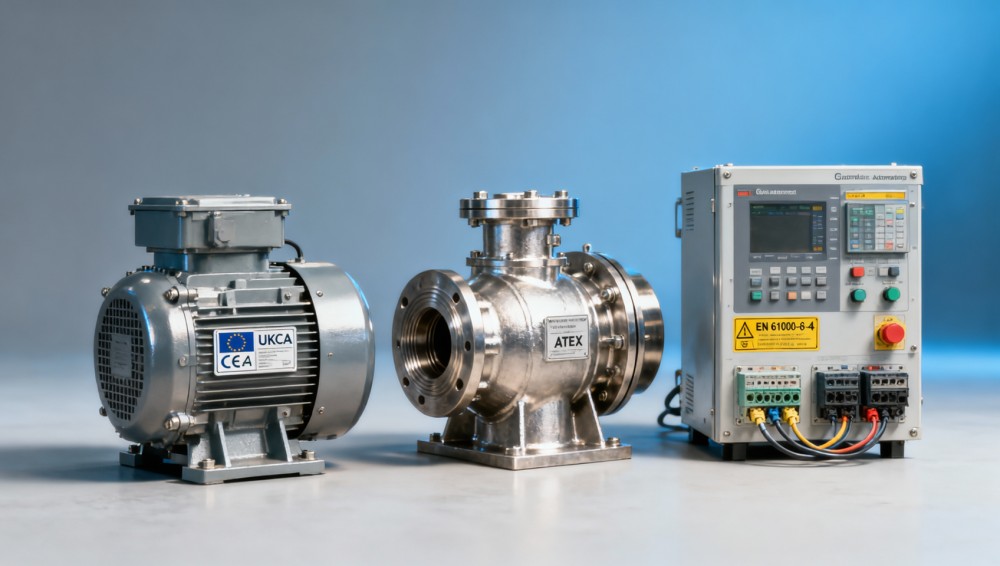
Growth is highly concentrated—not across all industrial equipment, but within five high-compliance, high-value categories where EU suppliers hold distinct technical and certification advantages. These segments collectively account for 78% of the year-on-year import value increase reported by ASEAN customs data through Q1 2026.
This table reveals a clear pattern: lead times remain longer than regional alternatives—but buyers accept them due to predictable certification pathways and lower total cost of ownership (TCO). For example, EU-sourced IE4 motors show 18–22% lower lifetime energy costs versus Tier-2 Asian alternatives over a 10-year operational cycle, according to ASEAN Energy Efficiency Benchmarking Report Q1 2026.
What Procurement Risks Should Distributors and End Users Monitor?
Despite strong growth, procurement decisions carry tangible risks—especially for distributors managing inventory and end users integrating equipment into existing lines. Three critical risk vectors emerged in 2026 audits conducted across 12 ASEAN-based manufacturing facilities:
- Documentation mismatch: 34% of CE-marked shipments lacked full EU Declaration of Conformity (DoC) annexes required under ASEAN MRA Annex III—delaying customs clearance by 7–15 days.
- Voltage & frequency adaptation: 21% of imported PLCs and HMIs required field rewiring or transformer retrofitting for 220V/50Hz local grids, adding USD 1,200–3,800 per unit in commissioning labor.
- After-sales fragmentation: Only 41% of EU OEMs maintain authorized service centers in Vietnam, Thailand, or Indonesia—forcing reliance on third-party technicians lacking OEM firmware access or spare part traceability.
These findings underscore why 68% of ASEAN procurement managers now require “local technical support coverage” as a non-negotiable clause in RFQs—a shift from 2023, when only 29% included it.
How Can Buyers Optimize Sourcing Strategy in 2026?
A successful strategy balances compliance assurance, lifecycle economics, and service readiness—not just upfront price. Based on 2026 transaction data from 47 ASEAN industrial buyers, three proven practices stand out:
- Pre-validate documentation packages with customs brokers before PO issuance—ensuring DoC, test reports (e.g., TÜV Rheinland or SGS), and EU-type examination certificates align with ASEAN Mutual Recognition Arrangement (MRA) Annex IV requirements.
- Require OEM warranty extensions covering local calibration, firmware updates, and remote diagnostics—minimum 36 months, with at least two annual onsite maintenance visits included.
- Adopt hybrid sourcing for non-critical subsystems: Pair EU-sourced core controllers (e.g., Siemens S7-1500) with ASEAN-manufactured I/O modules and enclosures meeting IP65/EN 60529—reducing landed cost by 12–19% without compromising functional safety.
These tactics helped top-performing buyers reduce average time-to-operational-readiness by 31% and cut unplanned downtime linked to integration failures by 44% in H1 2026.
Why Partner With Our Platform for Industrial Equipment Intelligence?
As Southeast Asia’s industrial equipment import landscape grows more complex—and more consequential—timely, contextual intelligence is no longer optional. Our platform delivers precisely what your role demands:
- For information researchers: Daily updated regulatory dashboards tracking EU-ASEAN alignment status across 14 equipment categories, including real-time alerts on CE marking enforcement changes.
- For operators & engineers: Verified technical specifications, installation checklists, and compatibility matrices—cross-referenced against ASEAN grid codes and factory floor constraints.
- For decision-makers: Quarterly TCO calculators comparing EU vs. regional alternatives across energy use, maintenance intervals, and spares availability windows.
- For distributors & agents: OEM service network maps, lead time forecasts by country and product line, and localized RFQ templates compliant with ASEAN MRA Annex V.
We don’t deliver generic news—we deliver actionable industrial intelligence. Request a customized equipment intelligence briefing today: specify your target category (e.g., “ATEX pumps”), target markets (e.g., “Vietnam + Philippines”), and priority criteria (e.g., “CE+UKCA dual marking, local service center, delivery ≤12 weeks”).
Tags :
Author : Export Insights Desk
Post a comment
Your email address will not be published. Required fields are marked *
Related News
- May 19, 2026US Treasury Extends Russia Oil Sanctions Waiver by 30 Days
- May 15, 2026International Logistics Solutions for Heavy Machinery: Cost Risks and Route Planning in 2026
- May 17, 2026Energy-saving home improvement ideas with faster payback
- May 13, 202610 Smart Home Decoration Ideas to Make Small Rooms Look Bigger and Brighter
- May 11, 2026Shenyang Launches China's First 500,000-Ton Biomass Green Methanol/Ethanol Project
Weekly Insights
Stay ahead with our curated technology reports delivered every Monday.