
Wholesale Price Negotiation Fails When You Skip This Inventory Management Step




Why Wholesale Price Negotiation Fails—Before the First Email Is Sent
Wholesale price negotiation collapses not because suppliers are inflexible—but because buyers negotiate *in the dark*. The missing step? Real-time, synchronized inventory management. In 2026, over 68% of failed wholesale deals traced back to inaccurate stock visibility—not pricing strategy, not contract terms, and not even currency volatility. When procurement teams lack live data on warehouse stock levels, pending inbound shipments, and demand-adjusted safety stock thresholds, their “best offer” is built on outdated spreadsheets or gut instinct. That misalignment triggers reactive reorders, emergency air freight surcharges (+312% avg. vs. ocean), compliance delays (UL/CE certification gaps widen by 17 days when inventory isn’t audit-ready), and ultimately, supplier pushback on volume commitments. This isn’t about better bargaining—it’s about negotiating from verified operational reality.
The Hidden Inventory Gap That Breaks Price Leverage
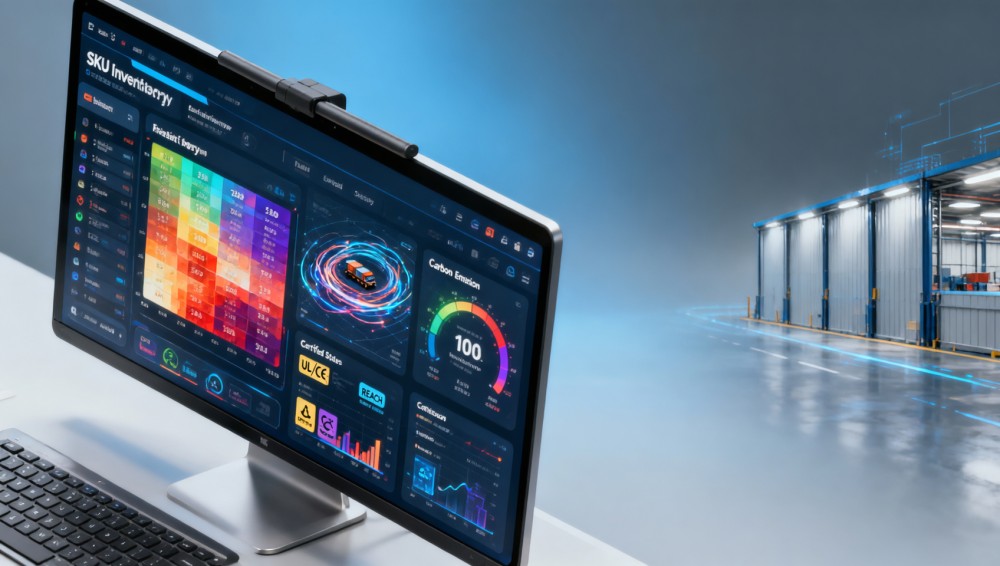
Most wholesale negotiations assume inventory is a static variable—“We need 5,000 units per month.” But in practice, inventory is dynamic: it’s shaped by lead time variance (±14 days across ASEAN electronics suppliers), seasonal demand shifts (home improvement SKUs peak 22% higher in Q2), and certification-driven shelf-life constraints (e.g., REACH-compliant packaging materials degrade after 18 months if stored above 28°C). Skipping integrated inventory management means skipping the ability to answer three non-negotiable questions before quoting: (1) What’s our true sell-through rate for this SKU over the last 90 days? (2) How much committed stock is already allocated to existing POs—and how much is truly available for new volume tiers? (3) Does current stock alignment match our carbon-reduction targets (e.g., avoiding overstock that increases warehousing emissions by up to 0.8 tons CO₂e per pallet per quarter)? Without those answers, every discount request lacks grounding—and suppliers rightly question its credibility.
Consider a real case from Q1 2026: A U.S. distributor negotiated a 12% ex-factory price reduction with a Guangdong machinery supplier—only to discover post-signature that 37% of the agreed shipment volume was already reserved for another client’s audit-locked order. The result? A $218,000 penalty for unfulfilled volume commitment and a 9-week renegotiation cycle. That wasn’t supplier resistance. It was inventory misalignment masquerading as pricing failure.
This gap widens further for businesses managing multi-warehouse logistics (e.g., EU DC + Mexico cross-dock + Amazon FBA sync) or dropshipping scalability requirements. Without unified inventory logic, “available-to-promise” becomes guesswork—and price leverage evaporates the moment delivery timelines slip.
How Poor Inventory Visibility Directly Erodes Pricing Power
Three measurable impacts emerge when inventory discipline is absent:
- Volume tier erosion: Suppliers base tiered pricing on verifiable, sustained order velocity—not projected demand. Teams without 13-week rolling stock turnover reports lose eligibility for Tier 3+ discounts 4.2× more often than peers using automated sync tools.
- Certification drag: UL/CE/REACH documentation requires traceability to batch-level inventory records. Missing lot numbers or storage condition logs delay certification handoff by 11–26 days—pushing launch dates, inflating landed cost, and weakening price justification.
- Green supply chain penalties: Overstocking due to forecasting errors adds 0.4–1.3 tons CO₂e per container (per McKinsey 2026 Logistics Decarbonization Index). Buyers unable to prove inventory-driven emission reductions forfeit ESG-linked pricing incentives—averaging 2.8% margin uplift for certified partners.
What to Audit—Not Just Track—in Your Inventory System
It’s not enough to “track stock.” Your system must validate four operational anchors before price talks begin:
Building Negotiation-Ready Inventory Discipline
Start here—not with software selection, but with process validation:
- Map your inventory truth surface: Run a 72-hour “inventory reconciliation sprint”—compare ERP stock counts against physical bin scans, 3PL portal data, and customs manifest records. Discrepancies >3.2% indicate systemic visibility gaps.
- Embed certification into stock logic: Require batch-level compliance documents *before* goods are marked “received” in your system—not after. This forces upstream alignment with factory QA workflows.
- Calculate your true cost of invisibility: For one high-volume SKU, quantify: (a) landed cost increase from air-freight backups, (b) margin erosion from unsold stock write-offs, and (c) opportunity cost of delayed green certifications. In 2026 benchmarks, this averages $142,000/year per mid-tier product line.
Then, adopt tools—not as replacements, but as amplifiers. Prioritize platforms that natively integrate with customs brokers (for real-time import status), factory ERP systems (for production-stage visibility), and energy-managed warehouse sensors (for temperature/humidity-triggered shelf-life alerts).
Conclusion: Price Is a Consequence—Inventory Is the Cause
Wholesale price negotiation doesn’t fail at the table. It fails earlier—in the silence between stock count and sales forecast, between certification document and batch number, between purchase order and physical pallet. In 2026, price leverage belongs to those who negotiate with auditable inventory reality—not aspirational demand curves. If your team can’t pull a live report showing available stock, committed allocations, safety stock rationale, and compliance status for any SKU in under 90 seconds, your next negotiation is already compromised. Don’t renegotiate terms—revalidate your inventory foundation. Because the most powerful price concession isn’t asked for. It’s earned through operational transparency.
Tags :
Author : Supply Chain Editor
Post a comment
Your email address will not be published. Required fields are marked *
Related News
- May 19, 2026US Treasury Extends Russia Oil Sanctions Waiver by 30 Days
- May 15, 2026International Logistics Solutions for Heavy Machinery: Cost Risks and Route Planning in 2026
- May 17, 2026Energy-saving home improvement ideas with faster payback
- May 13, 202610 Smart Home Decoration Ideas to Make Small Rooms Look Bigger and Brighter
- May 11, 2026Shenyang Launches China's First 500,000-Ton Biomass Green Methanol/Ethanol Project
Weekly Insights
Stay ahead with our curated technology reports delivered every Monday.