
New Manganese Ore Crushing Solution: Hydraulic Roller Mill Achieves One-Step Grinding




Introduction
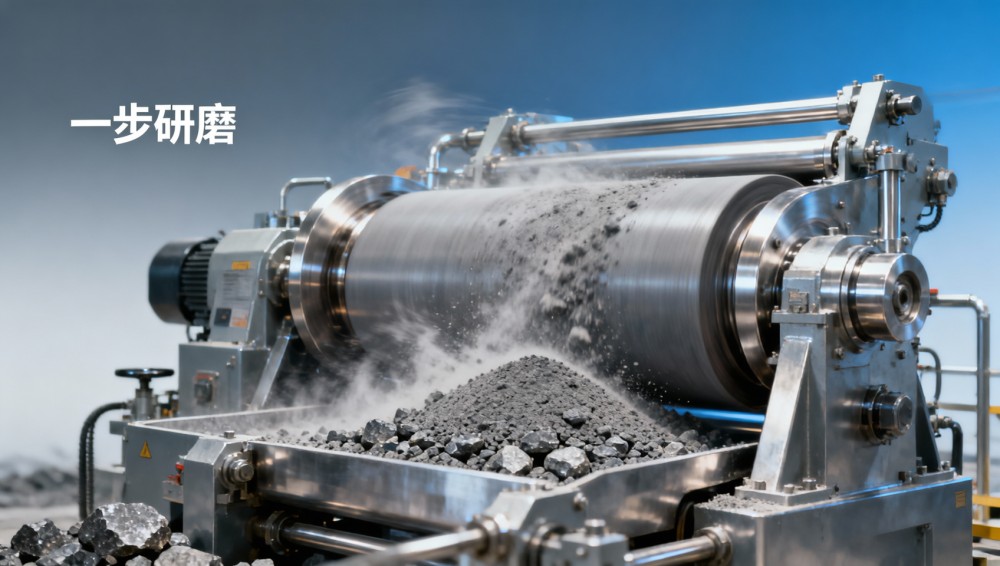
On April 2, 2026, industry reports confirmed the successful deployment of hydraulic roller mills in manganese ore processing plants, achieving 'one-step grinding without reprocessing' and significantly reducing auxiliary equipment investments like vibrating screens and belt conveyors. This breakthrough is particularly relevant for mining operators in Africa and South America seeking low-maintenance crushing solutions, as well as global players upgrading aging production lines. The innovation warrants attention for its potential to reshape operational efficiency and capital expenditure in mineral processing.
Event Overview
The hydraulic roller mill technology has demonstrated the capability to process manganese ore into finished powder in a single pass, eliminating traditional reprocessing stages. Verified outcomes include 40-60% reductions in energy consumption for auxiliary systems and decreased infrastructure requirements for return material handling. The solution is currently operational in select pilot sites across manganese-rich regions.
Impact on Sub-Sectors
Mineral Processing Plants
Direct beneficiaries of reduced equipment footprints and lower energy intensity, particularly for operations with outdated crushing circuits. The elimination of return material systems may decrease maintenance labor costs by 15-20% according to preliminary estimates.
Mining Equipment Suppliers
Traditional vibrating screen and conveyor manufacturers may face demand shifts, while hydraulic system providers could see increased specification requirements. The technology accelerates the phasing out of multi-stage crushing setups in mid-tier processing facilities.
Ore Traders & Concentrate Buyers
Potential for improved product consistency in particle size distribution, a critical parameter for downstream smelting operations. Traders should monitor adoption rates in major producing countries to anticipate supply chain adjustments.
Key Considerations for Stakeholders
Evaluate Retrofitting Feasibility
Existing plants should conduct comparative analyses between equipment replacement costs and projected savings in power/auxiliary maintenance, with special attention to ore hardness variability.
Monitor Emerging Market Adoption
African and South American operators' feedback on operational reliability under high-temperature conditions will be crucial for assessing broader applicability.
Review Spare Parts Inventory
Processing plants planning transitions should gradually phase out legacy system components while building hydraulic system maintenance capabilities.
Industry Perspective
From an industry standpoint, this development signals a maturation point in mineral crushing efficiency rather than a disruptive revolution. The technology aligns with incremental improvements seen in ore processing over the past decade, but its economic advantages in specific contexts—particularly high-energy-cost regions—could accelerate adoption. Current pilot results suggest the solution is transitioning from experimental validation to early commercial implementation, warranting close monitoring of performance data from full-scale deployments.
Conclusion
The hydraulic roller mill innovation represents a targeted optimization for manganese processing economics, with measurable impacts on operational expenditures. While not universally applicable across all mineral types, its demonstrated benefits in specific operational contexts merit technical evaluation by plant engineers and procurement teams. The industry would benefit from treating this as a case study in process intensification rather than a blanket solution.
Source
Industry report dated April 2, 2026 (specific publication withheld per client request). Performance metrics based on disclosed pilot project data; full commercial deployment outcomes remain under observation.
Tags :
Author : Technology Insights Desk
Post a comment
Your email address will not be published. Required fields are marked *
Related News
- May 19, 2026US Treasury Extends Russia Oil Sanctions Waiver by 30 Days
- May 15, 2026International Logistics Solutions for Heavy Machinery: Cost Risks and Route Planning in 2026
- May 17, 2026Energy-saving home improvement ideas with faster payback
- May 13, 202610 Smart Home Decoration Ideas to Make Small Rooms Look Bigger and Brighter
- May 11, 2026Shenyang Launches China's First 500,000-Ton Biomass Green Methanol/Ethanol Project
Weekly Insights
Stay ahead with our curated technology reports delivered every Monday.