
Smart Manufacturing News: Real-Time Data Becomes the Core of Efficiency




Smart Manufacturing and the Power of Real-Time Data
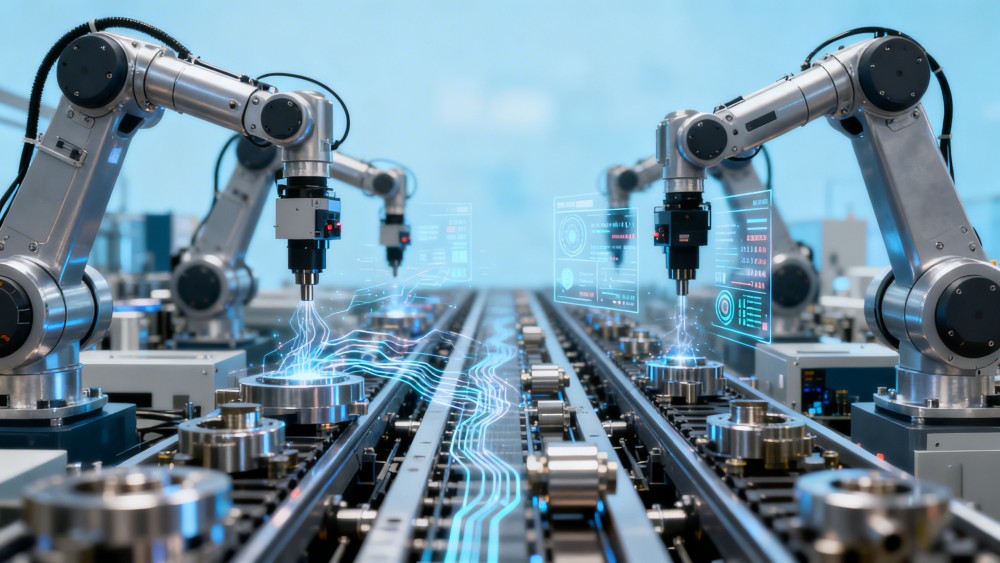
In the evolving world of smart manufacturing, real-time data is redefining business intelligence news and automation equipment trends. This feature industry report highlights how global sourcing trends, supply chain updates, and product innovation news are driving higher efficiency and smarter production. From export policy news and customs policy updates to the latest in industrial equipment news, discover how real-time insights are transforming decision-making for businesses, investors, and professionals across the manufacturing landscape.
In modern manufacturing systems, production lines now integrate sensors capable of capturing up to 2,000 data points per minute. Equipment efficiency, temperature deviation of ±0.5℃, and vibration frequency above 20Hz are monitored continuously. Real-time analytics convert this data into actionable intelligence, enabling predictive maintenance before equipment failure occurs. For industrial equipment and component manufacturers, this shift from periodic inspection to continuous observation fundamentally boosts uptime and reduces material waste by 8–12% annually.
Enterprises involved in machinery, packaging, electronics, and energy now depend on continuous feedback loops to adjust their production and logistics strategies. In an era where every second counts, real-time data enables decision-makers to respond within 2–5 seconds to anomalies, compared with traditional systems that required hours. This transition reflects not only a technological change but a strategic one, where data resilience and timeliness become the strongest pillars of operational competitiveness.
Key Drivers Behind Smart Manufacturing Efficiency
Four major drivers are accelerating efficiency gains across smart factories: sensor integration, industrial IoT connectivity, cloud-based analytics, and intelligent automation. Each element contributes distinct value to process control, demand forecasting, and product lifecycle management.
Sensor integration has evolved from optional to essential. Modern production tools often deploy 15–30 embedded sensors per line to track torque, pressure, temperature, and voltage. These readings feed into a central analytics engine every 3–10 seconds, forming the basis for predictive insight. Without such synchronization, machinery downtime typically rises by 18–25% due to undetected micro-failures.
Industrial IoT (IIoT) networks close the gap between mechanical systems and digital oversight. By linking up to 1,000 devices simultaneously, manufacturers are now able to monitor asset health across geographically dispersed facilities. Real-time dashboards reflecting OEE (Overall Equipment Effectiveness) above 85% have become common benchmarks.
Cloud infrastructure amplifies scalability by handling massive volumes of operational data, often exceeding 50GB per day for mid-sized enterprises. Meanwhile, AI-driven automation simplifies repetitive evaluations, such as quality scoring or component identification, cutting manual quality-checking time by 40–60%.
The table below summarizes the efficiency gains associated with each driver within industrial equipment operations:
Companies combining all four drivers typically experience a compounded productivity gain between 20% and 35% within the first operational year. For decision-makers, this correlation between real-time data use and cost efficiency offers clear direction for future investment planning.
Real-Time Data in Supply Chain and Equipment Management
Supply chain visibility has become crucial as industrial markets globalize. Components sourced from multiple continents can encounter lead time variability of 7–15 days, making predictive updates essential. Real-time tracking solutions using RFID and GPS reduce uncertainty by continuously updating shipment progress every 10 minutes.
Predictive maintenance has evolved into a strategic tool for managing asset readiness. When vibration thresholds exceed 5mm/s or temperature elevations surpass 3℃ from nominal, systems trigger alerts that allow maintenance crews to plan interventions without halting production. This adaptability saves enterprises approximately 2–4 hours per corrective cycle.
Equipment lifecycle optimization now emphasizes total cost of ownership (TCO) instead of initial purchase price. Continuous assessment of operating parameters—such as lubrication intervals, motor speed ranges, and energy usage at 5–15 kWh per machine hour—helps identify energy savings opportunities. A 10% reduction in energy waste across 50 machines can yield cost savings exceeding $100,000 annually.
To contrast how real-time data improves supply chain confidence versus traditional response methods, see the following comparative overview.
This table emphasizes that real-time monitoring delivers faster reactions and greater accuracy, making it indispensable for decision-makers handling sourcing, logistics, and factory operation synchronization in competitive global markets.
Implementation Steps for Data-Driven Manufacturing
For enterprises transitioning to data-driven operations, structured implementation is key. The process typically unfolds through five critical stages, each spanning 4–8 weeks depending on line complexity:
- Assessment and Baseline Measurement – Identify current equipment uptime, process bottlenecks, and KPI gaps.
- Infrastructure Setup – Integrate IoT sensors and gateways across high-priority machinery.
- Data Aggregation – Deploy a secure network layer for real-time data collection with less than 2% packet loss.
- Analytics and Insight Modeling – Calibrate predictive models to generate performance thresholds.
- Continuous Improvement – Use insights to refine process parameters and reduce mean time to repair (MTTR).
Each stage requires close collaboration between IT, engineering, and operations teams. During the calibration phase, systems should verify at least 95% signal integrity to ensure analytics reliability. Regular auditing, ideally every 6 months, keeps the implementation aligned with evolving production objectives and compliance standards.
Common Challenges and Mitigation Strategies
Transitioning to real-time data environments creates both opportunities and complexities. Among the top issues are cybersecurity risk, data overload, and integration variance between legacy and modern systems.
Cybersecurity ranks as a top-three challenge, representing almost 30% of IT-related interruptions in connected factories. Adopting multi-layer encryption and role-based access protocols can reduce unauthorized intrusion incidents by up to 70%.
Another hurdle lies in the sheer volume of data. A single production line generating 100,000 readings per hour may overwhelm older analytics frameworks. To mitigate this, enterprises often employ edge computing nodes placed within 2–3 meters of critical machine clusters, enabling local calculations before cloud transmission.
Integration challenges also arise when aligning diverse systems. Using open communication standards like OPC-UA or MQTT simplifies device-level compatibility. Pilot integrations carried out over 6–10 weeks provide measurable feedback before full-scale deployments.
Mitigation planning aligned with ISO 9001 and IEC 62443 standards provides the governance framework that operational leaders can rely on to protect data flow integrity and maintain production consistency under digital transformation.
FAQ: Real-Time Data Applications in Industrial Equipment
How do real-time systems affect maintenance schedules?
Real-time monitoring reduces unplanned maintenance by identifying deviation trends early. When vibration amplitude or thermal readings start diverging by 5–10%, automated notification triggers allow technicians to intervene before structural wear becomes critical. This can reduce annual maintenance costs by 12–20%.
Which industries benefit most from smart data manufacturing?
Heavy machinery, precision parts, and packaging industries derive the highest ROI, typically gaining process accuracy improvement of 15–30%. High-volume operations with strict quality tolerance, such as electronics and automotive sectors, benefit from correlated datasets to ensure defect rates remain under 0.5% per batch.
What is the typical time frame for deploying a real-time analytics system?
Deployment times depend on the existing digital infrastructure. Small-scale setups take about 6–10 weeks, while complex multi-site integrations might require 20–24 weeks. A phased rollout strategy minimizes disruption and allows process recalibration at each checkpoint.
Conclusion: From Data to Strategic Manufacturing Advantage
Smart manufacturing is no longer an aspirational concept—it is a measurable operational standard. Real-time data empowers organizations to predict, optimize, and act in milliseconds. For industrial equipment and component businesses, this capability differentiates leaders from laggards, directly influencing profitability and market resilience.
Organizations embracing continuous analytics not only enhance machinery reliability but also enable faster procurement alignment and global trade compliance. Decision-makers accessing a comprehensive industrial news platform can leverage aggregated insights on policy shifts, market fluctuations, and technology adoption to refine investment decisions and content planning.
To explore tailored solutions or obtain guidance on digital adoption strategies across manufacturing, logistics, and energy sectors, contact our industry insights team today. Gain real-time visibility that drives productivity, sustainability, and growth—built upon data that never stops working.
Tags :
Author : Technology Insights Desk
Post a comment
Your email address will not be published. Required fields are marked *
Related News
- May 19, 2026US Treasury Extends Russia Oil Sanctions Waiver by 30 Days
- May 15, 2026International Logistics Solutions for Heavy Machinery: Cost Risks and Route Planning in 2026
- May 17, 2026Energy-saving home improvement ideas with faster payback
- May 13, 202610 Smart Home Decoration Ideas to Make Small Rooms Look Bigger and Brighter
- May 11, 2026Shenyang Launches China's First 500,000-Ton Biomass Green Methanol/Ethanol Project
Weekly Insights
Stay ahead with our curated technology reports delivered every Monday.