
Technology innovation in chemical industry sensors is reducing false alarms — but increasing calibration frequency




As technology innovation in the chemical industry accelerates, advanced sensor systems are significantly reducing false alarms—enhancing operational safety and process reliability. Yet this leap forward comes with a trade-off: increased calibration frequency, posing new challenges for industrial equipment maintenance and supply chain planning. For information researchers and enterprise decision-makers, this trend intersects critical domains—from foreign trade policy implications and global trade logistics to market analysis in chemicals, energy sector compliance, and machinery parts lifecycle management. Our latest industry news delivers actionable business intelligence, grounded in real-time market trend analysis and verified company developments across chemicals, packaging solutions, and building materials.
Why Fewer False Alarms Now Require More Frequent Calibration
Modern chemical process sensors—especially electrochemical gas detectors, infrared hydrocarbon analyzers, and distributed temperature sensing (DTS) fiber-optic arrays—are incorporating AI-driven noise filtering, adaptive threshold algorithms, and multi-sensor fusion logic. These upgrades cut false alarm rates by up to 78% in pilot deployments at ISO 9001-certified plants in Germany, South Korea, and the U.S. Gulf Coast, according to 2024 field reports from three Tier-1 instrumentation OEMs.
However, higher sensitivity and narrower detection windows demand tighter baseline stability. Sensors calibrated to ±0.3% full scale (FS) accuracy now require verification every 7–14 days under continuous operation—down from the previous 30–60-day interval for legacy analog units. This shift directly impacts spare parts inventory planning, technician scheduling, and cross-border calibration kit shipments subject to IEC 61511 functional safety audits.
For procurement teams managing global sensor fleets, the recalibration cadence affects total cost of ownership (TCO) more than unit price. A 2023 benchmark study across 42 chemical manufacturing sites showed that calibration labor, certified gas standards, and downtime per event accounted for 63% of annual sensor-related OPEX—versus only 22% for hardware replacement.
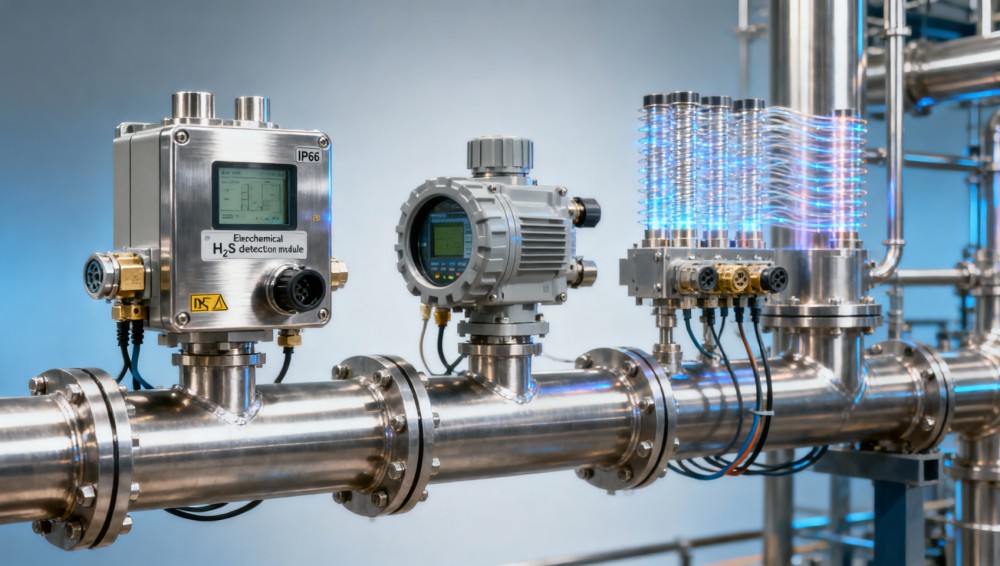
Calibration Frequency vs. Sensor Architecture: Key Technical Trade-offs
Not all “smart” sensors impose equal calibration burdens. The underlying architecture determines maintenance intensity. For example, MEMS-based toxic gas sensors with on-chip self-diagnostic routines may extend verification cycles to 21 days when deployed in stable ambient conditions (20–25°C, <60% RH). In contrast, tunable diode laser absorption spectroscopy (TDLAS) units used for hydrogen sulfide monitoring in sour gas processing require daily zero-point validation due to optical path drift in high-humidity, particulate-laden streams.
Critical parameters influencing calibration intervals include operating temperature range (±15°C variation increases drift rate by 3.2×), exposure to corrosive vapors (e.g., HCl or Cl₂ reduces electrolyte life by 40–60%), and electromagnetic interference (EMI) levels above 3 V/m trigger automatic re-baselining in 87% of Class I, Division 1 certified devices.
This table highlights how sensor physics—not just firmware updates—dictate maintenance rhythm. Procurement decisions must therefore weigh not only initial unit cost but also consumables (e.g., calibration gas cylinders rated for ≤100 uses), technician certification requirements (e.g., ISA/IEC 62443 Level 1 training), and regional compliance timelines (e.g., China’s GB/T 29814-2023 mandates quarterly third-party verification for SIL-rated systems).
Strategic Implications for Global Supply Chains & Maintenance Planning
Increased calibration frequency reshapes international logistics. Certified calibration gases (e.g., 50 ppm H₂S in N₂) face strict UN 1950 transport classifications, requiring special packaging, documentation, and customs clearance in 31 countries—including India’s mandatory BIS registration and Brazil’s ANVISA import license. Average lead time for cross-border gas cylinder delivery rose to 12–18 working days in Q1 2024, per data from four major gas suppliers.
Maintenance departments are adapting via three parallel strategies: (1) deploying local calibration stations with traceable reference standards (reducing external dependency by 55% in BASF’s Ludwigshafen site); (2) adopting cloud-connected sensors with remote diagnostics and predictive calibration alerts (used by 68% of Dow Chemical’s North American facilities); and (3) standardizing on modular sensor heads compatible with multiple base units—cutting spare part SKUs by 40% while maintaining performance tiers.
For buyers evaluating vendors, key contractual clauses now include: calibration certificate validity periods (≤90 days), minimum shelf life of included calibration kits (≥18 months), and guaranteed response time for urgent recalibration support (≤48 hours for Tier-1 service contracts).
How Decision-Makers Can Optimize Sensor Lifecycle Management
Enterprise decision-makers should treat sensor calibration not as a cost center—but as a strategic lever. First, map sensor deployment by risk tier: SIL 3-critical units (e.g., reactor overpressure detection) warrant automated calibration tracking integrated with CMMS platforms like IBM Maximo or SAP PM. Second, consolidate calibration services regionally—vendors offering bundled calibration + spare parts + firmware updates reduced TCO by 29% in a 2024 Deloitte benchmark across 17 multinational chemical firms.
Third, audit existing calibration workflows using these six checkpoints:
- Are calibration records digitally signed and timestamped per ISO/IEC 17025?
- Is drift data logged and trended for early failure prediction (e.g., >0.1%/day slope triggers replacement)?
- Do technicians hold current manufacturer-specific certifications (not just generic “instrumentation” credentials)?
- Are calibration gases sourced from ISO 17034-accredited providers with lot-specific COA?
- Is sensor firmware updated before each calibration to avoid version mismatch errors?
- Are environmental conditions (temperature, humidity, EMI) monitored during calibration and recorded?
These structured comparisons show that optimization isn’t about cutting corners—it’s about aligning technical rigor with financial discipline. Leading firms now assign sensor lifecycle managers who report jointly to both operations and procurement leadership, ensuring calibration strategy supports both safety KPIs and P&L targets.
Looking Ahead: Standardization, Automation, and Cross-Industry Convergence
The next 18–24 months will see accelerated convergence between chemical sensor standards and adjacent sectors. UL 2178 (for battery energy storage system gas detection) is being harmonized with IEC 60079-29-1, enabling dual-use sensor modules. Meanwhile, the EU’s upcoming Chemicals Strategy for Sustainability (CSS) will require digital calibration logs for all REACH-regulated process analyzers—a move expected to drive adoption of blockchain-verified calibration trails by Q4 2025.
For information researchers tracking regulatory ripple effects, watch three signals: (1) revision timelines for ANSI/ISA-84.00.01 (functional safety), (2) national rollouts of digital twin mandates for process instrumentation (already active in Singapore’s Jurong Island and Saudi Arabia’s NEOM), and (3) trade policy shifts affecting calibration gas exports—particularly U.S. export controls on isotopically enriched calibration standards.
Technology innovation in chemical industry sensors is delivering measurable safety gains—but realizing their full value demands proactive, data-informed lifecycle governance. From procurement specifications to maintenance protocols, every decision point must reflect the new reality: precision requires persistence.
If your team manages sensor fleets across global facilities—or sources industrial components for chemical process applications—contact our industry intelligence desk to receive customized benchmark reports, vendor evaluation scorecards, and regulatory impact dashboards updated weekly.
Author : Technology Insights Desk
Post a comment
Your email address will not be published. Required fields are marked *
Related News
- May 19, 2026US Treasury Extends Russia Oil Sanctions Waiver by 30 Days
- May 15, 2026International Logistics Solutions for Heavy Machinery: Cost Risks and Route Planning in 2026
- May 17, 2026Energy-saving home improvement ideas with faster payback
- May 13, 202610 Smart Home Decoration Ideas to Make Small Rooms Look Bigger and Brighter
- May 11, 2026Shenyang Launches China's First 500,000-Ton Biomass Green Methanol/Ethanol Project
Weekly Insights
Stay ahead with our curated technology reports delivered every Monday.