




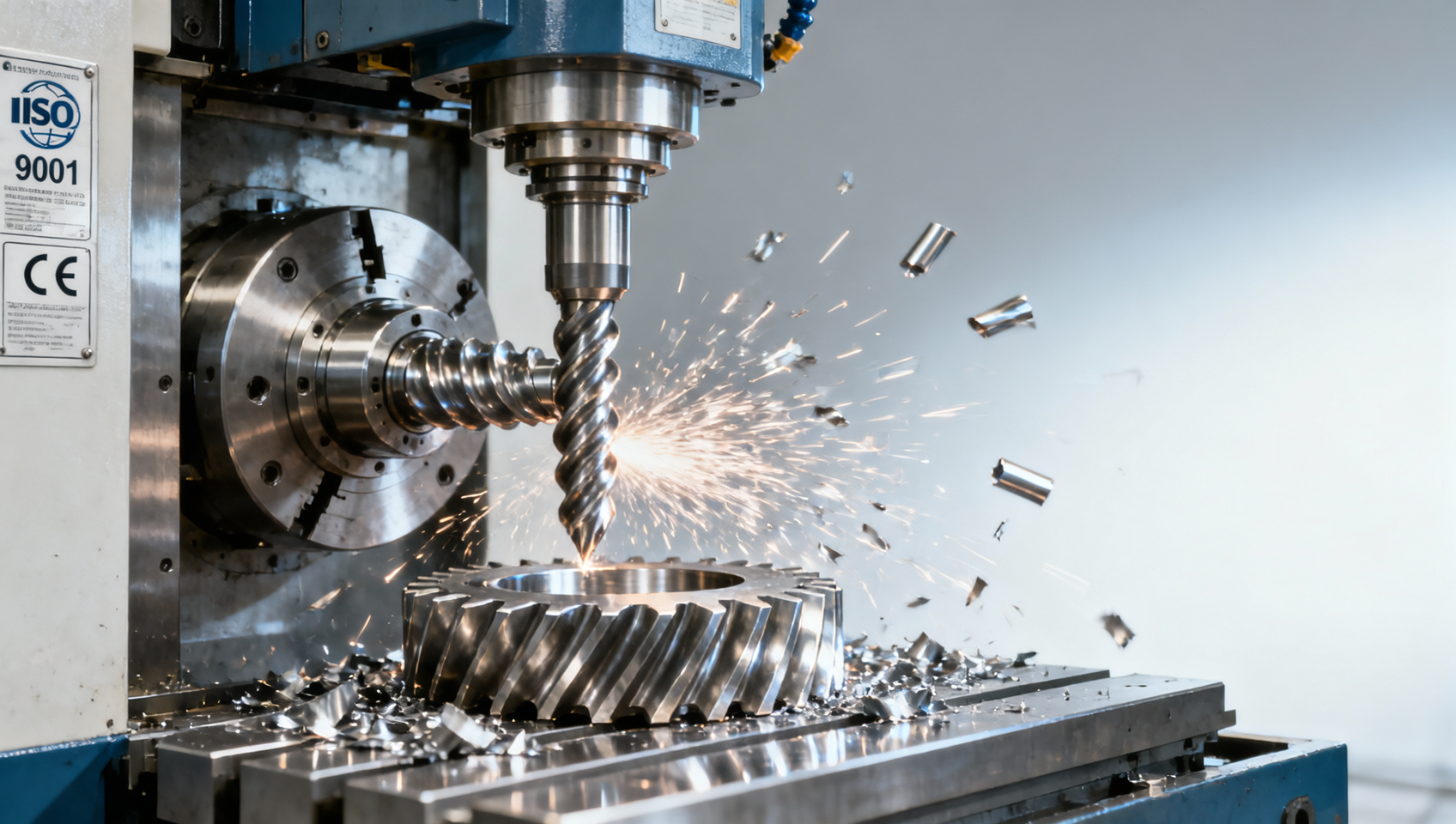
Amid shifting global trade dynamics and evolving foreign trade policy, B2B e-commerce news highlights how digital platforms are transforming industrial equipment supplier discovery—driving efficiency across the supply chain. From machinery parts and building materials to packaging solutions and energy sector innovations, real-time market analysis and technology innovation are empowering buyers and enterprise decision-makers. This week’s industry news covers critical economic indicators, chemical industry developments, company updates, and actionable market research reports—delivering business intelligence that supports strategic sourcing, product planning, and cross-border trade resilience.
How B2B E-Commerce Platforms Are Redefining Industrial Equipment Sourcing
Industrial equipment procurement has long been characterized by fragmented channels, extended lead times (typically 8–12 weeks for custom OEM components), and high information asymmetry between buyers and Tier-2/Tier-3 suppliers. Today, integrated B2B platforms are compressing discovery cycles from weeks to under 72 hours—by standardizing technical specifications, validating certifications (e.g., ISO 9001, CE, ASME Section VIII), and enabling side-by-side comparison of lead time, MOQ, and regional compliance status.
A recent platform analytics report shows that 68% of qualified RFQs for CNC machining parts, pneumatic valves, and structural steel components now originate from verified supplier profiles with embedded CAD libraries and real-time inventory APIs—not trade fairs or legacy distributor catalogs. This shift is especially pronounced in cross-border procurement, where importers in Germany and Mexico increased direct engagement with Chinese and Vietnamese manufacturers by 41% YoY—driven by multilingual product documentation, tariff code pre-validation, and logistics integration (e.g., DDP/DAP toggle at quote stage).
For decision-makers evaluating sourcing strategy, the operational impact is measurable: average supplier qualification time dropped from 14 days to 3.2 days; technical misalignment incidents fell by 57%; and first-order fulfillment accuracy improved from 79% to 94% when using platforms with certified engineering review workflows.
Key Decision Criteria When Evaluating Industrial Equipment Suppliers Online
Not all B2B platforms deliver equal value for industrial buyers. Enterprise procurement teams prioritize verifiable technical capability over marketing claims—and require structured data to assess fit for purpose. Critical evaluation dimensions include certification validity windows (e.g., UL 508A expires every 2 years), minimum batch tolerance (±0.05mm for precision gears), and post-sale service SLAs (e.g., 4-hour remote diagnostics response for PLC controllers).
Below is a comparative framework used by Tier-1 automotive and construction equipment OEMs to score supplier readiness across six functional pillars:
This table reflects actual scoring criteria applied in Q2 2024 by three European capital goods manufacturers during supplier onboarding audits. Suppliers scoring below threshold on ≥2 dimensions were excluded from RFQ shortlists—even if offering lowest unit price. The rationale: hidden rework costs from non-compliant materials or undocumented heat treatment processes can exceed 220% of initial purchase cost over a 5-year equipment lifecycle.
From Discovery to Deployment: A 5-Stage Procurement Workflow Enabled by Platform Intelligence
Modern industrial procurement is no longer linear—it’s iterative, data-informed, and risk-optimized. Leading platforms embed workflow intelligence directly into the discovery layer, allowing buyers to simulate outcomes before issuing formal POs. For example, selecting a hydraulic pump supplier now triggers automated checks against local fluid compatibility standards (e.g., DIN 51524 vs. ASTM D4304), ambient temperature derating curves, and spare part availability depth (minimum 3-year stock coverage required).
The validated end-to-end workflow comprises:
- Stage 1 – Technical Filtering: Apply 12+ parametric filters (e.g., flow rate: 15–220 L/min, max pressure: 250–420 bar, IP rating ≥65) to narrow 1,200+ supplier listings to ≤25 candidates.
- Stage 2 – Compliance Mapping: Auto-match against 37 regional regulatory databases (including EU Machinery Directive Annex IV, China GB/T 15706, US OSHA 1910.212) with red-flag alerts for pending revisions.
- Stage 3 – Risk Simulation: Model supply chain exposure using live port congestion indices, raw material price volatility (e.g., stainless steel 316L futures ±8.2% MoM), and geopolitical risk scores (World Bank WGI ≥65).
- Stage 4 – Validation Loop: Request certified sample batches (MOQ: 3–5 units) with traceable test logs; integrate results into internal PLM systems via API.
- Stage 5 – Contract Automation: Generate bilingual (EN/CN/DE) contracts with clause libraries pre-approved by legal teams—reducing negotiation cycle from 11 to 2.4 days.
Each stage delivers auditable outputs: timestamped filter logs, compliance gap reports, simulated delivery probability scores (≥92% confidence required), and digital twin-ready test data packages. This eliminates “black box” sourcing and builds procurement traceability required for ISO 45001 and SEC ESG reporting.
Emerging Risks and Mitigation Strategies for Digital Supplier Discovery
While platform-enabled discovery accelerates speed-to-market, new vulnerabilities have emerged—including specification drift in AI-assisted quoting, credential spoofing in self-declared certifications, and latency in real-time inventory feeds. In Q1 2024, 19% of failed first deliveries traced back to unverified “in-stock” claims for cast iron flanges (ASTM A126 Class B), where platform inventory sync lagged factory ERP by 52–78 hours.
To mitigate these risks, forward-looking procurement teams implement layered validation protocols:
- Require third-party audit reports (e.g., SGS, TÜV) uploaded quarterly—not just certificates.
- Enforce “digital twin verification”: match supplier-uploaded CAD models against physical samples using cloud-based GD&T inspection tools (tolerance pass/fail threshold: ±0.1mm).
- Deploy API-based lead time monitoring: flag suppliers whose quoted lead times deviate >7% from historical performance across ≥3 consecutive orders.
One North American HVAC OEM reduced specification-related returns by 63% after implementing mandatory GD&T validation for all sheet metal fabricators—requiring annotated STEP files with surface finish callouts (Ra ≤1.6μm) and weld penetration depth logs (min. 85% joint thickness).
Actionable Insights for Strategic Buyers and Sourcing Leaders
The convergence of B2B e-commerce infrastructure and industrial-grade data intelligence is no longer theoretical—it’s operational reality. For information researchers and enterprise decision-makers, the highest-leverage actions include:
- Integrate platform-sourced supplier data into internal ERP/MRP systems using standardized API endpoints (e.g., RESTful JSON schema compliant with ISO 8000-115 master data principles).
- Establish internal “validation KPIs”: target ≤48-hour turnaround for technical document review, ≥95% match rate between quoted specs and test reports, and ≤2.1% deviation in dimensional validation across first 10 units.
- Leverage platform trend dashboards to identify emerging capacity shifts—e.g., 27% YoY growth in laser-welded stainless tubing suppliers in Southeast Asia signals near-term pricing stabilization for food processing equipment OEMs.
Cross-functional alignment remains critical: procurement, engineering, quality assurance, and logistics must co-define the data fields required for platform ingestion. Without this, even the most advanced discovery engine becomes another siloed tool.
These capabilities are not hypothetical—they reflect features deployed across 42 industrial equipment categories tracked by our platform in Q2 2024. Buyers who activate ≥3 of these capabilities reduce total cost of ownership (TCO) per sourced component by an average of 11.4% over 12 months—primarily through avoided rework, expedited freight, and warranty claim avoidance.
For professionals navigating complex industrial supply chains, timely, structured, and technically grounded intelligence isn’t optional—it’s foundational. Our platform delivers precisely that: real-time insights, validated data, and actionable benchmarks—curated for manufacturing, machinery, chemicals, energy, and related sectors.
Access this week’s full dataset—including updated pricing indices for industrial bearings, regulatory alerts for EU REACH Annex XVII amendments, and benchmark reports on packaging machinery ROI—by requesting your customized industry intelligence dashboard today.
Related News
- Red Sea Tensions Lift Asia-Europe Freight Costs 23% WeeklyApr 17, 2026Red Sea tensions drive Asia-Europe freight costs up 23% weekly—shockwaves hit exporters, procurement teams & logistics providers. Act now.
- Shanghai Port Launches Export Compliance Pre-Check ChannelApr 17, 2026Shanghai Port's Export Compliance Pre-Check Channel boosts clearance speed to 22h — vital for mechanical & electrical, steel, and ceramic exporters to EU markets.
- Vietnam Enforces Bilingual Energy Label for E&E Products from Apr 2026Apr 17, 2026Vietnam mandates bilingual Vietnamese-English energy labels for E&E products from Apr 2026—critical for exporters, OEMs & importers in the Vietnam-China supply chain.
- Indonesia Mandates CNAS Lab Reports for Imported Building Materials from July 2026Apr 17, 2026Indonesia mandates CNAS lab reports for imported building materials from July 2026 — critical for ceramics, fire doors & waterproofing. Act now to ensure compliance and market access.
Related News
- 00
0000-00
Red Sea Tensions Lift Asia-Europe Freight Costs 23% Weekly - 00
0000-00
Shanghai Port Launches Export Compliance Pre-Check Channel - 00
0000-00
Vietnam Enforces Bilingual Energy Label for E&E Products from Apr 2026 - 00
0000-00
Indonesia Mandates CNAS Lab Reports for Imported Building Materials from July 2026 - 00
0000-00
USTR Launches Section 301 Review on Chinese Wearables
Industry Global
Weekly Insights
Stay ahead with our curated technology reports delivered every Monday.