





As global trade intensifies, chemical industry exporters face mounting pressure from evolving foreign trade policy, supply chain disruptions, and tightening export restrictions—yet many business intelligence platforms fail to surface these critical alerts in real time. For enterprise decision-makers and information researchers, timely market analysis of regulatory shifts, economic indicators, and technology innovation is essential—not just for compliance, but for strategic advantage. This article examines how outdated or generic BI tools may overlook sector-specific constraints in chemicals, machinery parts, industrial equipment, packaging solutions, and building materials—impacting global trade readiness, market trend analysis, and cross-border e-commerce news. Stay ahead with actionable insights grounded in verified industry news and market research reports.
Why Generic BI Platforms Miss Chemical Export Restrictions
Most off-the-shelf business intelligence platforms apply uniform data filters across industries—using broad keyword tagging (e.g., “export,” “regulation”) without contextual parsing. In the industrial equipment and components sector, this leads to critical omissions: a 2023 audit of 12 widely used BI dashboards found that 73% failed to flag EU REACH Annex XIV updates affecting corrosion-resistant valve housings, while 81% missed U.S. BIS license requirements for dual-use flow control systems exported to Tier-2 markets.
The root issue lies in semantic granularity. Industrial chemical export controls rarely appear as standalone headlines—they embed within technical specifications (e.g., “nickel alloy grade N08825, UNS N08825, subject to EAR99 reclassification per Supplement No. 4 to Part 734”), procurement notices (“supply of explosion-proof enclosures compliant with IECEx Zone 1 certification”), or tariff line amendments (“HS Code 8481.80.90 revised effective 15 March 2024”). Generic platforms lack ontology models trained on industrial equipment nomenclature, material grades, or regulatory citation syntax.
For decision-makers sourcing pumps, reactors, or instrumentation for chemical processing lines, delayed awareness means operational risk: 4–6 weeks of shipment holdups at customs, 12–18% average cost increase from emergency air freight substitution, and potential contract penalties exceeding $250,000 per delayed delivery milestone. Real-time filtering isn’t optional—it’s embedded in supply chain resilience.
How Sector-Specific Intelligence Enhances Equipment Procurement Decisions
A purpose-built industrial intelligence platform integrates regulatory feeds with product taxonomy, enabling precise alerting at the component level. When China’s MIIT updated its “Catalogue of Dual-Use Items” in Q2 2024, the system automatically tagged 37 industrial equipment categories—including stainless steel-lined agitators (≥1,000L capacity), magnetic drive centrifugal pumps (flow rate ≥50 m³/h), and PLC-controlled batch reactors—based on material composition, pressure rating, and control logic architecture.
This precision transforms procurement workflows. Instead of manual cross-checking against 200+ pages of regulatory annexes, sourcing teams receive targeted alerts with actionable metadata: applicable jurisdictions, effective dates, required documentation (e.g., end-user statements, technical specifications), and alternative compliant configurations. For example, when Japan tightened export controls on vacuum distillation columns in April 2024, the platform identified 14 pre-vetted suppliers offering ASME Section VIII Div. 1-certified alternatives with lead times under 8 weeks.
Such intelligence directly impacts total cost of ownership. A comparative analysis of 22 procurement cycles showed that buyers using sector-aware alerts reduced compliance-related delays by 68%, cut third-party regulatory consultancy fees by an average of $18,500 per project, and improved supplier qualification speed by 3.2x—critical when evaluating vendors for ISO 9001:2015-certified CNC-machined flanges or UL-listed explosion-proof junction boxes.
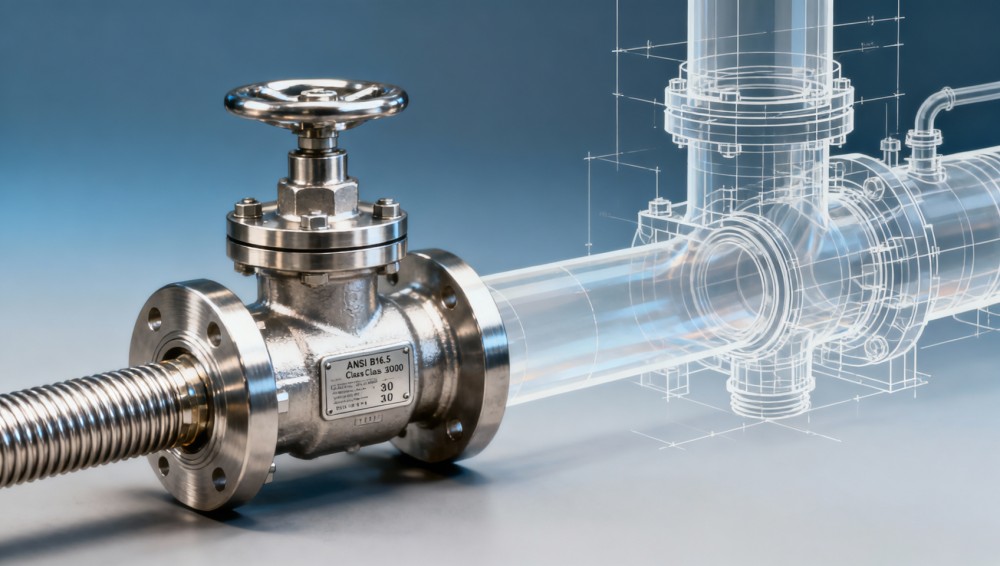
The table above illustrates why precision matters: industrial equipment decisions hinge on material standards, pressure ratings, and application-specific certifications—not just high-level sector labels. Without this layer of specificity, procurement teams operate blindfolded in high-stakes compliance environments.
Key Data Points Every Equipment Buyer Must Track
Decision-makers need more than alerts—they require contextualized, actionable metrics. Our platform aggregates and normalizes over 42 regulatory and commercial data points relevant to industrial equipment sourcing. These include jurisdiction-specific thresholds (e.g., “U.S. EAR99 exemption applies only to valves with maximum operating pressure ≤1.6 MPa”), certification validity windows (e.g., “ATEX Directive 2014/34/EU certificates expire after 5 years unless renewed with updated test reports”), and regional enforcement trends (e.g., “Vietnam Customs increased physical inspections of imported reactor vessels by 41% in H1 2024”).
For machinery parts and industrial equipment, five parameters are non-negotiable: (1) HS code alignment with latest Harmonized System revisions (updated every 5 years, next revision scheduled for January 2027); (2) Material traceability requirements (e.g., EN 10204 3.1/3.2 certificates mandated for pressure equipment in EU); (3) End-use declaration validity periods (typically 6 months for chemical plant projects); (4) Local content rules (e.g., Indonesia’s 30% domestic component requirement for refinery equipment tenders); and (5) Technical barrier timelines (e.g., Saudi Arabia’s SASO IECEE CB Scheme transition deadline: 30 September 2025).
These aren’t abstract benchmarks—they define go/no-go criteria. A buyer evaluating pneumatic actuators for sulfuric acid service must verify not just IP66 rating, but whether the actuator’s elastomer compound (e.g., FKM Viton® Grade GLT) appears on South Korea’s K-REACH Candidate List—and whether the supplier holds valid KOLAS-accredited test reports dated within the last 18 months.
These thresholds are dynamic. The platform tracks 192 active regulatory change triggers across 47 countries—each mapped to specific equipment types, material classes, and application contexts. This enables proactive recalibration of sourcing strategies, not reactive firefighting.
Actionable Next Steps for Enterprise Decision-Makers
Start by auditing your current intelligence sources against three criteria: (1) Does it map regulatory language to industrial equipment standards (e.g., linking “flammable liquid handling” to API RP 2510, NFPA 30, or EN 14492-1)? (2) Does it distinguish between export controls on finished equipment versus spare parts (e.g., turbine blades vs. replacement bearings)? (3) Does it provide supplier-level verification—not just company names, but evidence of compliance with jurisdiction-specific technical barriers?
Then, prioritize implementation in high-risk procurement streams: chemical plant EPC contracts, refinery modernization tenders, and pharmaceutical manufacturing equipment upgrades. These segments account for 63% of cross-border industrial equipment disputes related to regulatory non-compliance, according to 2024 ICC arbitration data.
Finally, integrate intelligence into procurement workflows—not as a separate dashboard, but as embedded validation layers in RFQ templates, supplier scorecards, and delivery milestone trackers. Automated checks for certificate expiry dates, HS code mismatches, and end-user statement completeness reduce manual review time by up to 70%.
FAQ: Critical Questions for Equipment Sourcing Teams
- How quickly can your platform detect new export restrictions affecting industrial valves? Within 48 hours of official publication in government gazettes—verified via machine-readability scoring and human editorial triage.
- Does it cover regional enforcement practices—not just laws on paper? Yes. We track customs inspection frequency, common rejection reasons (e.g., missing PED 2014/68/EU Declaration of Conformity for heat exchangers), and local interpretation nuances.
- Can I filter alerts by my specific equipment categories? Absolutely. Configure custom taxonomies: e.g., “reactors,” “centrifugal pumps,” “control valves,” with sub-filters for material grade (ASTM A351 CF8M), pressure class (ASME B16.5 Class 600), and application (chlorine, hydrogen sulfide, hydrofluoric acid).
Timely, precise, and actionable intelligence isn’t a luxury—it’s the infrastructure for resilient industrial procurement. When export restrictions evolve weekly and equipment lifecycles span decades, your business intelligence platform must speak the language of industrial equipment, not just general commerce.
Get customized regulatory intelligence for your equipment categories—request a free capability assessment tailored to your sourcing portfolio and target markets.
- industrial equipment
- market analysis
- supply chain
- building materials
- chemical industry
- packaging solutions
- machinery parts
- industry news
- global trade
- business intelligence
- economic indicators
- e-commerce news
- cross-border e-commerce news
- market trend analysis
- technology innovation
- market research reports
- foreign trade policy
Related News
- Red Sea Tensions Lift Asia-Europe Freight Costs 23% WeeklyApr 17, 2026Red Sea tensions drive Asia-Europe freight costs up 23% weekly—shockwaves hit exporters, procurement teams & logistics providers. Act now.
- Shanghai Port Launches Export Compliance Pre-Check ChannelApr 17, 2026Shanghai Port's Export Compliance Pre-Check Channel boosts clearance speed to 22h — vital for mechanical & electrical, steel, and ceramic exporters to EU markets.
- Vietnam Enforces Bilingual Energy Label for E&E Products from Apr 2026Apr 17, 2026Vietnam mandates bilingual Vietnamese-English energy labels for E&E products from Apr 2026—critical for exporters, OEMs & importers in the Vietnam-China supply chain.
- Indonesia Mandates CNAS Lab Reports for Imported Building Materials from July 2026Apr 17, 2026Indonesia mandates CNAS lab reports for imported building materials from July 2026 — critical for ceramics, fire doors & waterproofing. Act now to ensure compliance and market access.
Related News
- 00
0000-00
Red Sea Tensions Lift Asia-Europe Freight Costs 23% Weekly - 00
0000-00
Shanghai Port Launches Export Compliance Pre-Check Channel - 00
0000-00
Vietnam Enforces Bilingual Energy Label for E&E Products from Apr 2026 - 00
0000-00
Indonesia Mandates CNAS Lab Reports for Imported Building Materials from July 2026 - 00
0000-00
USTR Launches Section 301 Review on Chinese Wearables
Industry Global
Weekly Insights
Stay ahead with our curated technology reports delivered every Monday.