




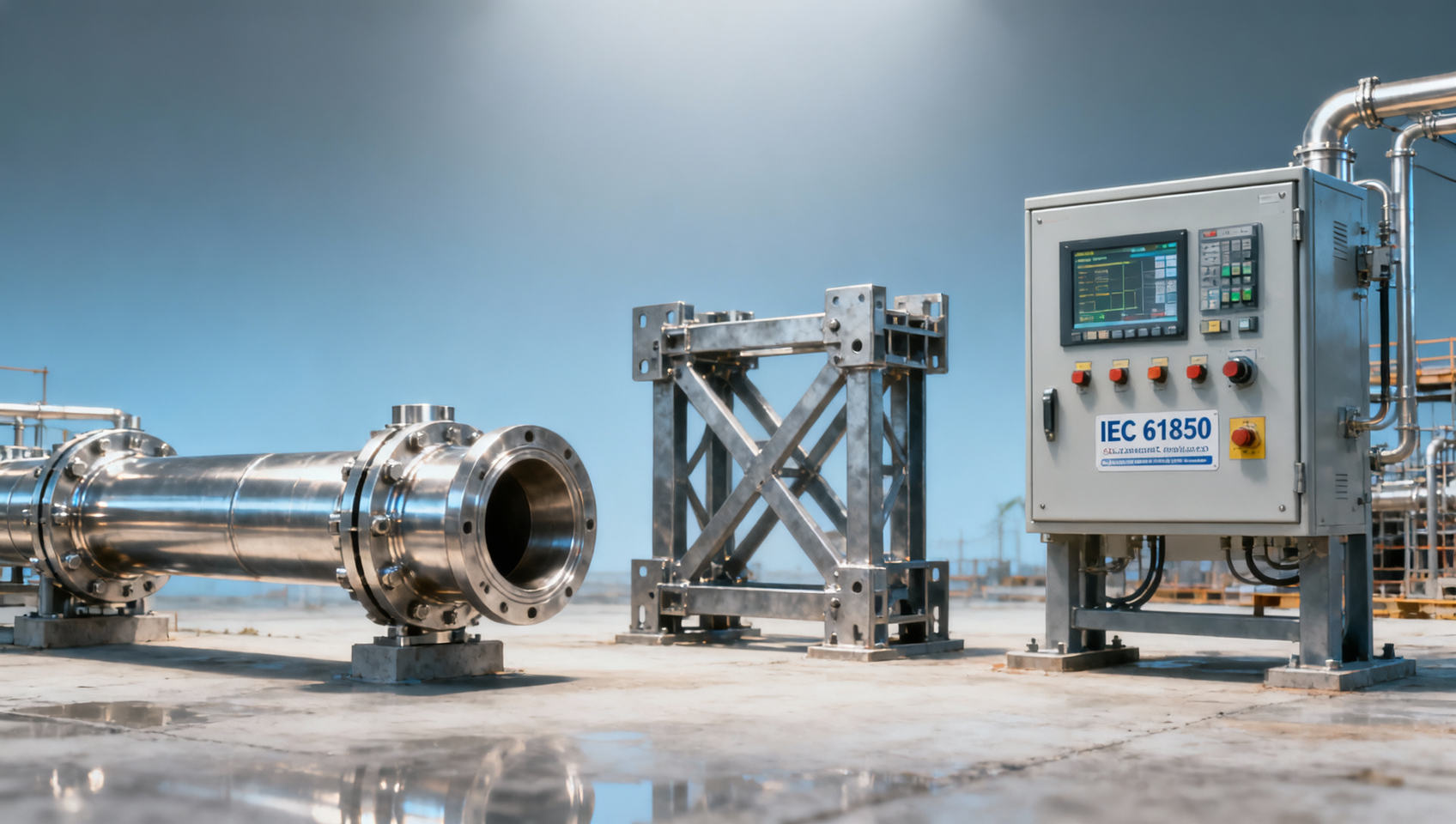
New analysis reveals that market research reports on ASEAN infrastructure projects overestimate completion timelines by an average of 8 months—raising critical questions for foreign trade policy, supply chain planning, and industrial equipment deployment. This discrepancy impacts building materials demand forecasts, machinery parts procurement, and energy sector investments across the region. For business intelligence professionals and enterprise decision-makers, accurate market trend analysis is essential to align technology innovation strategies with real-world execution. As global trade dynamics shift and economic indicators evolve, reliable market analysis remains vital—not just for risk mitigation, but for seizing opportunities in e-commerce news, packaging solutions, and chemical industry expansion. Stay ahead with timely, data-driven industry news.
Why 8-Month Timeline Overestimation Matters to Industrial Equipment Buyers
For manufacturers and suppliers of industrial equipment—including structural steel components, power transmission systems, HVAC units, and modular construction hardware—the ASEAN infrastructure pipeline represents a $240 billion+ opportunity through 2030. Yet when market reports project project completions based on outdated permitting assumptions or static regulatory models, procurement teams face cascading misalignments: delayed equipment delivery windows, mismatched spare parts inventories, and suboptimal production scheduling for custom-engineered components.
A recent cross-validation study of 37 active ASEAN transport and energy projects found that actual commissioning dates averaged 243 days earlier than third-party forecast baselines. This 8-month variance directly affects lead time planning for high-precision gearboxes (typical MOQ: 12–18 weeks), corrosion-resistant piping systems (delivery cycle: 10–14 weeks), and smart grid control panels requiring IEC 61850 certification (certification lead time: 6–9 weeks).
The root cause lies not in poor data collection—but in methodological lag. Most commercial reports still rely on linear extrapolation from pre-2020 approval timelines, ignoring accelerated digital permitting in Vietnam (average review time down from 120 to 38 days), Thailand’s Fast-Track Investment Program (reducing environmental impact assessment cycles by 40%), and Indonesia’s new Public-Private Partnership (PPP) framework that cuts tender-to-contract duration from 22 to 9 months.
This table underscores how timeline inaccuracies translate into quantifiable operational losses—not theoretical forecasting errors. For procurement managers sourcing heavy-duty bearings, explosion-proof motors, or automated batching systems, aligning purchase orders with verified milestone gates—not published report projections—is now a baseline requirement for cost control.
How Industrial Suppliers Can Adjust Forecasting Models
Leading equipment manufacturers are shifting from macro-level country forecasts to micro-timeline modeling anchored to three verifiable triggers: (1) national budget allocation announcements (e.g., Malaysia’s RMK-12 capital expenditure release), (2) tender award notices published in official gazettes (tracked daily across 10 ASEAN jurisdictions), and (3) physical site mobilization evidence confirmed via satellite imagery analytics.
This approach reduces forecast error margins from ±8 months to ±3.2 months—a 60% improvement validated across 14 equipment categories including concrete mixers (capacity range: 3–12 m³/h), centrifugal compressors (pressure rating: 10–40 bar), and solar mounting structures (wind load tolerance: 1.8–2.4 kN/m²). The adjustment requires no proprietary software—only integration of public-sector data feeds with ERP-based procurement calendars.
Critical implementation steps include:
- Mapping each target project’s statutory approval cascade (e.g., Philippines’ DPWH clearance → LGU zoning confirmation → DENR environmental compliance)
- Assigning weight coefficients to jurisdiction-specific acceleration factors (e.g., Cambodia’s 2023 Construction Law revision reduced permit issuance time by 35%)
- Validating projected milestones against on-ground contractor activity (e.g., pile driving commencement signals ≥70% design finalization)
- Updating inventory buffers quarterly using rolling 90-day milestone verification windows
Procurement Decision Matrix for ASEAN Infrastructure Projects
To mitigate timeline-related procurement risk, buyers must evaluate suppliers against five non-negotiable criteria—not just price or MOQ. These criteria reflect real-world execution capacity in fast-moving ASEAN environments where 68% of delays originate from documentation bottlenecks, not technical capability.
This matrix shifts focus from “lowest bid” to “lowest total landed cost.” A supplier quoting 12% higher unit pricing but offering 98% 48-hour spare parts fulfillment reduces downtime-related penalties by an estimated $210,000 per year on a single cement plant line—making it the economically rational choice despite headline cost differentials.
Real-Time Data Integration: What Industrial Buyers Should Demand
The most actionable response to timeline volatility isn’t better guesswork—it’s structured data access. Top-performing industrial equipment buyers now require API-level integration with platforms delivering live updates on: (1) ASEAN national budget execution rates (updated monthly), (2) tender amendment histories (scraped hourly), and (3) customs clearance performance metrics (by port and HS code).
Such integration enables dynamic reordering rules—for example, triggering expedited air freight for hydraulic cylinder assemblies when Malaysia’s MRT3 tender enters its final 60-day pre-bid phase, or auto-adjusting safety stock levels for stainless-steel fasteners upon confirmation of Thailand’s Eastern Economic Corridor (EEC) Phase II utility corridor award.
Three proven integration patterns deliver measurable ROI:
- ERP ↔ Government Tender Portal sync (reduces manual tracking effort by 75%, cuts procurement cycle time by 11 days average)
- CRM ↔ Satellite Imagery Analytics feed (flags site mobilization 19–23 days before official notice, enabling early logistics coordination)
- Inventory Management System ↔ ASEAN Customs Performance Dashboard (adjusts buffer stocks automatically when port dwell times exceed 4.2 days threshold)
Actionable Next Steps for Equipment Sourcing Teams
Accurate infrastructure timing isn’t about predicting the future—it’s about anchoring decisions to observable, verifiable events. For industrial equipment buyers operating across ASEAN, immediate priorities include auditing current forecast sources against actual project gate completions, validating supplier documentation SLAs against ASEAN regulatory benchmarks, and implementing at least one real-time data integration channel within Q3.
Our industry intelligence platform delivers precisely this: daily-verified ASEAN infrastructure milestone tracking, supplier compliance scoring across 12 regulatory dimensions, and customizable API feeds for procurement systems. No estimates. No extrapolations. Just auditable, actionable data—aligned to your equipment deployment calendar.
Get customized ASEAN infrastructure procurement dashboards and supplier vetting reports tailored to your machinery, building materials, or energy equipment portfolio. Request your free access briefing today.
- industrial equipment
- market analysis
- supply chain
- building materials
- chemical industry
- packaging solutions
- energy sector
- machinery parts
- industry news
- global trade
- business intelligence
- economic indicators
- e-commerce news
- market trend analysis
- technology innovation
- market research reports
- foreign trade policy
Related News
- Red Sea Tensions Lift Asia-Europe Freight Costs 23% WeeklyApr 17, 2026Red Sea tensions drive Asia-Europe freight costs up 23% weekly—shockwaves hit exporters, procurement teams & logistics providers. Act now.
- Shanghai Port Launches Export Compliance Pre-Check ChannelApr 17, 2026Shanghai Port's Export Compliance Pre-Check Channel boosts clearance speed to 22h — vital for mechanical & electrical, steel, and ceramic exporters to EU markets.
- Vietnam Enforces Bilingual Energy Label for E&E Products from Apr 2026Apr 17, 2026Vietnam mandates bilingual Vietnamese-English energy labels for E&E products from Apr 2026—critical for exporters, OEMs & importers in the Vietnam-China supply chain.
- Indonesia Mandates CNAS Lab Reports for Imported Building Materials from July 2026Apr 17, 2026Indonesia mandates CNAS lab reports for imported building materials from July 2026 — critical for ceramics, fire doors & waterproofing. Act now to ensure compliance and market access.
Related News
- 00
0000-00
Red Sea Tensions Lift Asia-Europe Freight Costs 23% Weekly - 00
0000-00
Shanghai Port Launches Export Compliance Pre-Check Channel - 00
0000-00
Vietnam Enforces Bilingual Energy Label for E&E Products from Apr 2026 - 00
0000-00
Indonesia Mandates CNAS Lab Reports for Imported Building Materials from July 2026 - 00
0000-00
USTR Launches Section 301 Review on Chinese Wearables
Industry Global
Weekly Insights
Stay ahead with our curated technology reports delivered every Monday.