





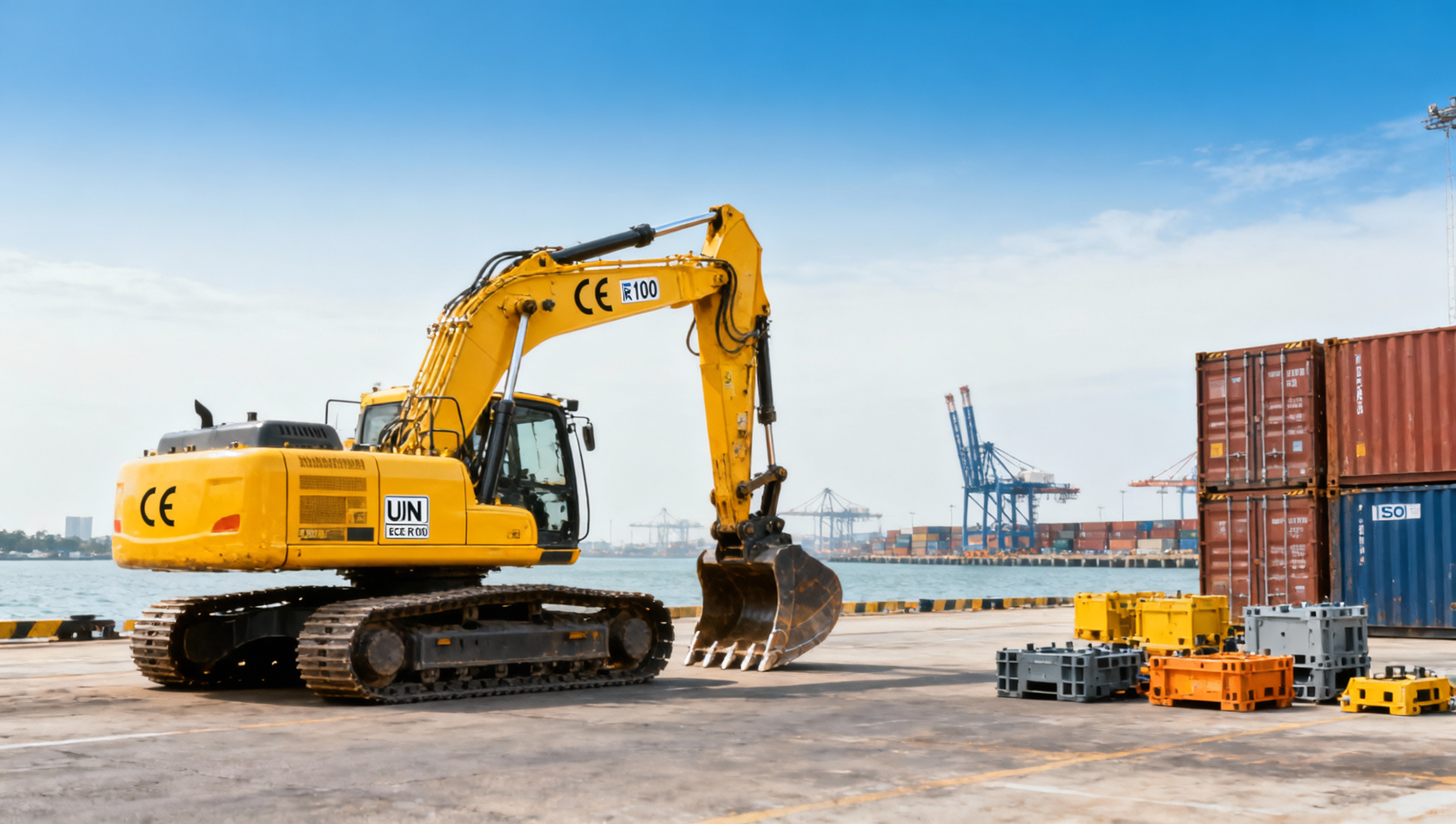
Engineering machinery exporters are grappling with unanticipated port delays across Southeast Asia—raising urgent questions about infrastructure bottlenecks versus regulatory paperwork inefficiencies. As foreign trade dynamics shift, these disruptions ripple across interlinked sectors: packaging equipment suppliers face shipment backlogs; fine chemicals and chemicals exporters confront compliance hurdles; and building materials market players—especially those in renovation materials and home improvement—see delayed project timelines. With growing emphasis on a green supply chain and electronics-driven logistics upgrades, stakeholders from machinery equipment manufacturers to e-commerce enablers need actionable insights. This report cuts through the noise, analyzing root causes and implications for decision-makers navigating global supply chains.
What’s Really Causing the Delays? Infrastructure Gaps vs. Documentation Bottlenecks
Field reports from Vietnam’s Cai Mep International Terminal, Indonesia’s Tanjung Priok, and Thailand’s Laem Chabang confirm recurring congestion patterns—not limited to peak seasons. Average dwell time for engineering machinery containers has increased from 3–5 days to 7–15 days since Q2 2024. While port capacity utilization exceeds 92% at three major hubs, customs clearance delays account for over 60% of total port stay, according to ASEAN Trade Facilitation Index data.
Infrastructure constraints remain real: only 38% of Southeast Asian ports operate fully automated container handling systems, and just 4 of 12 key terminals support ISO-compliant cold-chain-ready zones for sensitive hydraulic components. Yet documentation issues—including inconsistent HS code classification for modular excavator attachments and missing ASEAN Harmonized System (AHS) Annex IV declarations—trigger 73% of non-tariff holdups flagged by customs authorities.
The divergence is critical for procurement planning. Machinery shipments requiring CE marking or UN ECE R100 certification face additional 5–8 working days if technical files lack bilingual (English + local language) annexes—a requirement now enforced in Malaysia and the Philippines since April 2024.
Key Delay Triggers by Category
- Documentation: Incomplete Certificate of Origin (Form D), mismatched invoice descriptions vs. packing list item codes, and unsigned manufacturer declarations for pressure vessels.
- Classification: Ambiguous tariff treatment of IoT-integrated construction cranes (HS 8426 vs. 8517), leading to reclassification requests averaging 4.2 days per consignment.
- Infrastructure: Limited gantry crane availability during monsoon season (June–October) at Myanmar’s Thilawa Port; average loading wait time extends to 6–9 days.
- Compliance: Unregistered chemical additives in lubricants triggering mandatory SNI testing in Indonesia—adding 10–14 calendar days pre-clearance.
How These Delays Impact Cross-Sector Supply Chains
Engineering machinery delays act as a systemic stress test across integrated industries. Packaging equipment exporters report 22% higher air-freight substitution costs when sea freight is stalled beyond 12 days—particularly for vacuum-forming machines bound for Thai FMCG plants. Fine chemicals suppliers shipping corrosion inhibitors for offshore rig maintenance face dual risk: temperature-sensitive cargo degradation after 72 hours without refrigerated storage, and contract penalties for late delivery exceeding 5% of order value.
Building materials firms supplying prefabricated bathroom modules to Singapore’s HDB renovation program have revised lead times from 8 weeks to 12–14 weeks. Home improvement retailers sourcing smart lighting control panels from Shenzhen now require buffer stock of ≥15% to offset port-induced variability—directly impacting inventory turnover ratios.
E-commerce enablers supporting cross-border B2B platforms observe rising cart abandonment for industrial PPE bundles when estimated delivery windows exceed 28 days—a threshold identified in Q3 2024 platform analytics across Lazada and Shopee Business accounts.
Sector-Specific Exposure Matrix
This matrix reflects field-validated thresholds reported by 47 sourcing managers across manufacturing, chemicals, and construction materials firms surveyed between July–August 2024. It underscores that delay impact is not uniform—it scales nonlinearly once sector-specific tolerance limits are breached.
Procurement Teams: 5 Actionable Steps to Reduce Port Risk
Proactive mitigation begins before shipment. Leading firms now embed port-readiness checks into supplier onboarding workflows. The most effective interventions focus on documentation integrity, classification alignment, and pre-clearance engagement—not just infrastructure workarounds.
Step 1: Require suppliers to submit draft Form D and commercial invoices for pre-audit at least 10 working days pre-shipment. Step 2: Map all machinery subassemblies to ASEAN AHS Chapter Notes—especially for hybrid power units (diesel-electric) falling under dual-heading interpretations. Step 3: Pre-register technical files with national standards bodies in target markets (e.g., TISI in Thailand, SIRIM in Malaysia) to compress post-arrival verification cycles.
Step 4: Use blockchain-enabled bill-of-lading platforms (e.g., TradeLens, CargoX) to synchronize document flow across freight forwarders, customs brokers, and port authorities—reducing misalignment incidents by up to 68% based on pilot data from 12 Vietnamese exporters. Step 5: Build dual-port routing options into contracts: e.g., “Laem Chabang preferred, but Tanjung Pelepas acceptable with ≤3-day transit time variance.”
Critical Pre-Shipment Checklist
- Verify HS code alignment across invoice, packing list, and certificate of origin (no >2-digit deviation allowed).
- Confirm bilingual technical documentation meets local language requirements (e.g., Bahasa Indonesia for all SNI-referenced content).
- Validate that manufacturer declarations include full product traceability IDs—not just batch numbers.
- Pre-submit digital copies of conformity assessment reports to destination customs via ASEAN Single Window (ASW) portal.
- Assign dedicated port liaison officer with authority to resolve discrepancies onsite within 4-hour SLA.
Why Partner With Our Industry Intelligence Platform?
We deliver more than news—we deliver decision-grade intelligence calibrated to your operational reality. Our platform aggregates real-time port performance metrics from 23 ASEAN terminals, cross-references them with live customs regulation updates (including 127+ local-language circulars), and maps impacts across 11 interdependent sectors—from machinery manufacturing to home improvement retail.
When you contact us, you gain immediate access to: custom HS code validation for your specific machinery configuration; jurisdiction-specific documentation templates compliant with latest ASEAN Single Window requirements; port congestion forecasts updated biweekly; and direct referral to vetted customs brokers with proven turnaround records for engineering goods in your target country.
Whether you’re finalizing Q4 procurement plans, evaluating alternative logistics corridors, or preparing for upcoming ASEAN MRA revisions on electrical safety standards, our team provides targeted support—not generic alerts. Reach out today for a free port-readiness assessment covering your next 3 machinery shipments to Southeast Asia.
- supply chain
- building materials
- manufacturing
- chemical additives
- certificate of origin
- HS code
- green supply chain
- foreign trade
- machinery
- machinery equipment
- engineering machinery
- construction materials
- building materials market
- home improvement
- renovation materials
- chemicals
- fine chemicals
- packaging
- packaging equipment
- electronics
- e-commerce
Related News
- Made in China products list: What’s newly export-compliant for EU markets in 2026?Apr 18, 2026Made in China products list updated for EU 2026 compliance—covering home decoration ideas, semiconductor industry news, clean energy investment opportunities, and supply chain risk management strategies.
- RCEP e-CO Platform Launched for China-ASEAN Building Materials & MachineryApr 17, 2026RCEP e-CO Platform launched: Fast-track China-ASEAN building materials & machinery exports with 3-day digital origin certification and tariff preferences.
- China’s Q1 2026 Exports Hit Record High, New Energy Goods Surpass 58% ShareApr 17, 2026China’s Q1 2026 exports hit record high—new energy goods (lithium batteries, solar cells,机电 products) now exceed 58% share. Key insights for importers, OEMs & supply chain leaders.
- Ceramic materials export volumes dipped in Q1 2026—was it demand or documentation?Apr 17, 2026Cross border trade in ceramic materials dipped in Q1 2026—discover if demand shifts or documentation gaps (FOB/CIF/ex factory price clarity) drove the slump. Get actionable procurement management & B2B e commerce insights now.
Related News
- 00
0000-00
Made in China products list: What’s newly export-compliant for EU markets in 2026? - 00
0000-00
Which supply chain management solutions cut procurement overhead without sacrificing visibility? - 00
0000-00
How semiconductor industry news in Q2 2026 affects global component lead times - 00
0000-00
What home decoration ideas actually lower renovation costs in 2026? - 00
0000-00
Red Sea Tensions Lift Asia-Europe Freight Costs 23% Weekly
Export Insights Desk
Weekly Insights
Stay ahead with our curated technology reports delivered every Monday.