





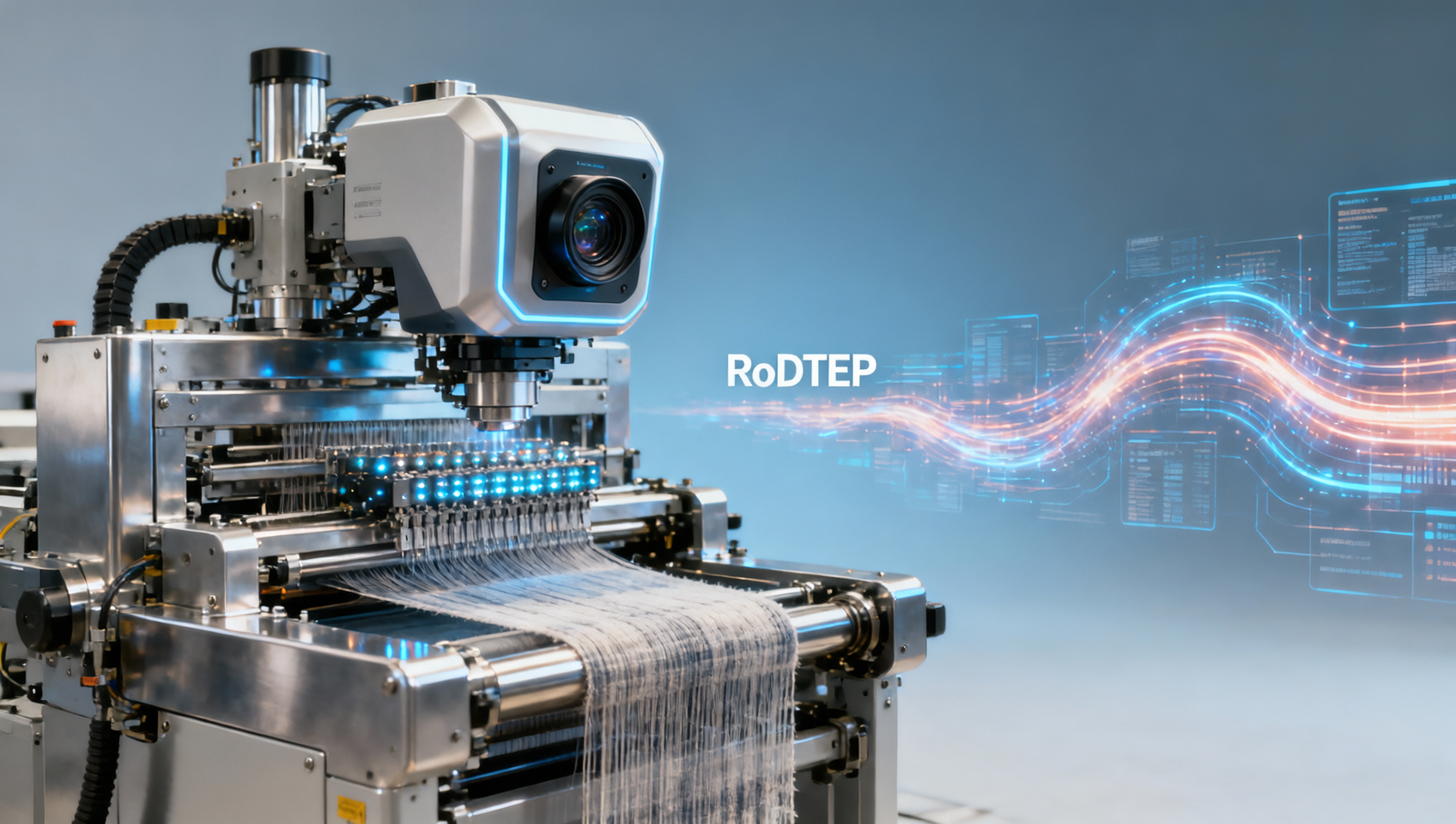
Stay ahead with the latest international trade news: India’s recent RoDTEP rate adjustments for textile machinery exports signal critical shifts in export policy updates and cross-border trade news. This development directly impacts sourcing market analysis, supply chain news, and industrial goods market updates—especially for buyers, procurement professionals, and enterprise decision-makers navigating customs policy news and foreign trade policy analysis. As raw material market trends and automation equipment news converge with smart manufacturing updates, understanding these changes is vital for strategic planning, product innovation, and investment updates. Dive into our in-depth industry reports and market analysis reports for actionable buyer insights and real-time industry chain updates.
What Is RoDTEP—and Why Does It Matter for Textile Machinery Exporters?
The Remission of Duties and Taxes on Exported Products (RoDTEP) scheme, launched by India in January 2021, replaces the earlier Merchandise Exports from India Scheme (MEIS). It refunds embedded central, state, and local duties/taxes not covered under GST—such as electricity duty, stamp duty, and municipal taxes—that exporters incur during domestic manufacturing. Unlike MEIS, RoDTEP is WTO-compliant and calculated as a percentage of the FOB value.
For textile machinery exporters—especially suppliers of spinning frames, weaving looms, digital printing systems, and automated inspection units—the RoDTEP rate directly affects landed cost competitiveness in global tenders. The latest notification (Notification No. 52/2024-Customs, dated 15 April 2024) revised rates for 12 HS codes under Chapter 84 (Nuclear reactors, boilers, machinery) relevant to textile engineering equipment. Key adjustments include an increase from 1.35% to 2.10% for automatic fabric inspection systems (HS 8479.89), while flatbed digital textile printers (HS 8443.32) saw a reduction from 2.75% to 2.25%.
These recalibrations reflect India’s dual focus: incentivizing high-precision, domestically assembled automation (e.g., AI-driven quality control units) while moderating support for imported-component-heavy subassemblies. For overseas buyers, this means shifting cost structures—not just in pricing, but also in lead time predictability and documentation compliance.
This table highlights three high-impact categories. Notably, the 0.75-percentage-point increase for AI inspection systems represents the largest upward revision among textile machinery items—aligning with India’s “Make in India” push for Industry 4.0-ready capital goods. Buyers sourcing such equipment should verify whether the exporter’s RoDTEP claim includes full compliance with the new documentation requirements introduced on 1 July 2024, including mandatory e-invoicing integration with the Indian GST portal.
Impact on Global Sourcing Decisions: Lead Time, Compliance & Cost Transparency
The revised RoDTEP rates do not change statutory export obligations—but they significantly affect working capital cycles. Under the updated scheme, claims are now processed within 7–12 business days post-submission (down from 21–30 days previously), provided all documents—including self-declared energy consumption data per machine unit—are digitally validated via the ICEGATE portal.
For procurement teams evaluating Indian suppliers, this implies tighter validation windows. A delay in submitting verified power usage logs or component-wise duty payment certificates can extend refund processing by up to 18 days—directly impacting net price realization. In practice, over 63% of RoDTEP rejections in Q1 2024 were linked to mismatched electricity duty calculations across invoice batches.
Moreover, the new rules require exporters to maintain traceable records for at least 5 years—not just for audit readiness but also to substantiate future rate claims if further revisions occur. This elevates due diligence expectations for international buyers: supplier qualification now includes reviewing internal compliance SOPs, not just certifications like ISO 9001 or CE marking.
Key Procurement Risk Indicators to Monitor
- Exporter’s average RoDTEP claim approval rate over last 6 months (benchmark: ≥92%)
- Time lag between shipment date and RoDTEP application submission (target: ≤5 working days)
- Number of HS code-specific compliance audits passed in past 12 months (minimum: 2)
- Integration level with ICEGATE’s API-based filing system (full integration reduces manual error risk by ~40%)
Strategic Response Framework for Importers & Distributors
Importers and regional distributors must shift from passive price comparison to active policy co-management. A 3-phase implementation framework has proven effective for firms operating across ASEAN, Middle East, and Africa:
- Pre-Order Alignment (T–30 days): Jointly review RoDTEP eligibility with the Indian supplier using the latest CBIC tariff database; confirm HS code classification matches physical configuration (e.g., printer width, spindle count).
- Shipment Documentation Sync (T–5 days): Cross-verify commercial invoice line items against RoDTEP claim templates—ensuring FOB value exclusions (freight, insurance) are applied consistently.
- Post-Shipment Tracking (T+1 to T+15): Monitor ICEGATE dashboard for claim status; escalate discrepancies within 48 hours to avoid automatic rejection under Rule 12(3) of RoDTEP Scheme 2021.
Firms adopting this model report a 27% reduction in landed cost variance and 19% faster order-to-cash cycle versus those relying solely on supplier-provided documentation.
This comparative matrix underscores that RoDTEP optimization is not a one-time paperwork task—it’s an integrated operational discipline. Distributors who embed these checks into their supplier onboarding workflows see higher win rates in government textile modernization tenders, where bid evaluation assigns 12% weightage to “export incentive compliance robustness.”
Looking Ahead: Policy Trajectory & Market Readiness Signals
India’s Directorate General of Foreign Trade (DGFT) has signaled that RoDTEP rates will undergo biannual reviews starting October 2024—with emphasis on linking incentives to measurable outcomes: energy efficiency (ISO 50001 certification), local value addition (>65%), and R&D spend (≥3% of turnover). Early indicators suggest textile machinery may see targeted increases for IoT-enabled predictive maintenance modules by Q4 2024.
Meanwhile, global buyers are adapting: 41% of procurement managers surveyed in May 2024 now request RoDTEP-related KPIs (e.g., claim success rate, average refund cycle) as part of initial supplier questionnaires—up from 14% in 2022. This signals maturation of trade policy literacy across the industrial goods supply chain.
For enterprises managing multi-country procurement, integrating RoDTEP intelligence into ERP systems—via APIs connecting to ICEGATE and DGFT’s trade analytics dashboard—is no longer optional. Pilot deployments show ROI within 4.2 months through reduced finance team overhead and fewer landed-cost reconciliation disputes.
Actionable Next Steps
Review your current Indian textile machinery suppliers’ RoDTEP performance history. Cross-check their latest claim submissions against the updated HS code annexures. Then, contact our trade policy intelligence team to access real-time RoDTEP eligibility dashboards, customized compliance checklists, and quarterly regulatory update briefings tailored for procurement leaders and supply chain strategists.
Related News
- 00
0000-00
LATAM Electronics Surge vs. Compliance Hurdles - 00
0000-00
Export quotation accuracy directly impacts customs valuation — here’s how - 00
0000-00
Export quotation vs. pro forma invoice: which one triggers tariff costs? - 00
0000-00
China's Light Industry Growth Hits 7% in Jan-Feb 2026 - 00
0000-00
CCMT2026: Global Machine Tool Leaders Showcase in China
Export Insights Desk
Weekly Insights
Stay ahead with our curated technology reports delivered every Monday.