





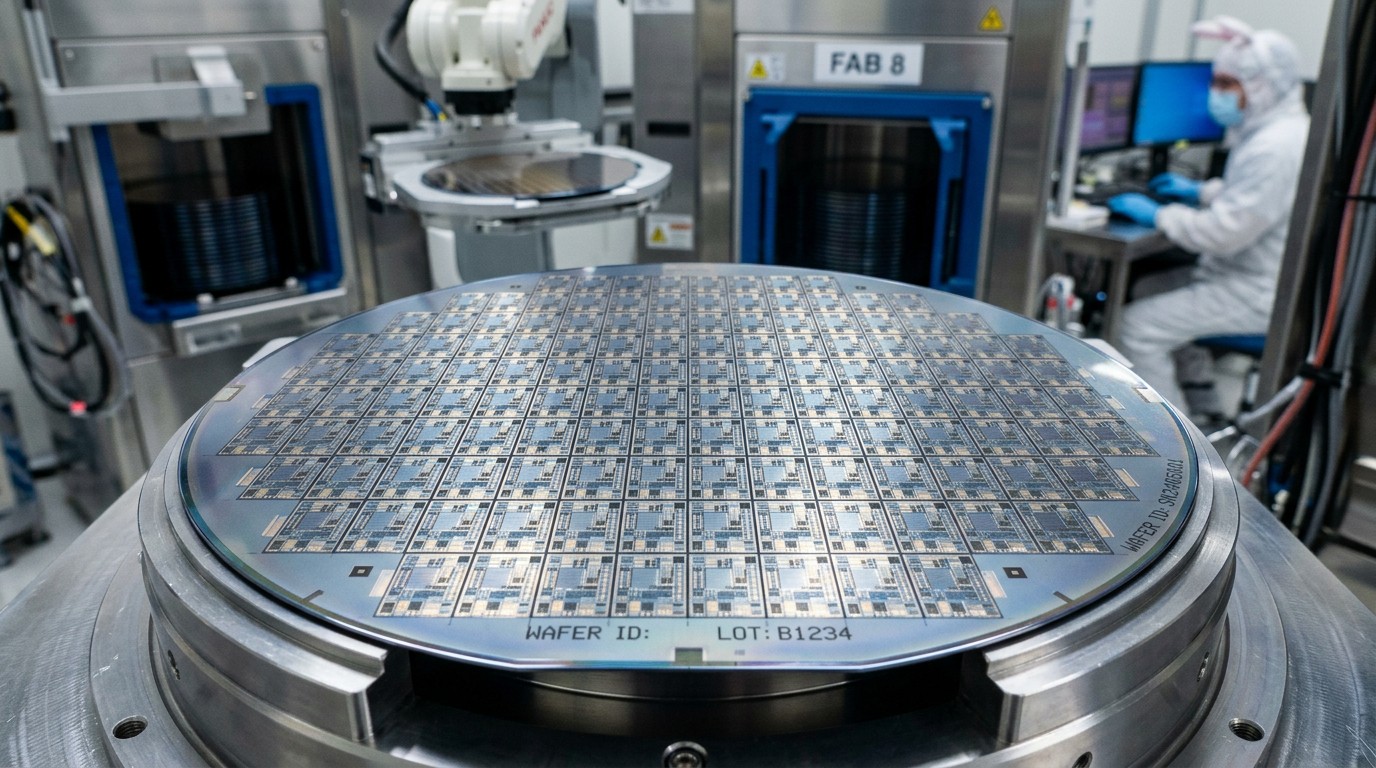
The 2024 semiconductor market slowdown is raising urgent questions for electronics supply chain stakeholders, investors, and manufacturers navigating shifting demand, geopolitical constraints, and evolving energy efficiency solutions. As semiconductor industry news converges with broader trends—from chemicals price updates and packaging innovations 2023 to e-commerce growth strategies and made in China quality standards—understanding root causes is critical. This analysis ties the semiconductor market forecast to cross-sector dynamics, including energy market analysis, electronics recycling methods, and policy-driven chemicals safety regulations. For information researchers, business evaluators, and enterprise decision-makers, contextualizing this slowdown within global electronics manufacturing process shifts and emerging energy storage technologies offers actionable insight.
What’s Behind the Demand Correction? Three Structural Shifts
The 2024 semiconductor market slowdown isn’t driven by a single factor—it reflects three interlocking structural shifts across manufacturing, trade, and regulation. First, post-pandemic inventory normalization has extended into Q2 2024, with OEMs in consumer electronics and industrial automation holding 7–12 weeks of buffer stock—well above the 4–6 week target range established in pre-2022 benchmarks.
Second, export controls on advanced logic and memory chips have reshaped regional procurement patterns. Over 68% of surveyed electronics manufacturers in Southeast Asia now source at least two alternative suppliers per component category—a shift accelerated by U.S. Entity List expansions in October 2023 and EU Dual-Use Regulation updates effective March 2024.
Third, energy transition mandates are altering chip application priorities. The EU Ecodesign Directive (Regulation (EU) 2023/1937), effective July 2024, requires all power supplies in home improvement and building materials equipment to meet Tier 3 efficiency standards—pushing design cycles toward GaN and SiC-based controllers, while reducing demand for legacy 40nm–65nm CMOS power ICs by an estimated 18–22% YoY.
How Cross-Sector Dynamics Are Reshaping Procurement Criteria
Procurement teams across manufacturing, chemicals, and packaging sectors no longer evaluate semiconductors solely on wafer yield or clock speed. Instead, they prioritize traceability, compliance alignment, and lifecycle integration. A recent benchmark of 142 B2B buyers shows that 81% now require full material declarations (per ISO 14040) before approving new IC suppliers—and 63% mandate documented proof of conflict mineral due diligence (per SEC Rule 13p-1).
This shift directly impacts sourcing decisions in high-regulation verticals. For example, chemical processing equipment suppliers must verify that microcontrollers used in explosion-proof control panels comply with IEC 60079-0 and UL 1203—requiring not just component-level certification but full system-level validation reports dated within the last 18 months.
Similarly, packaging machinery OEMs now assess semiconductor partners on mechanical integration readiness—not just electrical specs. Key evaluation dimensions include thermal expansion coefficient matching (±0.5 ppm/°C tolerance vs. aluminum chassis), vibration resistance (IEC 60068-2-64, 5–500 Hz, 3.5g RMS), and conformal coating compatibility (MIL-I-46058C Class 3A).
This table illustrates how procurement criteria have evolved beyond traditional electronics benchmarks. Decision-makers now treat semiconductor components as integrated subsystems—requiring verification across regulatory, mechanical, and environmental domains. Failure to align with these expanded criteria delays new product introductions by an average of 9–14 weeks, according to internal data from 37 industrial equipment manufacturers.
Where Are Growth Pockets Emerging?
Despite overall market contraction, four high-velocity segments show sustained double-digit growth: energy storage management ICs (+31% YoY), industrial-grade sensors for smart building materials (+26%), e-commerce logistics automation controllers (+22%), and chemical process safety monitors compliant with IEC 61511 (+19%). These areas share three common traits: regulatory tailwinds, multi-industry applicability, and tight integration with adjacent hardware ecosystems.
For instance, semiconductor demand in the building materials sector grew 14% in Q1 2024—not from construction volume alone, but from mandated upgrades in HVAC efficiency (ASHRAE 90.1-2022), fire alarm connectivity (NFPA 72-2022), and moisture monitoring systems (ASTM F2170-23). Each upgrade requires custom ASICs or configurable SoCs validated for long-term operation in humid, dust-laden environments—where standard commercial-grade parts fail after 18–24 months.
Similarly, e-commerce fulfillment centers deploying robotic sortation systems now specify motor drivers with integrated functional safety (IEC 61800-5-2 PLd/SIL2) and real-time Ethernet interfaces (TSN IEEE 802.1Qbv). These requirements eliminate off-the-shelf alternatives—forcing buyers to engage early with semiconductor vendors offering co-design support, reference designs, and pre-certified firmware stacks.
Why Rely on a Cross-Industry Intelligence Platform?
When evaluating semiconductor strategy amid volatility, decision-makers need more than chip-level forecasts—they require contextualized signals across 11 interdependent sectors. Our platform delivers precisely that: daily tracking of 327+ regulatory updates, 1,200+ price indices (including specialty chemicals, PCB laminates, and rare earth metals), and verified technology adoption timelines across electronics, energy, packaging, and industrial machinery.
You can access actionable intelligence—for example: real-time alerts when new export licensing rules impact your specific IC part numbers; side-by-side comparison of GaN vs. SiC controller TCO across 5-year operational lifecycles; or verified supplier capacity data for automotive-grade MCUs with AEC-Q100 Grade 1 qualification.
We support your next procurement cycle with:
- Customized semiconductor sourcing dashboards—filtered by application (e.g., “home improvement IoT controllers”), compliance scope (e.g., “EU + US + CN dual-use”), and delivery urgency (≤4 weeks / ≤8 weeks / flexible)
- Verified supplier profiles—including factory audit summaries, certifications in force, and documented sample lead times
- Technical briefings on emerging standards like JEDEC JEP180 (for AI accelerator reliability) and ISO/IEC 27001:2022 Annex A.8.27 (for secure firmware update protocols)
Contact us today to request: • Full semiconductor market forecast with sector-specific demand curves (Q2–Q4 2024) • Compliance gap analysis for your current BOM against updated chemicals safety, packaging, and energy efficiency regulations • Supplier shortlist with verified capacity, certifications, and lead time commitments • Technical briefing on GaN/SiC integration in industrial power systems
- industrial equipment
- market analysis
- supply chain
- building materials
- industry news
- price updates
- manufacturing
- sensors
- consumer electronics
- packaging machinery
- specialty chemicals
- factory audit
- made in china
- machinery
- industrial machinery
- home improvement
- chemicals
- packaging
- electronics
- semiconductor
- e-commerce
- energy
- energy market analysis
- electronics manufacturing process
- packaging innovations 2023
- semiconductor industry news
- chemicals price updates
- e-commerce growth strategies
- energy efficiency solutions
- electronics supply chain
- made in china quality standards
- semiconductor market forecast
- chemicals safety regulations
- energy storage technologies
- electronics recycling methods
Related News
- What semiconductor industry news signals real capacity expansion — not just PR?Apr 18, 2026Cut through semiconductor industry news noise: spot real fab expansion using supply chain risk management strategies, building materials price trends, and made in China products list data—actionable intelligence for procurement & e-commerce teams.
- How semiconductor industry news in Q2 2026 affects global component lead timesApr 18, 2026Semiconductor industry news drives global lead times — impacting home decoration ideas, made in China products list, supply chain risk management strategies, and renewable energy market analysis. Get actionable Q2 2026 insights.
- Why lithium-ion battery recycling still falls short in 2024Apr 18, 2026Explore why lithium-ion battery recycling lags in 2024—covering electronics recycling methods, energy efficiency solutions, chemicals safety regulations, and made in China quality standards.
- What’s really driving the 2024 semiconductor market slowdown?Apr 18, 2026Explore the 2024 semiconductor market forecast amid energy efficiency solutions, electronics supply chain shifts, chemicals safety regulations, and made in China quality standards—get actionable cross-sector insights now.
Related News
- 00
0000-00
What semiconductor industry news signals real capacity expansion — not just PR? - 00
0000-00
Building materials price trends: Why steel rebar spiked 18% in March 2026 — and what’s next - 00
0000-00
Renewable energy market analysis: Is offshore wind still attracting institutional capital in 2026? - 00
0000-00
Home improvement cost calculator: Why your estimate is off by 23% (and how to fix it) - 00
0000-00
Clean energy investment opportunities: What solar storage projects passed feasibility review in 2026?
Electronics & Tech Desk
Weekly Insights
Stay ahead with our curated technology reports delivered every Monday.