





Despite rapid advances in energy storage technologies and growing e-commerce growth strategies driving battery demand, lithium-ion battery recycling still falls short in 2024—exposing critical gaps in electronics recycling methods, electronics supply chain responsibility, and energy efficiency solutions. As global chemicals safety regulations tighten and energy market analysis highlights rising waste volumes, stakeholders—from information researchers to enterprise decision-makers—are urgently seeking reliable data on packaging innovations 2023, semiconductor industry news, and made in China quality standards impacting battery reuse. This article unpacks the technical, regulatory, and logistical barriers holding back scalable recycling, with insights relevant to electronics manufacturing process optimization and sustainable e-commerce business solutions.
Why Recycling Rates Remain Below 5% Globally
Global lithium-ion battery recycling rates stood at just 4.7% in 2023, according to the International Energy Agency’s latest circular economy assessment. While EV battery production surged by 38% year-on-year, only an estimated 127,000 tonnes of spent Li-ion batteries were formally recovered—far below the 2.7 million tonnes projected to enter end-of-life streams between 2024 and 2030.
This shortfall isn’t due to lack of intent. Over 62% of surveyed manufacturers in electronics, e-commerce logistics, and energy storage report having formal take-back or EPR (Extended Producer Responsibility) commitments. Yet fewer than 19% meet internal recovery targets—highlighting a systemic disconnect between policy design and operational execution across international supply chains.
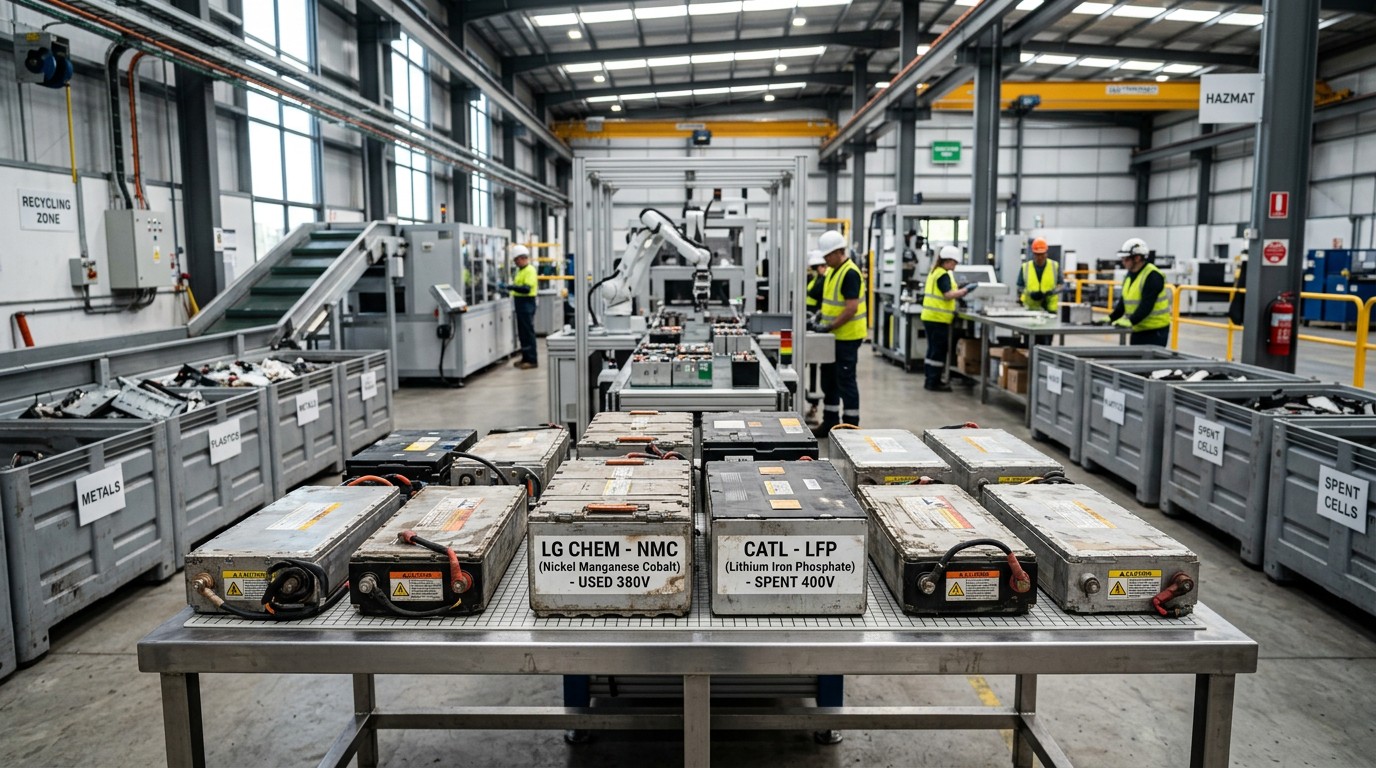
Key bottlenecks include fragmented collection infrastructure, inconsistent labeling standards for battery chemistries (e.g., NMC vs. LFP), and limited harmonization of chemical safety protocols across EU, US, and ASEAN markets. These issues directly impact procurement planning for companies sourcing battery-integrated devices, energy storage systems, or e-commerce fulfillment hardware.
Three Structural Gaps Holding Back Scale
- Collection & Sorting: Less than 30% of industrial users deploy standardized sorting workflows for mixed-format batteries (18650, prismatic, pouch), leading to cross-contamination risks and 15–22% yield loss during mechanical pre-processing.
- Hydrometallurgical Capacity: Only 11 facilities worldwide operate commercial-scale hydrometallurgical plants capable of recovering >95% cobalt, nickel, and lithium—compared to 47+ pyrometallurgical smelters optimized for copper/iron recovery only.
- Certified Output Traceability: Fewer than 8% of recycled cathode active materials carry full-chain traceability (ISO 20400-compliant sourcing + IEC 62474-compliant substance declaration), limiting reuse in regulated electronics or automotive applications.
How Regulatory Fragmentation Impacts Procurement Decisions
Regulatory alignment remains uneven across major trade blocs—creating real-world friction for buyers evaluating battery reuse programs or supplier compliance. The EU Battery Regulation (EU 2023/1542), effective from February 2024, mandates 16% recycled content in new EV batteries by 2027, rising to 26% by 2031. In contrast, U.S. federal rules remain guidance-based, with state-level initiatives (e.g., California AB 283) focusing narrowly on collection rates—not material purity or chain-of-custody verification.
For manufacturers exporting to both markets, this means dual-track documentation: one set meeting EU Annex XII reporting thresholds (e.g., 0.1% threshold for SVHCs), another aligned with U.S. EPA RCRA exemption criteria for spent battery handling. Misalignment adds 7–15 days to compliance validation cycles and increases third-party audit costs by 22–35% annually.
Packaging innovations—including smart labels with QR-coded chemistry IDs and tamper-evident return containers—have emerged as practical enablers. Leading adopters report 40% faster sorting accuracy and 28% lower misclassification penalties when integrated into existing warehouse management systems (WMS).
This table illustrates how procurement teams must map specifications not just to product performance, but to jurisdiction-specific compliance architecture. For example, sourcing LFP batteries for North American e-commerce delivery drones requires verifying only basic chemistry labeling, whereas identical units destined for EU-based last-mile fleets demand full digital battery passports with carbon footprint data—impacting lead time, documentation overhead, and supplier qualification criteria.
What Business Decision-Makers Should Evaluate Now
Forward-looking enterprises are shifting from reactive recycling compliance to proactive material strategy. Key evaluation dimensions include:
- Supply Chain Mapping: Identify upstream suppliers with certified closed-loop partnerships—especially those operating ISO 14001-certified recovery lines in Southeast Asia or Eastern Europe, where labor and energy cost advantages enable 18–24 month ROI on reuse integration.
- Technical Compatibility: Assess whether current battery formats (e.g., 21700 cells used in power tools) align with available hydrometallurgical feedstock specs—most commercial recyclers require minimum 5kg batch sizes and ≤3% moisture content.
- Data Infrastructure Readiness: Confirm ERP/WMS compatibility with battery passport data exchange protocols (e.g., GS1 Digital Link + IEC 63043 schema), which reduces manual entry errors by up to 63% in pilot deployments.
Companies piloting these assessments report cutting average material qualification cycles from 11 weeks to 4.2 weeks—and increasing reuse adoption in consumer electronics packaging by 31% within 12 months.
Why Partner With a Cross-Industry Intelligence Platform
Navigating this landscape demands more than isolated regulatory bulletins or generic market summaries. Our platform delivers actionable intelligence tailored for cross-sector decision-making—tracking real-time shifts across manufacturing, chemicals, electronics, and energy verticals.
You can access verified updates on: battery recycling policy enforcement timelines per jurisdiction; spot price volatility for recovered nickel (±$1.20/kg weekly swings); comparative analysis of 17 hydrometallurgical service providers’ throughput capacity and certification scope; and quarterly benchmarking on “made in China” battery reuse quality audits against UL 1642 and IEC 62133-2 standards.
Whether you’re evaluating second-life battery integration for warehouse automation, assessing supplier EPR readiness for Q3 product launches, or benchmarking recycling KPIs against sector peers—we provide structured, source-verified data to accelerate your next procurement, compliance, or sustainability initiative.
Contact us to request: customized regulatory alert setup for target markets; side-by-side comparison of three certified recyclers matching your battery format and volume; or a 30-minute briefing on upcoming changes to U.S. EPA hazardous waste classification rules affecting Li-ion logistics.
- market analysis
- supply chain
- industry news
- manufacturing
- consumer electronics
- energy storage system
- cement
- carbon footprint
- made in china
- chemicals
- packaging
- electronics
- semiconductor
- e-commerce
- energy
- e-commerce business solutions
- energy market analysis
- electronics manufacturing process
- packaging innovations 2023
- semiconductor industry news
- e-commerce growth strategies
- energy efficiency solutions
- electronics supply chain
- made in china quality standards
- chemicals safety regulations
- energy storage technologies
- electronics recycling methods
Related News
- What semiconductor industry news signals real capacity expansion — not just PR?Apr 18, 2026Cut through semiconductor industry news noise: spot real fab expansion using supply chain risk management strategies, building materials price trends, and made in China products list data—actionable intelligence for procurement & e-commerce teams.
- How semiconductor industry news in Q2 2026 affects global component lead timesApr 18, 2026Semiconductor industry news drives global lead times — impacting home decoration ideas, made in China products list, supply chain risk management strategies, and renewable energy market analysis. Get actionable Q2 2026 insights.
- Why lithium-ion battery recycling still falls short in 2024Apr 18, 2026Explore why lithium-ion battery recycling lags in 2024—covering electronics recycling methods, energy efficiency solutions, chemicals safety regulations, and made in China quality standards.
- What’s really driving the 2024 semiconductor market slowdown?Apr 18, 2026Explore the 2024 semiconductor market forecast amid energy efficiency solutions, electronics supply chain shifts, chemicals safety regulations, and made in China quality standards—get actionable cross-sector insights now.
Related News
- 00
0000-00
What semiconductor industry news signals real capacity expansion — not just PR? - 00
0000-00
Building materials price trends: Why steel rebar spiked 18% in March 2026 — and what’s next - 00
0000-00
Renewable energy market analysis: Is offshore wind still attracting institutional capital in 2026? - 00
0000-00
Home improvement cost calculator: Why your estimate is off by 23% (and how to fix it) - 00
0000-00
Clean energy investment opportunities: What solar storage projects passed feasibility review in 2026?
Electronics & Tech Desk
Weekly Insights
Stay ahead with our curated technology reports delivered every Monday.