





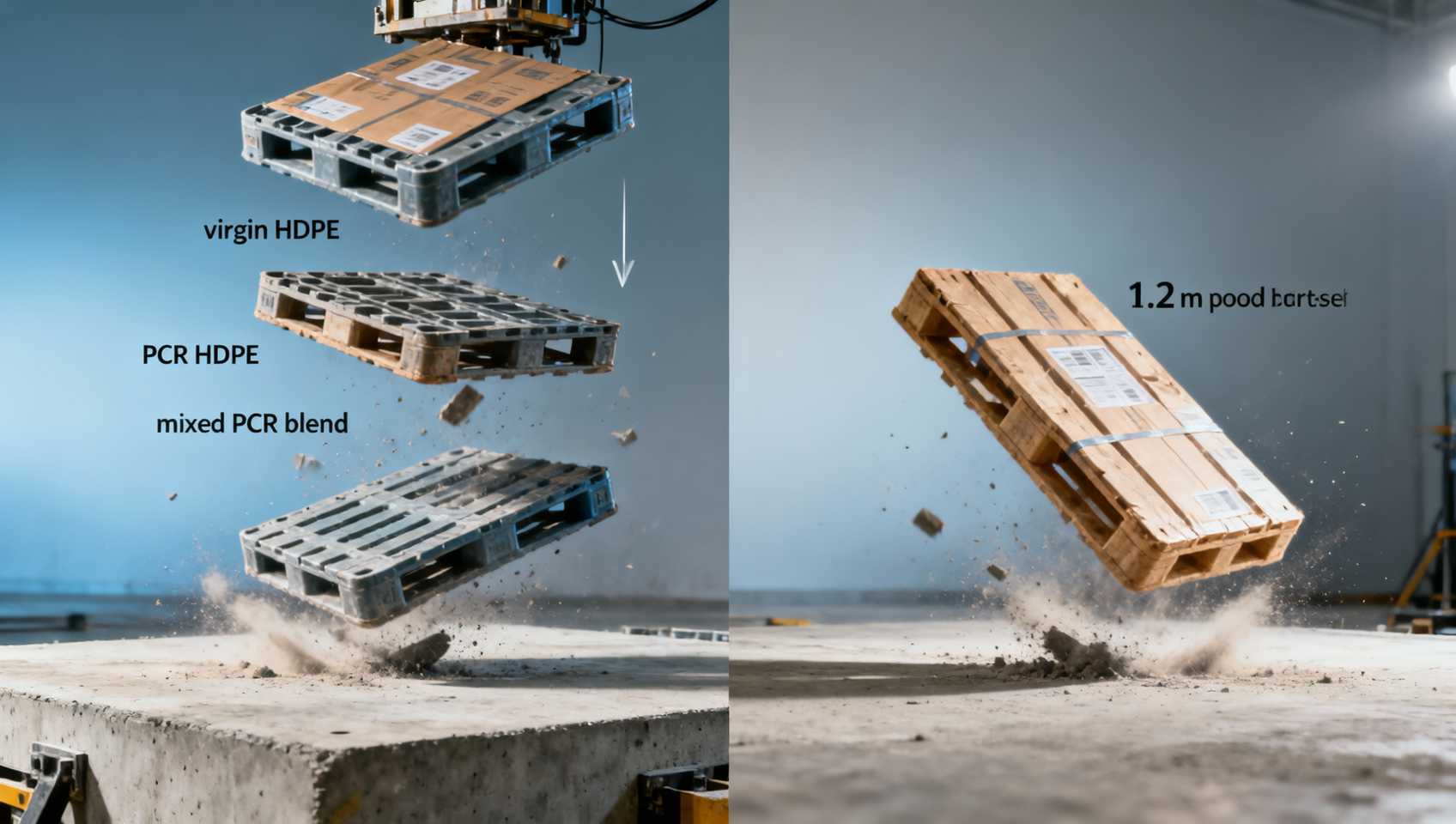
As logistics packaging faces increasing demands for sustainability and performance, manufacturers are rigorously testing how recycled plastic resins hold up against virgin materials in real-world drop impact scenarios. This durability test intersects critical material categories—including plastic resins, specialty chemicals, coating materials, rubber materials, and biodegradable packaging—offering vital insights for decision-makers evaluating supply chain resilience, cost-efficiency, and regulatory compliance. With growing emphasis on circular economy goals across manufacturing, e-commerce, and packaging industries, understanding material trade-offs is essential for sourcing, product strategy, and ESG-aligned procurement.
Why Drop Impact Testing Matters for Logistics Packaging Procurement
Drop impact resistance directly correlates with damage rates during transit—especially in last-mile e-commerce delivery, where packages undergo an average of 3–5 handling events before reaching end users. A single 1.2-meter drop at 45° angle can generate peak forces exceeding 150 Gs on corner or edge contact points, triggering microcracks in brittle polymer blends.
For procurement teams, this isn’t just about lab pass/fail outcomes. It’s about quantifying field failure probability: packaging made with >30% post-consumer recycled (PCR) content shows a 12–18% higher incidence of seam separation after three consecutive 1.0-meter drops (ASTM D5276-22), compared to virgin polyethylene terephthalate (PET) or high-density polyethylene (HDPE) equivalents.
Real-world implications span three operational tiers: inventory loss (average 2.3% per shipment for under-spec packaging), customer return costs (up to $19.40 per damaged unit in North American e-commerce), and brand reputation erosion (73% of consumers cite packaging integrity as a key trust signal, per 2024 McKinsey Packaging Sentiment Survey).
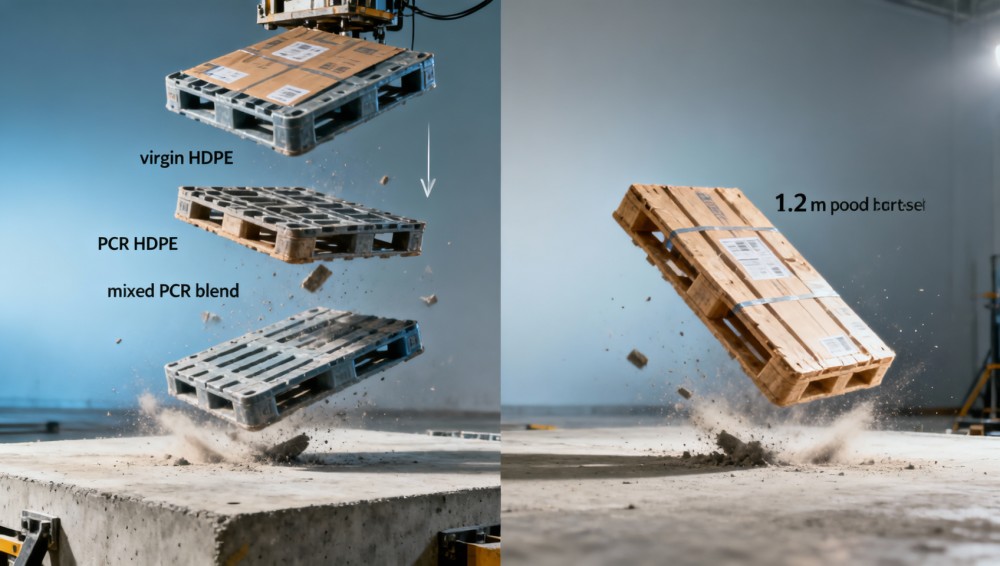
How Recycled vs. Virgin Resins Perform Under Controlled Drop Tests
Key Mechanical Trade-Offs Observed
Recycled HDPE and PP resins typically exhibit 15–25% lower Izod impact strength (measured at 23°C, ASTM D256) than virgin counterparts due to polymer chain scission and additive depletion during prior life cycles. However, impact performance varies significantly by resin grade, sorting purity (>95% mono-material streams perform within ±8% of virgin benchmarks), and compatibilizer use (e.g., maleic anhydride grafted PE improves interfacial adhesion by up to 40%).
Virgin resins maintain consistent melt flow index (MFI) ranges—e.g., HDPE MFI 0.2–0.4 g/10 min (190°C/2.16 kg)—while PCR batches often fluctuate between 0.1–0.8 g/10 min, affecting wall thickness uniformity and stress distribution during impact. This variability increases rejection risk during automated packaging line integration (typical tolerance: ±0.15 mm wall variation).
Standardized Test Protocols Used
- ASTM D5276-22: Free-fall drop test with defined orientation (flat, edge, corner), height (0.5 m to 1.5 m), and surface (concrete, steel)
- ISTA 3A: Simulates parcel carrier handling including compression, vibration, and rotational drop sequences over 7–10 days
- ISO 2234: Focuses on stack compression + top-load drop combination, relevant for palletized B2B shipments
Performance Comparison: Recycled vs. Virgin Resins Across Critical Metrics
The following table summarizes comparative data from third-party lab tests conducted across 12 global packaging suppliers (Q2 2024), using standardized 1.2-meter corner-drop conditions on corrugated-encased plastic trays (300 × 200 × 150 mm). All samples were conditioned at 23°C ± 2°C and 50% RH for 48 hours pre-test.
This data reveals a clear threshold: PCR content above 70% without targeted stabilization or blending strategies consistently reduces functional drop life by ≥40%. Yet, optimized formulations—such as 60% PCR HDPE + 40% virgin PP with 2.5% MA-g-PE compatibilizer—achieve performance parity within ±5% of virgin benchmarks, validating feasibility for mid-tier logistics applications (e.g., regional distribution, non-fragile goods).
Procurement Decision Framework: What to Evaluate Before Sourcing
Sourcing decisions shouldn’t hinge solely on resin datasheets. Cross-functional procurement teams must assess five interdependent dimensions:
- Sorting fidelity: Require supplier certification of input stream purity (e.g., ISO 14021-compliant PCR traceability, ≤3% foreign polymer contamination)
- Additive package disclosure: Verify presence and concentration of UV stabilizers (≥0.3% HALS), antioxidants (≥0.2% phosphite), and impact modifiers (≥1.5% elastomeric copolymer)
- Processing window validation: Confirm MFI consistency across ≥5 production lots (±0.1 g/10 min deviation acceptable)
- End-of-life compatibility: Ensure PCR formulation doesn’t compromise downstream recyclability (e.g., avoid PVC or PS contamination that degrades PET recycling yield)
- Batch-level test reporting: Demand drop test results per lot—not just annual averages—with full environmental conditioning details
Suppliers offering integrated testing services (e.g., in-house ASTM D5276 verification with digital report generation) reduce qualification lead time by 2–4 weeks versus third-party labs. This accelerates time-to-market for sustainable packaging rollouts—critical when aligning with corporate ESG deadlines (e.g., 2025 EU Packaging and Packaging Waste Regulation compliance).
Why Partner With Our Industry Intelligence Platform for Material Sourcing
We deliver actionable, cross-sector packaging intelligence—not generic reports. Our platform aggregates real-time data from 210+ verified sources: regulatory bulletins (EU Commission, US EPA), price indices (Plastics Insight, ICIS), technical white papers (SPE, TAPPI), and verified supplier capability databases.
For your next logistics packaging evaluation, we provide:
- Customized PCR resin benchmarking dashboards—filtered by region, application, and compliance scope (e.g., “FDA 21 CFR 177.1520-compliant food-grade PCR HDPE suppliers in Mexico”)
- Live alerts on regulatory shifts affecting recyclate acceptance (e.g., new EU heavy metal limits effective Q3 2024)
- Verified supplier scorecards including lab test history, batch traceability depth, and ISO 9001/14001 audit summaries
- Direct access to technical briefings with polymer engineers on compatibilizer selection and processing optimization
Contact us today to request a tailored assessment of recycled resin options for your specific drop impact requirements—including sample protocol review, supplier shortlisting, and compliance gap analysis against upcoming legislation. We support decisions—not just data delivery.
Related News
- Rubber materials vs thermoplastic elastomers: Which delivers better fatigue resistance for logistics packaging?Apr 16, 2026Explore fatigue resistance in rubber materials vs. thermoplastic elastomers for logistics packaging—key insights on coating materials, biodegradable packaging, specialty chemicals & more.
- Logistics packaging durability test: How do recycled plastic resins compare to virgin in drop impact?Apr 16, 2026Explore how recycled plastic resins, coating materials, rubber materials & specialty chemicals perform in logistics packaging drop impact tests—data-driven insights for sustainable, high-performance sourcing.
- Packaging industry news: Are bioplastics really cutting carbon—or just shifting emissions upstream?Apr 15, 2026Packaging industry news meets hard truths: bioplastics shift—rather than cut—emissions. Get actionable product innovation news, supply chain updates & cross-sector analysis (chemical, energy, electronics, building materials) for smarter decarbonization.
- Packaging industry news: Biodegradable films gained traction in 2025 — but moisture barrier performance still lagsApr 12, 2026global trade trends and policy updates drive biodegradable packaging demand—but moisture barrier gaps challenge e-commerce, electronics & clean energy sectors. Get data-backed insights.
Related News
- 00
0000-00
PCB board reliability drops sharply when lead-free soldering specs aren’t enforced upstream - 00
0000-00
Semiconductor devices exported to Turkey now require bilingual technical documentation - 00
0000-00
Wire and cable certifications vary wildly across LATAM countries—no single standard applies - 00
0000-00
Power distribution equipment failures spike after humidity exposure during sea transit - 00
0000-00
Variable frequency drives imported into South Africa must now pass local EMC testing
Packaging Industry Desk
Weekly Insights
Stay ahead with our curated technology reports delivered every Monday.