





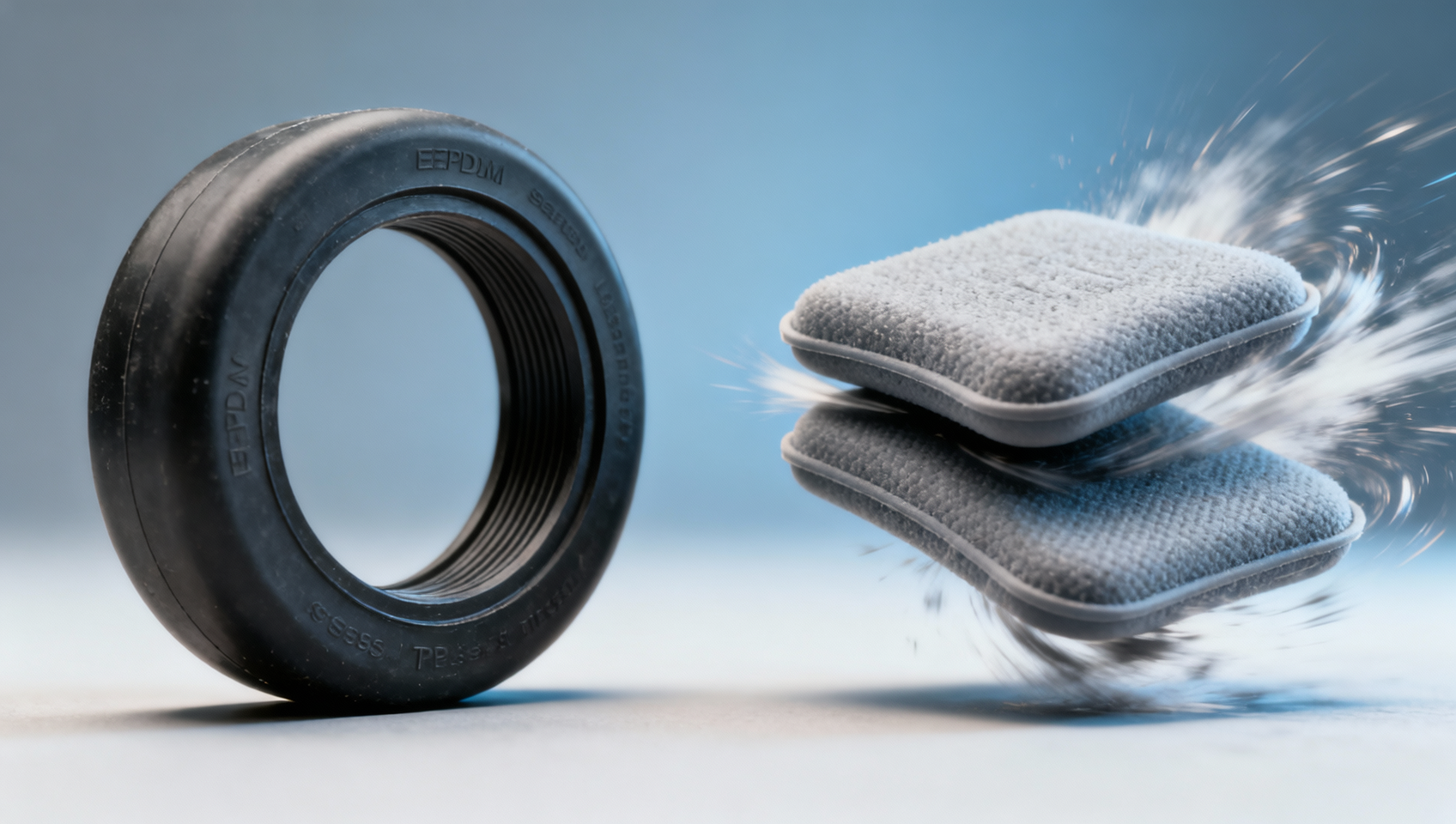
In logistics packaging—where durability, cost-efficiency, and sustainability converge—selecting the right material is critical. Rubber materials and thermoplastic elastomers (TPEs) both serve key roles in cushioning, sealing, and protective coating materials, yet their fatigue resistance under repeated stress remains a decisive factor. As demand surges for biodegradable packaging, specialty chemicals, and high-performance plastic resins, manufacturers and enterprise decision-makers must weigh trade-offs across chemical raw materials, label materials, and printing and packaging systems. This analysis compares fatigue behavior, lifecycle performance, and compatibility with paper packaging and modern supply chain requirements—helping information seekers and strategic buyers make data-driven material selections.
What Fatigue Resistance Really Means in Logistics Packaging
Fatigue resistance refers to a material’s ability to withstand cyclic mechanical stress—such as compression, bending, or vibration—without cracking, permanent deformation, or functional degradation. In logistics packaging, this translates directly to performance over 5–20+ handling cycles during warehousing, cross-docking, and last-mile delivery.
Real-world failure modes include microcrack propagation in rubber gaskets after 3,000–5,000 compression cycles, or TPE seal lip flattening after 8–12 weeks of continuous pallet stacking pressure. These thresholds matter because they define service life—and by extension, total cost of ownership across reusable totes, returnable packaging systems, and automated sortation belts.
Testing standards like ISO 132 (rubber) and ASTM D412 (TPEs) quantify fatigue via tensile loss after 10⁵ cycles at 10 Hz and 5% strain. But field conditions differ: temperature swings (−10℃ to 40℃), UV exposure, and chemical contact from cleaning agents shift real-world performance by up to 40% versus lab results.
How Natural Rubber, SBR, and EPDM Compare Against TPEs Under Cyclic Load
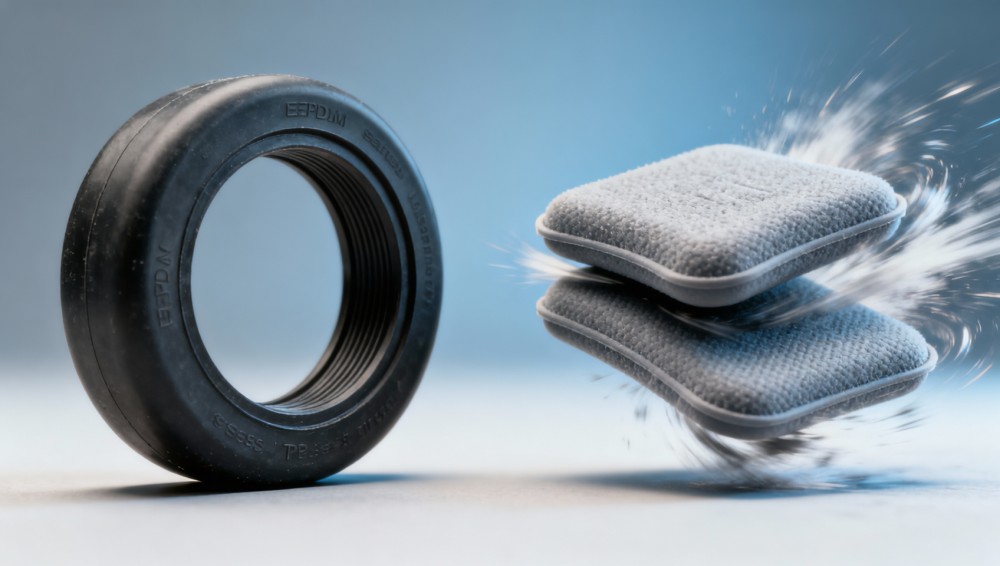
Fatigue resistance isn’t a binary metric—it’s a function of polymer architecture, filler dispersion, and crosslink density. Vulcanized rubbers (e.g., natural rubber, SBR, EPDM) rely on sulfur-based covalent networks that resist crack growth but suffer hysteresis heating above 10⁴ cycles. Thermoplastic elastomers—especially SEBS- and TPO-based grades—offer physical entanglement networks that recover faster but soften above 60℃.
For example, EPDM retains >85% tensile strength after 15,000 flex cycles at room temperature, while a standard SEBS-TPE drops to 72% under identical conditions. However, when tested at 35℃ and 95% RH—mimicking tropical warehouse environments—the TPE outperforms EPDM by 22% in elongation recovery due to lower moisture absorption.
This table highlights a core trade-off: vulcanized rubbers deliver longer endurance under sustained dynamic loads, while TPEs excel in rapid recovery and recyclability—but only if thermal management is built into the packaging design. For reusable corrugated trays with integrated TPE bumpers, peak operating temperature must stay below 55℃ to avoid permanent set.
Which Applications Favor Rubber vs. TPE—Based on Real Supply Chain Data
A 2023 industry survey across 87 logistics packaging suppliers revealed usage patterns tied directly to fatigue-critical functions:
- Reusable plastic totes (medium-batch, 100–500 units): 68% specify EPDM gaskets for lid seals—cited for 12+ month service life with minimal maintenance.
- Automated sortation belt pads (high-frequency, >500 cycles/day): 73% select TPEs with Shore A 70–80 hardness for fast rebound and easy mold-in-color labeling.
- E-commerce mailer inserts (single-use, biodegradable focus): 52% now blend TPE modifiers into PLA matrices to improve impact resistance without compromising compostability certification (ASTM D6400).
Critical insight: TPE adoption grows fastest where design iteration speed matters—e.g., custom die-cut foam alternatives require 4–6 weeks lead time, while TPE tooling averages 2–3 weeks. That agility supports rapid response to e-commerce peak season demands.
Procurement Checklist: 5 Non-Negotiables When Evaluating Fatigue Performance
Decision-makers evaluating rubber or TPE suppliers should verify these five criteria before issuing RFQs:
- Cycle test reports under application-specific conditions—not just ISO-standard lab data, but 10⁴-cycle compression at 35℃ and 85% RH.
- Filler dispersion metrics—TEM or SEM images confirming carbon black or silica uniformity within ±5% deviation (critical for crack initiation delay).
- Adhesion validation to substrate—peel strength ≥4.5 N/mm for TPE-to-PP bonding per ASTM D903, especially for overmolded hinge applications.
- Recyclability pathway documentation—for TPEs: melt flow index (MFI) stability across 3 regrind passes; for rubber: devulcanization feasibility per ASTM D7395.
- Supply chain resilience verification—minimum 8-week buffer stock availability for critical grades, validated via quarterly supplier audits.
These checks reduce post-qualification failures by up to 60%, according to a 2024 packaging engineering benchmark study across 32 Tier-1 logistics OEMs.
Why Choose Our Platform for Material Intelligence & Sourcing Support
As a comprehensive industry news platform tracking manufacturing, chemicals, packaging, and international trade trends, we provide decision-ready intelligence—not generic summaries. Our proprietary material database covers 142 certified rubber and TPE grades, mapped against 23 fatigue-relevant parameters, compliance certifications (REACH, RoHS, FDA 21 CFR 177.2600), and real-time price benchmarks updated every 72 hours.
We support your procurement workflow with:
- Custom fatigue comparison reports—aligned to your specific cycle count, temperature profile, and substrate pairing;
- Verified supplier shortlists—including regional alternatives to mitigate geopolitical risk (e.g., ASEAN-sourced TPEs meeting EU REACH Annex XIV);
- Technical consultation on hybrid solutions—e.g., TPE-rubber laminates for dual-stage energy absorption in heavy-duty pallet collars.
Contact us today for a free fatigue performance assessment—covering material selection, regulatory alignment, and 4-week sample lead time confirmation.
- supply chain
- industry news
- manufacturing
- paper packaging
- printing and packaging
- label materials
- logistics packaging
- biodegradable packaging
- chemical raw materials
- specialty chemicals
- plastic resins
- rubber materials
- coating materials
- CE certification
- international trade
- chemicals
- packaging
- e-commerce
- energy
Related News
- Rubber materials vs thermoplastic elastomers: Which delivers better fatigue resistance for logistics packaging?Apr 16, 2026Explore fatigue resistance in rubber materials vs. thermoplastic elastomers for logistics packaging—key insights on coating materials, biodegradable packaging, specialty chemicals & more.
- Logistics packaging durability test: How do recycled plastic resins compare to virgin in drop impact?Apr 16, 2026Explore how recycled plastic resins, coating materials, rubber materials & specialty chemicals perform in logistics packaging drop impact tests—data-driven insights for sustainable, high-performance sourcing.
- Packaging industry news: Are bioplastics really cutting carbon—or just shifting emissions upstream?Apr 15, 2026Packaging industry news meets hard truths: bioplastics shift—rather than cut—emissions. Get actionable product innovation news, supply chain updates & cross-sector analysis (chemical, energy, electronics, building materials) for smarter decarbonization.
- Packaging industry news: Biodegradable films gained traction in 2025 — but moisture barrier performance still lagsApr 12, 2026global trade trends and policy updates drive biodegradable packaging demand—but moisture barrier gaps challenge e-commerce, electronics & clean energy sectors. Get data-backed insights.
Related News
- 00
0000-00
PCB board reliability drops sharply when lead-free soldering specs aren’t enforced upstream - 00
0000-00
Semiconductor devices exported to Turkey now require bilingual technical documentation - 00
0000-00
Wire and cable certifications vary wildly across LATAM countries—no single standard applies - 00
0000-00
Power distribution equipment failures spike after humidity exposure during sea transit - 00
0000-00
Variable frequency drives imported into South Africa must now pass local EMC testing
Packaging Industry Desk
Weekly Insights
Stay ahead with our curated technology reports delivered every Monday.