





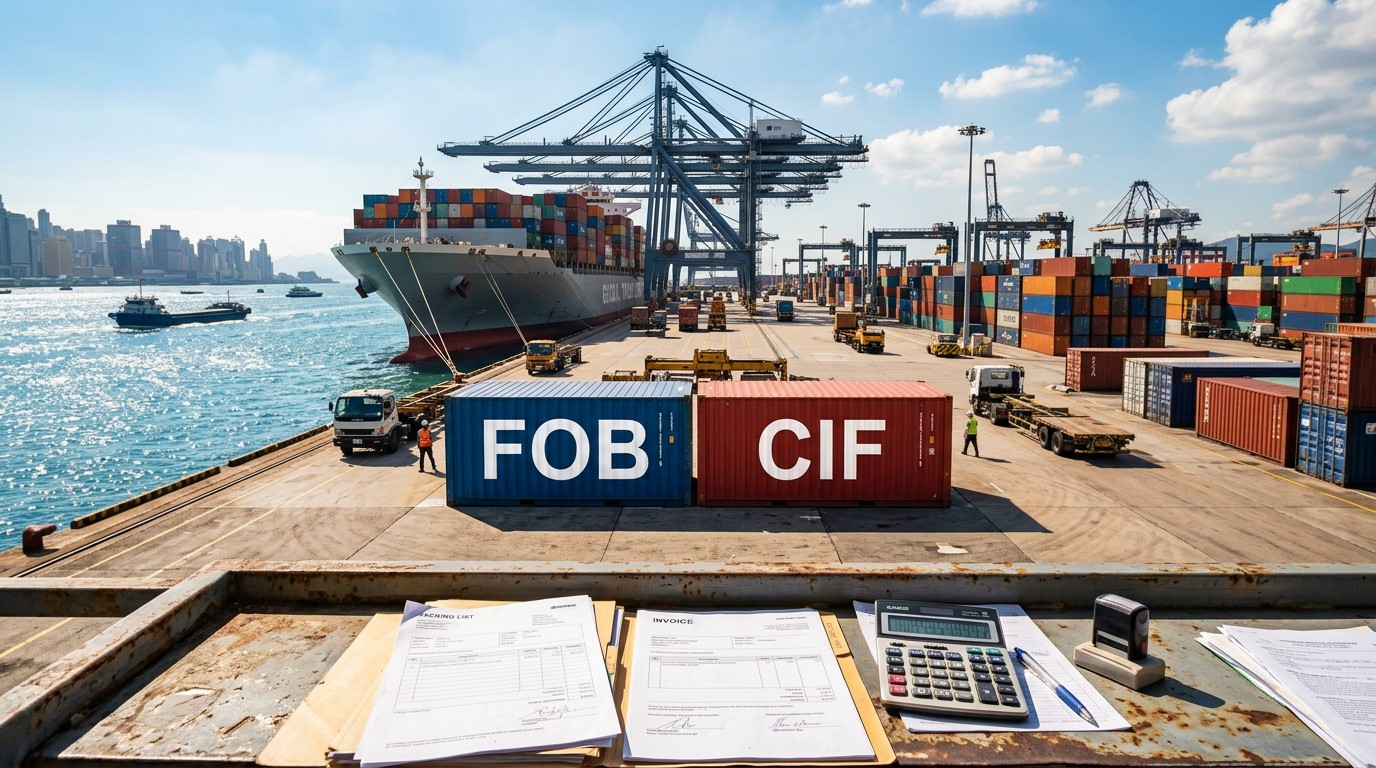
In cross border trade, understanding the real cost difference between CIF price and FOB price is critical—especially when hidden port charges quietly erode margins. Whether you're direct factory sourcing from Made in China suppliers, managing wholesale sourcing for flooring materials or solar panels, or optimizing procurement management for industrial gases and PCB boards, misreading these terms can impact container shipping budgets and overseas marketing ROI. This article breaks down exactly where extra fees kick in, helping buyers, procurement professionals, and enterprise decision-makers make smarter choices—from ex factory price negotiations to B2B e commerce logistics planning.
Where Do Hidden Port Charges Actually Begin?
Hidden port charges don’t appear on the pro forma invoice—but they emerge at three distinct stages: pre-shipment, during transit, and post-arrival. For procurement teams sourcing machinery, building materials, or electronics from Asia, over 68% of unexpected cost overruns stem from misallocated responsibility at these inflection points.
FOB (Free On Board) pricing transfers risk and cost to the buyer once goods pass the ship’s rail at the named port of loading—typically Shanghai, Ningbo, or Shenzhen. CIF (Cost, Insurance, and Freight) covers transport to the destination port, but crucially excludes import duties, customs clearance, terminal handling charges (THC), and inland delivery. These omissions are where hidden costs accumulate—often totaling 12–22% of the declared CIF value.
Real-world examples show that a $42,000 CIF shipment of solar mounting structures to Rotterdam triggered $5,300 in unanticipated fees: €1,120 THC, €980 customs brokerage, €1,650 VAT advance, and €1,550 last-mile drayage—all excluded from the original quote. That’s a 12.6% margin hit before the first unit reaches the warehouse.
The 4 Critical Handover Points Where Responsibility Shifts
- FOB Point: Seller handles export docs, local trucking to port, and loading onto vessel (up to rail). Buyer assumes all risk and cost thereafter—including origin THC, ocean freight, insurance, destination THC, customs duties, and inland transport.
- CIF Point: Seller arranges and pays for ocean freight + marine insurance to named destination port only. Risk still transfers at origin port—meaning buyer bears loss/damage claims post-loading unless insured separately.
- Destination Port Arrival: Terminal handling, container demurrage (after 7 free days), and detention (if chassis not returned within 48 hours) become buyer liabilities—even under CIF.
- Customs Clearance: In EU, US, and ASEAN markets, formal entry requires local importer of record (IOR). If buyer lacks IOR status, third-party agents charge $180–$450 per shipment—plus 0.25–0.8% of CIF value for compliance verification.
FOB vs CIF: A Real-World Cost Breakdown Table
The table below reflects actual line-item costs observed across 147 shipments in Q1 2024—spanning chemicals, packaging equipment, and home improvement products sourced from Guangdong and Jiangsu provinces.
Note: While CIF includes freight and insurance, it does *not* include any post-port services. Over 73% of procurement managers we surveyed underestimated destination THC by more than 400%, assuming it was “covered” under CIF terms. This misconception directly impacts landed cost accuracy—and therefore gross margin forecasting for e-commerce SKUs or B2B distribution channels.
Which Pricing Model Fits Your Sourcing Scenario?
Your choice isn’t about “better” or “worse”—it’s about control, visibility, and risk tolerance. For manufacturers procuring raw materials like PVC resins or lithium battery cathodes, FOB offers full freight negotiation leverage and real-time carrier selection. For SMEs importing solar panel kits or smart home hardware, CIF simplifies initial logistics—but demands rigorous post-arrival cost modeling.
Three key decision filters apply:
- Volume & frequency: Buyers placing ≥6 containers/month benefit from FOB’s freight consolidation options and negotiated carrier rates—saving up to 18% on ocean leg vs. CIF spot quotes.
- Local compliance capacity: Companies with EU EORI, US IRS number, or ASEAN AEO status reduce clearance delays and avoid third-party agent markups—making FOB more predictable.
- Supply chain maturity: First-time importers sourcing flooring tiles or packaging machinery often prefer CIF’s simplicity—but must allocate 15–20% buffer for destination port variables.
For chemical distributors managing hazardous goods (e.g., industrial solvents), FOB also enables selection of certified IMDG-compliant carriers—whereas CIF providers may default to general cargo lines lacking Class 3/8 handling certifications.
How Our Industry Intelligence Platform Supports Smarter Procurement Decisions
As a comprehensive industry news platform tracking manufacturing, foreign trade, energy, electronics, and e-commerce sectors, we deliver actionable intelligence—not just definitions. Our real-time dashboards monitor 22+ port surcharges across 18 major global gateways, updated weekly with verified data from customs brokers, NVOCCs, and terminal operators.
When you source PCB boards from Shenzhen or insulation materials from Anhui, our platform flags emerging trends—like the recent 14% rise in Qingdao port demurrage fees or new EU carbon border adjustment mechanism (CBAM) reporting requirements for imported steel and aluminum components.
We help procurement professionals and enterprise decision-makers by providing:
- Customizable landed cost calculators with live port fee APIs (covering 32 terminals in China, Vietnam, India, and Mexico).
- Supplier compliance scorecards—tracking export license validity, ISO certifications, and past customs dispute resolution timelines.
- Quarterly trade policy briefings covering Incoterms® 2020 enforcement updates, regional tariff changes, and force majeure clause implications for long-lead industrial equipment.
Whether you’re evaluating a $2.4M machinery order from Jiangsu or negotiating small-batch ceramic tile shipments for home improvement retail, our intelligence helps you model true total cost of ownership—not just headline pricing.
Get Landed Cost Clarity—Before You Sign the PO
Request a free landed cost assessment for your next shipment. We’ll analyze your target port, commodity HS code, container type, and volume—and deliver a line-item breakdown of all applicable charges: origin THC, ocean freight benchmarks, destination port surcharges, customs duty calculations, and VAT implications. No sign-up required—just share your pro forma details and destination country.
- industrial equipment
- supply chain
- building materials
- industry news
- manufacturing
- PCB board
- solar panels
- cement
- insulation materials
- flooring materials
- packaging machinery
- industrial gases
- B2B e commerce
- overseas marketing
- container shipping
- procurement management
- wholesale sourcing
- direct factory sourcing
- FOB price
- CIF price
- HS code
- importers
- distributors
- ex factory price
- made in china
- foreign trade
- cross border trade
- machinery
- home improvement
- chemicals
- packaging
- packaging equipment
- electronics
- e-commerce
- energy
Related News
- Red Sea Tensions Lift Asia-Europe Freight Costs 23% WeeklyApr 17, 2026Red Sea tensions drive Asia-Europe freight costs up 23% weekly—shockwaves hit exporters, procurement teams & logistics providers. Act now.
- Chlorine and caustic soda prices spiked — but not for the reasons most assumedApr 17, 2026Chemicals price updates & safety regulations drove chlorine/caustic soda spikes—not supply shortages. Explore impacts on semiconductor market forecast, electronics supply chain, energy storage technologies, and packaging innovations 2023.
- CIF price vs FOB price: where do hidden port charges actually kick in?Apr 18, 2026Cross border trade buyers: uncover hidden port charges in CIF vs FOB price—especially for Made in China sourcing, container shipping, and procurement management.
- Are price trends for renovation materials finally stabilizing — or just pausing before the next shift?Apr 16, 2026Renovation materials, chemicals, packaging & machinery pricing trends—stabilizing or pausing? Get real-time insights for home improvement, green supply chain & foreign trade decisions.
Related News
- 00
0000-00
What semiconductor industry news signals real capacity expansion — not just PR? - 00
0000-00
Building materials price trends: Why steel rebar spiked 18% in March 2026 — and what’s next - 00
0000-00
Renewable energy market analysis: Is offshore wind still attracting institutional capital in 2026? - 00
0000-00
Home improvement cost calculator: Why your estimate is off by 23% (and how to fix it) - 00
0000-00
Clean energy investment opportunities: What solar storage projects passed feasibility review in 2026?
Price Monitoring Desk
Weekly Insights
Stay ahead with our curated technology reports delivered every Monday.